A bee swarm can look like a moving storm – a loud, swirling cloud that suddenly settles on a tree branch, fence post, or the side of a shed. If it’s on your property, your first job is simple: make the area calm and boring for the bees, while you keep your household safe.
Most swarms aren’t out to “attack.” They’re usually honey bees in transition, clustering temporarily while scout bees search for a permanent home. That’s good news, because it means there’s often a window where you can protect people and pets, avoid unnecessary harm to the bees, and get the swarm handled the right way.
How to handle a bee swarm outside without getting stung
Start by giving the swarm space. A good rule is at least 50 feet, more if anyone in your home is nervous, allergic, or likely to run toward it out of curiosity. Close nearby doors and windows, and keep foot traffic away from the area. If the cluster is near a walkway, block the path with a trash can, chair, or temporary barrier so nobody “accidentally” walks into the flight path.
Then do the quiet cleanup that actually prevents stings: bring kids inside, bring pets inside, and pause lawn work. Vibrations and noise from mowers, leaf blowers, string trimmers, and even loud music can irritate bees and pull them into defensive behavior. If you have sprinklers set to kick on near the swarm, turn them off. Water hitting the cluster can also agitate them.
If a few bees are bumping into you, don’t swat. Slow down, cover your face with your shirt if needed, and walk away steadily. Swatting reads like a threat and increases the odds of getting stung.
What a swarm is (and what it isn’t)
A swarm is typically a temporary cluster of honey bees that has left an existing hive with a queen. The group gathers in a “rest stop” location while scouts look for a cavity like a hollow tree, wall void, or attic space.
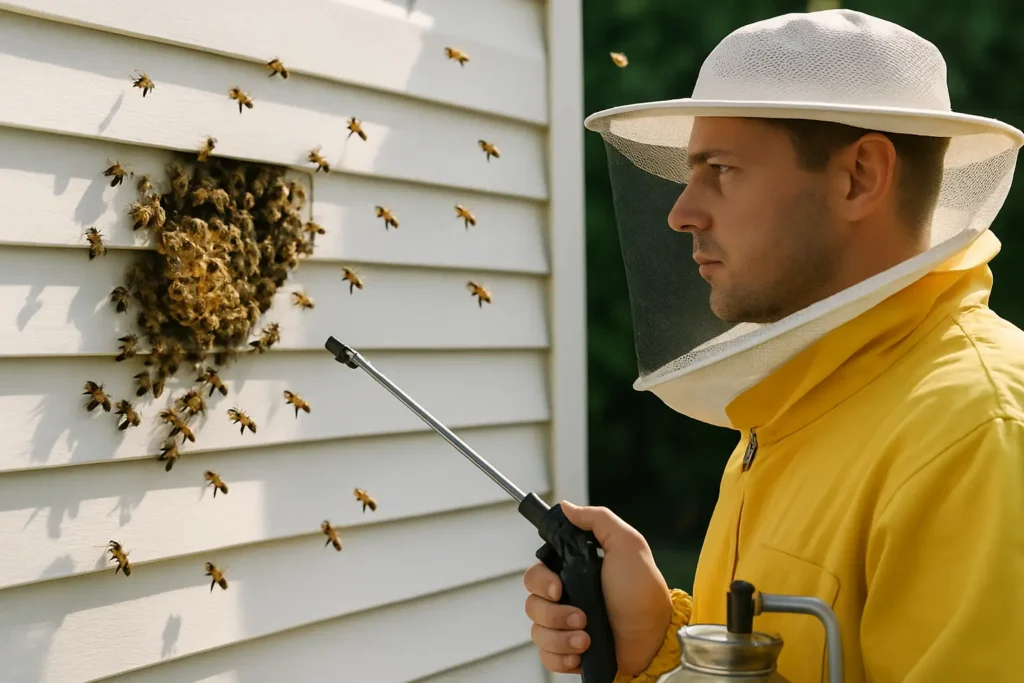
It’s different from an established hive. With a swarm, you often see a tight ball of bees about the size of a grapefruit to a basketball (sometimes larger) hanging on a branch or attached to a surface. With an established hive, you’ll usually notice steady flight traffic into a specific crack or hole, often inside a wall, eave, or roofline.
This difference matters because it affects urgency and approach. Swarms may move on within hours or a couple of days, but they can also decide your building is perfect and move inside. Once bees move into a structure, removal becomes more involved and repairs become important for long-term prevention.
First 15 minutes: safety steps that actually work
If you’re standing there thinking, “Okay, what do I do right now,” here’s what makes a real difference.
Get everyone inside and account for kids, visitors, and pets. If you manage a commercial property, notify staff and redirect customers away from the area. Put distance between people and bees first, then handle everything else.
If someone in the household has a known severe allergy, locate the epinephrine auto-injector and keep it accessible. This isn’t about panic – it’s about readiness. Also consider moving vehicles if the swarm is near a driveway, so nobody has to walk close later.
Finally, take a quick photo from a safe distance. It helps a professional identify whether this looks like honey bees, where the cluster is positioned, and whether it appears to be a swarm versus bees entering a structure.
What not to do (even if the internet suggests it)
When homeowners are stressed, it’s tempting to try a shortcut. Most shortcuts create two problems: more stings today and a bigger bee problem tomorrow.
Avoid spraying anything – especially foam sprays, “wasp and hornet” chemicals, brake cleaner, or soapy water. Aside from being inhumane, these methods often don’t eliminate the real issue and can drive bees into wall voids or deeper crevices, making professional removal harder.
Don’t knock the swarm down with a broom or hose. A falling cluster breaks apart and turns a calm group into a chaotic, defensive cloud. The same goes for throwing rocks or blasting it with a leaf blower. It can also separate the bees from their queen, which prolongs the mess.
And please don’t try the “bucket and sheet” method unless you’re trained. Beekeepers sometimes collect swarms, but doing it safely involves protective gear, experience, and a plan for relocating the bees into a proper hive setup.
“Should I wait it out?” It depends
If the swarm is high up in a tree and far from people, waiting can be reasonable. Many swarms move along in 24 to 72 hours.
But waiting carries a risk: the longer they stay, the higher the chance they find a cavity on your property and move in. In Southern California, that can mean eaves, attic vents, irrigation boxes, palm trees, or gaps behind siding.
If the swarm is low to the ground, close to entrances, near a playground, or anywhere that people must pass, it’s usually better to schedule humane removal sooner rather than later. The goal is peace and home restored – without pushing the bees into a worse situation.
If bees are entering a wall or roofline, treat it as urgent
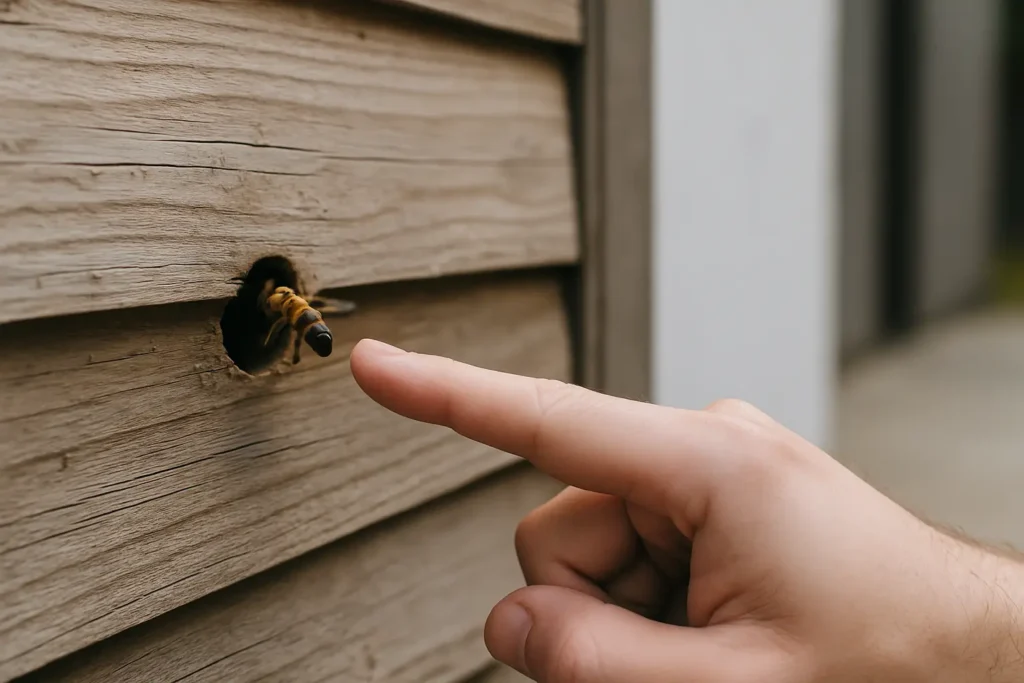
A visible cluster outside is one scenario. A steady stream of bees entering and exiting a crack is another.
If you see bees “beelining” into a specific hole, especially with multiple bees arriving every minute, you may already have an established colony. That’s when waiting can backfire quickly, because comb and honey can develop inside a wall. Over time, that can lead to staining, odors, pests, and repeat invasions if the entry point isn’t repaired.
In this case, the safest move is to keep people away from the entry area, avoid sealing the hole yourself (trapping bees inside can create more problems), and call a humane removal specialist who can confirm what’s happening and remove the colony properly.
How to handle a bee swarm outside when you have kids or pets
Kids and pets add one complication: speed. A curious child can cover 50 feet in seconds. A dog can be on a swarm before you can call their name.
Bring everyone indoors and set expectations clearly. Tell kids the bees are “traveling” and need space, and make the boundary non-negotiable. For dogs, keep them inside or on a leash well away from the area.
If your pet has already been stung, watch for swelling around the face, trouble breathing, excessive drooling, or weakness. Those are reasons to contact a veterinarian immediately. For people, symptoms like hives away from the sting site, swelling of lips or throat, vomiting, dizziness, or trouble breathing require emergency care.
What a humane, professional removal looks like
Homeowners often ask what “safe and humane” means in real terms. For a swarm, it usually means collecting the bees without poisoning them and relocating them to a managed apiary where they can continue natural behaviors.
For a colony in a structure, it means a proper live removal and full extraction when needed – not a quick spray-and-leave. Comprehensive work includes removing comb, addressing the cavity so it doesn’t attract new bees, and repairing or sealing the entry points that allowed the bees in.
That last part is what prevents the repeat call months later. Bees are excellent at finding the same inviting gaps, especially if the scent of old comb remains.
If you’re in Los Angeles, Orange, Riverside, San Bernardino, or Ventura County and you need bees rescued and relocated, Eli the Bee Guy is a local option for humane removal and entry-point repairs: https://elithebeeguy.com/.
How to talk to a bee removal pro so you get the right help
When you call, a few details make it easier to estimate urgency and arrive prepared.
Share whether it’s a cluster (swarm) or bees entering a hole, how high off the ground they are, and how long you’ve noticed them. Mention if the swarm is on a movable object like a garbage bin, patio furniture, or a vehicle, because relocating that object can sometimes reduce risk while you wait.
Also say whether anyone on-site has a severe allergy, and whether the location is a school, apartment complex, restaurant patio, or other high-traffic area. That helps prioritize safety planning.
Preventing the next swarm from choosing your property
You can’t stop swarms from flying through your neighborhood – that’s normal bee behavior. But you can make your structure less attractive.
The practical focus is simple: reduce easy cavities and close off entry points. Small gaps along rooflines, loose vents, unsealed utility penetrations, and damaged fascia boards are common invitations. If you’ve had bees before, prevention is even more important, because lingering scent can act like a beacon.
It’s also worth keeping an eye on outdoor clutter that creates sheltered voids. Stacked lumber, unused irrigation boxes, and hollow decorative items can become temporary gathering spots.
A bee swarm outside can feel like an emergency, but your best results come from calm decisions. Give them space, protect your people, and choose a humane solution that keeps both your property and the bees on the right path – that’s how you get peace back without creating another problem down the line.