A wasp problem rarely starts with a dramatic swarm. It usually starts with one or two “scouts” circling your patio table, checking the eaves, or hovering around the trash can like they own the place. If they find easy food, water, or a protected nook, they tell the rest.
Plants can help – but only when you use them as part of a bigger, common-sense setup. Think of plant choices as gentle “friction” that makes your yard less appealing, not a force field that guarantees wasps disappear. With that expectation, here’s how to use the best plants to deter wasps naturally in a way that fits Southern California yards and actually supports peace and home restored.
What plants can (and can’t) do for wasps
Wasps navigate by scent and visual cues, and many species are drawn to sugars, proteins, and water. Strongly aromatic plants can make certain areas less inviting, especially near seating, doors, and outdoor eating spaces.
What they can’t do is override a prime nesting spot. If a queen finds a protected cavity in a wall void, soffit, shed, or dense hedge, a ring of herbs nearby won’t stop her. Also, some plants that repel wasps may attract bees and other pollinators, which is a good thing for the environment – but it means “more insects” doesn’t always equal “more wasps.” The goal is to discourage wasps from your high-traffic human areas while still respecting beneficial pollinators.
Best plants to deter wasps naturally (and how to use them)
A good strategy is to concentrate aromatic plants where you want wasps to stay away: patio edges, near gates and doors, around outdoor dining zones, and close to trash and recycling areas (without blocking access).
Mint (peppermint and spearmint)
Mint is one of the most reliable scent-based options homeowners use because it’s intensely aromatic, especially when brushed or crushed. Plant it in pots, not directly in the ground – mint spreads aggressively in Southern California conditions and can take over beds.
Place pots near seating areas and along the path from the house to the grill or outdoor table. If you want a stronger burst of scent, lightly bruise a few leaves before guests arrive.
Basil
Basil brings a strong, sweet-spicy aroma that can help make outdoor eating areas less attractive to wasps. It’s also practical: you’ll actually use it, so it won’t turn into a neglected corner of the yard.
Basil does best with regular water and sun, but in hotter inland areas it appreciates some afternoon shade. Keep it close to where food is served – near the patio or outdoor kitchen – since that’s where you most want to reduce wasp curiosity.
Rosemary
Rosemary is a Southern California workhorse. It handles heat, tolerates drought once established, and puts off a resinous scent many pests dislike. While rosemary alone won’t solve a nest issue, it’s a solid perimeter plant around patios and walkways.
One caution: dense, woody rosemary can create sheltered spaces that some insects may explore. Keep it pruned so it doesn’t form deep, hidden cavities near eaves or wall lines.
Thyme
Thyme stays low, releases fragrance when stepped on or warmed by the sun, and works well as a border plant. It’s a nice option for the edge of pavers or around a seating area where people naturally brush against it.
If you’re aiming for a calmer patio zone, thyme pairs well with rosemary or sage to create a “scent barrier” that is noticeable to humans and often discouraging to wasps.
Sage (common sage and other culinary sages)
Sage has a strong, earthy aroma and grows well in many California microclimates. It’s especially useful in planters near doors or windows where you want a steady scent without much maintenance.
Sage is also easy to trim. A quick pruning keeps it tidy and reduces the chance of it becoming a protected little nook near the foundation.
Lemongrass (often called “citronella plant”)
People reach for citronella for mosquitoes, but lemongrass can also help in a broader “make this spot smell less interesting” approach for wasps. The scent is sharp and noticeable, which is exactly what you want near outdoor dining.
Lemongrass likes warmth and sun. In windy patio corners, the scent carries well, but you’ll want to keep the plant stable in a heavy pot so it doesn’t tip.
Lavender
Lavender is a classic for SoCal landscapes, and its aroma can help discourage some nuisance insects. It’s also a strong choice if you want a clean-looking border along a walkway or near a patio wall.
Here’s the trade-off: lavender is also attractive to many beneficial pollinators, including honey bees. That’s not a problem in itself – it’s part of a healthy yard – but if your main concern is avoiding all stinging insects around a pool or play area, place lavender farther from those high-traffic spaces and use stronger “repellent” herbs (like mint and basil) closer in.
Marigolds
Marigolds have a distinctive scent and can be helpful around garden edges, especially near vegetable beds where wasps may come looking for caterpillars and other prey. They’re also easy to rotate seasonally.
They won’t stop wasps from scouting trash or sugary drinks, but they can be one part of keeping certain corners of the yard less inviting.
Eucalyptus (with caution)
Eucalyptus has a strong, unmistakable scent. Some homeowners like it as a larger landscape element where the aroma carries.
The caution is practical: eucalyptus can be messy, and certain species can be high-maintenance or inappropriate near structures. If you’re considering it, think carefully about placement and local conditions, and don’t use it as your primary “solution.” It’s more of a background scent element than a targeted deterrent.
Where to plant for the biggest impact
Placement matters more than the plant list. If wasps are bothering you at the patio table, planting rosemary by the driveway won’t change the behavior you care about.
Start with your “people zones”: patio perimeter, outdoor dining, grill area, pool gate, front entry, and any path where kids or pets run. Use pots for high-impact herbs (mint, basil, lemongrass) so you can move them with the season and concentrate scent where it’s needed.
Next, look at “attraction zones”: trash cans, recycling, compost, fallen fruit, outdoor pet bowls, and dripping spigots. You don’t need to hide these areas behind plants, but adding aromatic planters nearby can reduce how comfortable wasps feel lingering there.
Don’t accidentally invite wasps with what you plant
This is where “it depends” really matters. Wasps are predators and scavengers, and they’re often drawn to what your landscape supports.
If you have fruit trees, clean up fallen fruit quickly. Rotting fruit is a magnet in late summer. If you have flowering plants everywhere, you’ll see more insect activity overall – and sometimes wasps show up because they’re hunting other insects around blooms.
Also, watch dense shrubs against structures. Thick, unpruned hedges near eaves can create perfect nesting shelter. A yard can be beautiful and wildlife-friendly without creating hidden cavities right next to where people walk.
Plants work best when you remove the real attractants
If you want plant-based deterrence to actually feel like it’s working, pair it with a few simple habits.
Keep trash lids tight and rinse sticky cans and bottles before they sit outside. Don’t leave sugary drinks uncovered outdoors, and avoid letting meat scraps linger after grilling. Fix small leaks and don’t keep pet water bowls out all day if wasps are actively visiting.
If you do nothing else, do this: make the yard less rewarding. Wasps are persistent when there’s a payoff.
When a “wasp problem” is actually bees (and why that changes everything)
Homeowners often call any flying stinging insect a “wasp,” but honey bees behave very differently than yellowjackets or paper wasps. Bees are typically focused on flowers and water sources and are essential pollinators. Wasps are more likely to hover around food, trash, and proteins.
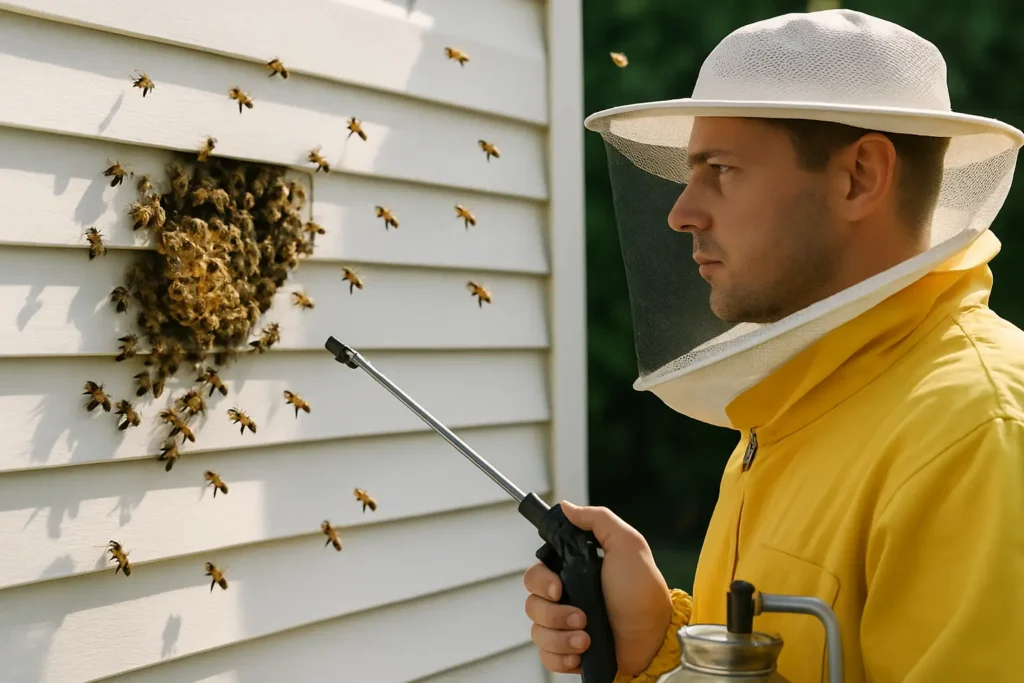
If you’re seeing a steady stream of insects going in and out of a wall, roofline, or tree cavity, that’s a sign of an established nest – and at that point plants won’t address it. The safest move is to identify the insect first, especially because humane options exist for bees.
If you’re in Los Angeles, Orange, Riverside, San Bernardino, or Ventura counties and suspect honey bees, a professional who specializes in live removal can protect both your household and the colony. Eli the Bee Guy focuses on safe, ethical bee rescues and long-term prevention, including entry-point repairs that help keep your peace and home restored – you can learn more at https://elithebeeguy.com/.
A realistic “plant plan” for a calmer patio
If your main goal is fewer wasps hovering where people sit, build a small cluster of pots rather than scattering plants across the yard. A couple of mint pots at the patio edge, basil near the grill, and lemongrass by the seating area creates a noticeable scent zone.
Then keep the area clean and dry, especially during late summer when wasps get more aggressive about scavenging. The result is usually not “zero wasps,” but fewer lingering visits – and that’s often what makes the yard feel comfortable again.
The most helpful mindset is simple: use plants to guide insect traffic, not to wage war on nature. When your yard is balanced and your home’s entry points are secure, you can enjoy the outdoors with a lot more calm – and the right insects can keep doing their job at a safe distance.