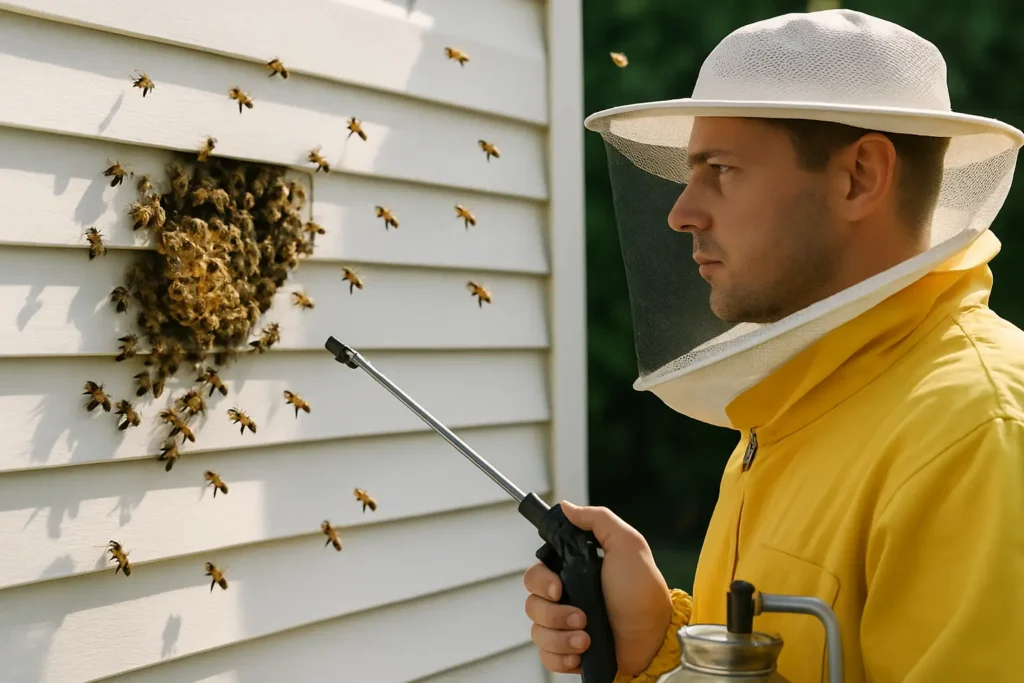
A honey bee swarm hanging from a citrus tree can look like a moving, humming blanket. A hive in a wall can feel scarier – especially if kids, tenants, or a severe allergy is in the picture. Either way, most people want the same outcome: everyone stays safe, the bees are rescued, and your property doesn’t become a repeat stop.
This is exactly where “how to safely relocate honey bees” gets tricky. Relocation is not just “move them somewhere else.” The safest relocations protect the people nearby, protect the bees, and prevent the colony from returning or another colony moving into the same scent trail.
First, confirm what you’re dealing with
Homeowners often call everything that flies and stings “bees,” but the plan changes depending on the insect. Honey bees are typically golden-brown and fuzzy, and they tend to forage calmly from flowers and water sources. Wasps and yellowjackets look sleeker, behave more aggressively around food and trash, and often nest in the ground or under eaves.
If you’re seeing a temporary cluster outdoors (a “ball” of bees on a branch, fence, or patio furniture), that’s usually a swarm. Swarms are often in transit and may move on within hours to a couple of days. If bees are actively flying in and out of a crack in siding, a roofline gap, a utility box, or a wall vent, that’s more consistent with an established hive – and that’s when relocation becomes a true removal and extraction job.
It also matters because a swarm can sometimes be safely captured by a trained beekeeper. A hive in a structure may require opening materials, removing comb and honey, and then repairing entry points to keep “peace and home restored.”
Decide if this is a DIY situation or a professional one
There are times when the most humane option is also the most practical: call a professional who does live removal and relocation. If any of the situations below apply, treating this like a weekend project can put you and the bees at risk.
If the bees are inside a wall, attic, chimney, soffit, or crawlspace, relocation usually requires a full extraction. Leaving comb behind can cause honey leakage, ants, roaches, stains, and lingering odor that attracts new bees. If the colony is high up on a ladder line, near power, or over a public walkway, the fall risk alone makes it a no-go for DIY.
And if anyone on the property has a history of anaphylaxis or carries an epinephrine auto-injector, safety has to lead. Even “gentle” honey bees can sting when they feel the colony is threatened.
How to safely relocate honey bees: the safe path for a swarm
A swarm is the scenario people picture when they imagine relocation. The bees are usually gorged on honey, focused on protecting their queen, and not yet defensive about comb or brood. That said, “usually calm” is not the same as “safe to handle.” Your goal is to reduce stress, reduce traffic around them, and avoid forcing them into defensive behavior.
Start by giving the swarm space. Keep kids and pets indoors, and set a buffer zone of at least 30 feet if possible. Don’t spray water, foam, or chemicals. Don’t bang on the branch, rev a mower nearby, or try to “smoke them out” with a backyard fire pit. Stress and vibration are common triggers.
Next, think about timing. Swarms are easiest to handle in the cool of early morning or near dusk when flight activity slows. Hot mid-day sun can increase agitation and makes protective gear more necessary.
If you are not trained and equipped to capture a swarm, the safest action is often to monitor from a distance and schedule a live removal. A qualified bee removal specialist can collect the cluster into a ventilated box, confirm the queen is captured, and transport the swarm to a vetted apiary so the colony can rebuild naturally.
If you are working with a beekeeper who plans to capture the swarm, expect them to use a proper bee suit and veil, gloves, and a dedicated container designed for ventilation and transport. A humane capture is calm and deliberate, not rushed. A good sign is that the beekeeper prioritizes getting the queen secured rather than scattering the cluster.
Relocating a hive in a structure is a different job entirely
Once a colony has built comb inside a wall, relocation is no longer a simple capture. It becomes a removal, a cleanup, and a prevention plan.
Here’s why: honey bees don’t just “live” in a cavity. They build wax comb that holds brood (developing bees), honey, and pollen. If you remove only the adult bees and leave comb behind, you haven’t truly relocated the colony. You’ve separated the bees from their developing young and left behind an attractant.
A humane relocation keeps the colony intact as much as possible. That usually involves carefully opening the structure at the right access point, removing comb in sections, securing brood comb into frames when feasible, and placing the bees into a hive box so they can continue caring for their queen and brood.
Then comes the part many people skip: the cavity must be cleaned and sealed. The scent of wax and honey can linger and invite new bees. Entry-point repair is not an “upsell.” It’s what makes the solution permanent.
Safety basics that protect people and bees
Whether you’re dealing with a swarm outside or a hive that needs professional extraction, a few principles reduce the chance of stings and prevent unnecessary harm.
First, avoid quick movements and vibrations near the colony. Bees interpret sudden disturbance as a threat. Second, manage your scents. Strong perfumes, cologne, hair spray, and heavily scented detergents can attract curiosity or trigger defensive behavior. Third, control the environment: close nearby doors and windows, and block off foot traffic so no one accidentally walks into a flight path.
If you’re waiting for removal, keep outdoor food and sugary drinks covered. In Southern California, drought and heat can push bees to seek water at pools, fountains, and pet bowls. Providing a shallow water source away from people – like a tray with pebbles so bees can land safely – can reduce their interest in your main living areas while you’re waiting.
The ethical side of relocation (and the honest trade-offs)
Most property owners want bees treated humanely, and that’s a good instinct. Still, ethical relocation has real constraints.
Sometimes a colony is accessible and healthy, and relocation is straightforward. Other times the hive is deep in a wall with limited access, the comb is extensive, or the structure is fragile. In those cases, the most humane choice may involve careful removal that still disrupts the colony temporarily, because leaving them in place isn’t safe for the occupants and doesn’t prevent future issues.
It also depends on the season. During peak nectar flow, colonies can rebound quickly after relocation. During colder or dearth periods, they may need more support at the receiving apiary. A responsible remover considers this and avoids “dumping” bees without a plan.
Finally, there’s the issue of pesticides. Using chemicals might seem like a quick fix, but it can create secondary problems: dead bees in walls, contaminated honey, and a cavity that still needs cleanup and sealing. Humane relocation aims to rescue the colony, not simply stop the activity for a few weeks.
What to expect from a responsible bee relocation service
If you’re hiring help, you should feel informed and protected, not pressured. A responsible provider will ask where the bees are entering, how long you’ve noticed activity, whether anyone has allergies, and whether there’s been prior treatment on the site.
They should explain whether your situation looks like a swarm capture or a full hive extraction. They should also talk about prevention – specifically, how they plan to repair or advise on sealing entry points so another colony doesn’t take over the same cavity.
If you’re in Los Angeles, Orange, Riverside, San Bernardino, or Ventura County and want a humane, live relocation approach paired with entry-point repairs, you can reach out to Eli the Bee Guy for safe removal that prioritizes bees rescued and peace at home.
While you’re waiting: what not to do
People usually get into trouble trying to “encourage” bees to leave. A few common moves can escalate risk fast.
Do not plug the entrance of an active hive. Trapping bees inside can force them into living spaces, and overheated colonies can become more defensive. Do not spray soapy water, insecticide, or expanding foam into a wall void. Even if activity slows, you’re left with comb, honey, and dead bees where you can’t reach them.
Avoid smoke from improvised sources. Beekeepers use smoke carefully and sparingly to manage behavior, but household smoke attempts often create heat, fire risk, and panic – for everyone involved.
After relocation: keep bees from coming right back
Relocation is only “done” when your property stops advertising itself as a perfect bee cavity.
For swarm situations, you’ll want to remove any lingering attractants and watch for scouting bees for a few days. A small number of bees investigating the area is normal, but steady traffic to the same crack or vent suggests there’s an inviting cavity.
For hive removals, sealing matters. Gaps around rooflines, damaged stucco, open weep holes that lead into voids, and poorly screened vents are common entry points. Repairs should be paired with cleanup of wax and honey residue when accessible, because scent is a powerful homing signal.
If you’re managing a commercial property, it’s worth adding periodic exterior inspections in warm months. Catching an entry point early can prevent a full-scale hive from establishing inside a wall.
A calm, humane relocation is possible in many cases, but the safest choice is the one that fits your exact situation. Give the bees space, protect the people around you, and choose a plan that ends with a repaired home and a colony that can thrive somewhere it’s truly welcome.