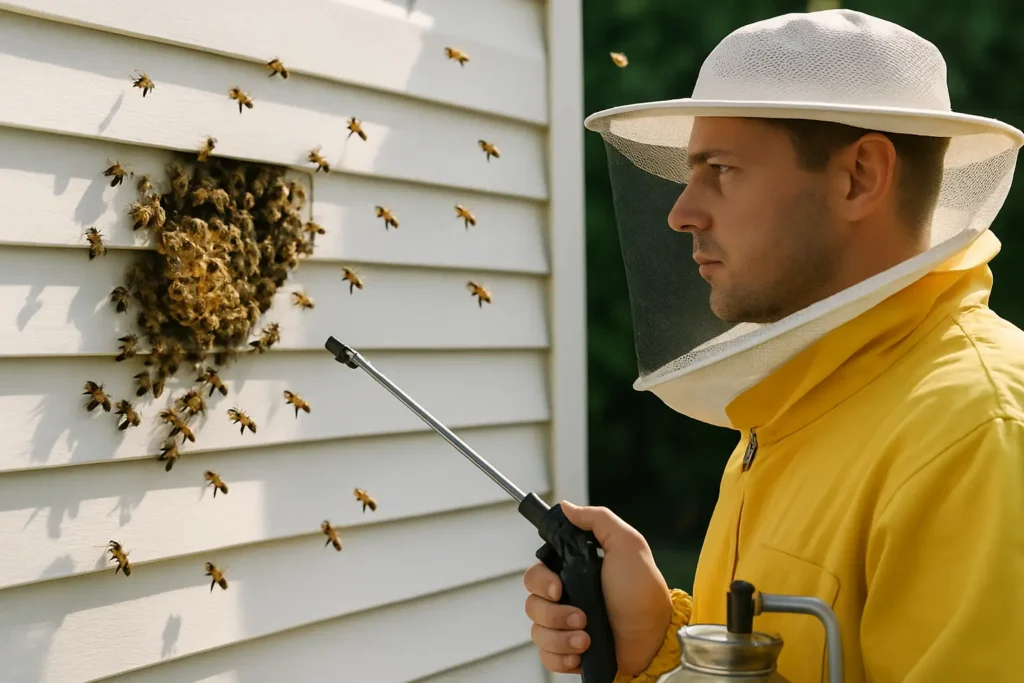
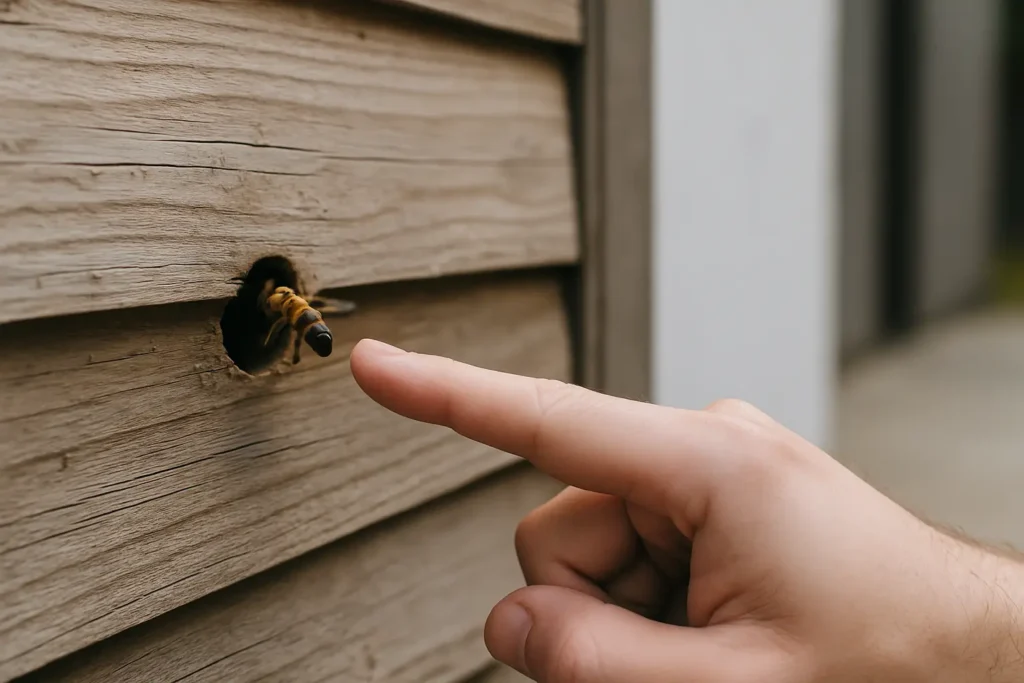
You hear it first as a low, steady buzz behind a wall. Or you step outside and see a swirling cloud gather on a tree branch. In Southern California, a bee problem can go from “Is that normal?” to “We need help now” in a single afternoon – especially if kids, tenants, customers, or anyone with allergies is nearby.
When you start calling around, the quotes, timelines, and promises can sound wildly different. Some companies talk about “spraying and being done.” Others insist every job is a “cut-out” even when it is not. The safest way to choose well is to ask better questions – the kind that reveal whether you are getting a humane removal, a real fix, and peace and home restored.
Best bee removal company questions answered – what to ask first
The fastest clarity usually comes from three early questions: Are these honey bees or something else? Is there an established hive in a structure or just a swarm resting? And what is the immediate safety risk right now? A solid provider will slow the conversation down long enough to sort those pieces out because the right approach depends on them.
If a company tries to give a firm price or a one-size-fits-all plan before asking where the bees are located, how long they have been there, and whether anyone has been stung, that is a signal to be cautious. Bee work is not mysterious, but it is situational.
Are these actually bees – and does it change the plan?
Yes. Honey bees, yellowjackets, paper wasps, and bumble bees behave differently, and responsible removal starts with correct identification. Honey bees are typically the priority for live rescue and relocation because they are essential pollinators and can often be removed humanely.
If you are seeing smooth, slender insects darting in and out of a ground hole, that is usually not honey bees. If you see a tight ball of bees hanging calmly on a branch, that is often a swarm that may move on, but it still needs careful handling to keep people safe and to protect the bees.
A good company will ask for photos or short video when possible. That simple step prevents misdiagnosis and helps the crew arrive with the right equipment.
What is the difference between a swarm and a hive in a wall?
A swarm is a temporary cluster of bees resting while scout bees search for a new home. Swarms can look dramatic, but they are often less defensive because they are not guarding brood or honey stores. Timing matters, though. If a swarm finds a cavity in a wall, soffit, roofline, or chimney, it can become an established colony quickly.
An established hive in a structure is different. You may notice a steady “bee traffic” line, staining near an entry point, or buzzing that is louder indoors on warm afternoons. At that point, removal is not just about getting bees out – it is about removing comb, honey, and brood so the odor and residue do not attract a new colony.
Do you use chemicals or do live removals?
This is one of the most important questions to ask if you care about humane outcomes and long-term results. Chemical treatments can kill bees without solving the underlying problem, especially inside structures. Dead bees, leftover comb, and honey can create odor, staining, secondary pests, and re-infestation.
Live bee removal focuses on safely extracting bees and comb and relocating them to an apiary that supports natural bee behaviors. It is more work, but it aligns with ethical treatment and tends to produce a cleaner, more permanent fix when paired with proper repairs.
It also comes with a real-world trade-off: if a colony is deeply embedded in a hard-to-access structure, live extraction may require opening sections of drywall, siding, or soffit. A professional should explain that upfront, including how they will protect your property and what repairs are included.
What does “full hive extraction” actually include?
Some companies use that phrase loosely. What you want to hear is that they will remove the bees and also remove the comb, brood, and honey where accessible, then clean and prep the cavity. Leaving comb behind is one of the most common reasons bees return.
A thorough extraction typically involves careful access, removing comb from studs or rafters, collecting bees, and addressing residue. If the job is in a wall, the question is not only “Can you get the bees?” but “Can you leave the space in a condition that will not invite the next colony?”
Will you repair the entry point so bees do not come back?
Entry-point repair is where “removal” becomes “solution.” Bees are excellent at finding gaps: roof intersections, vents, eaves, fascia boards, and tiny cracks in stucco transitions. If the access point is not sealed properly, the smell of old comb can attract new bees, sometimes within the same season.
Ask what repairs are included and what is considered outside the scope. Sometimes sealing is straightforward. Other times, it requires carpentry or coordination with a roofer. A trustworthy provider will be clear about what they can do on-site and what they recommend if larger construction is needed.
How quickly can you respond – and what should we do while we wait?
If there is an active defensive colony near a doorway, a school, a loading area, or a public-facing business, response time matters. But “rush” should not mean “reckless.” The best providers balance urgency with safety planning.
While waiting, the safest advice is usually to keep distance, keep pets and kids inside, and avoid vibrations near the colony (mowers, leaf blowers, banging doors). Do not spray aerosol insecticides into a wall void. That can agitate bees and drive them deeper into the structure.
If someone in the home has a history of severe allergic reactions, say so immediately. That changes the risk profile and should influence the company’s response plan.
How do you protect tenants, customers, and workers during removal?
For commercial properties and multi-unit buildings, the question is not just how the bees are handled, but how people are managed. The best teams will discuss scheduling, setting a safe perimeter, and minimizing foot traffic near the work area.
It can depend on the location. A hive near a busy entry may require after-hours work. A colony in a courtyard might be handled mid-day if the area can be closed off. What you are listening for is a calm, organized plan that respects both safety and operations.
What factors affect cost – and what is a fair estimate process?
Bee removal pricing is driven by access and complexity more than by “how many bees.” A swarm on a low branch is often simpler than a colony inside a two-story roofline.
Expect cost to reflect things like how high the entry point is, whether cutting into a wall is required, how much comb needs to be removed, and what repairs and sealing are included. It is reasonable for a company to give a range from photos and then confirm on-site.
Be wary of quotes that sound too good to be true without seeing the situation. Cutting corners often looks like leaving comb behind, skipping cleanup, or not sealing the entry point. That is when the problem returns and you pay twice.
Where do the rescued bees go?
If you are seeking a humane option, ask this directly. “Relocation” should mean the bees are moved to a vetted apiary or responsible beekeeping setup – not dumped in an unknown location where they cannot survive.
Also ask what happens if the colony is not a good candidate for relocation due to disease concerns or extreme aggression. A straight answer here is a sign of professionalism. It is not common, but it can happen, and you want someone who will prioritize safety and follow responsible practices.
How do you handle Africanized honey bee risk in Southern California?
In parts of California, defensive behavior can be a concern. You do not need to panic, but you do need a company that understands local conditions and can recognize when a colony’s behavior requires extra precautions.
Listen for practical safety measures: protective gear, controlled access, and a plan to prevent bees from spreading through the structure during removal. A good provider will not sensationalize this topic, but they will not dismiss it either.
What guarantees do you offer – and what is not guaranteed?
No ethical company can guarantee that bees will never fly through your yard again. Bees forage widely. What can be more reasonably addressed is whether the removed colony will re-occupy the same cavity.
Ask whether their warranty covers re-entry at the same site and what conditions apply. If sealing is recommended but declined, that may affect coverage, and that is fair. Guarantees should match reality and be written clearly.
How do I choose the best bee removal company near me?
The best choice is usually the company that treats bees as worth rescuing, treats your property as worth protecting, and treats your safety as non-negotiable. That shows up in how they communicate: they ask questions, explain trade-offs, and do not promise shortcuts.
If you are in Los Angeles, Orange, Riverside, San Bernardino, or Ventura County and want a humane approach that includes live removals, full hive extractions, relocations to vetted apiaries, and entry-point repairs, you can contact Eli the Bee Guy for a straightforward plan focused on bees rescued and peace and home restored.
A final thought to keep you grounded: the goal is not just fewer bees today. The goal is a safe property tomorrow – and a solution that respects the bees enough to remove them the right way.