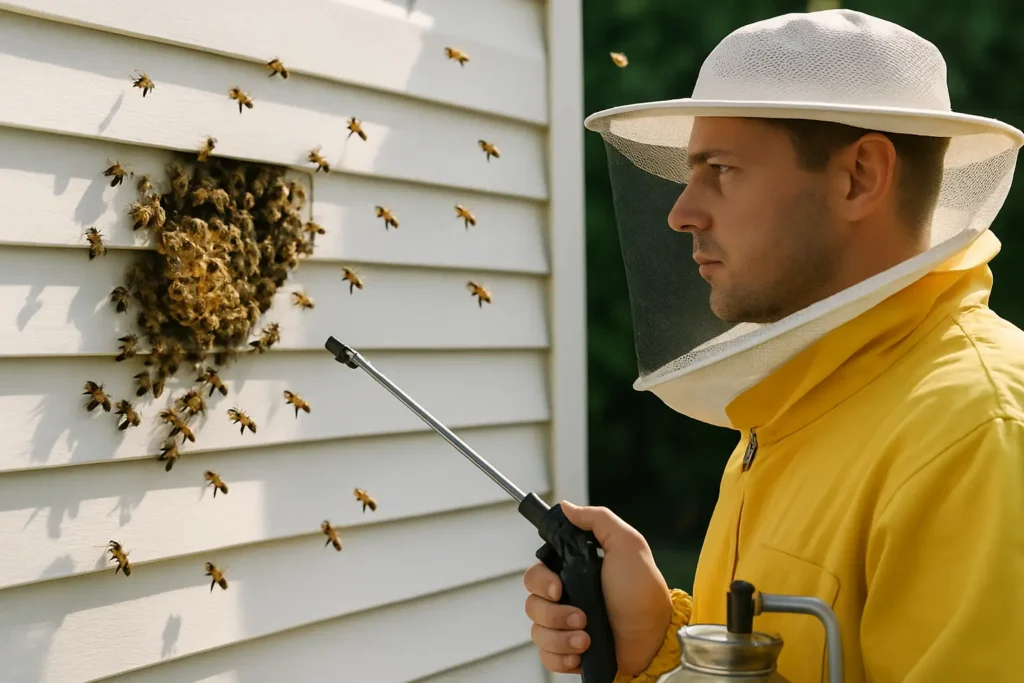
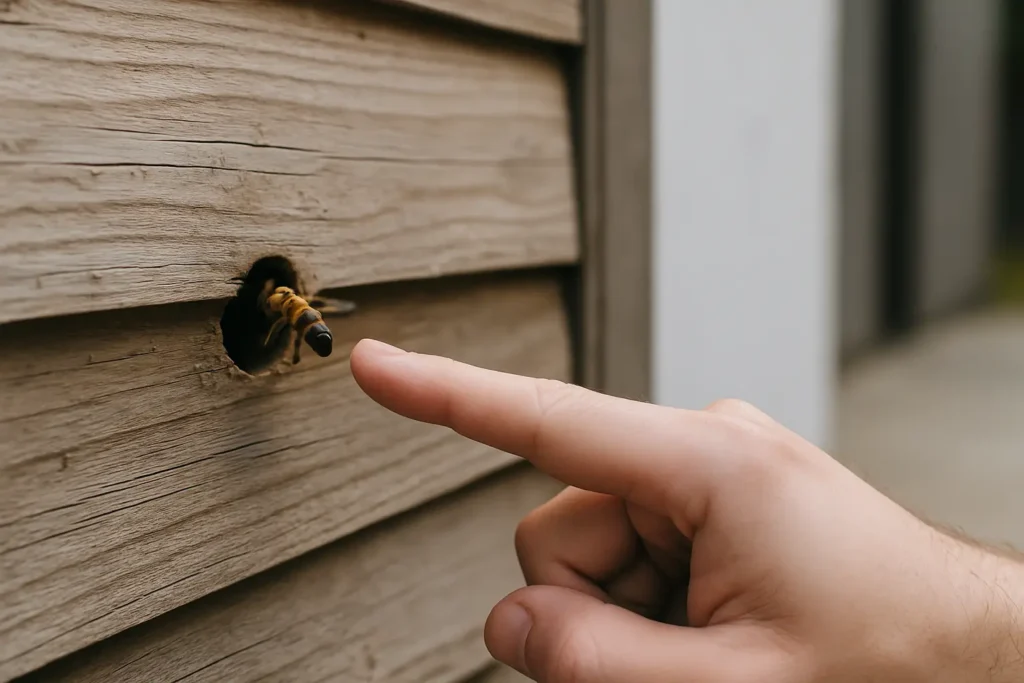
If you can hear a faint hum in a wall, soffit, or roofline, your first instinct is usually to ask one question: “How much will it cost to get rid of them?” The more expensive question often shows up later, when the bees are gone but the smell, stains, and sticky mess start to spread.
That is why homeowners and property managers in Southern California end up weighing bee removal cost vs repair cost. Both matter. One solves the immediate safety issue. The other determines whether your home is truly restored – dry, sealed, and protected from a repeat occupation.
Bee removal cost vs repair cost: the real difference
Bee removal cost is the price to safely get bees out of the structure and prevent them from continuing to occupy that space. In a humane live removal, it usually includes locating the colony, opening the access area, removing bees and comb, and relocating them.
Repair cost is everything it takes to put the building back the way it should be and to keep the next swarm from finding the same invitation. That can include patching and finishing the opening, sealing entry points, replacing damaged materials, and sometimes addressing secondary issues like honey contamination, odors, or stains.
They are connected, but they are not the same line item. A removal can be done without meaningful repairs. It might look “cheaper” upfront, but it is often the kind of cheap that comes back.
What drives bee removal pricing in Southern California
There is no single flat rate that fits every hive, because every structure creates a different level of access and risk. In practice, the biggest drivers are how hard it is to reach the colony and how much work it takes to remove it cleanly.
Access and height change everything
A hive in a low fence post is a very different job than a hive inside a second-story wall under stucco. If ladders, roof access, or careful opening of finished surfaces are required, the labor and safety precautions increase.
Multi-unit buildings and commercial sites can also add complexity. Coordinating access, working around tenants, and protecting public walkways can take more time than the removal itself.
Hive size and how long it has been there
A small, newly established colony is typically faster to remove. A colony that has been building comb for months can mean more honeycomb, more bees, and more cleanup. Larger colonies also tend to have more stored honey – and that matters for what happens after the bees are removed.
Humane live removal vs chemical “knockdown”
Some companies offer chemical treatment or a quick kill-and-seal approach. It may appear less expensive at first glance, but it often pushes costs into the repair column later.
When bees die inside a wall and the comb is left behind, you can end up with melting honey, fermented odors, and staining that can migrate into drywall and framing. Those problems do not politely stay in one spot. They spread slowly, and they are hard to ignore once they start.
A humane removal that includes full comb extraction is more work up front, but it is designed to leave you with a structure that can actually be restored.
What drives repair cost after bees are removed
Repair costs range from simple sealing to significant reconstruction, depending on what had to be opened and what the bees did to the space.
The size of the opening you have to make
The cleanest removals usually require opening the exact area where the comb is attached. That might be a small section of siding or soffit, or it might be a larger cut into drywall or stucco to reach the full colony.
Here is the trade-off: a smaller “access hole” can sound appealing, but if it prevents full comb removal, you may pay later in cleanup and odor control. The best outcome is not the smallest cut. It is the right cut that allows complete extraction and proper closure.
Finish work: stucco, drywall, siding, paint
The structural repair is one part. Matching finishes is another. Stucco blending, paint matching, and texture work can add time and cost, especially on older homes with sun-faded paint or specialty finishes.
Commercial properties may have additional requirements for appearance standards or tenant expectations, which can influence the scope of repairs.
Secondary damage from honey and wax
Even with a live extraction, honey can seep into insulation or framing if the colony has been there long enough. If comb was left behind from a prior attempt, that risk increases.
Honey attracts other pests. Ants and roaches are common. In some cases, rodents are drawn in as well. If you are comparing bee removal cost vs repair cost, this is where the repair side can climb quickly – because you are no longer dealing with bees alone.
Preventing re-occupation
Bees are excellent scouts. If a cavity smelled like a hive recently and the entry point is still available, it can be reoccupied.
Repair cost is not just “cosmetic.” Sealing the entry point, addressing gaps, and making the cavity less inviting is what protects your investment. When this step is skipped or rushed, people often end up paying for removal twice.
The common scenario: removal looks affordable, repairs surprise you
Many calls start the same way: “I just need them gone.” That is understandable, especially if someone in the building has an allergy or the bees are near a walkway.
But once a colony is in a wall, you are dealing with two jobs:
First job: remove the bees and the comb so the structure is no longer functioning as a hive.
Second job: restore the building envelope so it is sealed, weather-tight, and unattractive to the next swarm.
If you only pay for the first job, you can be left with a cavity that still smells like a hive, a patch that is not fully sealed, or comb residue that continues to cause issues.
When repair cost can exceed removal cost
Repairs can outpace removal when the hive is high, the exterior is hard to match, or the colony has been active long enough to saturate materials.
A few “it depends” situations show up often in Southern California homes:
If the hive is behind stucco, repairs may involve lath work and careful blending to avoid a visible patch.
If the hive is in a roofline, you may be repairing fascia boards, soffits, or vents – areas that also protect against rain intrusion and dry rot.
If honey has soaked insulation, you may need insulation replacement and odor control steps before closing the cavity.
None of these mean you did something wrong as a homeowner. Bees choose cavities that are dry, protected, and hard for predators to reach. Unfortunately, those are often the same cavities that are hardest for humans to access.
A practical way to compare quotes (without getting burned)
When you are comparing providers, the lowest number is not always the lowest cost. The goal is peace and home restored, not “quiet for now.”
Ask whether the quote includes full comb removal. If it does not, ask what happens to the honey and wax left behind.
Ask what “repairs” means in their scope. Some quotes mean “we stuff a gap and leave.” Others mean “we close the opening properly and address the entry point so it does not happen again.” Those are very different outcomes.
Ask how they handle re-entry prevention. Sealing the exact entry point matters, but so does checking nearby gaps that scouts may use next.
Ask what the plan is for finishing. You might be fine with a functional patch in a utility area. For a front-facing wall on a commercial property, you may need a cleaner finish. Making that expectation clear upfront prevents surprises.
Why humane removal often reduces long-term repair risk
Ethical, live bee removal is not just about rescuing bees – although that matters. It also tends to produce cleaner results for the structure.
When bees are removed alive and the comb is extracted, there is far less organic material left behind to melt, ferment, stain, or attract pests. That can mean fewer callbacks, fewer odor complaints, and fewer escalating repairs weeks later.
It is also the approach most aligned with how many Californians want to live: protecting people and preserving pollinators at the same time.
If you want a removal that prioritizes both safety and humane relocation, Eli the Bee Guy focuses on live removals, full hive extractions, and entry-point repairs designed to keep bees from moving right back in.
The decision that saves money most often
If you are stuck deciding how much to spend, prioritize completeness over speed. A thorough removal with proper closure and entry-point repair is usually the most cost-stable path, even if it is not the cheapest estimate on day one.
If you are managing a property, that stability matters even more. Tenants remember the second swarm, the lingering smell, or the sticky stain that appears after a “quick fix.” A complete solution protects your building and your reputation.
The best moment to control repair cost is before the wall is closed again. Once everything is patched and painted, discovering leftover comb or a missed entry point becomes a much more expensive kind of learning.
Peace in a home or on a property is not just the absence of buzzing. It is the confidence that the bees were rescued, the structure was restored, and the same problem is not waiting for the next warm spring day.