The hidden damage bees can cause to roofs, attics, and walls: real job examples and repair insights
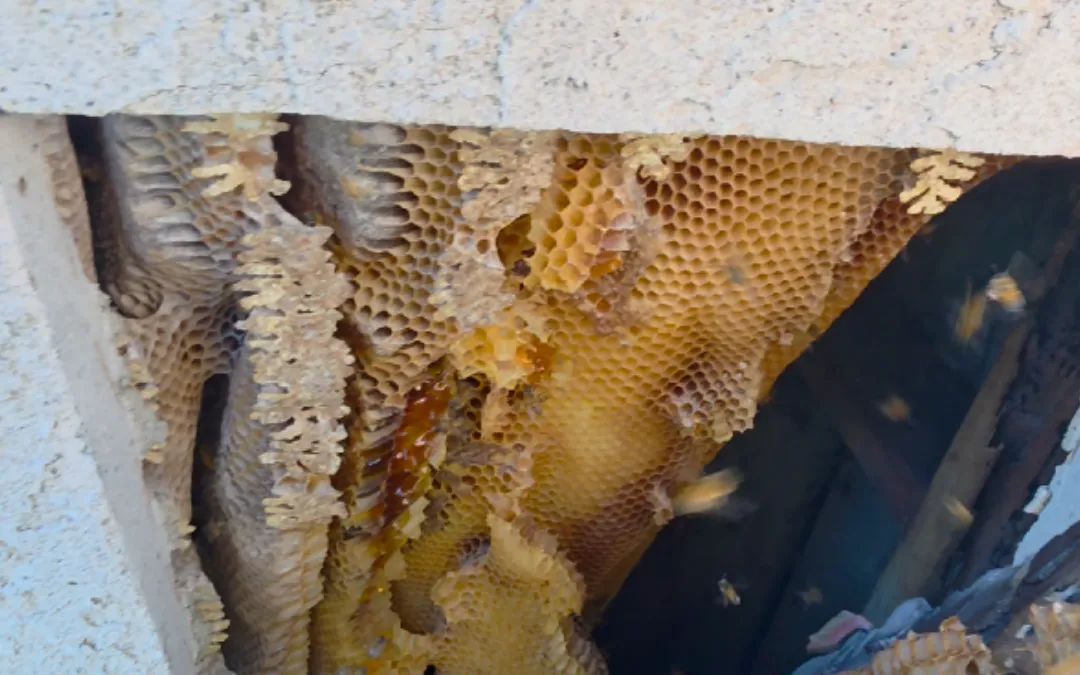
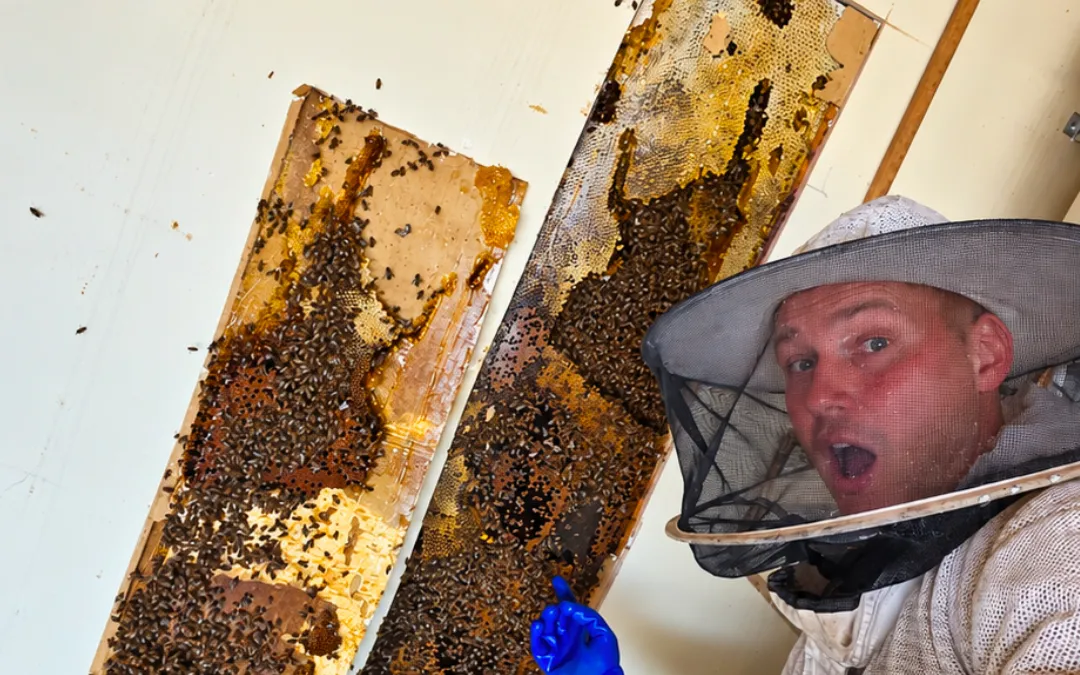
I still remember prying back a loose soffit and finding a honeycomb the size of a suitcase tucked into the eave, with honey already staining the insulation and creeping toward the ceiling drywall. In this article I go through how honeybees and carpenter bees cause that kind of hidden structural damage, why catching it early saves money, and how a careful cleanup and repairs fix the building without inviting the same problem back. I'll cover the usual entry points, the things you can see and hear that tell you a hive is growing, how honey and wax hurt rafters, insulation and drywall through weight and moisture, and the realistic repair options, from a simple patch up to reinforcing studs. There are checklists, repair cost comparisons and anonymized job summaries, the kind of detail a lot of providers leave out. Last, I explain how humane removal with repairs planned alongside it keeps long-term costs and the chance of bees coming back down, and where to get a free inspection if you think you have an active hive. The point is to help you spot trouble early and pick the right fix.
What's in here:
- How honeybees and carpenter bees cause hidden structural damage.
- Why catching an infestation early saves money.
- How cleanup and repairs fix the building without inviting bees back.
- The usual entry points and the clues that a hive is developing.
- How honey and wax damage rafters, insulation and drywall through weight and moisture.
- Realistic repair options, from a simple patch to reinforcing studs.
- How humane removal with planned repairs lowers long-term costs and the risk of bees returning.
What are the common signs and entry points of bee infestations in roofs, attics, and walls?
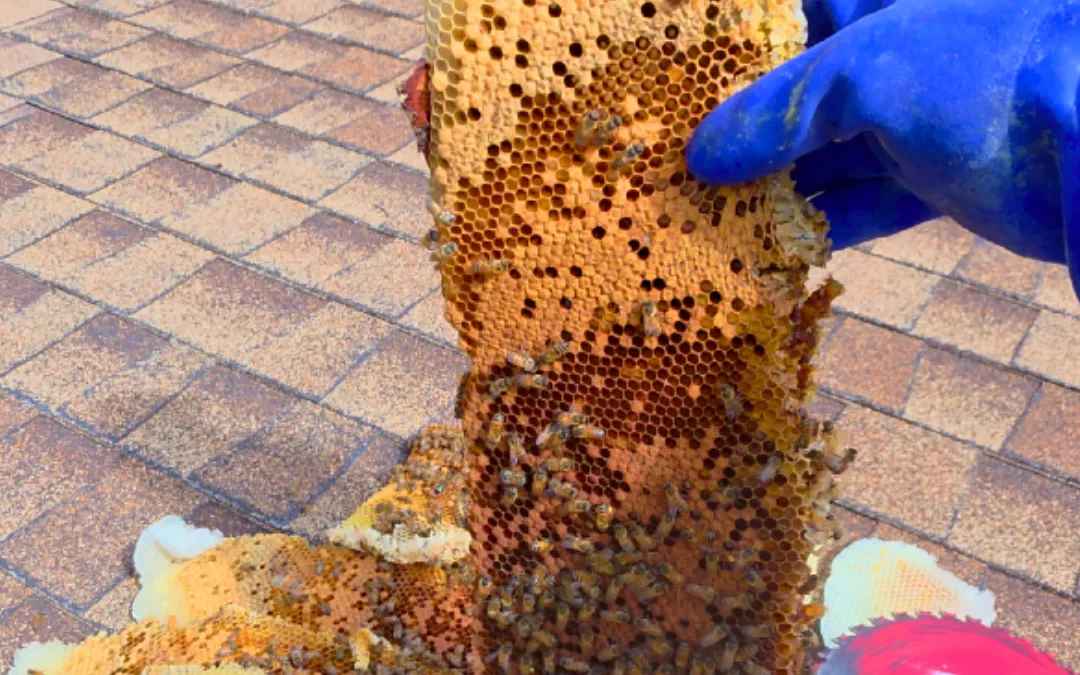
Bees go for small gaps that lead into sheltered cavities. Soffits, eaves, roof vents, damaged flashing, wall cracks and chimneys all make good entry points, because behind them is dry, protected space to build comb. It works the same way every time: a tiny opening leads into a void, a colony moves in, and as the hive grows, the weight and the honey seeping out start to show. Catching it early usually saves a lot of time and money, because a small hive is cheaper and easier to take out and less likely to cause mold or structural failure. Here are the usual entry points and warning signs, to help homeowners decide when to take a closer look or call someone.
Common entry points and signs to look for:
- Gaps in soffits and eaves, where you'll see bees coming and going from tiny openings.
- Roof vents and gaps in flashing, sheltered seams and vent cavities bees will use.
- Cracks in walls and damaged siding, narrow openings that lead straight into the wall cavity.
- Buzzing you can hear, and bee traffic focused on one spot. Repeated flights to the same place usually mean a nest is close by.
- A sweet, fermented smell and yellow-brown stains, which are strong signs of honey seeping behind a surface.
Use these as a checklist to decide whether to look into it further or call a professional before the damage gets worse.
How do bees enter and nest in roofs, attics, and wall cavities?
Bees get in through hairline gaps, old caulk that's failing, unsealed vents and damaged soffits. Once inside, they want a cavity that stays dry and out of the rain. A colony often starts small, just a few thousand bees, and builds comb outward into whatever space it finds between rafters or studs. Over weeks and months that comb fills with honey and wax, and the weight starts pressing on the framing, insulation and drywall. If you know how a nest grows, you know which spots on the house to check first, and you're less likely to get a surprise like a ceiling coming down when someone pulls a panel.
What are the key signs of bee activity in your home’s structure?
Look for these signs of bee activity:
- Bees flying back and forth to one spot.
- Steady buzzing inside walls or ceilings.
- Stains on the outside siding under the eaves.
- A sweet, fermented smell in enclosed areas, which means honey is fermenting.
- Soft spots in the ceiling, sagging drywall or damp insulation (signs on the inside).
Catch these early and the comb stays manageable, and ants and rodents are less likely to move in after it. When you see several of these at once, it's time to get a professional inspection before the damage spreads where you can't see it.
How do bees cause structural damage to roofs, attics, and walls?
Bees damage buildings in three main ways. The weight of built-up comb makes framing bend and sag. Honey seeps into wood and drywall and leads to rot and mold. And carpenter bees tunnel through wood, taking material out of structural members. Put together, those weaken the framing, lower the insulation's R-value, and bring on moisture and pest problems that make repairs more complicated. Knowing which kind of damage you have tells you whether the job needs a simple patch or real structural work. The table below sums up the usual causes and what they do to roof and attic parts right away.
Here's how each kind of damage shows up in the roof and attic.
| Component Affected | Damage Mechanism | Typical Effect |
|---|---|---|
| Honeycomb in rafters | Added static weight | Rafter sagging or joint stress |
| Honey seepage under shingles | Moisture penetration | Deck staining and wood rot |
| Attic insulation | Saturation with honey/wax | Reduced R-value and odors |
| Ceiling drywall | Honey migration | Staining, softening, collapse |
What roof damage results from honeycomb weight and honey seepage?
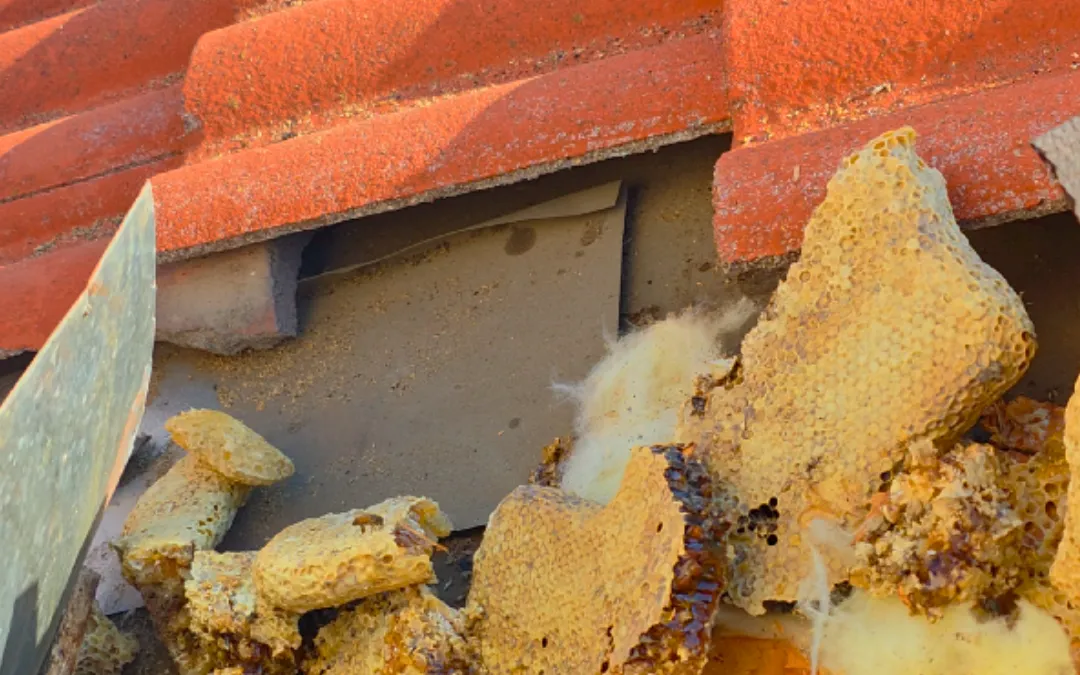
Comb is heavy. It pushes down on rafters and joints and can cause sagging you can see, especially where the joists were undersized or already under stress. Honey runs along seams and penetrations and can end up under the shingles or in the roof deck, where the moisture speeds up rot and mold. In the short term that means temporary shoring and getting the heavy comb out. Longer term, a contractor may need to sister rafters, replace sheathing and reseal flashing. The earliest signs to watch for are a sag in one spot on the roof, wet stains on the attic framing, and honey stains on the outside of the eaves.
How does bee infestation affect attic insulation and ceiling stability?
Insulation soaked with honey and wax stops insulating and starts growing mold, so your energy bills go up and the air inside can get worse. Heavy, soaked insulation also weighs down on the ceiling panels under it, which raises the risk of sagging or a partial collapse if there's comb sitting above the ceiling. Cleanup usually means pulling out all the contaminated insulation, deodorizing the area and putting in new insulation so you get the R-value back and the mold risk is gone. Dealing with the insulation and ceiling early keeps the repairs smaller and means less leftover honey drawing in pests.
What types of damage do bees cause inside walls and how are they repaired?
Inside walls, honeybee comb can fill the cavity and leak honey that stains and softens drywall and feeds mold. Carpenter bees bore tunnels that take wood out and weaken studs or siding. Those two problems get handled differently. Comb and honey have to be removed completely and the area cleaned in a way that's safe for mold, while tunneling often means replacing or reinforcing the damaged framing or siding. A good repair contains the mess, cleans it properly and fixes the structure so bees don't come back and the wood doesn't keep decaying. The table below lists common wall damage, the usual repair and rough cost ranges, to help you plan.
| Damage Type | Typical Repair | Estimated Cost Range |
|---|---|---|
| Honeycomb in cavity | Remove comb, clean honey, replace drywall & insulation | $400 to $2,000 |
| Drywall staining/softening | Cut out affected drywall, treat framing, replace panels | $300 to $1,200 |
| Mold from honey moisture | Mold remediation, HEPA cleaning, anti-microbial treatment | $500 to $3,000 |
| Carpenter bee tunnels | Replace or sister affected studs/siding, seal entry points | $250 to $1,800 |
How does honeycomb and carpenter bee tunneling damage drywall and wood studs?
Comb pushes against the drywall and puts moisture into the core, so it delaminates, stains, and eventually collapses once the gypsum goes soft. Carpenter bees cut clean tunnels through siding and studs, which takes out structural material and makes the wood more likely to bend under load. Both can get into wiring and insulation, which is an electrical hazard and costs you insulating value. In practice, a wall that fails from honey usually needs someone to open the cavity, get every bit of honey out and dry it in a mold-safe way. Tunneled studs sometimes need to be partly or fully replaced so the load is carried properly again.
What are the repair options for wall damage from bees?
Repairs start with taking the whole hive out and cleaning up all the honey so the moisture damage stops. After that comes drying, mold treatment if it's needed, and replacing insulation and drywall that's been ruined. Structural fixes run from drywall patches and new cavity insulation up to sistering or replacing studs and reinforcing framing where bees tunneled. Sealing the entry points and screening vents finishes the job and lowers the chance of bees coming back. For structural or mold work, call a licensed contractor. Small drywall touch-ups can go to a skilled handyman, but only after a professional has cleared the area.
How can professional bee removal prevent further damage and save repair costs?
A professional removal stops honey from piling up, cuts the mold risk and ends the energy loss from soaked insulation, so homeowners often save money by not having to repair the same thing again or watch it get worse. When it's done in order (inspection, humane removal, a thorough honey and wax cleanup, then planning the repairs) you need fewer trades and the whole fix takes less time. A pro will also spot hidden damage to framing or utilities that a homeowner might miss, which saves you an expensive surprise the next time you renovate.
The main steps, and what each one does for you:
- A full inspection, so no hidden comb gets missed and you get an accurate scope with no surprises.
- Humane extraction, which stops the moisture damage by getting the remaining honey and wax out.
- Cleanup and deodorizing, which cuts down on remediation by heading off mold and pests.
- Planning the repairs, which keeps costs and time down because nothing has to be fixed twice.
This article is about homes, but commercial buildings can take the same damage from bees or worse. Commercial bee removal services deal with the extra challenges of bigger buildings and try to keep disruption to the business as small as possible.
What is Eli the Bee Guy’s humane removal and repair process?
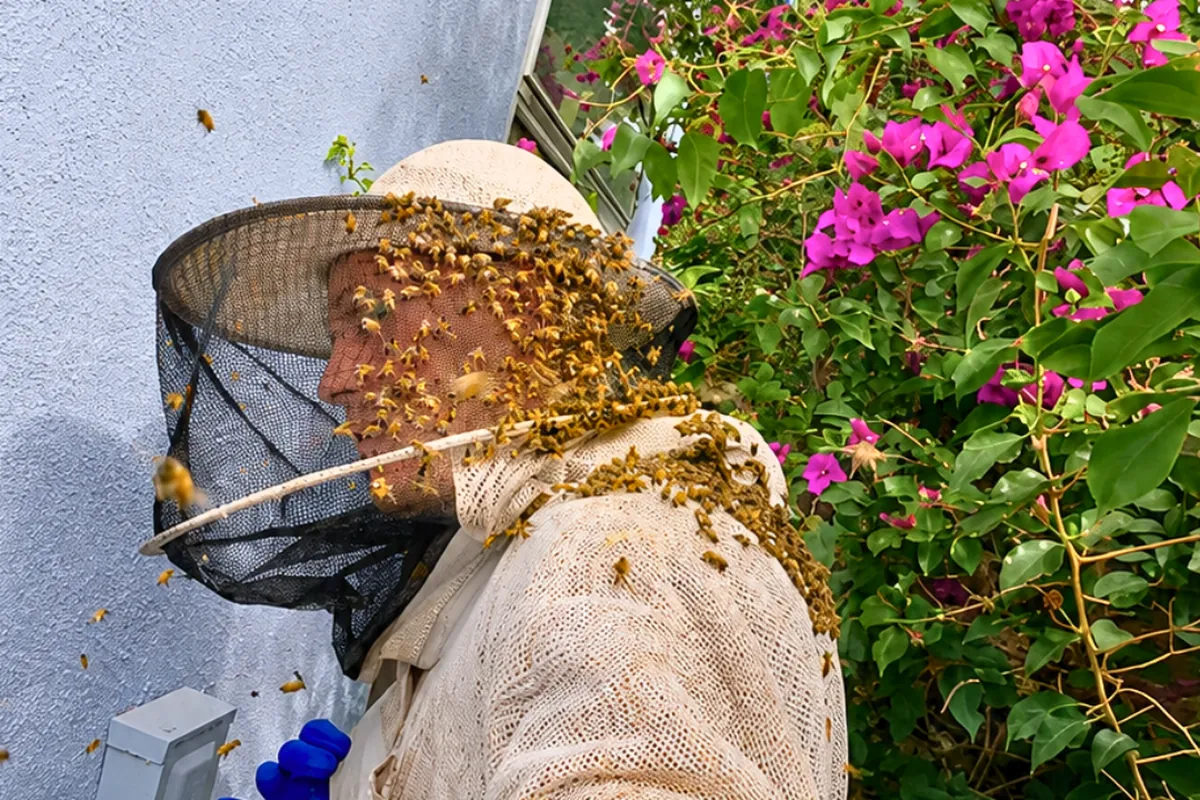
At Eli the Bee Guy, I start with an inspection aimed at finding the comb and seeing how much of the structure is affected. Then I remove the colony alive and relocate it to an apiary that will look after it, instead of exterminating it. After the extraction I clean out the honey and wax, tell you where insulation or drywall needs replacing, and seal the entry points so bees don't move back in. My repairs are patches, not rebuilds, and anything structural should go to a licensed contractor. I'm upfront about price with no hidden fees, the inspection and quote are free, and I can often get out the same day when it's urgent, including 24-hour help Monday to Saturday for life-threatening allergic emergencies. If you're in Southern California and want a free inspection or same-day service, request a quote through the contact options on the site.
What real job examples show successful bee damage removal and repairs?
Here are anonymized summaries of real jobs that show what fast professional work saved. More answers are on my Bee removal services FAQ page.
- Attic hive near Los Angeles County: The large comb came out before the ceiling collapsed. The insulation was replaced and a joist sistered, which avoided replacing the whole roof deck and saved thousands.
- Wall cavity honey in Orange County: Removing the comb and doing a mold-safe cleanup meant only some of the drywall and insulation had to be replaced, so there was less remediation than if it had been caught later.
- Carpenter bee tunnels in Inland Empire siding: Replacing the studs in that one area and reinforcing the siding stopped the wood loss and ended the ongoing structural weakening.
In each one, humane removal, cleanup right away and repairs aimed at the damaged spot stopped the damage from spreading, and the total cost came in lower than a partial or late fix would have.
Eli the Bee Guy is my business. I do humane live bee removal and relocation to apiaries that take care of the bees, safe non-toxic wasp control, and patch repairs across Southern California, including Los Angeles, Orange, Riverside and San Bernardino Counties. If you think you have active bees and want a free inspection or same-day service to stop the damage fast, request a quote or inspection and I'll give you an accurate scope and repair plan.
To deal with a bee infestation and keep the damage down, see the FAQs for bee removal services and:
- Call for a free inspection, and I'll come out and find any hidden comb.
- Choose humane removal. Live relocation takes the colony out and keeps the pollinators alive.
- Schedule the cleanup and repairs. Line up the cleanup, insulation replacement and any structural repair so the building is sound again.
Like these guides? Add Eli the Bee Guy as a preferred source on Google to see more of them in your search results.