You've got bees going in and out of a crack in your stucco, and the hardware store sells a can of spray that promises to kill them on contact. I understand why people grab it. If you want to know how to get rid of honey bees in a wall for good, though, spraying them is the one thing that almost always makes it worse.
Short answer: The right way to get rid of honey bees in a wall is live removal: a beekeeper opens the wall, takes out the bees and every piece of honeycomb, cleans the cavity and seals the entry. Spraying kills the bees but leaves comb, honey and dead brood behind to melt, stain, smell and attract pests and new swarms.
What happens if you kill bees in a wall?
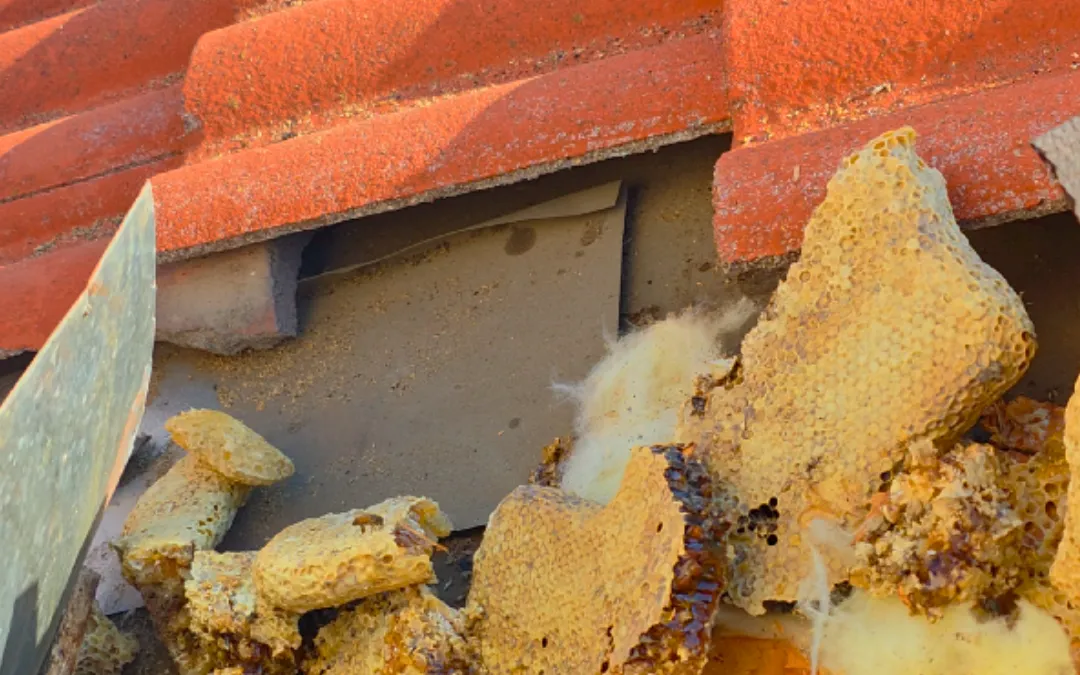
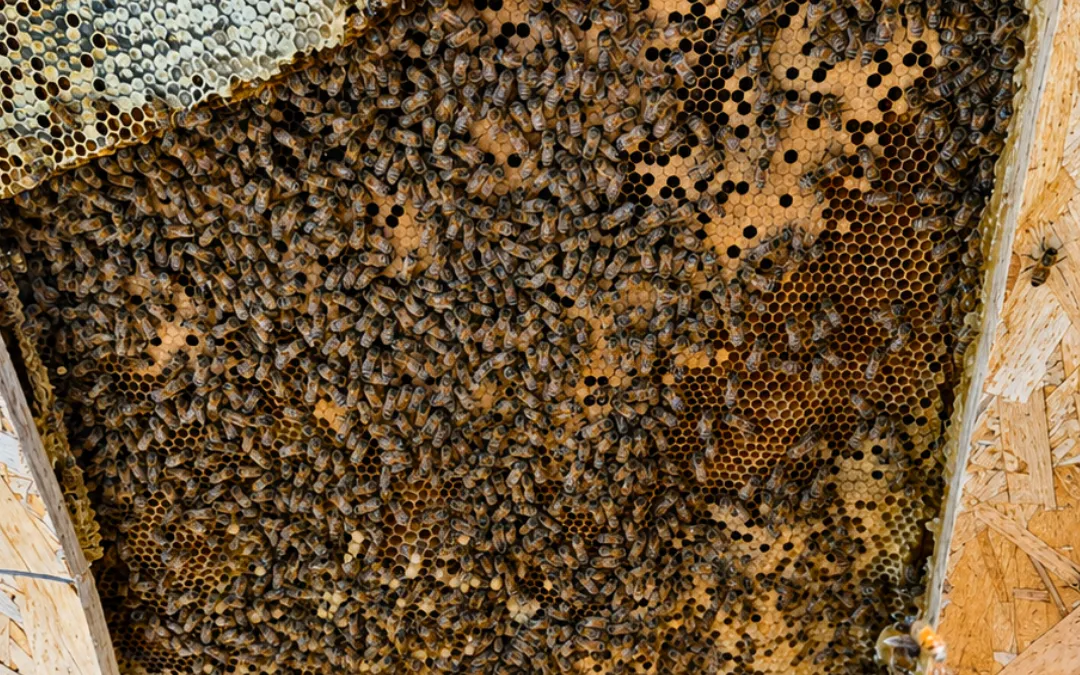
The bees are only part of what's in there. An established colony builds sheets of wax honeycomb filled with honey, pollen and developing young bees (brood). According to UC Riverside, a colony can hold up to about 10 pounds of bees, several pounds of larvae, the wax combs and up to roughly 100 pounds of honey.
Spray kills the bees, and everything else stays right where it is, inside your wall. This is what usually happens after that.
Honey leaks and stains
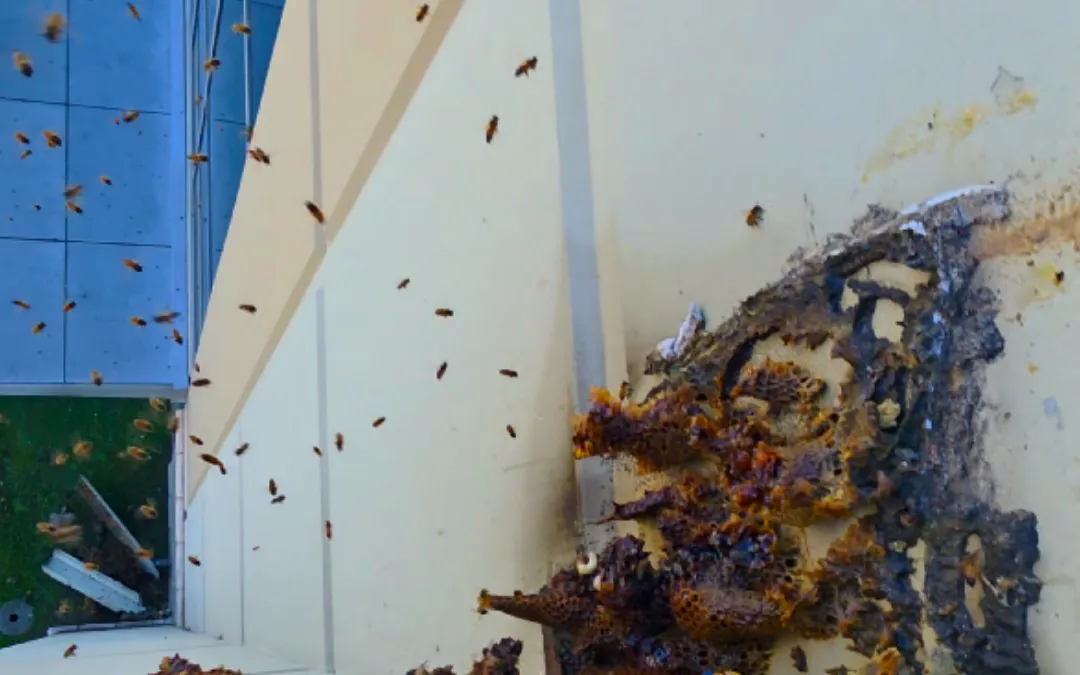
Once the bees are dead, nobody is tending the nest. UC Riverside notes that combs can melt or collapse and honey can seep through walls, baseboards and even between floors. Honey also pulls moisture from the air and can ferment. Extension experts at NC State and the University of Kentucky warn that this can discolor walls and leave permanent stains on interior surfaces.
Smells and scavengers
Pounds of dead bees and decaying brood inside a wall can leave lingering odors. The University of Kentucky lists wax moth larvae riddling the comb and scavengers like carpet beetles moving in. NC State adds ants and cockroaches drawn to the honey, and Louisiana State University's extension warns that leaking honey attracts ants, wasps and other animals that eat honey.
Robbing bees and new swarms
Most people don't see this part coming. Bees from other colonies may find the unguarded honey and rob it, and the old nest's scent doesn't go away. Both UC Riverside and the University of Kentucky note that the odor of an old nest can attract future swarms, so a sprayed wall can turn into a ready-made home for the next colony.
Why spraying bees in a wall often doesn't even work
Even before the cleanup problem, spraying is a poor way to kill a colony. The comb is built in parallel sheets, and UC Riverside points out that those combs act as barriers that keep insecticide from reaching the bees deep inside. The University of Kentucky's Entomology fact sheet explains that treating only the entrance may miss the nest entirely. The foragers die, but the queen and house bees can survive and the colony can recover.
Spraying can also drive agitated bees in the wrong direction. Kentucky's fact sheet warns against plugging the hole right after treatment because it can push bees into the living space. Bees looking for another way out can come through light fixtures, outlets and gaps around windows, especially at night when they're drawn to indoor lights.
The pesticide problem with killing bees in a wall
When a colony is treated with insecticide, the honey and wax are contaminated. UC Riverside says insecticide makes the honey inedible and dangerous to other bees, and the University of Kentucky says comb and honey from a treated colony should never be salvaged.
That causes two problems. If bees from other colonies rob that honey, they can carry it home. And you now have contaminated comb and honey sitting in your wall that still has to come out. You'll still have to open the wall after spraying, except now there's a chemical in the mess and the bees can't be saved.
Here in Southern California, poking at a colony with a spray can is also a real safety risk. UC Riverside reports that Africanized honey bees have spread through every county in the region. They look exactly like other honey bees, and they respond to disturbance faster and in much greater numbers.
How do you get rid of honey bees in a wall the right way?
Fixing it takes three things: get the bees out alive, get all the comb out, and close up the entry behind them. This is how I handle a wall job:
- First I find where the comb actually sits in the wall, which isn't always right behind the entrance hole.
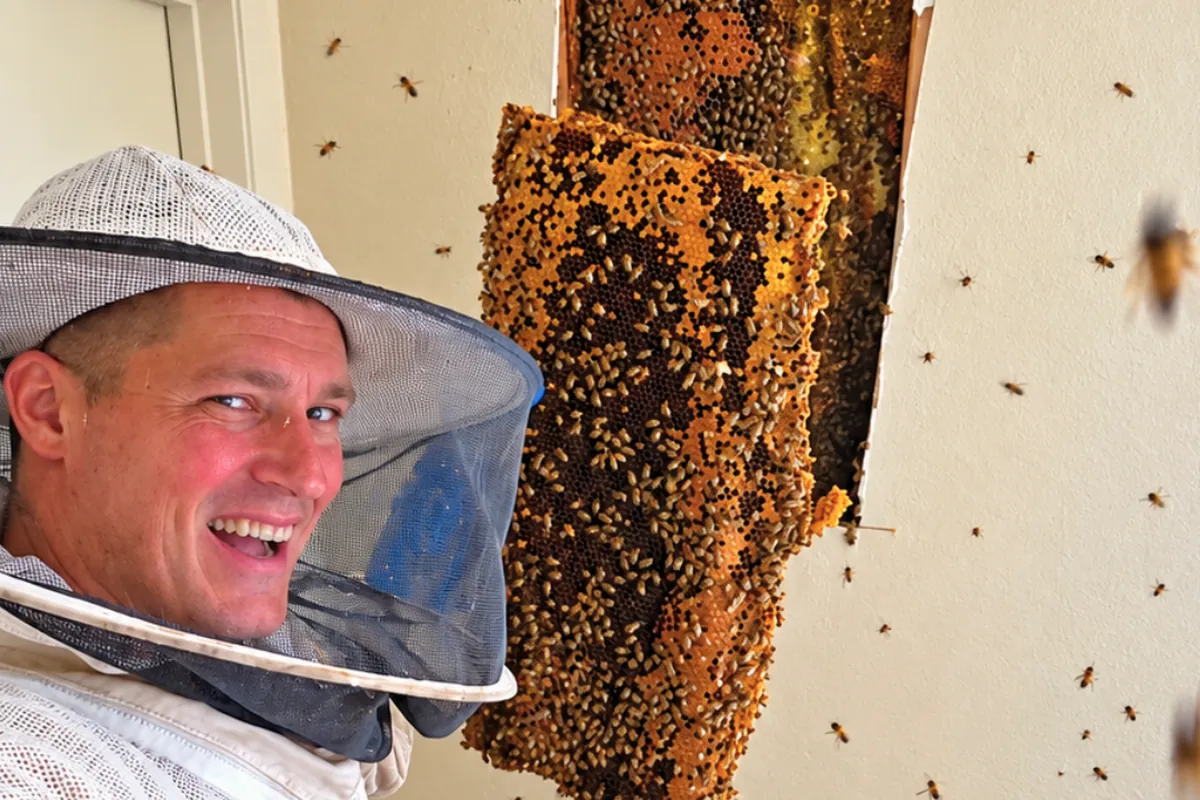
- I open the wall and take the bees out alive, without chemicals. They get collected and relocated to vetted local beekeepers.
- Every bit of comb comes out. Honey, wax and brood all go, so there's nothing left to melt, stain or ferment.
- I clean out the wax and honey residue so the cavity doesn't keep drawing in the next swarm.
- Then the entry points get sealed and patched. UC Riverside recommends screening or plugging entrances with mesh smaller than 1/4 inch and looking for additional openings. Sealing is what keeps bees from moving right back in.
UC Riverside also notes that if bees have been in a wall for more than about a week, the cavity should be opened to remove them. By then they've already built comb. It's more work up front than a spray can, but it ends the problem for good, and the bees get to keep going as a working colony. You can learn more on my bee hive removal and bee relocation pages.
What to do today if you have bees in the wall of your house
If you've just found bees in your wall, this is what to do:
- Don't spray, plug or caulk the hole. Sealing bees in can send them looking for another way out, sometimes into your house.
- Keep kids, pets and anyone with a sting allergy away from the entrance, and hold off on mowers, trimmers and power tools near that wall.
- From a distance, snap a photo of where the bees go in and out. My guide on how to find the bee entry point can help.
- Check indoors. If bees are getting in through an outlet, light fixture or vent, keep that room closed and the lights off at night.
- Call a live removal specialist, and get an inspection from someone who will take out the comb along with the bees.
If anyone gets stung many times, or has trouble breathing or swelling of the face or throat, call 911 right away. For more next steps, see bee hive in your wall: what to do next.
Need a hand?
I'm a local beekeeper, and removing honey bees from walls without chemicals is what I do. I'll take out the bees and the comb, clean out the residue and seal the entry points so they don't come back, and the bees go to vetted local beekeepers. Inspections are free. I work across Orange County, the Inland Empire and LA County, including Santa Ana and San Bernardino. Call me at (626) 487-6052 or request a free quote.
Frequently asked questions
Can I just seal the hole and let the bees die inside the wall?
Will bees in a wall leave on their own?
Is honey from a hive in my wall safe to eat?
How do I know if I have a bee hive in my wall?
Like these guides? Add Eli the Bee Guy as a preferred source on Google to see more of them in your search results.