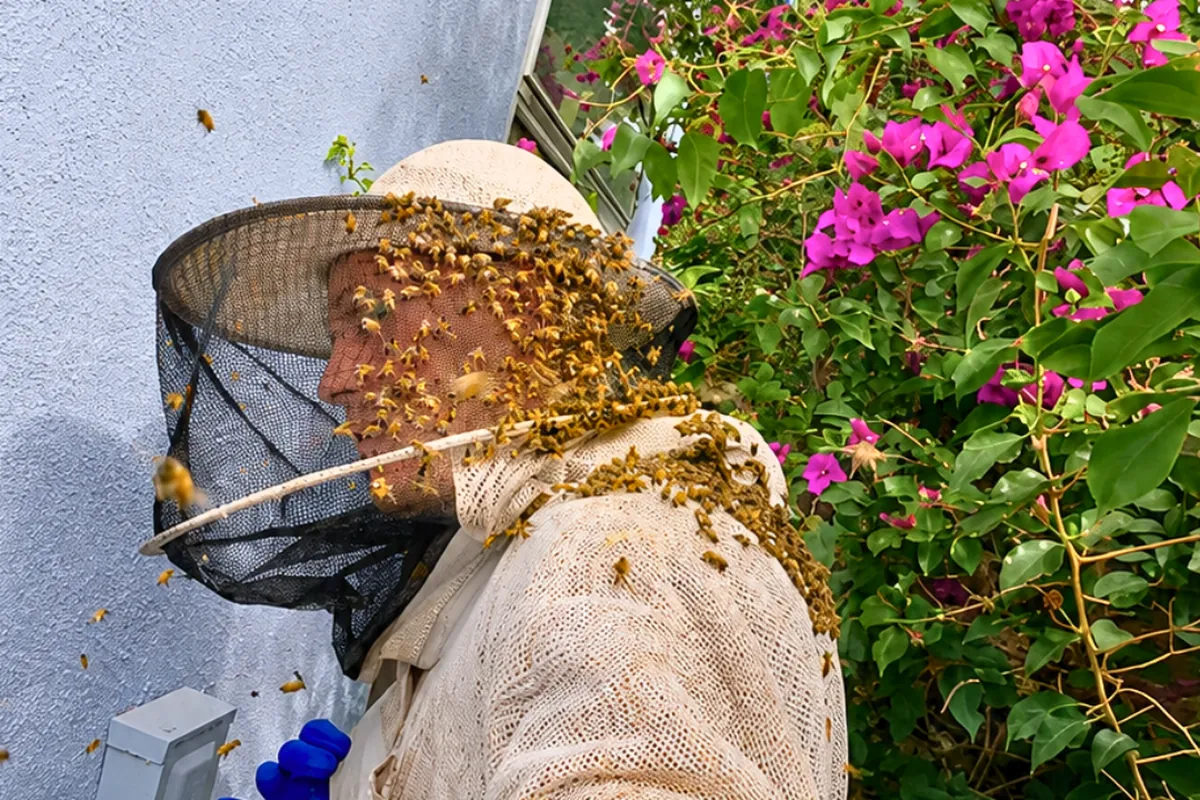
One question I hear a lot, usually from someone a little shaky, is "Are these killer bees?" It's a fair question here. Africanized bees in California are real, they're well established in the southern half of the state, and the nickname doesn't help anybody stay calm.
Short answer: Yes, Africanized "killer" bees live throughout Southern California and have since the mid-1990s. You can't tell them from regular honey bees by looking; only lab testing confirms them. Treat any wild colony as potentially defensive, keep your distance, and let a professional handle removal.
Below I'll go over what Africanized honey bees are, how common they are around here, how they act, and what to do if a colony ever comes after you. I'll stick to what the research says and leave the horror-movie stuff out of it.
What are Africanized "killer" bees?
Africanized honey bees are the same species as the European honey bees beekeepers keep for honey and pollination. They descend from African honey bees brought to Brazil in the 1950s. Those bees spread north through the Americas and mixed with European bees along the way, which is why they're called "Africanized" and not African.
The "killer" label came from how hard they defend the nest. The venom is the same. According to UC's Africanized Honeybee Facts sheet, both types sting only once and carry the same venom. What changes is how many bees join in and how far they follow you. One Africanized bee working your lemon blossoms is no more dangerous than any other honey bee. It's the colony you need to respect.
Are killer bees in Southern California?
They are. Africanized honey bees reached Texas in 1990 and were first found in California in October 1994, according to UC Riverside's Africanized honey bee page. By 1999 they'd turned up across most of Imperial, San Diego, Riverside, Orange, Los Angeles and San Bernardino counties, plus southern Kern and Ventura.
How common are they now? A 2015 UC San Diego study found that about 65% of the foraging honey bees sampled in San Diego County carried African ancestry, and African-lineage bees were fairly common across the rest of Southern California too. Some showed up as far north as the Central Valley south of Sacramento. UC IPM's honey bee Pest Notes point out that removal work is often trickier in areas colonized by Africanized bees, "including all Southern California counties."
So whether you're in Orange County, Riverside, or out toward Rancho Cucamonga, the practical answer is the same: any honey bee colony that isn't in a beekeeper's managed hive could be Africanized.
Honey bees vs. killer bees: can you tell them apart?
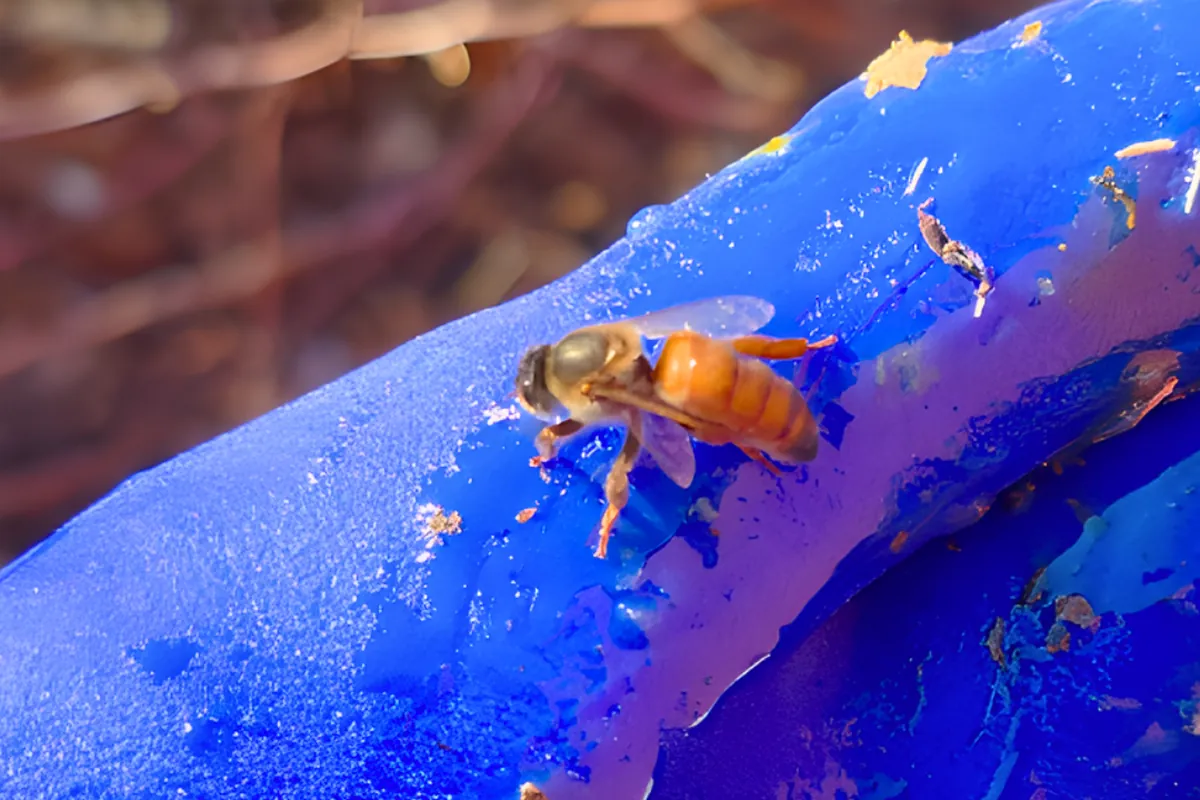
Not by eye, and that surprises a lot of people. Africanized and European honey bees look about identical: brownish, a little fuzzy, with banded abdomens. UC Riverside notes that only microscope measurements or DNA analysis can reliably tell them apart, and San Bernardino County's vector control program says the same thing. That's why the recommendation from both is to treat every wild honey bee colony as if it could be Africanized.
| Trait | European honey bee | Africanized honey bee |
|---|---|---|
| Appearance | Golden-brown, fuzzy | Looks the same; lab test needed |
| Venom and stinger | Stings once | Same venom, stings once |
| Reaction to disturbance | Fewer defenders | Responds quickly, in much larger numbers |
| How far they pursue | Shorter distances | A quarter mile or more |
| Nesting habits | Larger, protected cavities | Also small cavities: meter boxes, overturned pots, near the ground |
| Swarming | Mostly spring | Swarms more often |
If what you're looking at has bright yellow-and-black markings or a gray papery nest, it probably isn't a honey bee at all. That's usually wasps or yellow jackets, and my yellow jacket removal page is the one you want.
How do Africanized bees behave?
Out on the flowers, Africanized bees act like any other honey bee and rarely bother anyone. Near the nest they're a lot touchier. The UC fact sheet says they:
- Can sense a threat from people or animals 50 feet or more from the nest.
- Can react to vibrations from power equipment, like mowers and weed trimmers, 100 feet or more away.
- Respond quickly and in greater numbers than European bees.
- Will pursue a perceived threat a quarter mile or more.
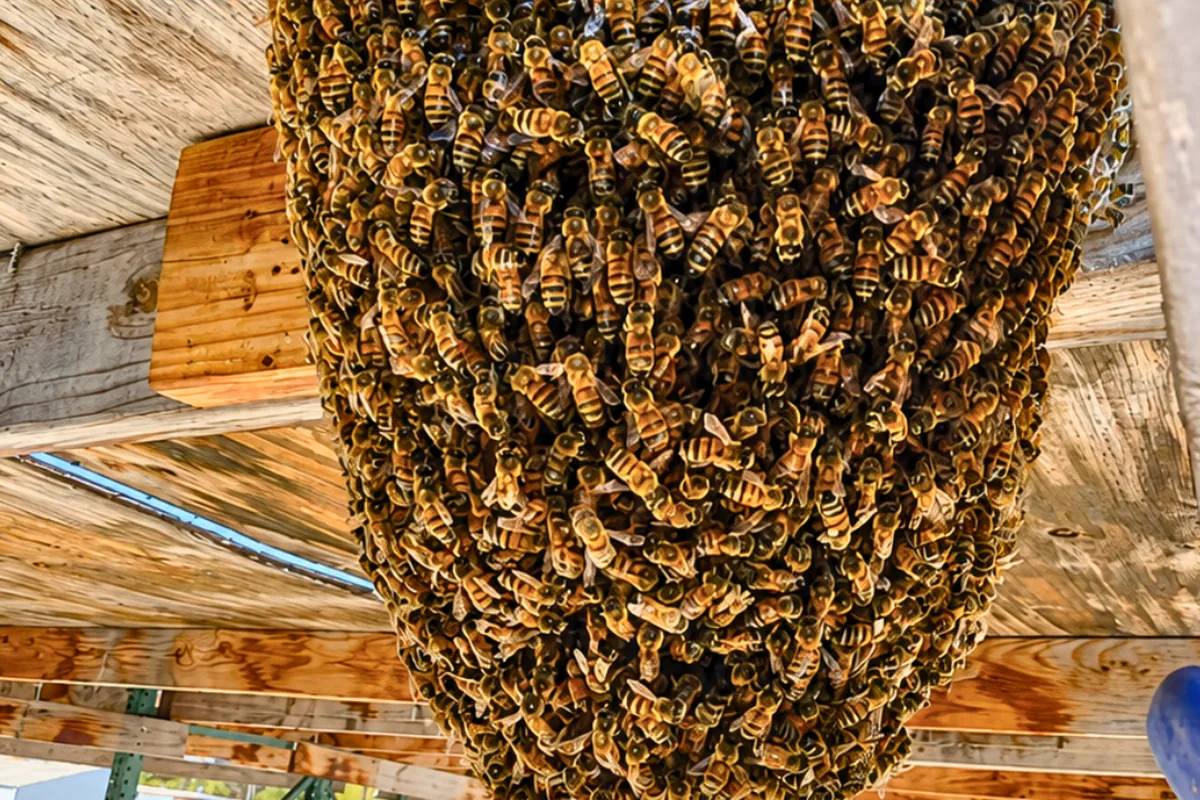
- Swarm frequently and like small, sheltered spots such as water meter boxes, utility boxes, empty buckets, old tires and wall voids.
A lot of the bad stinging incidents start the same way: somebody fires up a mower or trimmer, or lifts a meter box lid, with no idea a colony is sitting right there.
What should you do if bees attack you?
If a bunch of bees starts coming at you, don't stop to figure out what kind they are. Do this:
- Run. Get away right now, in as straight a line as you can, toward a car or building. You can outrun bees.
- Cover your face and head while you run. Pull your shirt up over your face or use your arms, but keep your eyes clear so you can see where you're going.
- Don't swat or flail. Fast movements get you stung more.
- Get inside a car or building and stay there, even if a few bees follow you in. There are far more waiting outside.
- Don't jump into a pool or pond. The bees will still be there when you come up for air.
- Get the stingers out fast. Scrape them out with a fingernail or the edge of a card as soon as you're safe. Speed matters more than technique, since the stinger keeps pumping venom.
- Call 911 if someone has many stings, trouble breathing, swelling of the face or throat, or dizziness, or is allergic to stings.
Afterward, wash the stings with soap and water and use a cold pack for swelling. Keep everyone, pets included, away from the area until the colony is dealt with. If someone in your household has a serious sting allergy, read bee removal when allergies make it urgent.
How do you keep Africanized bees from moving in?
Your best defense is not giving a swarm anywhere to settle. UC recommends:
- Clearing out the clutter bees love: empty boxes, cans, buckets, old tires, unused vehicles and lumber piles.
- Sealing openings wider than 1/8 inch in walls and around chimneys and plumbing.
- Covering vents, rain spout tops, and openings in water meter and utility boxes with 1/8-inch hardware cloth.
- Checking your house and yard once or twice a week, spring through fall, for bees going in and out of one spot.
- Looking and listening for bees before you mow, trim, or open sheds and outbuildings.
- Teaching kids to be careful around all bees and to walk away from any they find clustered or flying in and out of a hole.
If you've seen bees disappearing into a crack and you're not sure where they're nesting, my guide on how to find a bee entry point shows what to look for from a safe distance.
Why should a professional handle any unknown colony?
Nobody can tell by looking whether a colony is mellow or hot, and guessing wrong can mean dozens of stings for you, your kids, your dog or your neighbors. UC's advice is to leave a nest or swarm alone and not try to remove a colony without experience and the right equipment.
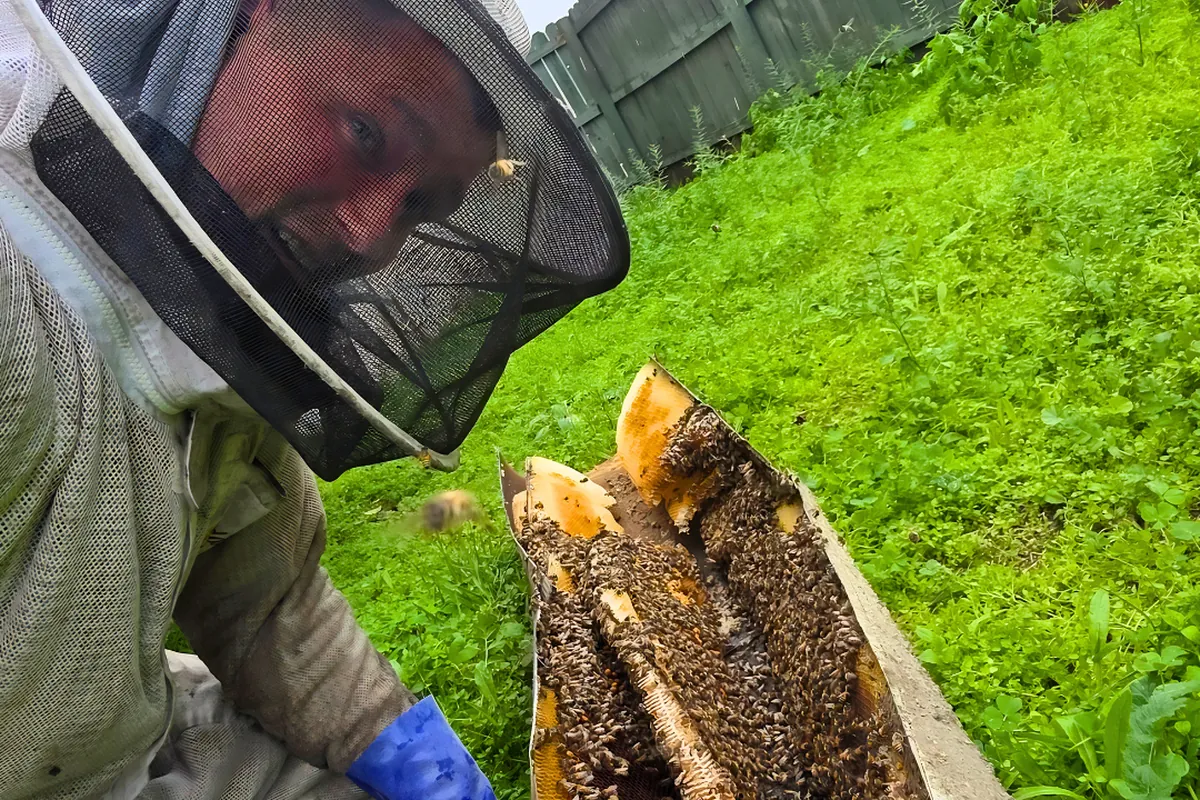
When I come out, I treat every unknown colony with that same caution. I suit up fully, keep people and pets back, and work in a way that keeps the bees as calm as I can. For a colony that's moved into a wall, roof or meter box, my bee hive removal service gets the bees and all the comb out and seals the entry so another swarm doesn't move in. You can read how relocation works on my bee relocation page.
Please skip the can of spray. Killing a colony inside a structure leaves honey and comb behind to ferment, leak and draw in the next swarm, and a half-sprayed colony is an angry one.
Need a hand?
If you've got bees where they shouldn't be, keep your distance and give me a call at (626) 487-6052, or request a free quote online. Inspections are free, and I'm open 24 hours Monday through Saturday. If someone in your home has a life-threatening sting allergy, tell me when you call so I can help right away.
Frequently asked questions
Do Africanized bees look different from regular honey bees?
Is Africanized bee venom stronger than regular bee venom?
How far will Africanized bees chase you?
Can Africanized bees kill you?
Can Africanized bees sting more than once?
Are bee swarms in Southern California Africanized?
When should I call 911 for bee stings?
Like these guides? Add Eli the Bee Guy as a preferred source on Google to see more of them in your search results.