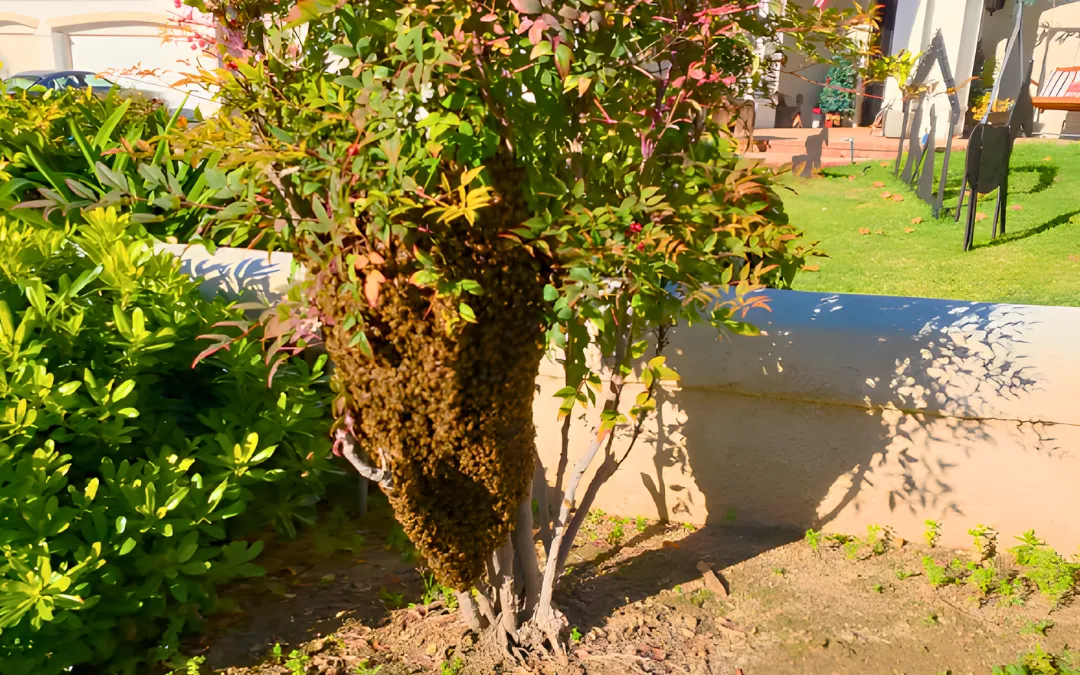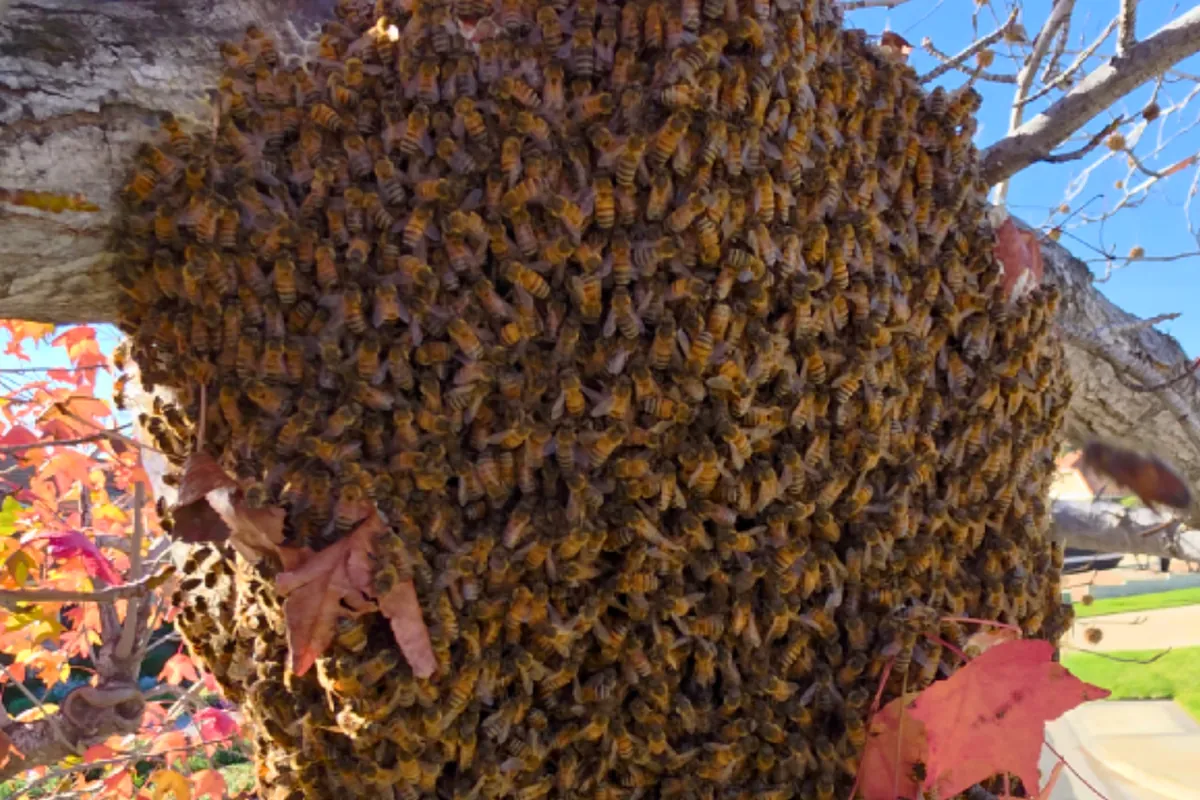
You walk outside and there it is: a buzzing, football-sized lump of bees hanging off your tree, fence or patio chair. It looks like trouble. Most of the time, though, a swarm is just passing through, and what you really want to know is whether a bee swarm will leave on its own or move in for good.
Short answer: Usually, yes. A honey bee swarm is a resting cluster waiting while scout bees find a new home, and it typically leaves within a few hours to a few days. If it stays longer, starts building comb, or begins slipping into your walls or roof, it's becoming a colony and needs professional removal.
Below is what's going on inside that cluster, how long swarms usually stay, and how to tell when it makes sense to wait and when to pick up the phone.
Will a bee swarm leave on its own?
In most cases it will. A swarm on a branch or fence is a rest stop, and the bees haven't set up a hive there. UC IPM describes swarm clusters as "ephemeral by nature," which is why they generally don't need to be managed. Once the scouts agree on a new home, the whole cluster lifts off and flies there.
What you have to worry about is where they decide to go. Sometimes the best cavity the scouts find is inside your wall, attic, chimney or water meter box. Other times they never find a spot and start building comb right where they're hanging. Either way, a short visit turns into a colony you have to deal with.
Why do honey bees swarm?
Swarming is how a honey bee colony reproduces. The old queen and about half of the worker bees leave to start a new home, while the bees left behind raise a new queen. A swarm can hold anywhere from 5,000 to 20,000 bees, according to UC IPM's honey bee Pest Notes.
After leaving, the bees cluster nearby, usually within 100 to 200 yards of the original hive, on a tree limb, shrub, eave, fence or even a car. The queen is somewhere inside the ball, surrounded by workers. Meanwhile, a small group of scout bees flies off to inspect possible new homes.
Whether you're in Irvine or out in Riverside, swarm season peaks in spring, but our mild weather means swarms can show up in other months too.
How long do bee swarms stay?
UC IPM says the scouts usually agree on the best site within a few hours to a few days, and then the swarm moves on. Roughly, here's what you might see:
- In the first few hours, a dense cluster forms. You'll see scouts coming and going from the surface.
- Most swarms leave somewhere between day one and day three, once the scouts agree on a cavity.
- Past a few days, the longer a swarm hangs around, the more likely the bees are to start building wax comb out in the open. Once they do, you've got an exposed colony on your hands.
Even after they leave, swarms leave a little beeswax behind where they clustered, and other swarms may be drawn to the same spot later. If you get swarms on the same branch year after year, that's why.
Is a honey bee swarm dangerous?
Swarms are usually the calmest honey bees you'll ever meet. They have no comb, eggs or honey stores to defend, and their bellies are full of honey from the old hive. UC IPM calls spring swarms of European honey bees "extremely docile," usually requiring real provocation, like being hit with sticks or rocks or sprayed with a hose, before they sting.
Two big caveats for us here in SoCal:
- Africanized bees. UC IPM notes Africanized bees "aren't nearly as predictable and can be very touchy," even as swarm clusters, and they're established across Southern California. You can't tell them apart from regular honey bees by looking.
- Hungry swarms. A swarm that's been out for a while and run out of food can also get touchy.
So "docile" doesn't mean "pet it." Give every swarm space.
When should you wait, and when should you call?
If the swarm is up in a tree at the back of the yard and nobody needs to go near it, waiting a day or two is perfectly reasonable. Some situations need help sooner, though:
| Situation | What I'd suggest |
|---|---|
| Swarm high in a tree, away from doors and walkways | Keep people and pets back and give it a day or two |
| Swarm near a door, play area, pool, or busy walkway | Call for removal |
| Someone in the home has a bee sting allergy | Call right away |
| Swarm has been there more than two days | Call, since it may be settling in |
| You can see wax comb forming | Call, since it's now a colony |
| Bees going in and out of a gap in a wall, roof, eave or vent | Call, since they're moving into the structure |
You can usually spot that last one because the cluster gets smaller each day without ever flying off. UC IPM says if a cluster is shrinking but hasn't flown away, chances are the bees are moving in.
What to do with a bee swarm: do's and don'ts
For a full walkthrough, see how to handle a bee swarm outside and my bee swarm safety tips for homeowners. Here are the basics:
Do
- Keep kids and pets indoors or well away from the cluster.
- Close nearby doors and windows.
- Hold off on mowing, trimming, or using a leaf blower nearby. Vibration and noise from power equipment can set bees off.
- Snap a photo from a safe distance so a beekeeper can see the size and location.
- Watch for bees entering a gap in your house.
Don't
- Don't spray it with pesticide, soapy water, or anything else.
- Don't hose it down. That's one of the ways UC says swarms get provoked.
- Don't throw things at it, hit it with a stick, or try to knock it out of the tree.
- Don't light fires or use smoke to drive it off.
- Don't seal up a hole the bees are already going into. You'll trap them inside, and they may find their way into your living space.
What happens if the swarm moves into your house?
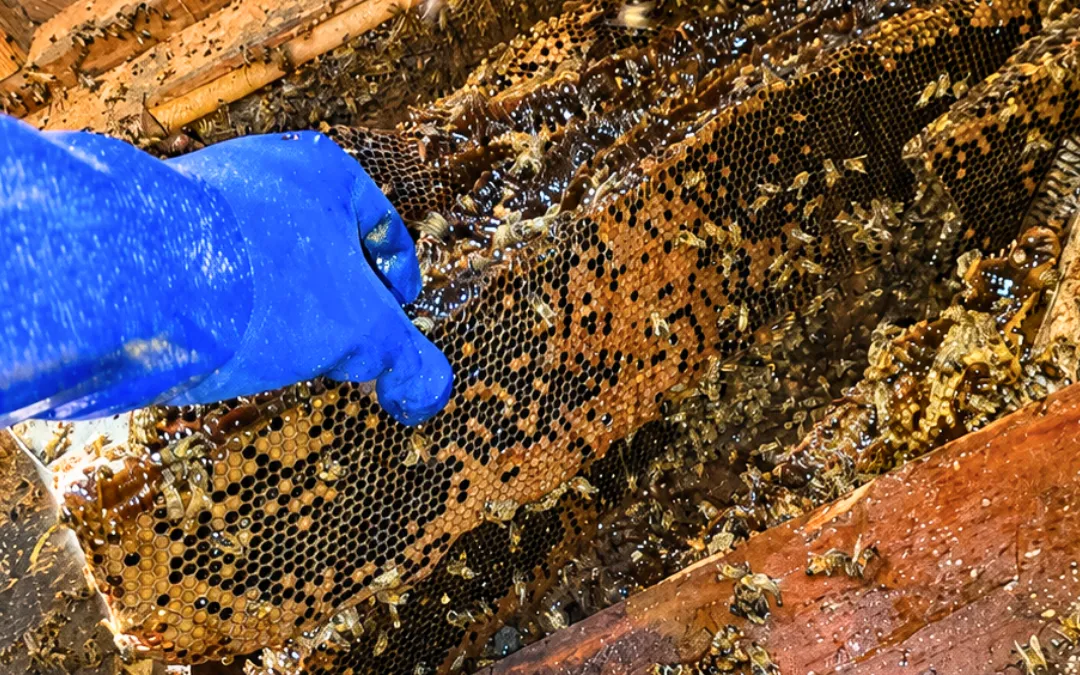
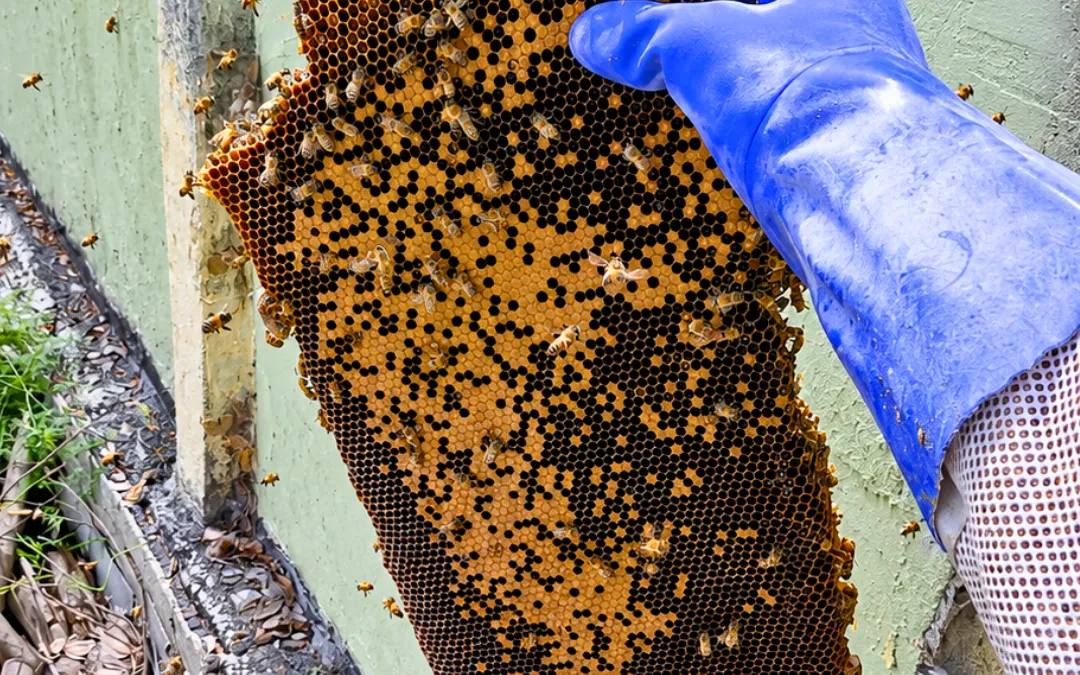
Then you've got an established colony, and it won't leave on its own. The bees build comb, the queen starts laying eggs, and honey starts piling up. Left alone, a colony keeps growing, and if it dies or gets sprayed in place, the comb, brood and honey can rot, ferment and leak through walls and ceilings.
That's when you need bee hive removal, which means getting the bees and all the comb out, cleaning up the honey and wax residue, and sealing the entry so the next swarm doesn't smell the old wax and move right in. If the bees are still clustered outside, that's a bee swarm removal, $250. I collect them alive and take them to a local beekeeper without any chemicals.
Need a hand?
If a swarm is somewhere it can't stay, or it's been hanging around longer than you'd like, give me a call at (626) 487-6052 or request a free quote. I'll take a look for free, and I'm open 24 hours Monday through Saturday. If anyone in the house has a serious sting allergy, let me know right away.
Frequently asked questions
Why did a bee swarm land in my yard?
Can I spray a bee swarm with soapy water?
Do bee swarms come back to the same place?
What time of year do bees swarm in Southern California?
Like these guides? Add Eli the Bee Guy as a preferred source on Google to see more of them in your search results.