A row of bees lined up along the pool edge, or one floating right where you want to put your hand, will ruin a summer afternoon swim pretty fast. If you've got bees in your pool, you've got company, especially during a Southern California heat wave. People usually want to know two things: why the bees picked your pool, and how to make them leave.
Short answer: Honey bees visit pools to collect water, which they use to drink and to cool their hive in hot weather. To get rid of bees in your pool, give them a better water source before the hot season, keep it reliably filled, remove pool floats, and avoid killing them. A heavy, steady stream may mean a hive is nearby.
Bees at the pool are usually just thirsty, and they aren't looking for a fight. Below is why they come, how to move them to another water source, and when they point to a hive close by.
Why are there bees in my pool?
Honey bees need a lot of water, especially when it's hot. According to the University of Arkansas Cooperative Extension, a colony keeps its brood nest at around 93°F. When fanning alone can't keep the hive cool, the bees switch to evaporative cooling: foragers haul water home, spread droplets around the comb, and fan their wings so the evaporating water carries heat away, the same way a swamp cooler works.
Bees also use water to drink, to dilute the food they feed their young, and to keep the nest humid. On a 100-degree day in the Inland Empire, a colony can send out a lot of water collectors, and a big open pool is easy to find.
Bees can't swim, and they'd rather keep their feet dry. They land on a wet edge, splash puddles on the deck, the pool wall right at the waterline, or a floating toy, and sip from there. The ones you find floating in the pool are often just unlucky. UC Davis Extension apiculturist Eric Mussen pointed out that a colony loses roughly 1,000 old workers a day to natural causes, and foragers tend to keep working until they drop wherever they happen to be, including your pool.
Why do bees like pool water so much?
There are a few reasons a pool is so tempting to them.
- It's always there. Bees learn where the reliable water is and keep going back to it. Once a colony is habituated to your pool, foragers keep coming back.
- The water may be a little salty. Mussen believed bees may prefer water that's a bit salty to pure water, which could help explain why pools draw them in.
- There's plenty to land on. Splashed decking, steps, coping and floats all give bees somewhere to stand and drink.
- They'll travel for it. Mussen noted bees will fly up to nearly five miles for a suitable water source, so the bees at your pool may not live on your property at all.
Honey bees or sweat bees: which ones are in your pool?
Not every small bee at the pool is a honey bee. If tiny bees keep landing on your arms and legs while you lounge, they may be sweat bees.
| Honey bees | Sweat bees | |
|---|---|---|
| What they're after | Water to drink and cool the hive | Moisture and salt in human sweat |
| Where you'll see them | Pool edges, wet decking, floats, puddles | Landing on your skin |
| Looks | Golden-brown, fuzzy, banded | Small; many are black or brown, some metallic green or blue |
| Nest | Colonies in trees, walls, roofs, meter boxes | Most nest in the ground |
| Sting | Will sting if stepped on or pressed | Not aggressive; mild sting if squeezed |
The Missouri Department of Conservation notes that sweat bees use human perspiration for moisture and salts, a bit like a deer at a salt lick. A gentle brush usually sends one on its way. If what you're seeing is bright yellow and black and hunting around your snacks, you're probably dealing with yellow jackets instead. See my yellow jacket removal page.
How do you get rid of bees in your pool?
With thirsty bees, getting rid of them really means talking them into drinking somewhere else. This is what works:
- Set up a better water source early. Timing is the big one here. Beekeeper Joe Conti, writing in the American Bee Journal, recommends offering an alternative water source before you open the pool for the season. Bees are much harder to retrain once they're hooked on your pool.
- Give them somewhere to stand. Use a shallow dish, birdbath or bucket filled with gravel, pebbles, corks or floating wood so bees can drink without drowning.
- Put it in the bees' path. Set it away from the pool and the patio, ideally between the pool and the direction the bees seem to be coming from.
- Never let it dry out. If the new source goes dry, the bees go right back to the pool. Keeping it filled year-round helps them stay loyal to it.
- Pull out floats and noodles. Floating toys give bees a perfect landing pad in the middle of the pool.
- Cover the pool when nobody's using it, but make sure the cover doesn't collect puddles. A cover holding standing water can become a bee magnet of its own.
- Fix drips and puddles. Leaky hose bibs, drippy irrigation and pet bowls all teach bees your yard is a good place for water.
Give it time. Mussen also noted that drying up a water source for a while doesn't break the habit. Bees keep checking and come right back once the water does, so it can take a while before the foragers switch.
Should you kill bees that come to your pool?
Please don't. Bees collecting water aren't defending anything, and they're important pollinators. Spraying insecticide around a pool is also a bad idea for you and whoever swims in it. It won't fix anything either, because there are thousands more foragers back at the hive and new ones will find the water.
You do still have to be careful. Bees floating in the pool or crawling on the deck can still sting if you step on or grab one. Wear sandals on the deck and skim floating bees out with the net, not your hand.
Could a steady stream of bees mean a hive nearby?
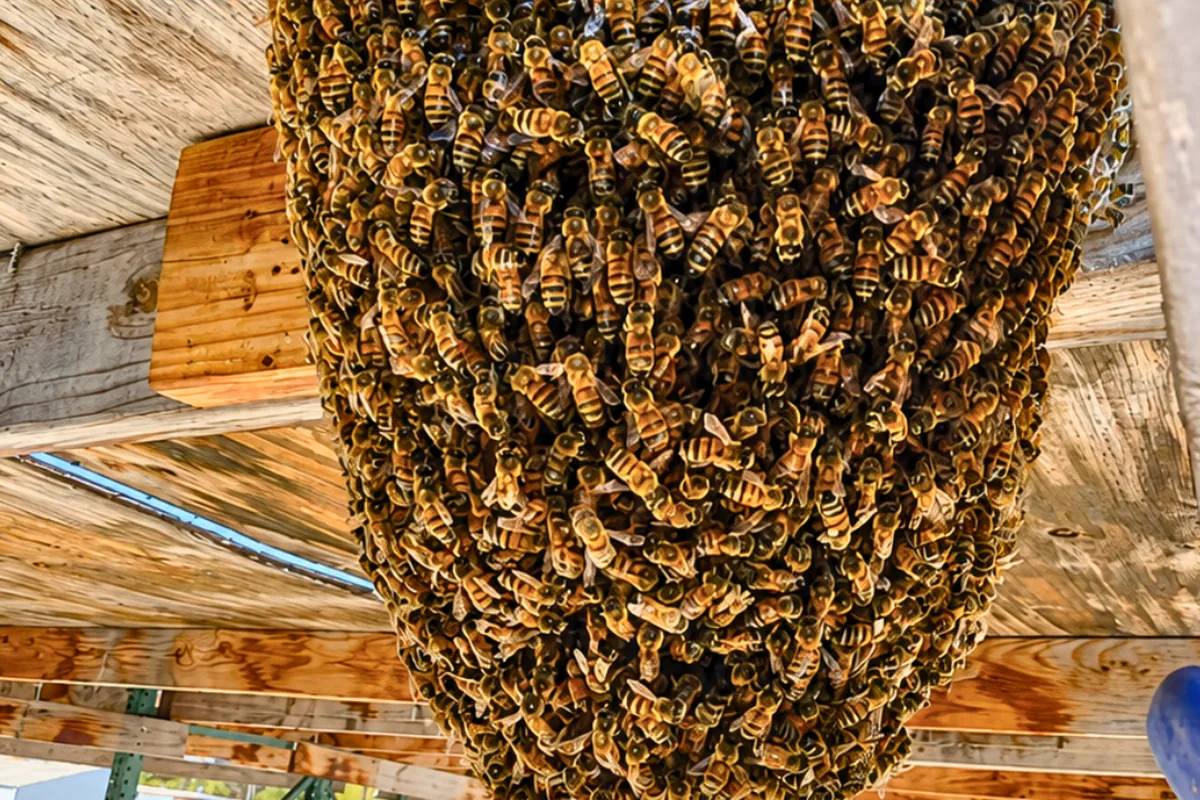
Sometimes. A few bees here and there could be coming from miles away. If you see a heavy, constant stream of them, or bees flying back and forth between the pool and one spot, take a careful look from a distance. Around pools, I usually find them in places like these:
- Wall voids and gaps in stucco or siding
- Eaves, roof lines, vents and attics
- Water meter boxes and irrigation valve boxes
- Pool equipment enclosures, sheds, and hollow trees
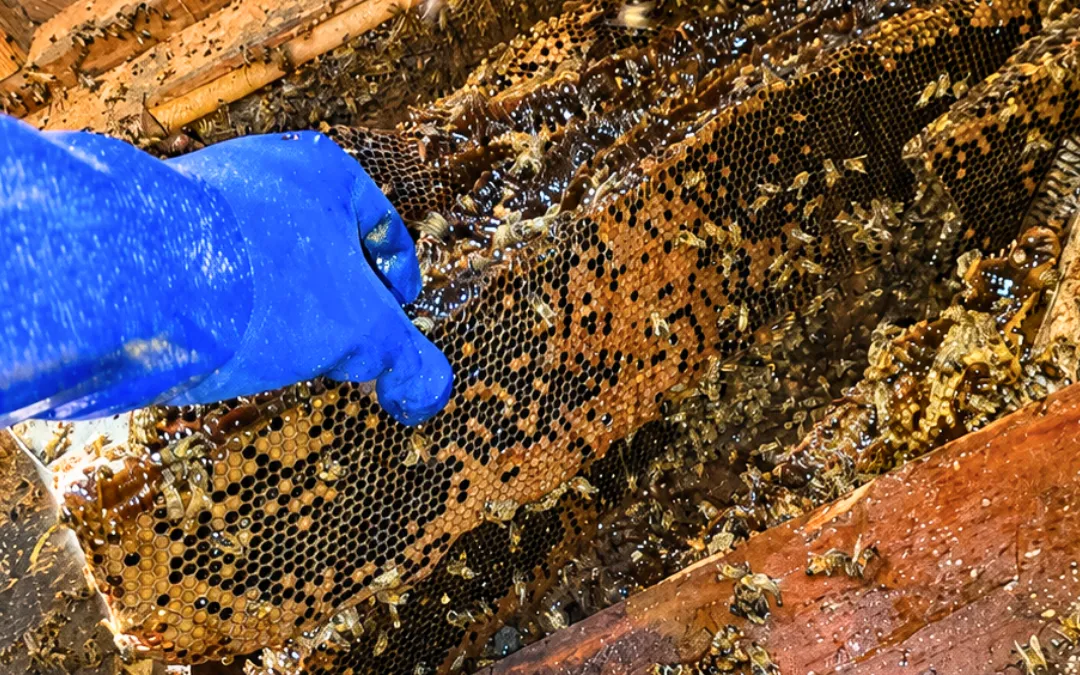
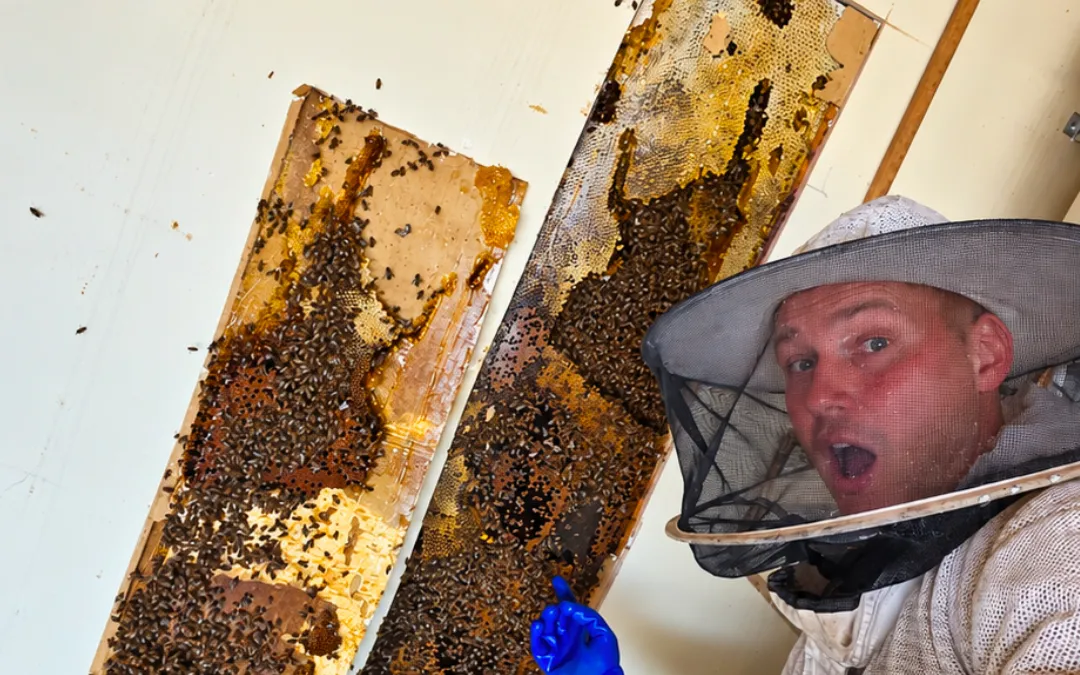
My guide on how to find a bee entry point walks through what to look for safely. If you do find a colony, don't plug the hole or spray it. Call for bee hive removal, where the bees and all the comb come out, the residue gets cleaned up, and the entry gets sealed so another swarm doesn't take its place. In hot inland areas like Rancho Cucamonga, bees at the pool and a hive in the wall show up together a lot.
Need a hand?
If the bees at your pool seem to be coming from your house, or you're just not sure where they're nesting, I can come take a look. Inspections are free. Call me at (626) 487-6052 or request a free quote online. I'm open 24 hours Monday through Saturday. I remove honey bees alive and relocate them to local beekeepers, and I don't use chemicals.
Frequently asked questions
Why are there dead bees in my pool every morning?
Does chlorine attract bees to pools?
Do bees in a saltwater pool sting?
Will a bee water station near my pool attract more bees?
Like these guides? Add Eli the Bee Guy as a preferred source on Google to see more of them in your search results.