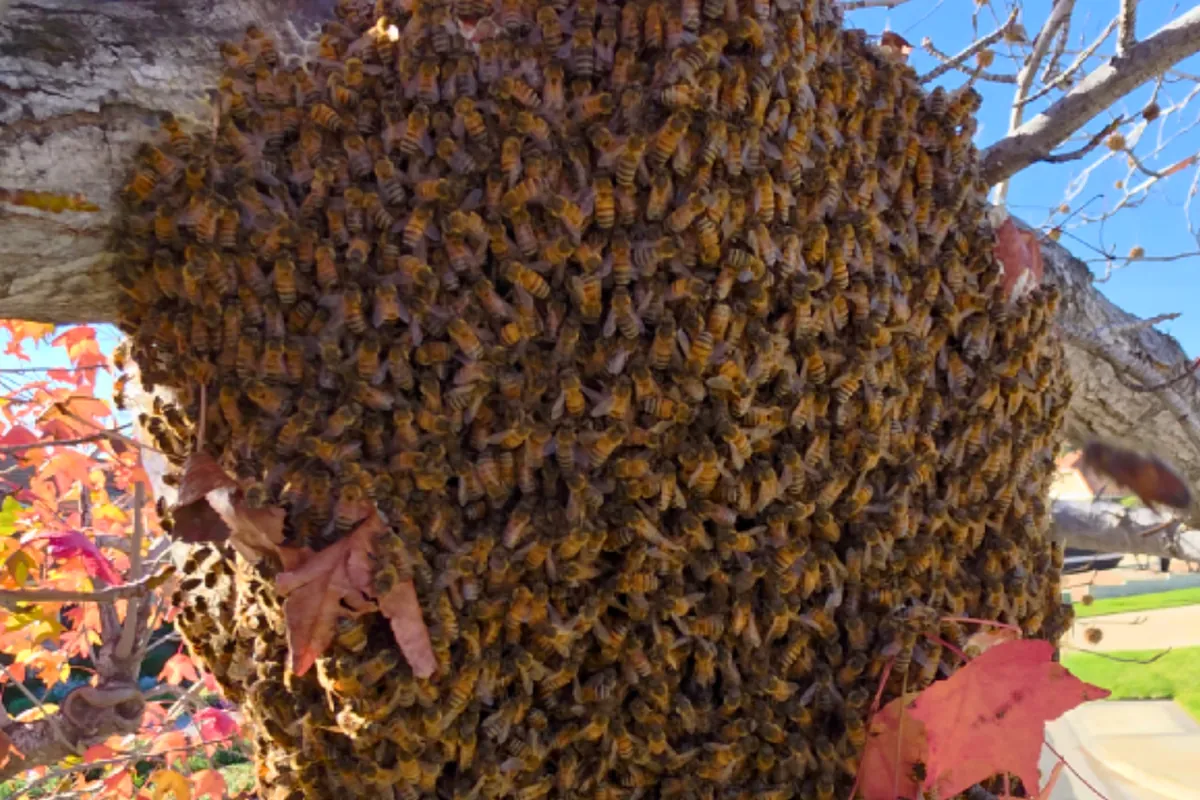
Every spring my phone starts ringing with the same story: "There's a giant ball of bees on my tree and it wasn't there this morning." Bee swarm season in Southern California is real and it's predictable, and once you know when it comes around it's a lot less scary.
Short answer: In Southern California, bee swarm season usually peaks in spring, roughly March through June, with April and May the busiest. In a warm year swarms can start as early as February, and smaller swarms sometimes show up in fall. Weather shifts the timing from year to year.
Why do honey bees swarm?
Swarming is how a honey bee colony reproduces. Once a colony gets big enough it raises new queens, and the old queen leaves with a big share of the workers to start over somewhere else. According to the University of Florida's extension guide on swarming, about 50 to 70 percent of the worker bees leave with the old queen, and the rest stay behind with a new one.
A few things push a colony to swarm:
- Crowding. The colony keeps growing and has no room to expand. As that same guide puts it, it isn't necessarily the strong colonies that swarm, it's the crowded ones.
- Weaker queen pheromone, because it doesn't spread as well through a packed hive.
- Lots of nectar and pollen. Swarms usually go out just before and during the main spring bloom, when there's plenty of food.
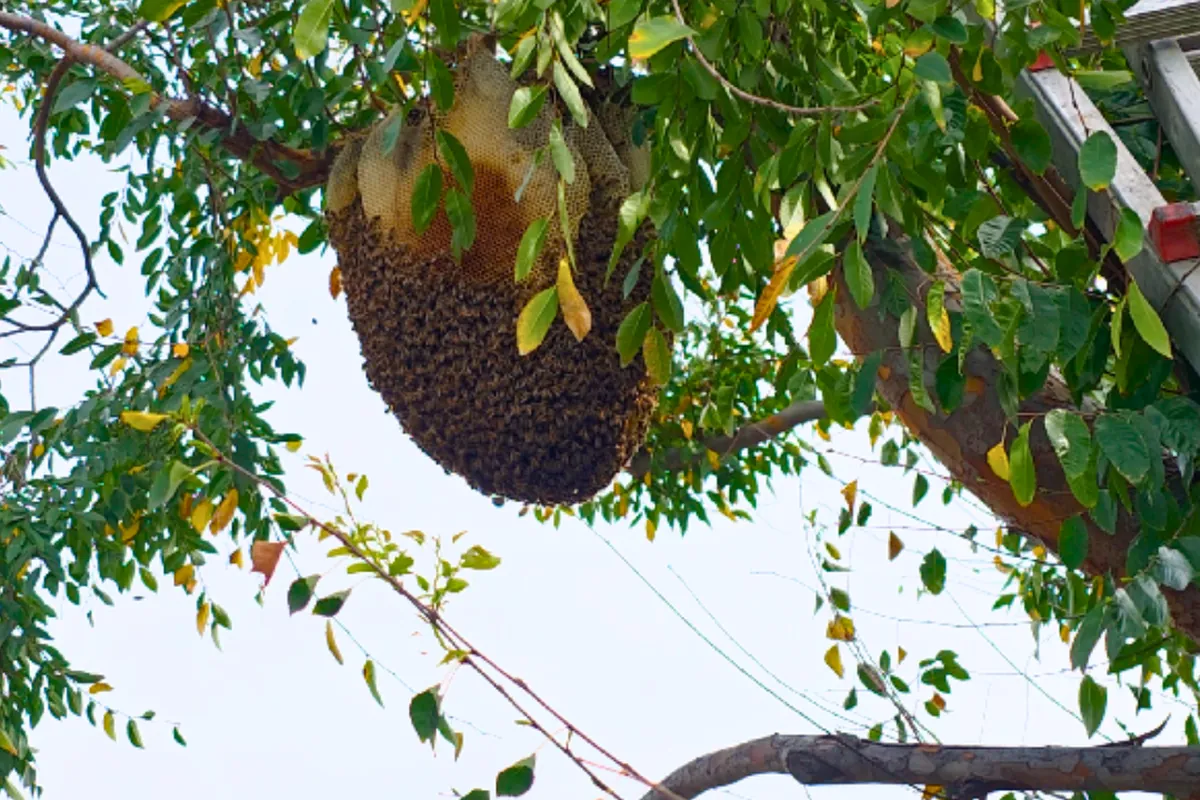
After the swarm leaves, it hangs on a branch, fence or eave while scout bees look for a new cavity. The Los Angeles County Agricultural Commissioner says a swarm left alone will usually leave in two to three days, sometimes within a few hours. Homeowners care about where it goes next, because those scouts are checking out your walls, attic vents and meter boxes.
When is bee swarm season in Southern California?
The UC Statewide IPM Program says swarming happens "usually in the spring but sometimes at other times of the year when local conditions permit". LA County's Agricultural Commissioner names April, May and June as the months when a lot of colonies swarm. Our weather is mild, so the season can start earlier and run longer than in colder parts of the country, and a warm winter or a big bloom after good rain can shift things around.
Here's roughly how a year goes for homeowners. Treat it as a general guide. The bees never signed off on it:
| Months | What the bees are doing | What it means for you |
|---|---|---|
| January | Colonies are smaller and start building up as the days get longer | Quiet time. A great month to seal gaps and screen vents |
| February | Colonies growing; early swarms possible in a warm year | Finish bee-proofing before the season starts |
| March | Swarm season gets going as the bloom picks up | Watch for clusters and for bees scouting gaps in your house |
| April and May | Peak swarming | Most swarm sightings, and the peak time for new colonies moving into walls, roofs and boxes |
| June | Swarming keeps going, then tapers off | Check for steady bee traffic at any one spot on the house |
| July and August | Fewer swarms; established colonies growing; bees out looking for water | Bees at pools and drips. The spring move-ins are bigger colonies now |
| September and October | Occasional fall swarms when conditions allow | Don't assume the season's over; deal with any colony you've noticed |
| November and December | Colonies are less active but still alive in our mild winters | Good time to plan a removal and seal entry points |
What does each part of the year look like at home?
Spring: swarms and move-ins
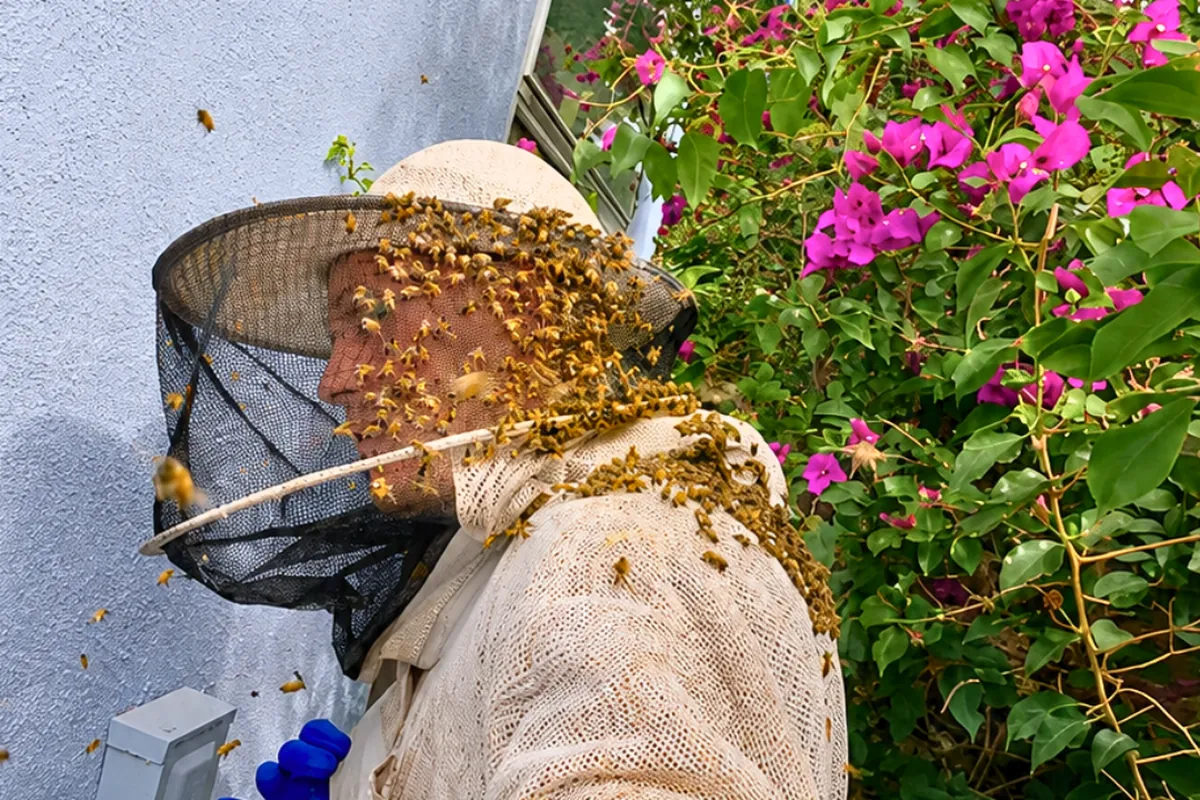
Spring is when you'll see swarms hanging off trees, fences, patio covers and car mirrors. A resting swarm is usually calm because the bees don't have a home to defend yet. Keep people and pets back, don't hit it with water or bug spray, and give it some time. I go into more detail in my posts on whether a bee swarm will leave on its own and how to handle a bee swarm outside.
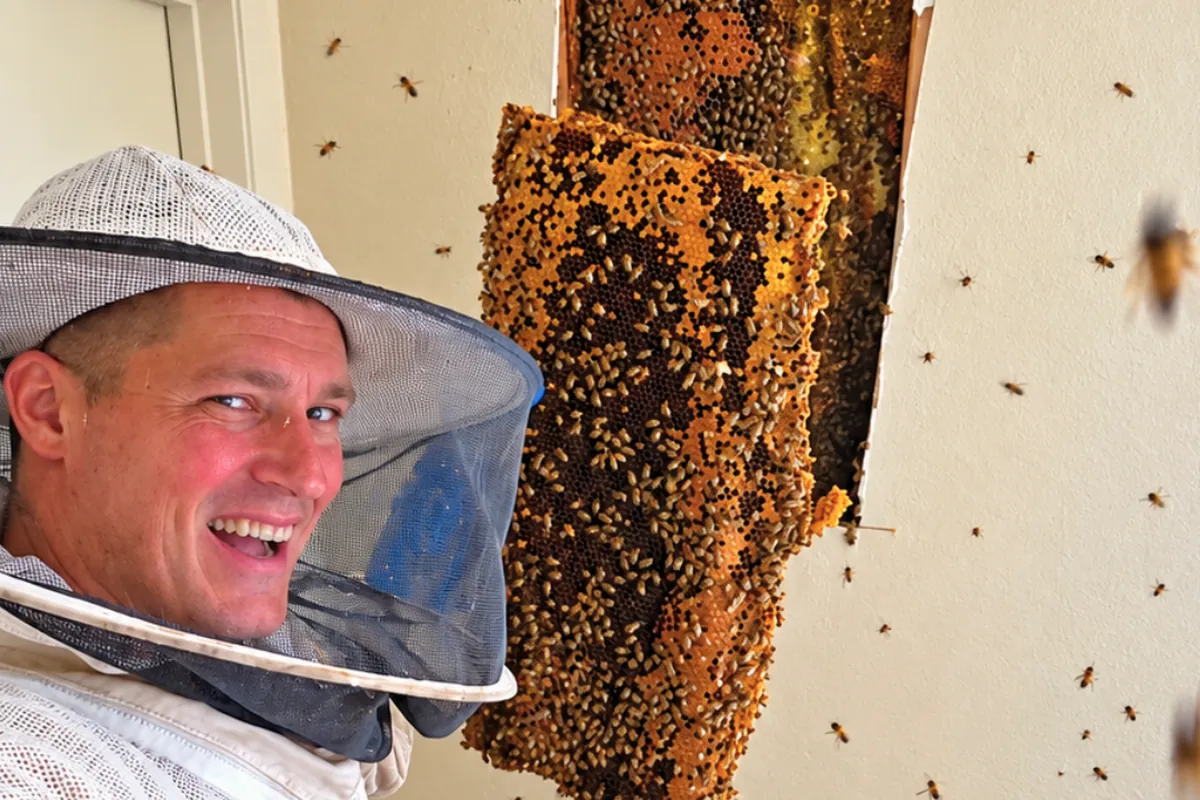
What you should really worry about is a swarm that doesn't leave because it found a spot in your house. If bees are steadily flying in and out of one gap in a wall, roof, eave or vent, a colony is moving in, and it won't leave on its own.
Summer: water-seeking bees and growing colonies
By summer the swarming slows down, but you'll see bees at pools, fountains, pet bowls and leaky hose bibs. They carry water home to cool the hive, so a few bees drinking at your pool is normal. Meanwhile, a colony that moved into a wall in April has had months to build comb and store honey. Summer is when a lot of people first hear buzzing in the wall or find bees inside the house.
Fall: a second, smaller wave
Some years bring a few fall swarms. They're less common than spring swarms, but one showing up in October isn't a fluke, and I handle it the same way.
Winter: the best time to bee-proof
Our winters are mild, so a colony that's already in your house stays alive and keeps living there. Winter is also the slowest time for new move-ins, which makes it the best time to seal up the house before the scouts come looking next spring.
How do you prevent bees from moving in during swarm season?
You can't stop swarms. They're natural, and they're good for pollination. What you can do is make your house a bad place to settle. These steps come from UC and USDA bee-proofing advice:
- Seal small openings. UC IPM says every hole about the size of a pencil or bigger that leads into a roomy cavity should be sealed. Bees can chew their way out through caulking, but they won't chew in through it.
- Screen vents and larger openings, like attic, gable and foundation vents, with screen that has six or more meshes per inch.
- Screen the key holes on meter boxes and irrigation valve boxes. The USDA bee lab recommends a small mesh screen over these, since bees can get into a water meter box through a 3/16-inch gap.
- Put a proper cover on the chimney.
- Caulk cracks in the walls, the foundation and along the roofline.
- Check the bottom edge of the stucco. If there are gaps where the stucco and weep screed meet the foundation, have them screened or repaired instead of caulked shut, because the weep screed is there to let moisture drain out.
- Get rid of spare cavities like upside-down pots, old appliances, grills nobody uses and piles of junk, and keep the shed door closed.
- Take care of the old spots. If you've had bees before, make sure the old comb got removed and the cavity cleaned out, because old wax smells like home to the next swarm.
What should you do if bees move in anyway?
Don't spray, don't plug the hole with the bees still inside, and don't try to cut out the comb yourself. Sealing bees in can push them into your living space, and killing them leaves the comb and honey behind. Call a beekeeper who does live removal. With an established colony, I take the bees out alive, remove all of the honeycomb, clean out the wax and honey residue, and then seal and patch the entry point. The colony goes to a vetted local beekeeper through my bee relocation program. A swarm still hanging out in the open is simpler: my bee swarm removal is $250.
If anyone gets stung many times, or has trouble breathing, swelling in the face or throat, or feels faint after a sting, call 911.
Need a hand?
Swarm season is my busiest time of year, and I'm happy to help whether it's a swarm on a branch or bees going into your wall. I do free inspections across the Inland Empire, Los Angeles County and Orange County, including Rancho Cucamonga. Call (626) 487-6052 or request a free quote online.
Frequently asked questions
Are swarming bees aggressive?
Do bees swarm in winter in California?
Is bee swarm season getting earlier?
Should I call someone for a swarm or wait?
Can a swarm move into my house?
Why are there so many bees this year?
Like these guides? Add Eli the Bee Guy as a preferred source on Google to see more of them in your search results.