Hearing Bees in Your Walls? What That Buzz Means and What to Do Next
A buzz in your walls that won’t go away is worth taking seriously, and a lot of homeowners call me about exactly that. Most wall infestations sound like a low, steady hum, which is the sound of a healthy bee colony working. Below I go over what bees sound like, what to look for and smell for, how to tell bees from other pests, and what to do if you think a colony has moved into your house. Knowing the difference helps you protect your home and keeps the bees from getting killed for no reason.
What Does a Bee Infestation Inside Walls Usually Sound Like?
Most bee infestations sound like a low, continuous buzz, made by the whole colony moving around and beating their wings fast. How loud it is and the pitch can change with the colony’s size, how active it is and what kind of bee it is. Paying close attention to the sound, and to when it happens, is one of the earliest and most reliable ways to catch an infestation.
Research keeps showing more cavity-nesting bees in cities, which is why it’s worth knowing these sounds.
Urban Cavity-Nesting Bees: Research Insights
Studies examining urban bee communities report a general decline in overall species richness with increased development. However, these environments often show a corresponding increase in cavity-nesting species, which demonstrate a remarkable adaptability to city habitats. Specialist foragers, conversely, are less commonly observed in these modified landscapes.
Ecology of urban bees: a review of current knowledge and directions for future study, JL Hernandez, 2009
How Does Bee Buzzing Sound Different from Other Noises in Walls?
Bee buzzing is usually steady and rhythmic. It’s a constant hum from a living colony, where other pests make random scrapes and taps. Rodents are on and off, with scratching, scurrying and the occasional thump. Plumbing sounds wet or gurgly and lines up with water running. If what you hear is a steady, low buzz that follows a daily pattern, louder in the daytime and quieter when it cools off, bees are a very likely suspect.
How and When Does the Buzz Change?
The volume and pitch of the buzz follow how active the colony is. It’ll be louder and steadier on warm, sunny days when the bees are busiest, usually late morning into early afternoon. It gets quieter on cool evenings and early mornings. That daily pattern can tell you something about how big and how healthy the colony is.
Beyond the Buzz: Advanced Visual and Olfactory Indicators
Sound is the main clue, but to be sure it’s really a bee colony and not something else, you also want to use your eyes and your nose. Catching these signs early makes the removal safer and simpler.
What Visual and Smell Clues Should You Look For?
Watch for bees flying in and out of small holes or gaps near the eaves, vents, soffits or window frames. Wax, bits of honeycomb or something sticky around those openings is strong confirmation. A sweet, honey-like smell coming from the wall, inside or outside, is another good sign, especially when the colony is big or very active. That smell usually comes from the honey being made and fermenting inside the cavity.
Where Do Bees Usually Get In, and What Stains Should You Check For?
Bees will use the smallest weak spot in a building: cracks, unsealed vents, gaps in the siding, flaws along the roofline and hollow spaces behind trim. Check those spots carefully for dark or discolored patches, streaks, or something tacky that could be propolis, honey or bee waste. Any new stain you can’t explain near a possible entry point is worth looking into right away.
Field surveys keep finding bees, stingless species included, nesting in building cavities and other city structures, so it helps to know where they like to nest.
Stingless Bees and Urban Buildings: Nest Localization Study
A 2022 field survey conducted in Realeza (PR) systematically searched public and private spaces for stingless bee nests during a peak flowering season. Researchers meticulously recorded nest locations, proximity to floral resources, and specific building features. The study identified 23 nests belonging to *Tetragonisca angustula* and *Scaptotrigona depilis*, and observed foraging activity by *Scaptotrigona bipunctata* and *Plebeia* species. This research unequivocally demonstrates the readiness of these bee species to utilize urban structures for nesting.
Stingless bees and urban spaces: An investigation of the conditions for adaptation to city buildings and landscaping, 2025
How Do You Tell Bee Sounds Apart from Wasps, Rodents, or Other Pests?
You need to know what’s making the noise. Different pests sound different, and getting it right decides what you do next, so you don’t damage the house or waste money on something that won’t work.
What Sounds Do Bees Make Compared to Wasps and Rodents?
Bees make a continuous, low hum, the sound of a big, organized colony. Wasps usually make a sharper buzz that comes and goes, or a fast clicking, more like single wasps than a whole colony vibrating together. Rodents scratch, gnaw and scurry all of a sudden. If the sound is steady, rhythmic and follows a daily pattern, it’s much more likely bees than any other household pest.
Why Getting the Sound Right Matters: Precision in Pest Management
If you mistake bees for some other pest, you can end up with the wrong treatment and do real harm. Rodent traps, insecticides and chemical sprays won’t fix a bee problem, and they can hurt the colony, your house and the environment around it. Knowing what you’ve got lets you pick the fix that works, is humane and does the least damage, for your home and for the bees.
What Should You Do If You Hear Bee Buzzing Inside Walls?
Don’t ignore buzzing that keeps going. Left alone, a colony can get a lot bigger, cause structural damage and honey leaks, and make the removal much more involved later. Doing the right things early keeps everyone safer.
When to Call a Pro: Humane Relocation First
If the buzzing keeps going, you can see entry points or honeycomb, or you’re not sure what pest it is, call a professional bee removal service. At Eli the Bee Guy, safe, humane removal and relocation is what I do. That way the problem gets fixed without killing the bees, and these pollinators get to keep working.
How Humane Removal Helps Both Your Home and the Bees
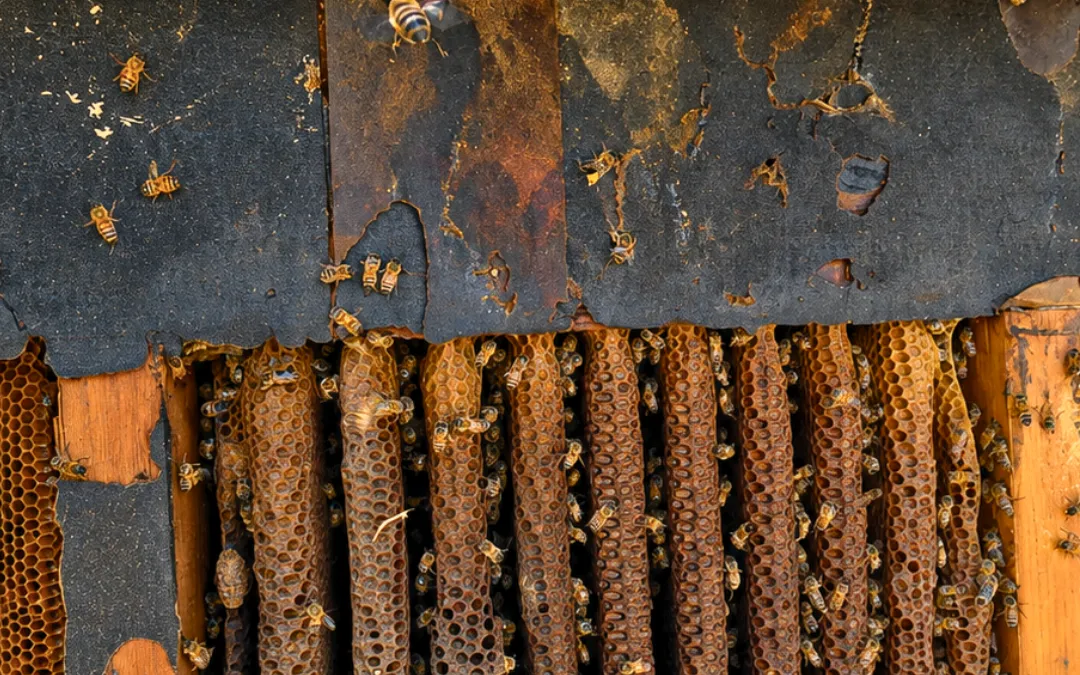
Humane removal means relocating the colony somewhere suitable instead of exterminating it. It protects the pollinators, and it’s easier on your house too, because there are no toxic chemicals and no tearing out more than needed. Going with a humane professional helps the local bee population and still takes care of the bees in your wall.
Most of my work is residential, but commercial properties often have big or complicated infestations that take more experience. For larger jobs on commercial properties, there’s a separate service built for that kind of work so it gets done safely and efficiently.
| Indicator Type | Description | Importance |
|---|---|---|
| Visual Signs | Active bee traffic at entry points; visible honeycomb or wax residue; propolis deposits | Direct evidence of an established, active colony |
| Olfactory Signs | Distinct sweet, honey-like aroma near walls or vents; potential fermentation smell | Confirms significant bee activity and honey production |
| Sound Patterns | Low, continuous, rhythmic buzzing with predictable daily cycles (louder during day) | Primary auditory cue distinguishing bees from other pests |
The table sums up the main signs of a bee infestation. Put the sound together with what you can see and smell, and you’ll have the clearest idea of whether bees are nesting in your walls.
So a steady, rhythmic buzz along with an entry point you can see or a sweet smell almost always means a bee colony. If you’re noticing those signs, get in touch with a qualified, humane bee removal service right away to protect your property and the bees. Acting early with good information makes the whole thing safer, simpler and more likely to work the first time.
Like these guides? Add Eli the Bee Guy as a preferred source on Google to see more of them in your search results.