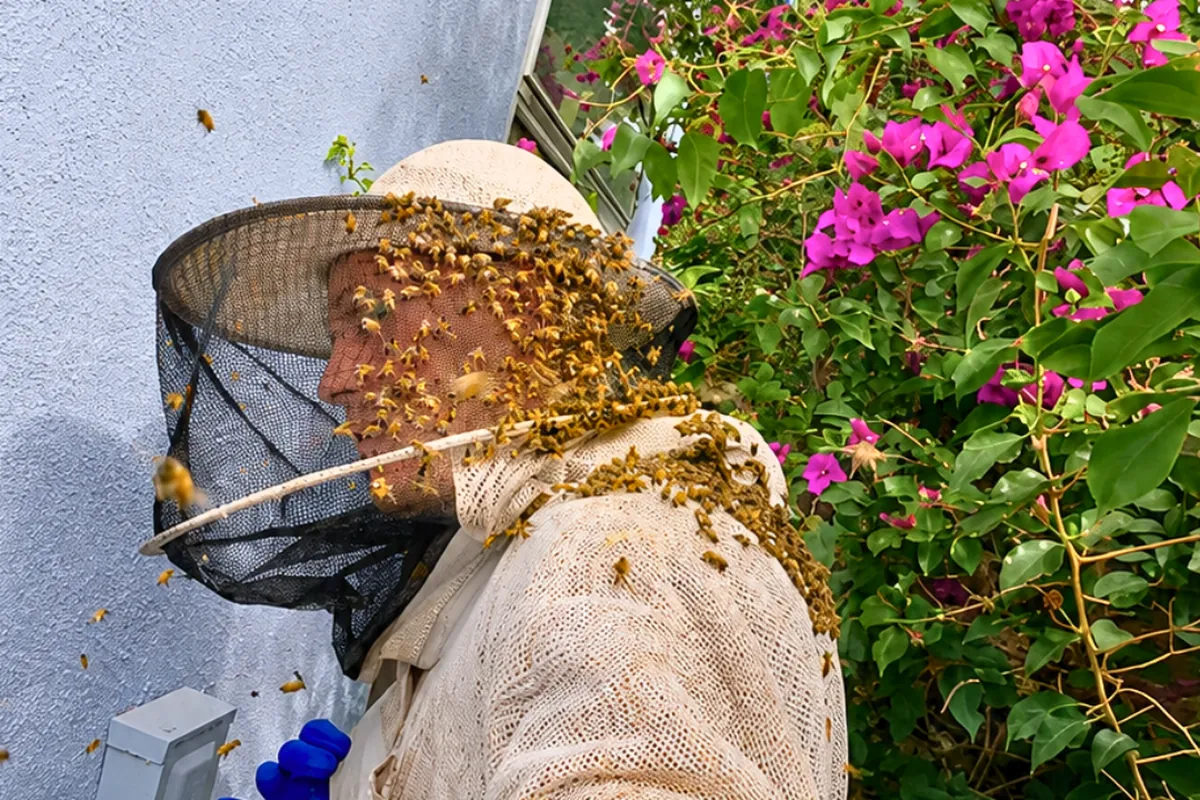
You notice a few bees landing on the side of your house, then a few more, and soon there's a steady line of them slipping into a gap in the siding. I see this all the time in Southern California, and it nearly always means honey bees have found a hollow behind your siding and moved in.
Short answer: Bees under siding are usually a honey bee colony building comb in the wall cavity behind the panels. Don't seal the gap or spray it, because that can trap bees inside and leave rotting comb and honey in the wall. Have the siding opened, the bees and all the comb removed alive, and the gap sealed.
Here's why bees end up behind siding, how to tell honey bees from carpenter bees, what to do and not do, and how I take them out.
Why do bees get under house siding?
The space behind siding is just what a honey bee swarm goes looking for. When a colony swarms, scout bees search for a dark, dry, protected cavity with a small entrance. UC IPM's honey bee Pest Notes list wall voids among the most common places colonies settle, and the gap behind siding often leads straight into one.
Bees usually get in through small openings like these:
- Gaps where siding panels overlap or have warped or pulled loose
- Openings around pipes, wires, hose bibs, dryer vents and light fixtures
- Corner trim, J-channel or flashing that doesn't sit tight
- Weep holes and gaps along the bottom edge of the siding
- Spots where siding meets the roofline, a chimney or stucco
A gap you could barely slip a pencil into is plenty for a honey bee.
What are the signs of bees in house siding?
The clearest sign is steady traffic. Watch from a safe distance and look for:
- Bees flying in and out of the same spot on the siding, day after day
- A cluster of bees on the outside of the wall that slowly shrinks as they move inside
- A humming or buzzing sound when you put your ear near the inside of that wall
- Stains, sticky drips or a sweet, fermented smell on the siding or the inside wall
- Bees showing up indoors, often at windows or light fixtures on that side of the house
If you're trying to pin down exactly where they're getting in, my guide on how to find the bee entry point walks through it safely.
Honey bees or carpenter bees under siding: how do you tell?
Look at what they're doing and where the hole is. Honey bees use an existing gap and live together behind the siding. Carpenter bees drill their own holes into wood.
| Honey bees | Carpenter bees | |
|---|---|---|
| Look | Small, fuzzy, golden-brown | Large, often shiny black, about the size of a bumblebee |
| Entrance | An existing gap or crack in the siding | A neat, round hole bored into wood siding, fascia or trim |
| Traffic | A steady stream of bees in and out of one spot | One or a few bees at a time |
| Inside | Wax honeycomb, honey and brood | Tunnels in the wood, no honeycomb |
| Siding type | Any: vinyl, wood, fiber cement, metal | Wood only |
| What to do | Live colony removal and sealing | Repair and protect the wood |
If you've got vinyl or fiber cement siding and a steady line of small bees going into a gap, it's almost certainly honey bees. If you see round holes in wood trim with sawdust underneath, read my post on carpenter bees in California instead.
Will bees under siding leave on their own?
Usually not, once they've moved in. A swarm resting on the outside of your house may leave in a few hours to a few days. Once bees go behind the siding and start building comb, though, they're an established colony with brood and honey to protect, and they stay put while the colony keeps growing.
If you're not sure which one you've got, watch for a day or two from a distance. A swarm that leaves was just passing through. Bees that keep flying in and out of the same gap have moved in.
How do you get rid of bees under siding?
The only fix that lasts is getting the bees and all of the comb out, then sealing the gap. This is how the job goes:
- I inspect first: find the entry point and work out where the comb sits behind the siding. Sound, heat and bee traffic all help narrow it down.
- The panels over the colony get carefully taken off or cut open so the cavity is exposed.
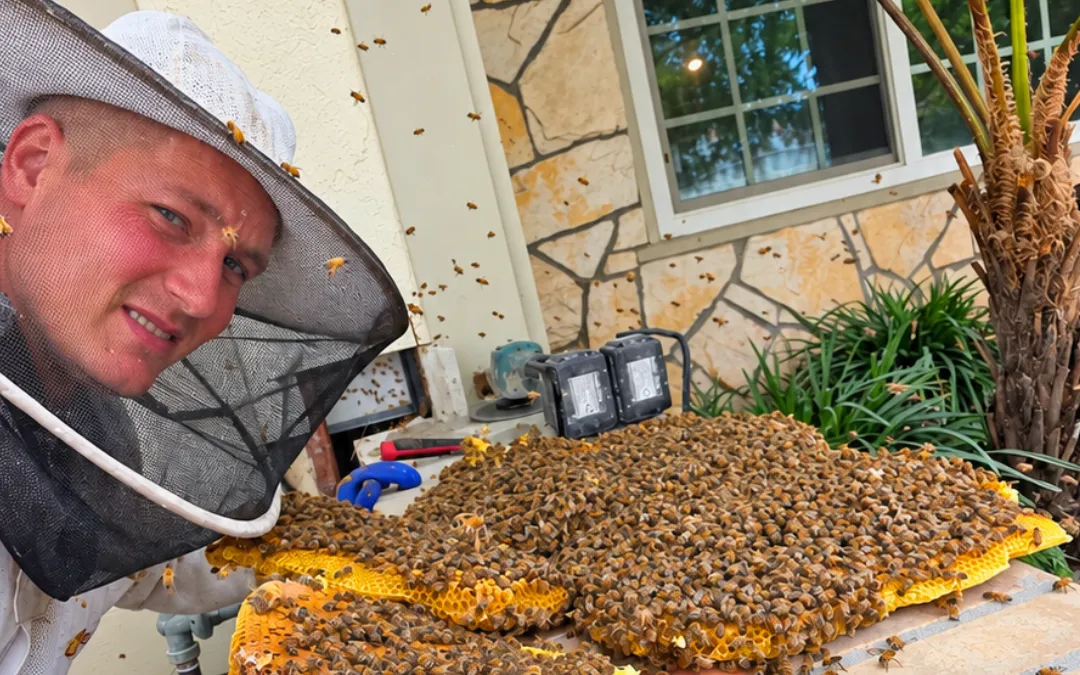
- The bees are collected gently and alive, so the colony can be relocated instead of killed.
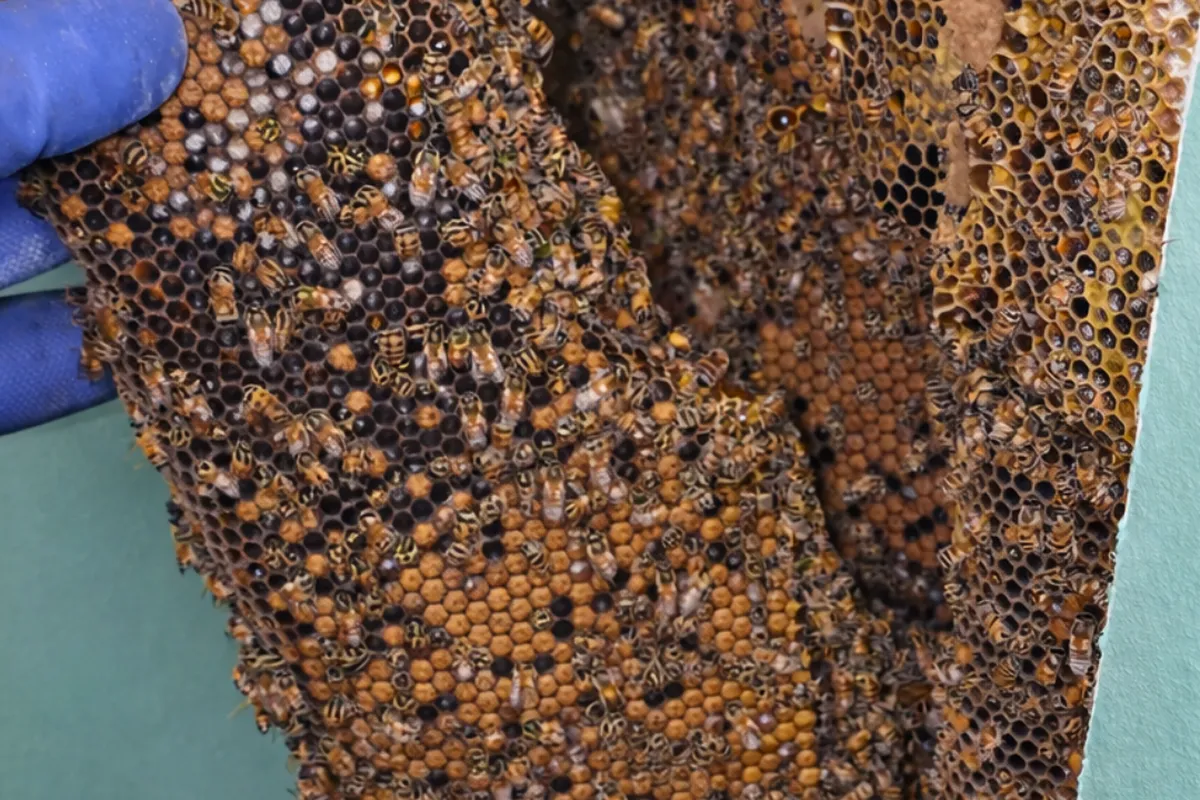
- Every piece of comb, honey and brood comes out. Leftover comb can rot, leak, attract pests and draw in the next swarm.
- I clean the wax and honey residue out of the cavity so the old scent doesn't keep pulling bees back.
- The entry point gets sealed and the siding goes back on, on the same visit.
That's what my bee hive removal service covers. I don't use chemicals or pesticides on honey bees, and the bees get relocated alive.
What does a hive behind siding look like?
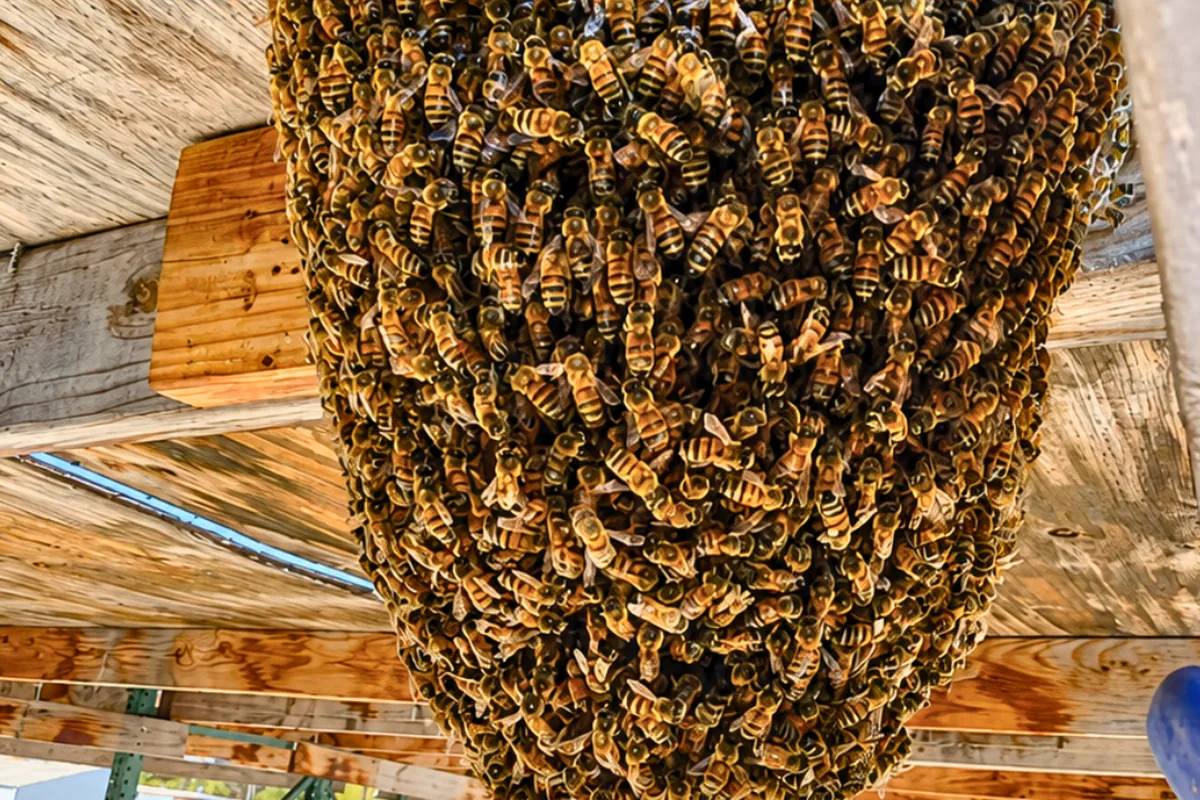
Usually bigger than people expect. On one job in Claremont, I found a large honey bee hive behind the siding of a home, with long sheets of honeycomb built inside the wall. That's the photo at the top of this post.
From the street, a hive like that can look like nothing more than a few bees at a gap, because the comb is hidden behind the panels. Bees fill the space between the studs with comb and keep building as long as nobody bothers them, so every month it stays there's more comb and honey to take out.
Should you seal the gap or spray the bees?
Please don't do either. I get why people want to, but each one usually makes things worse.
- Sealing the gap traps the colony in the wall. Bees look for another way out, and that can be through an outlet, a vent or a light fixture into your home.
- Spray rarely reaches the whole colony, and killing bees in place "often leads to undesirable consequences," according to UC IPM. Dead bees and brood rot and smell, and honey can ferment and seep through the wall.
- Comb left behind after the bees are gone invites the next colony in. UC IPM notes that the scent of old wax attracts future swarms.
I go into more detail on this in why you should never spray a bee hive in a wall.
What does it cost to remove bees from siding?
Bees under siding are a structural removal, which runs $375 to $1,000 with me. Where your job lands depends on how big the colony is, how high it is, what kind of siding you have and how much needs to be opened up. The inspection is free, so you'll know what's involved before any work starts.
How do you keep bees from coming back under the siding?
Once the colony and comb are out, the work is closing up the house:
- Seal gaps around pipes, wires, vents and fixtures where they pass through the siding
- Repair loose, cracked or warped panels and trim
- Screen vents and weep openings without blocking the airflow they need
- Check the siding each spring, before swarm season picks up
UC's Africanized bee guidance recommends sealing openings wider than 1/8 inch in walls. If you see a few scout bees checking out a gap, close it then, before a swarm moves in.
Need a hand?
If you've got bees going in and out of your siding, keep people and pets back and don't seal or spray the opening. Call or text a photo to (626) 487-6052, or request a quote online. I'll come out for a free inspection and tell you what it will take to get the bees and comb out and the siding sealed. I answer calls 7 days a week, and I do removals Monday through Saturday.
Frequently asked questions
Can bees damage house siding?
Can I spray bees under my siding?
Will bees under siding come into the house?
How much does it cost to remove bees from siding?
Are the bees under my siding carpenter bees?
Like these guides? Add Eli the Bee Guy as a preferred source on Google to see more of them in your search results.