Honey bees in your backyard usually mean one of two things: a swarm resting for a few hours or days, or an established hive that has moved into something on your property and built honeycomb. From a distance they look alike, but you handle them very differently. Here's how to tell which one you've got, what's safe to do yourself, and what a proper live bee hive removal looks like.
Swarm or hive? Figure out which one you have
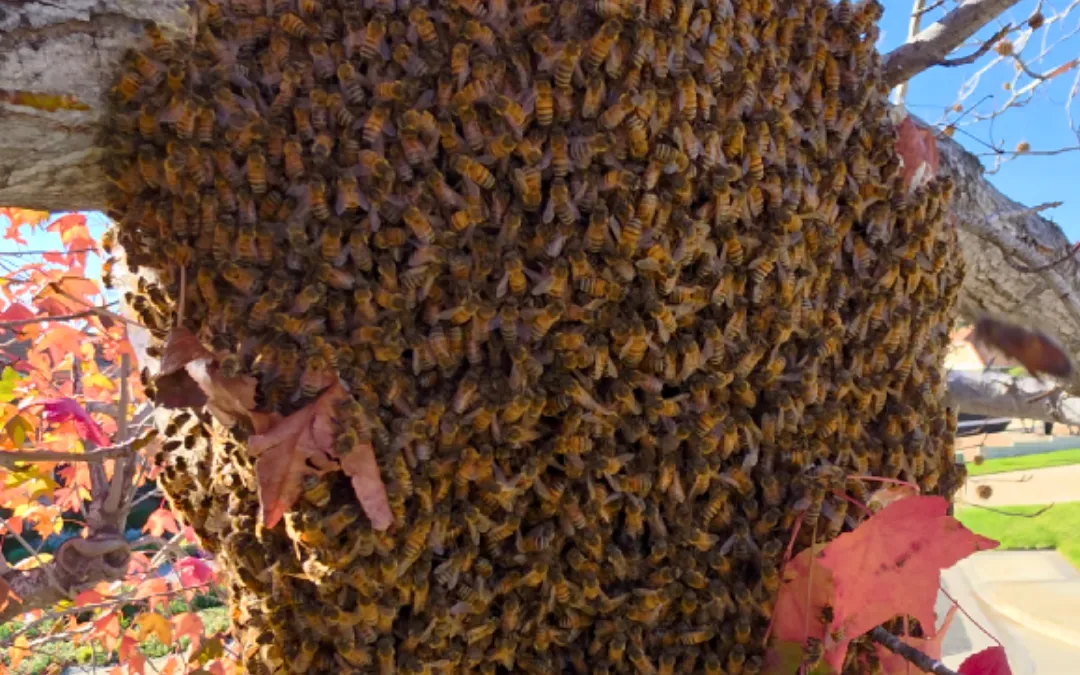
A swarm is a ball or beard of bees hanging out in the open, on a branch, fence, mailbox or eave. There's no honeycomb yet. Swarming is how bees reproduce: part of a colony leaves with a queen and waits while scouts look for a new home. Swarms are usually calm because they don't have comb or brood to defend, and a lot of them leave on their own in a day or two. Here is what to do about a swarm outside.
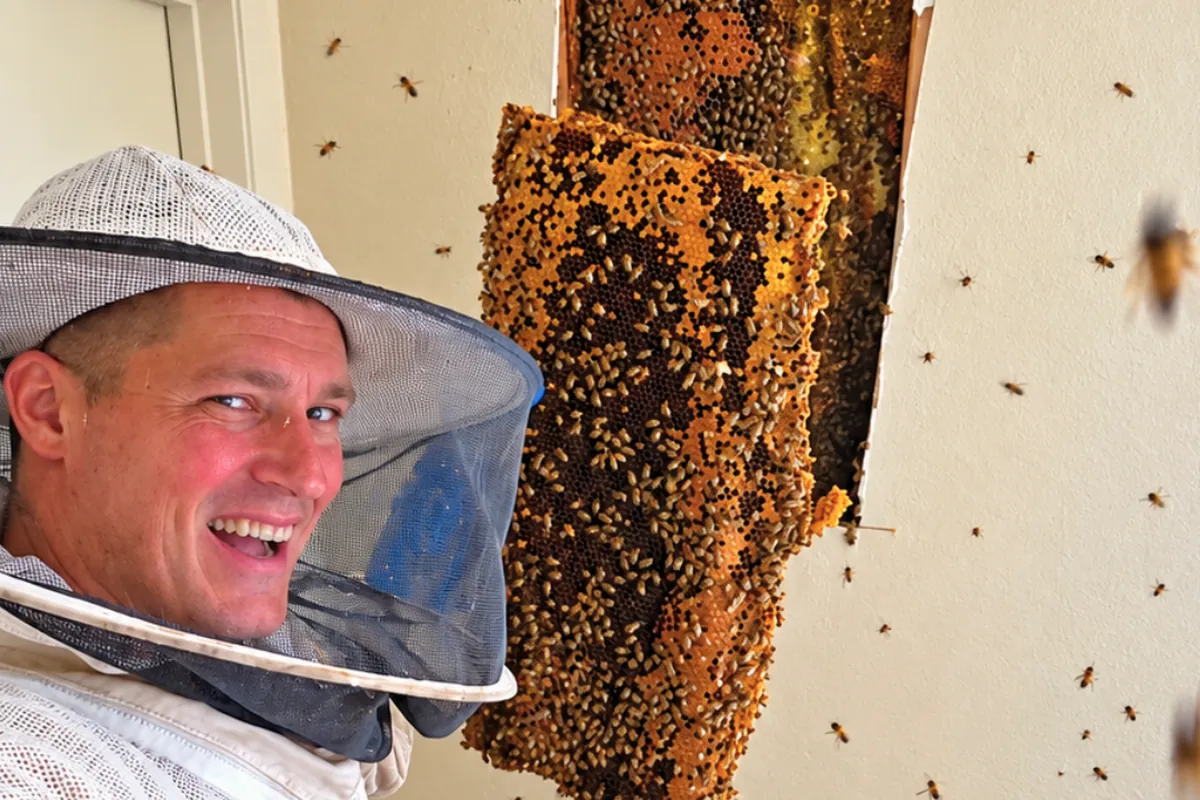
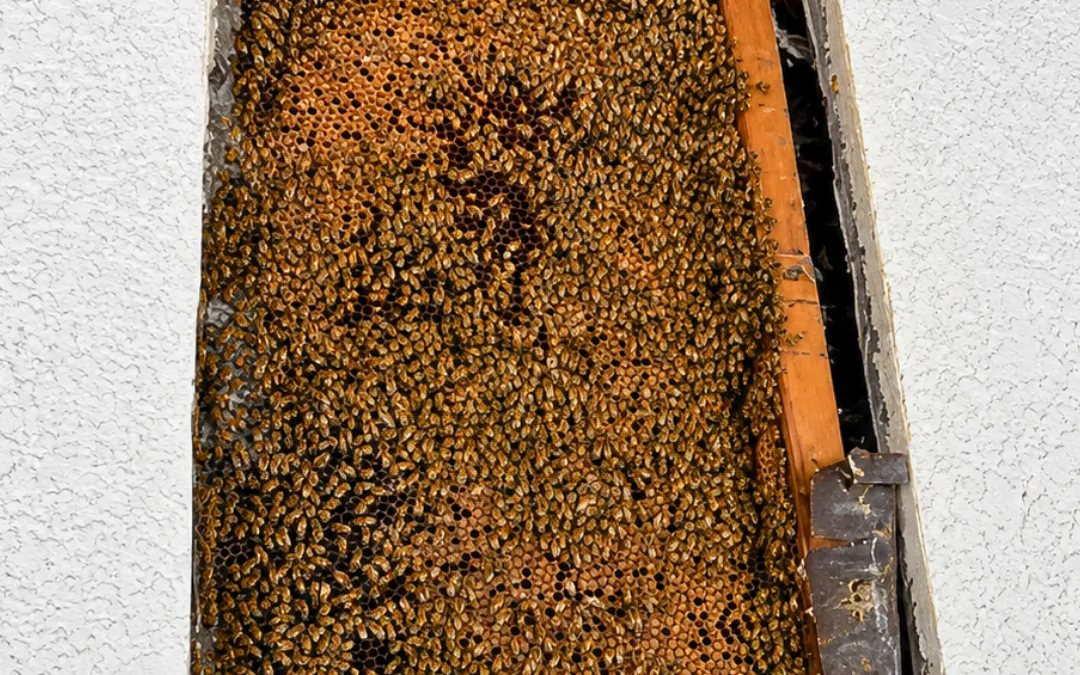
A hive is a colony that's moved in and started building comb. You'll see a steady line of bees flying in and out of one spot, like a gap in the stucco, a roof tile, a vent, a block wall, a water meter box, a tree hollow or a shed. Bees going in and out of the same small hole day after day almost always means there's comb behind it, and that colony won't leave on its own.
What is safe to do yourself
- Keep people and pets back. Stay at least 20 to 30 feet from the entrance or the swarm, and keep the kids and dogs inside while you work out a plan.
- Shut off equipment near it. Lawn mowers, leaf blowers, hedge trimmers and string trimmers are the most common reason people get stung, because the vibration and noise put bees on the defensive.
- Watch from a distance. Notice where the bees are going in and roughly how many there are. A photo of the entrance taken from a safe spot helps a beekeeper give you an accurate quote.
- Leave it alone and call. A swarm can often be collected the same day, and a hive is easier to remove before it's had months to build comb.
What not to try
- Don't spray it. Spray kills the bees you can see and misses the colony behind the wall, and the honeycomb and honey stay inside. The comb melts, draws ants, roaches and rodents, and the smell brings the next swarm to the same spot. Why spraying a hive in a wall backfires.
- Don't seal the hole with the bees inside. Trapped bees look for another way out, and that's often into the house through outlets, light fixtures and vents.
- Don't knock it down, burn it or flood it with water. Those are the quickest ways to get stung, and in Southern California a lot of colonies carry defensive (Africanized) genetics. More on Africanized bees.
- Don't count on "natural repellents". Peppermint, vinegar and cinnamon won't move an established colony that has comb and brood.
How a live bee hive removal works
A live removal takes out the whole colony, including the part you can't see:
- Find out how far the hive runs. The entrance is often a foot or more away from where the comb actually sits, so I use a thermal camera and experience to pinpoint it.
- Open the cavity. I carefully open the stucco, drywall, roof tiles, siding or block caps over the comb.
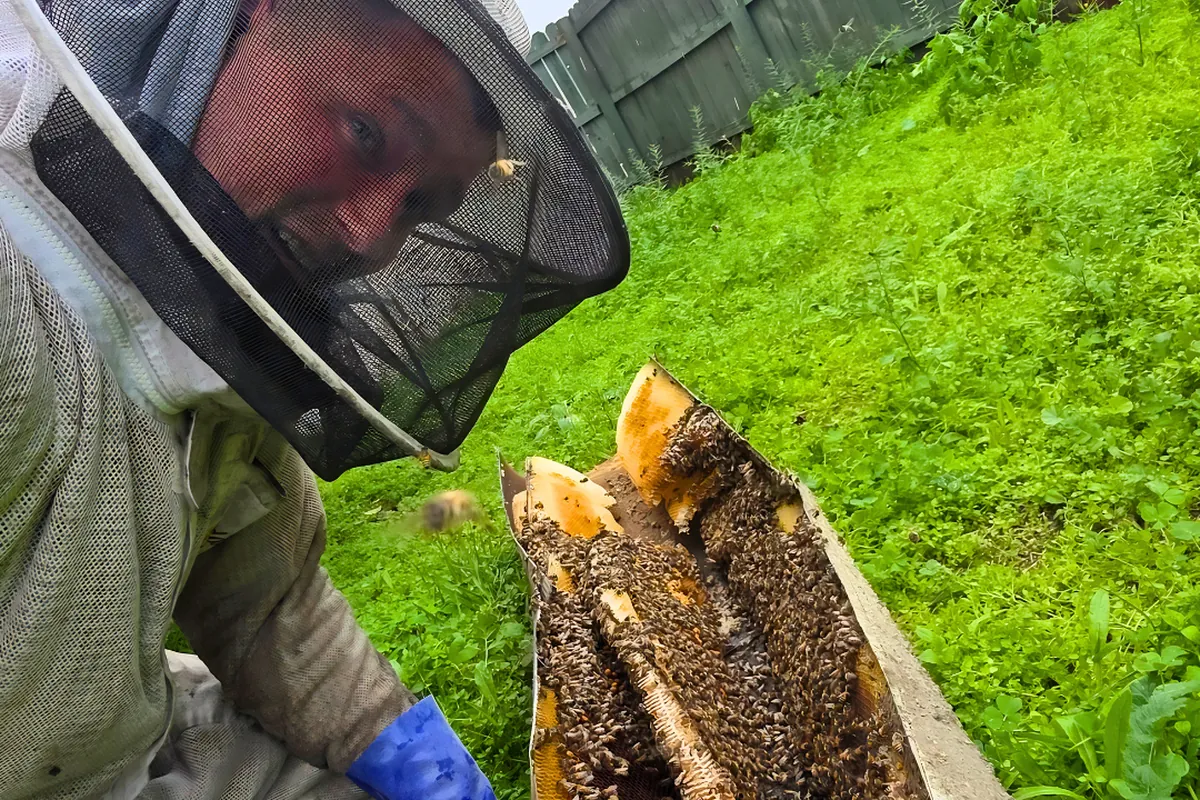
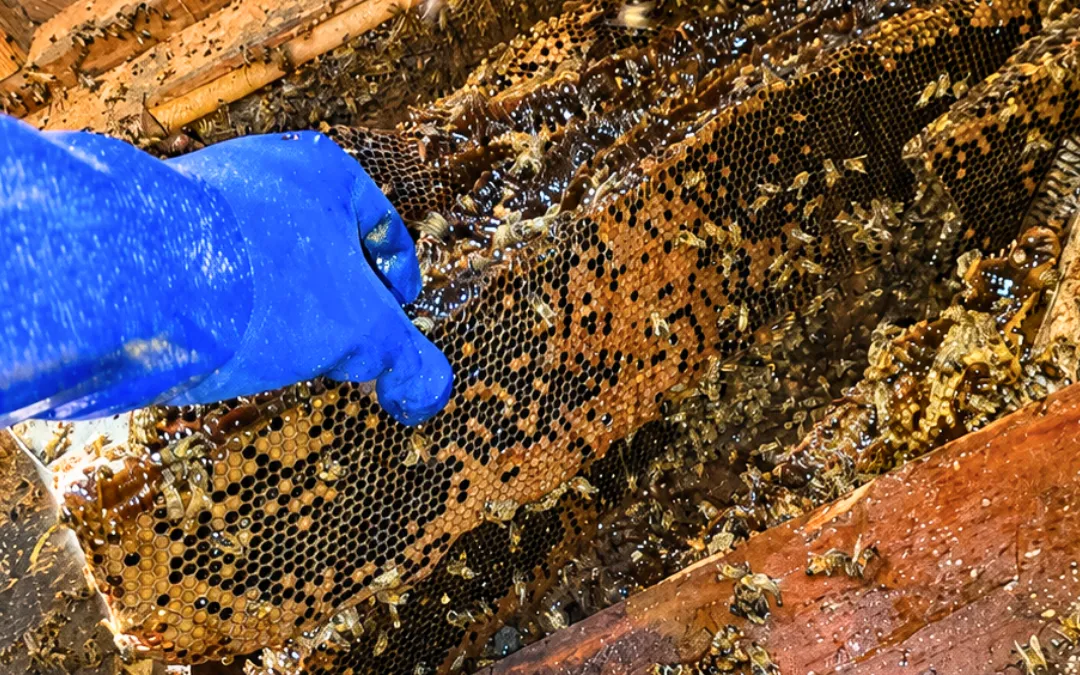
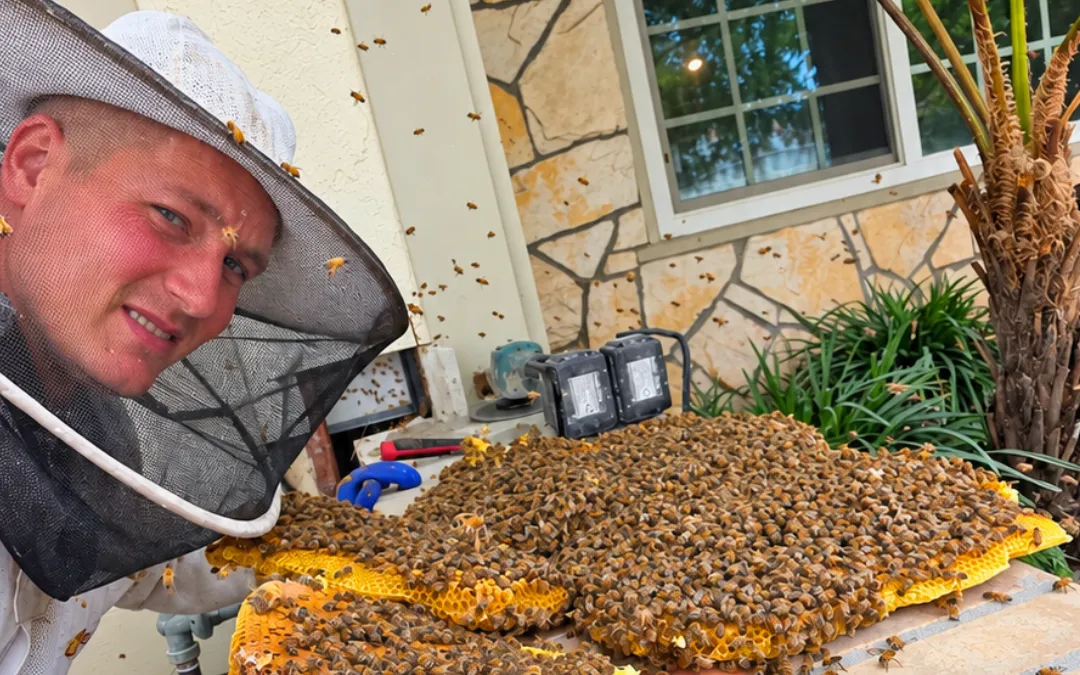
- Take out the bees and every piece of comb. The bees, brood and queen go into a box for relocation. All of the comb and honey comes out too, because leftover honey is what causes stains, pests and repeat swarms.
- Clean and seal. I clean out the cavity and seal the entry point so scout bees can't move back in.
- Patch. The opening gets patched as part of the job, depending on the condition of the structure. It’s a patch, not a structural rebuild.
The bees get relocated to local beekeepers. Nobody kills them. I'm a beekeeper, Eli the Bee Guy isn't a pest control company, and I don't use pesticides on honey bees.
When it's urgent
Call right away if bees are inside the house, if someone near the hive is allergic, if the colony is next to a door, pool, play area or business entrance, or if the bees are acting defensive and following people. For more, see what to do in a bee emergency, or book emergency bee removal.
When to call a pro
Once bees have built comb inside a wall, roof, shed or water meter box, it's time to call someone. The comb has to come out with the bees, or it rots and draws the next colony to the same spot. That job is beehive removal, and I do it across Orange County, the Inland Empire and Los Angeles County, for homes and for businesses and HOAs.
A ball of bees hanging on a branch or a fence is a swarm, and that's a different, simpler job. My bee swarm removal is $250.
Get a quote
I price every job after I see it, because a swarm on a branch and a five-year-old hive in a second-story wall are very different jobs. Call, or text a photo, to (626) 487-6052. See what affects the cost of bee removal.
Frequently asked questions
Can I remove a bee hive myself?
A swarm hanging in the open is best left to a beekeeper, and a hive with comb inside a structure shouldn't be a DIY job. It means opening up the structure, taking out all the comb and sealing the entry around tens of thousands of bees. Spraying or sealing them in causes bigger problems.
Will bees in my yard leave on their own?
A swarm resting in the open often leaves in a day or two. A colony that has built comb inside a wall, roof, box or tree won't leave on its own.
Is it safe to spray a bee hive?
No. Spray kills the bees you can see but leaves the comb and honey inside, and that melts, draws pests and brings in new swarms. In Southern California, stirring up a colony can also set off a defensive response.
What happens to the bees after removal?
I take them out alive and relocate them to local beekeepers. At Eli the Bee Guy I don't use pesticides on honey bees.
Do you repair the wall or roof after removing a hive?
Yes. I always seal the entry point, and I can patch the stucco, drywall, wood or roofing as part of the job. It's a patch, not a rebuild, it depends on the condition of the structure, and it doesn't come with a structural warranty.
Like these guides? Add Eli the Bee Guy as a preferred source on Google to see more of them in your search results.