A low, steady hum in a wall or a swarm swirling over the yard can turn a normal day into a decision you have to make fast. If you manage a property in Southern California, the bees are only part of it. You're also thinking about tenants, liability, kids and pets, allergies, and how quickly this can get worse.
People search for "bee removal vs extermination," and the choice usually comes down to this: do you want a fix that lasts, keeps people safe and doesn't leave a bigger mess behind, or do you want the fastest stopgap and live with the trade-offs? The right answer depends on what kind of bee you have, where they're nesting, and what "safe" means for your household or your site.
Bee removal vs extermination: the real difference
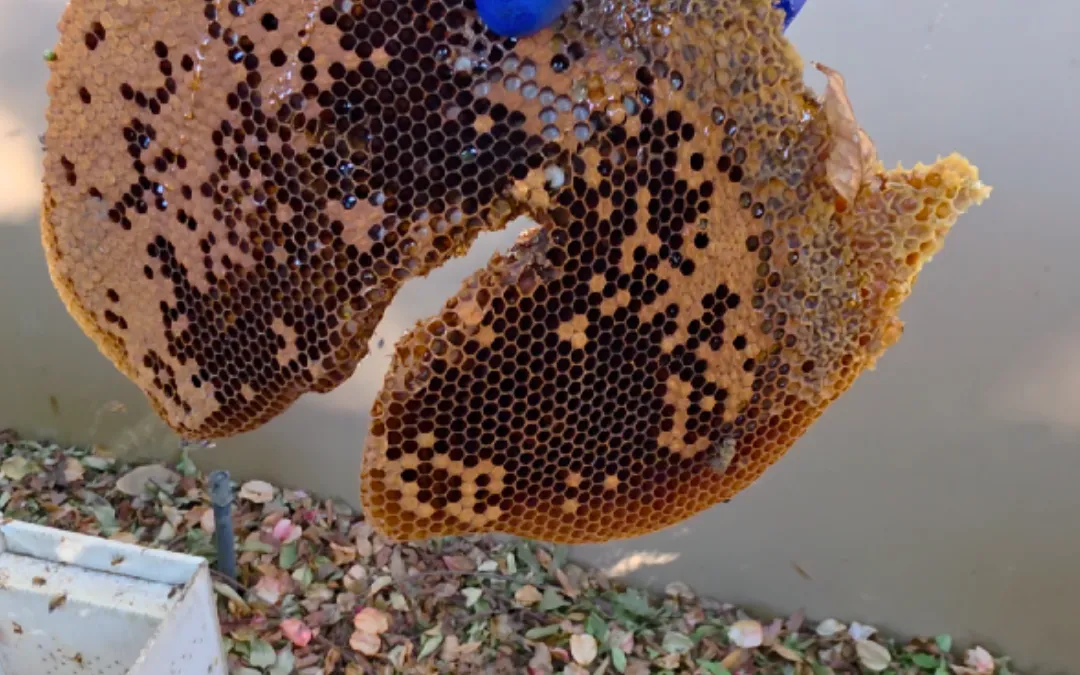
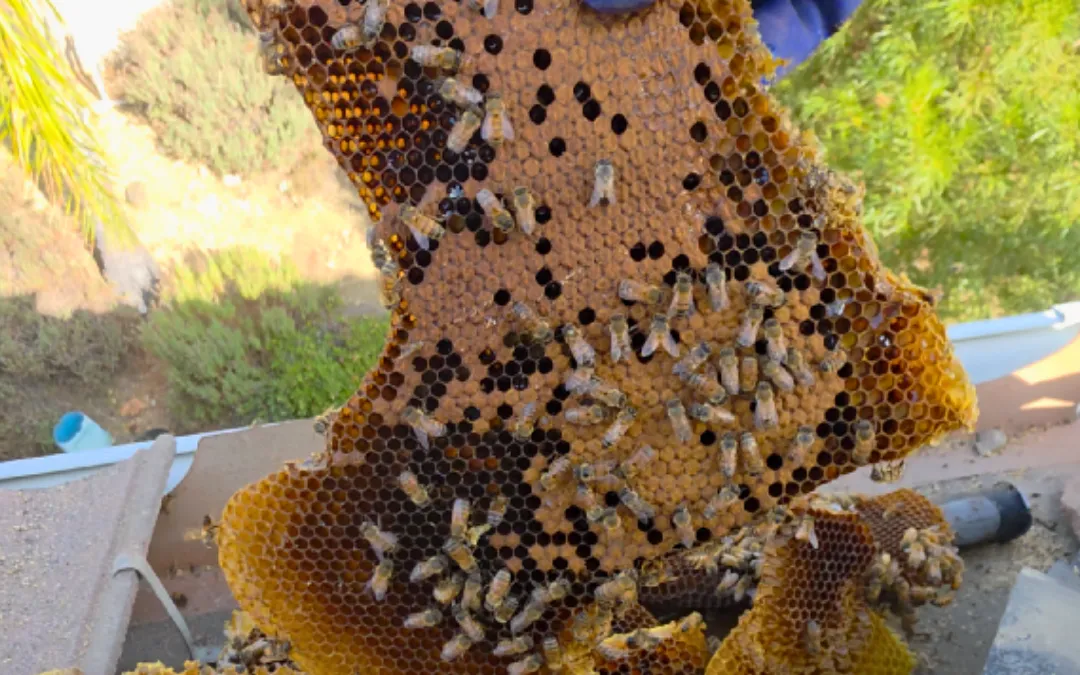
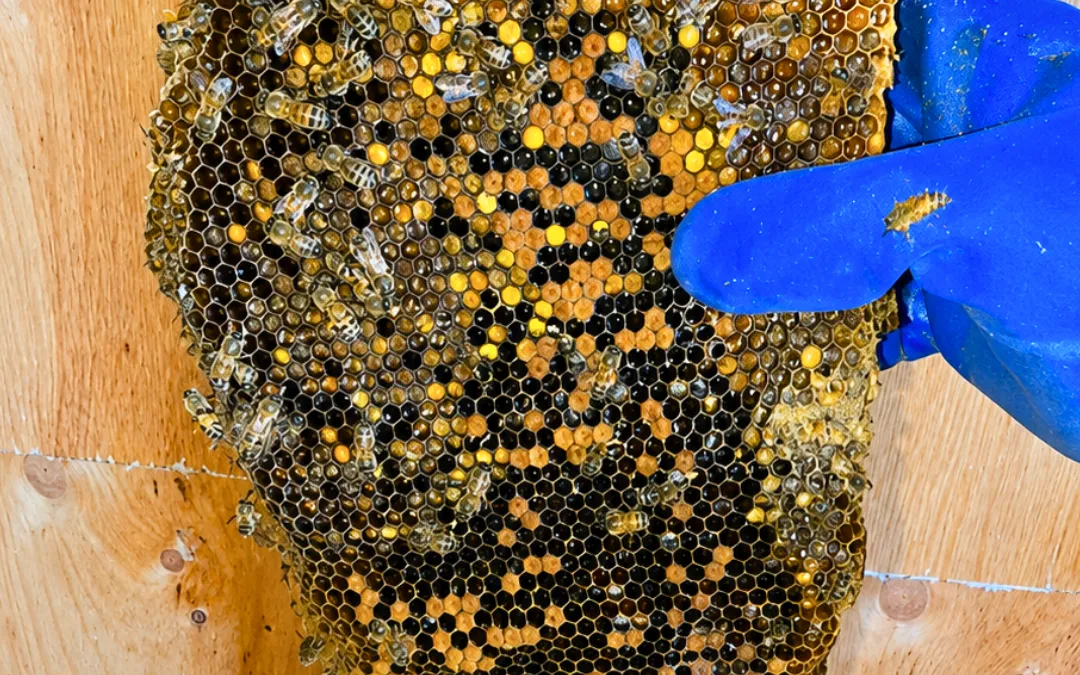
Live bee removal means taking the colony out of the structure or off the property and relocating it somewhere the bees can keep living like bees. When I do it, the whole hive comes out: the bees, the comb and the stored honey. Then I seal the entry points so that colony, or a new one, doesn't move right back in.
Extermination means killing the colony on purpose, usually with insecticides or dusts. Sometimes it gets sold as "treatment" or "spraying," but the goal is the same: kill the bees where they are.
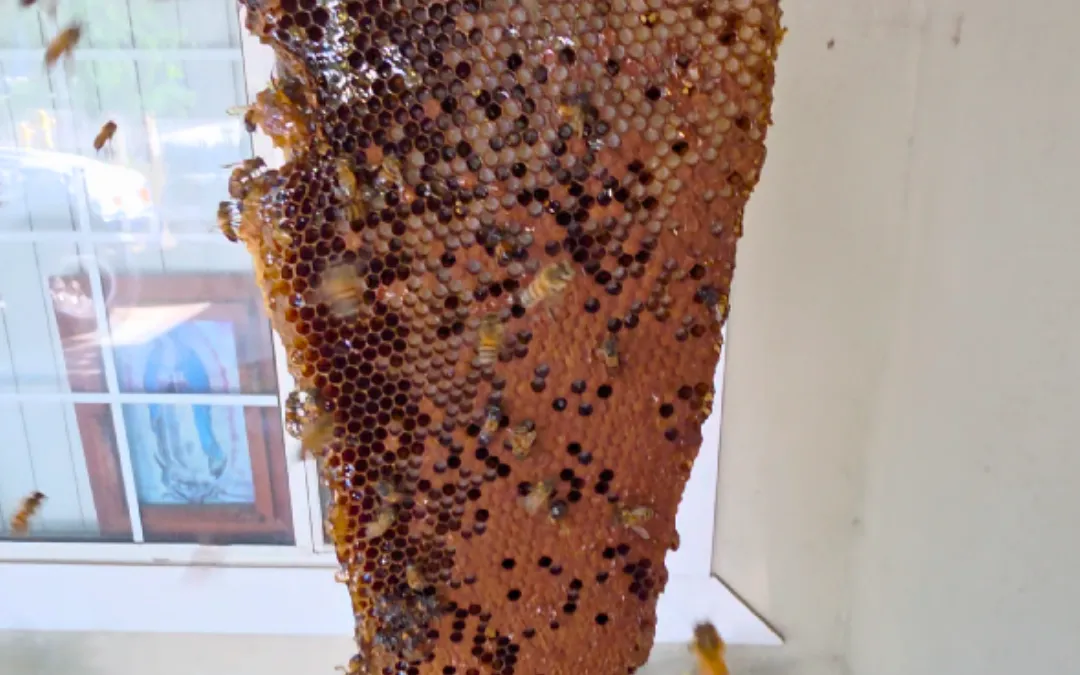
What a lot of people find out too late is that killing bees in a wall leaves the hive in the wall. The comb, brood and honey stay put. That can mean odor, stains, other pests, and even fermenting honey soaking into the drywall. You can end up paying twice, once to kill them and again to open the wall, clean it out and fix what the bees were living in.
Why removal usually lasts longer
When bees move into a wall, soffit, attic or eave, they picked that spot for a reason. They found a protected cavity with an entrance they could use. If the cavity stays the way it is and still smells like hive, it can pull in a new swarm next season.
A real removal deals with why they're there. That means taking the colony out safely, getting the comb and honey out, and then closing and patching the entry point. When all of that gets done, you have your house back, and the odds of bees moving back in drop way down.
Extermination often stops the flying bees quickly, and that feels like the problem's solved. But if nobody is removing the hive material, you can be left with a cleanup problem you can't see that shows up days or weeks later.
When extermination gets considered (and why it's complicated)
Some people think about extermination because they're scared, because someone in the house has a severe allergy, or because they need the risk to customers and staff down right now. Those are fair concerns. Safety comes first.
The trouble is that extermination brings its own safety and property risks. Bees can get more defensive while chemicals are being applied. If the colony dies inside a wall, other insects move in, and ants, roaches and wax moths after a kill are common. Honey can also melt and run when it heats up, and in Southern California that happens plenty.
And not everything that looks like a "bee problem" is honey bees. Yellowjackets and paper wasps are different insects that nest differently. If it isn't honey bees, relocation may not make sense, and the way you handle it changes.
Swarm vs established hive: your next move depends on this
A swarm is a temporary cluster of bees, often hanging from a branch, a fence or the side of a building. Swarming bees are on the move and looking for a new home. They haven't built comb inside your structure yet.
An established hive is a colony that has moved into a cavity and built comb. You might see steady traffic in and out of one opening, staining around the entry, or a hum behind a wall or ceiling that doesn't go away.
Swarms are usually the easiest to handle humanely, and speed matters. If a swarm gets removed quickly, you can often keep it from turning into an established hive inside a wall.
Established hives take more work. Usually I have to open up the area where the colony lives to get the comb out and clean the cavity properly. That's where the "quick spray" approach tends to backfire, because the hive itself is still in there.
What property managers should think about: liability and repeat calls
If you manage apartments, retail spaces, warehouses or offices, this isn't only a matter of personal preference. It's risk management.
Live removal with entry-point repair is usually the approach you can repeat and defend, because it goes after how the bees got in. If a tenant or customer gets stung after a chemical-only treatment that left the hive and honey behind, you're dealing with a second incident that people will say could have been avoided.
A professional removal also leaves you a clearer record of what was done: where the colony was, what came out, what was patched and what I recommend to keep it from happening again. I film every job before and after, which helps when several people need to sign off.
Allergies, kids, pets: how to prioritize safety without panic
If someone in the building has a history of severe allergic reactions, treat any active hive as urgent. That doesn't automatically make extermination the safest choice. The safest choice is the one that lowers the sting risk while the problem is being handled and keeps it from coming back.
In practice that usually means keeping people out of the area, keeping pets inside, and not banging around or running equipment near the nest until a professional gets there. A DIY spray can drive defensive bees into the living space or push them into new voids inside the structure.
If the hive is near a doorway, a playground, pool equipment or a busy walkway, getting someone out fast matters even more. You want the risk down right away and the space back in normal use as soon as possible.
The hidden costs of extermination inside structures
People compare the price of removal to the price of extermination and forget about what comes after.
When bees are killed in a wall and the comb stays behind, you can get:
- Odor from dead bees and fermenting honey, especially when it warms up
- Stains spreading through drywall, plaster or ceilings
- Other pests coming in for the honey and brood
- Sticky seepage that ruins insulation and finishes
- A new swarm moving in because the cavity still smells like a hive
Once you add up the repair work, the pest follow-ups and the tenant complaints, the "cheaper" option can turn into the expensive one.
What humane removal looks like when it's done right
Humane removal means more than catching some bees. There's an order to it, and every step is there to keep people safe and save the colony.
First I figure out what the insect is and exactly where the colony sits. Then I remove the bees in a controlled way, cut out the comb and clean the cavity as well as the structure allows. Last, I seal and patch the access points so the space doesn't invite the next swarm.
Where the bees end up matters too. Moving bees to a vetted apiary gives the colony a real chance to keep going, instead of getting dumped somewhere it can't survive. That's the ethical part a lot of homeowners care about, and there's a practical side as well: when bees are relocated responsibly, a stressed colony is less likely to become someone else's problem down the street.
If you want a local, ethical option for live removals and full hive extractions across Southern California counties, that's what I do at Eli the Bee Guy. I relocate the bees and seal the entry points, and nobody has to kill a colony to get the house back.
How to decide quickly: a calm checklist in your head
You don't have to be an expert to make the right call. You just have to recognize what you're looking at.
If there's a hanging cluster that showed up in the last day, it's probably a swarm. Keep your distance and get it removed soon, before it moves into a wall.
If you've seen steady traffic into a crack, vent or roofline for several days, assume it's an established hive. At that point, go for full removal over any surface treatment. Ask whoever you call whether they take out the comb and honey and whether they close up the entry point afterward.
If you can't tell whether they're honey bees or wasps, don't guess. Get it wrong and you can pick the wrong approach and make things worse.
Prevention after the bees are gone
Bees are very good at finding gaps you didn't know you had. After a removal, prevention mostly means not letting them in.
Sealing openings along the roofline, fixing damaged vents and screens, and closing gaps where pipes or cables enter the building make a big difference. A lot of the time, small repairs like that are what keep a one-time problem from turning into a yearly one.
If you've had bees more than once, ask for an inspection, not just a removal. You want to know where the bees are today, and also why they like this building and what will keep them from coming back.
A decision that protects both people and pollinators
Bees can feel like an emergency because sometimes they are one, especially around busy areas or when someone has an allergy. Choosing between removal and extermination comes down to which approach keeps your property safe, avoids damage you won't see until later, and leaves alive an insect that does real work in our food system.
If you're standing in the yard right now watching bees go in and out of a wall, the next step is simple. Keep your distance, keep other people away, and get a professional to look at it who will take out the whole hive and seal it up. When the job's done right, you get your space back and the bees go somewhere better suited to them.
Like these guides? Add Eli the Bee Guy as a preferred source on Google to see more of them in your search results.