A lot of the people who call me start the conversation the same way: "I want the bees gone, but I don't want to kill them." Good, I'm glad to hear it. Honey bees are pollinators, and most of the time there's no reason a colony has to die just because it picked a bad spot. What you need to know is which approach works for your situation, because a lot of the "natural" advice online doesn't work at all.
Short answer: To get rid of bees without killing them, first figure out what you have. A swarm hanging out in the open often leaves on its own within a few hours to a few days. An established hive with comb won't leave, and home remedies like vinegar, mothballs or smoke won't move it. A hive needs live removal and relocation.
Below is how to tell the two apart, what works, which popular tricks to skip, and what happens to the bees afterward.
Is it a swarm or an established hive?
Answer this one first, because everything else depends on it. A swarm is just stopping over, while a hive is where the colony lives.
| Swarm | Established hive | |
|---|---|---|
| What you see | A ball or clump of bees hanging on a branch, fence, eave or shrub | Bees flying in and out of a hole in a wall, roof, tree, box or vent |
| Comb | None, or just starting | Wax honeycomb with honey and brood |
| How long it stays | Usually a few hours to a few days | Stays and grows until it's removed |
| Temperament | Usually calm; no home to defend yet | Will defend the nest |
| Humane option | Wait it out, or have it collected | Live removal of bees and comb, then relocation |
If you're not sure which one you're looking at, take a photo from a safe distance and text it to me. I can usually tell right away.
How do you make a bee swarm go away naturally?
A lot of the time, you just wait. A swarm is a group of bees that left their old colony with a queen, and it's resting while scouts look for a new home. UC IPM's honey bee Pest Notes describe swarm clusters as temporary and say they usually move on within a few hours to a few days once the scouts agree on a site.
While you wait:
- Keep people and pets well back, and keep kids from throwing things at it
- Don't spray it with water, a hose or anything else
- Don't run mowers, trimmers or blowers right next to it
- Watch for signs it's settling in: comb forming, or bees slipping into a wall, roof or box
If the swarm is somewhere you can't avoid, like over a front door or a busy walkway, or if it hasn't left after a few days, it can be collected alive. Swarm removal with me is $250. I go into the timing in more detail in will a bee swarm leave on its own?
Do vinegar, mothballs or smoke get rid of bees naturally?
Not an established hive. These are some of the "natural" remedies I hear about most, and none of them will remove a colony that has comb, brood and honey to protect:
- Vinegar or peppermint sprays might bother a few bees at the entrance. A colony isn't going to abandon its brood and honey over them.
- Mothballs are a pesticide, so they aren't a natural repellent to begin with, and they're not meant to be stuffed into walls or vents. They don't evict a hive either.
- Smoke is what beekeepers use to calm bees while they work. It doesn't drive them out, a colony won't pack up and leave over it, and fire next to a hive full of beeswax is a real hazard.
- Cinnamon, garlic, citronella and the like have the same problem. At best they shuffle some bees around for a while.
The bigger problem is what happens when a remedy half works. Bees that are pushed out of one part of a wall can end up deeper inside it, or in your living space. And if the colony does die, the comb and honey are still in there, rotting and drawing in the next swarm.
Why can't you just block the entrance?
Blocking it traps the colony where it is. Seal a hole with bees inside and they still don't leave. They go looking for another way out, and that can be through an outlet, a vent or a light fixture into the house. If they can't find one, they die in the wall with the brood, and the honey can ferment and leak. UC IPM warns that killing a colony in place "often leads to undesirable consequences," and the scent of old comb attracts future swarms.
I go into this more in why you should never spray a bee hive in a wall. The same goes for sealing it.
What is humane bee removal?
Humane, or live, bee removal means taking the whole colony out alive, comb and all, and relocating it. For an established hive, it's the only approach that saves the bees and also fixes the problem. With me, it goes like this:
- A free inspection, where I confirm they're honey bees, find the entry point and figure out where the comb is.
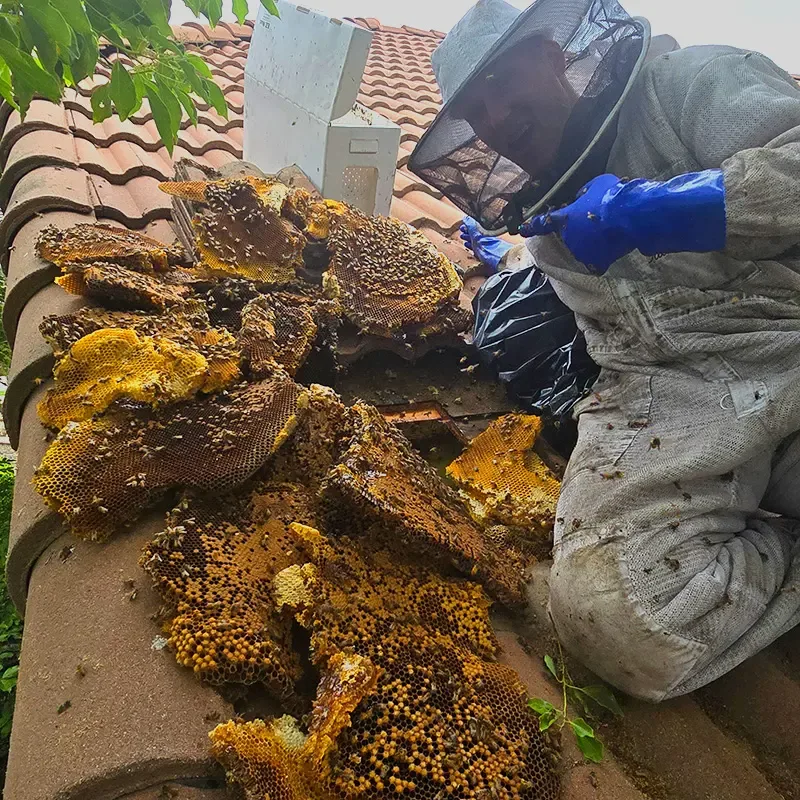
- I carefully open up the space to reach the colony, whether it's a wall, roof, soffit, box or tree.
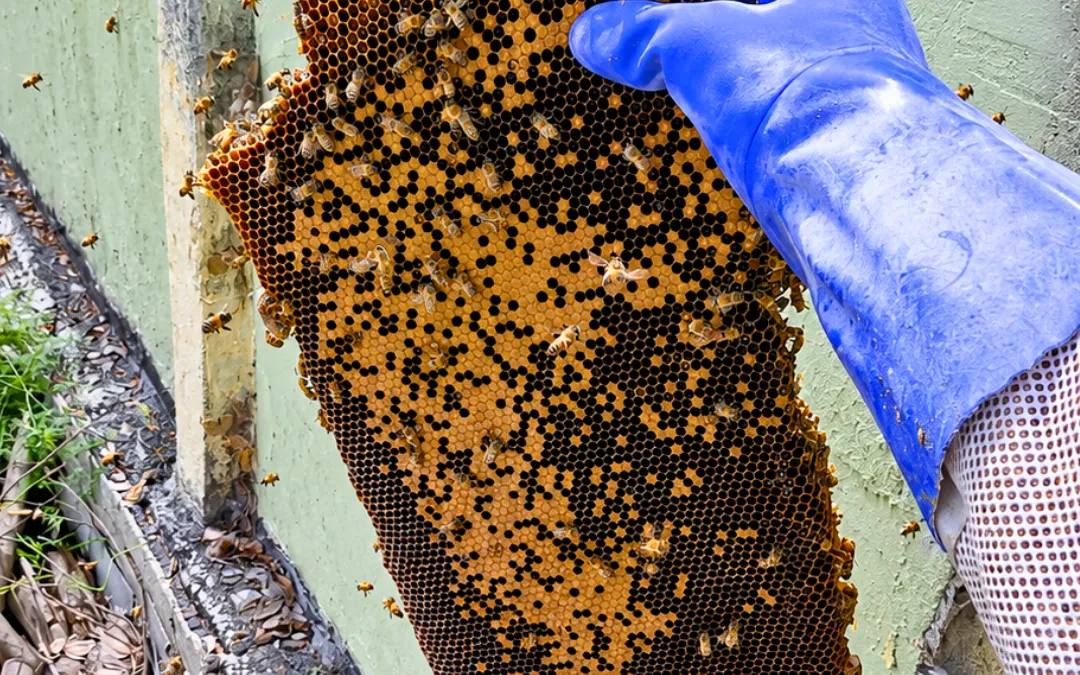
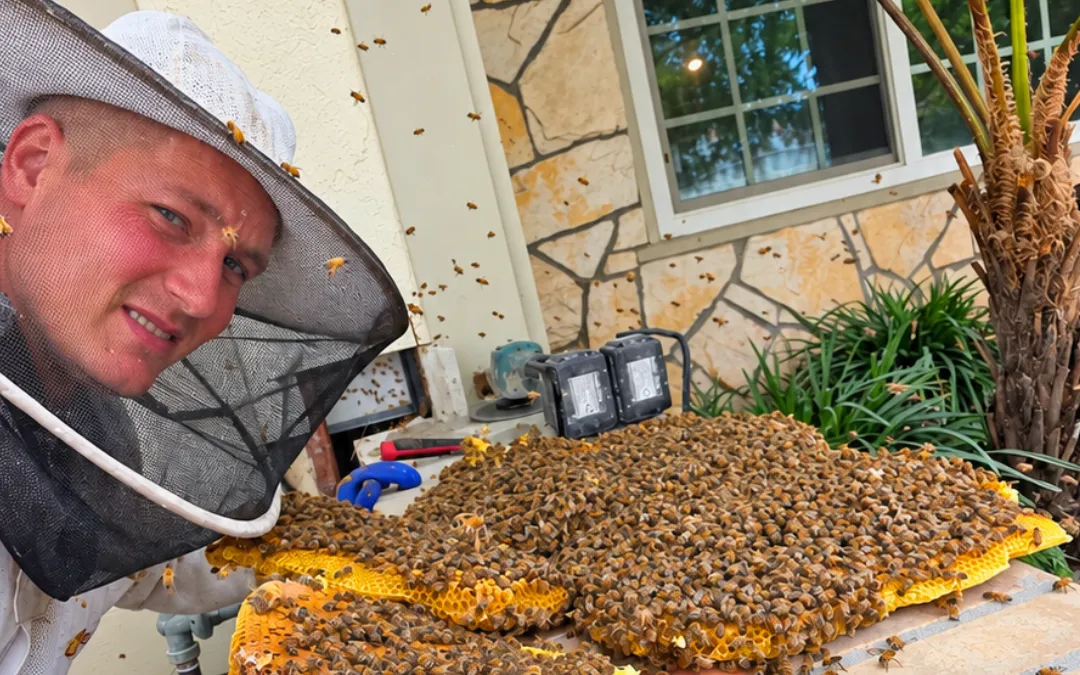
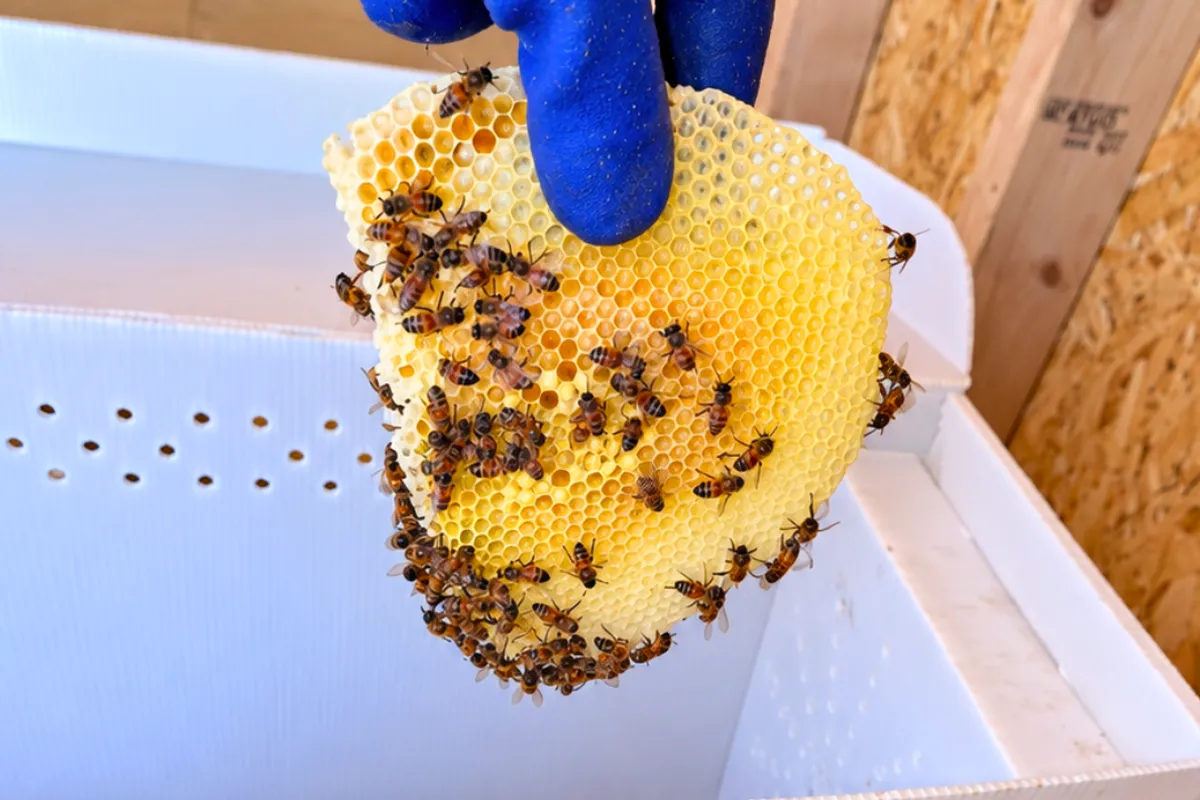
- The bees and comb come out alive. The comb with brood and bees goes into a bee box so the colony can be moved. No chemicals or pesticides.
- Everything else comes out too. I take all the comb and honey so nothing is left to rot or attract more bees.
- I seal the entry point and patch what I opened on the same visit.
That's the photo at the top of this post: honeycomb with live bees being placed into a bee box for relocation on a job in Eastvale. Structural removals like that run $375 to $1,000, depending on where the colony is and how much has to be opened up.
What happens to the bees after relocation?
They get another shot. With my bee relocation service, the colony goes to a vetted local beekeeper instead of being destroyed. Once it settles into a proper hive, it can keep growing and pollinating. If you're curious how colonies handle the move, I cover it in what happens to the bees after a live removal.
How do you keep bees away without hurting them?
Prevention is the most humane option there is, because it keeps a colony from moving in somewhere it can't stay. A few simple steps help:
- Seal gaps and cracks in walls, eaves and around pipes. UC's Africanized bee guidance recommends sealing openings wider than 1/8 inch.
- Screen vents, weep holes and chimney flues with fine mesh
- Keep lids on water meter boxes and irrigation valve boxes, and repair broken ones
- Clear out unused containers, empty boxes and junk piles that make good cavities
- If you see a few scout bees checking out a gap, close it before a swarm shows up
Just make sure no bees are living behind an opening before you seal it.
When should you call instead of waiting?
Call if bees are going in and out of a structure, if a swarm has stayed more than a few days, if you see comb, or if anyone in your home has a sting allergy. If someone is stung many times, has trouble breathing or is allergic, call 911.
Need a hand?
If you want the bees gone without killing them, call or text a photo to (626) 487-6052, or request a quote online. The inspection is free, and I'll give you a straight answer on whether it's a swarm you can wait out or a hive that needs live removal. I answer calls 7 days a week, and I do removals Monday through Saturday.
Frequently asked questions
Does vinegar get rid of bees?
Will bees leave if I block the hole?
How long will a bee swarm stay before it leaves?
Is humane bee removal more expensive?
Can a beekeeper take bees for free?
Like these guides? Add Eli the Bee Guy as a preferred source on Google to see more of them in your search results.