When people find bees in a wall or a swarm on a tree, the first thing a lot of them do is search for a beekeeper. That's a good instinct. A beekeeper wants the bees alive, and so do I. But "beekeeper" covers everyone from a weekend hobbyist with two hives to someone who opens walls and roofs for a living, and the difference matters a lot once the bees are inside your house.
Short answer: Yes, a beekeeper can remove bees, but not every beekeeper does removals. A hobby beekeeper may come collect an easy swarm hanging on a branch. Bees living inside a wall, roof, chimney or meter box need a beekeeper who does structural removals: someone who opens the area, takes out every piece of comb, relocates the colony and seals the entry so new bees don't move in.
Can a beekeeper remove bees from my house?
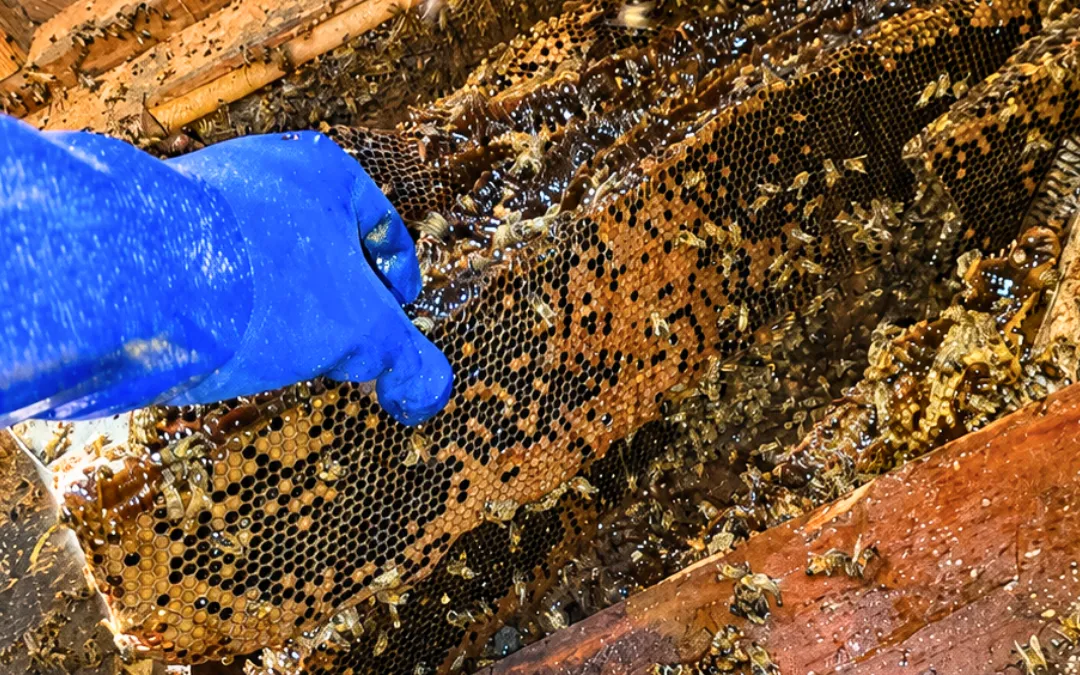
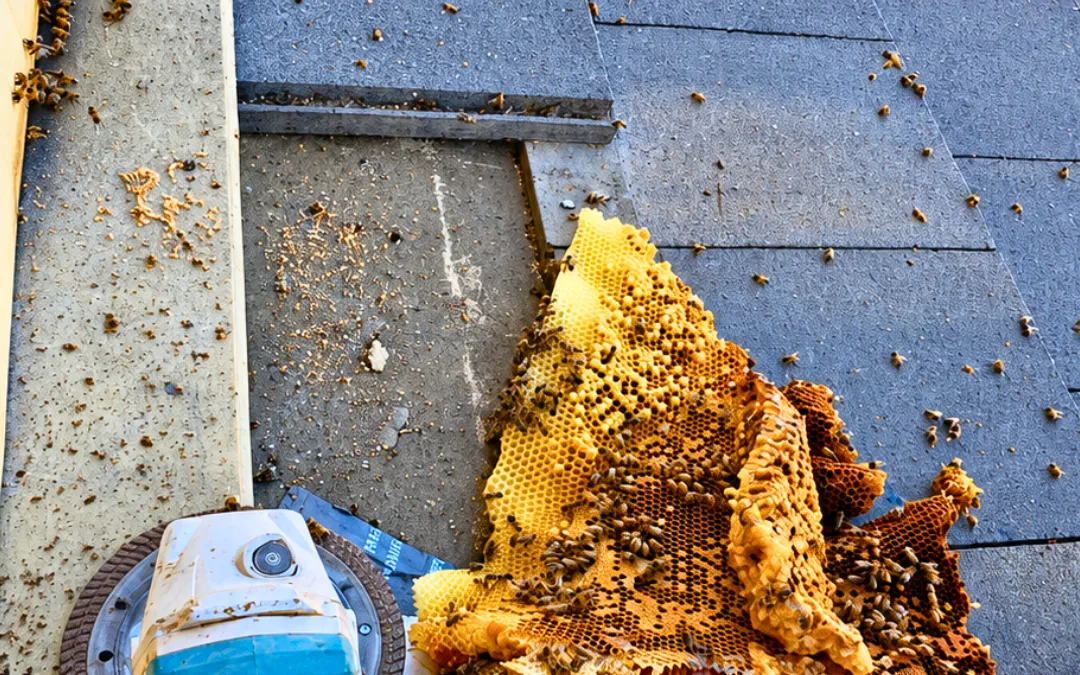
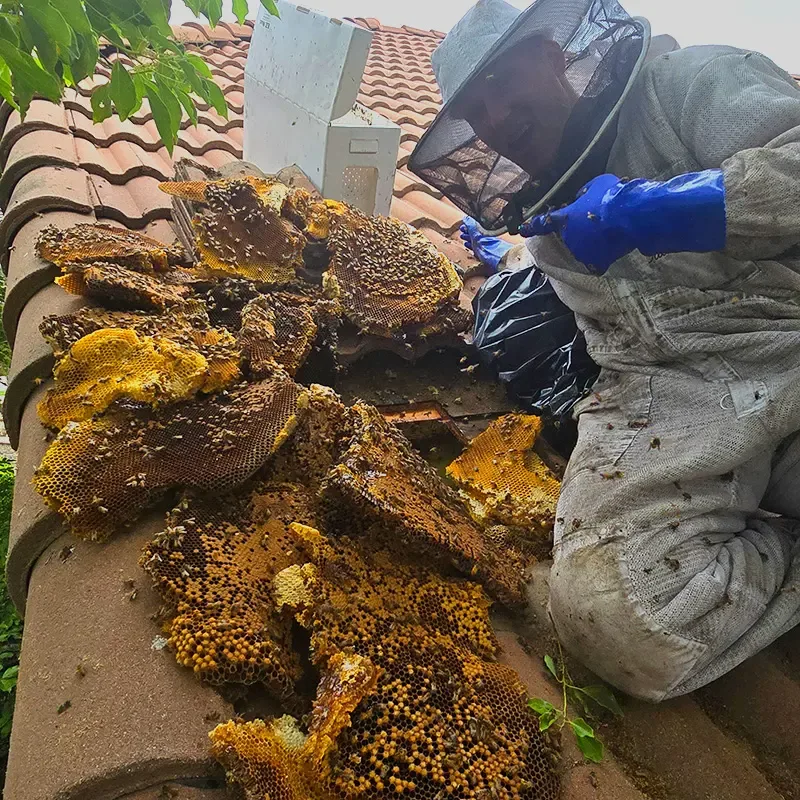
A beekeeper who specializes in removal can. That's what I do. I've worked with bees for over 15 years, and almost all of my jobs are colonies that have moved into a structure: walls, eaves, roof tiles, attics, sheds, water meter boxes and trees.
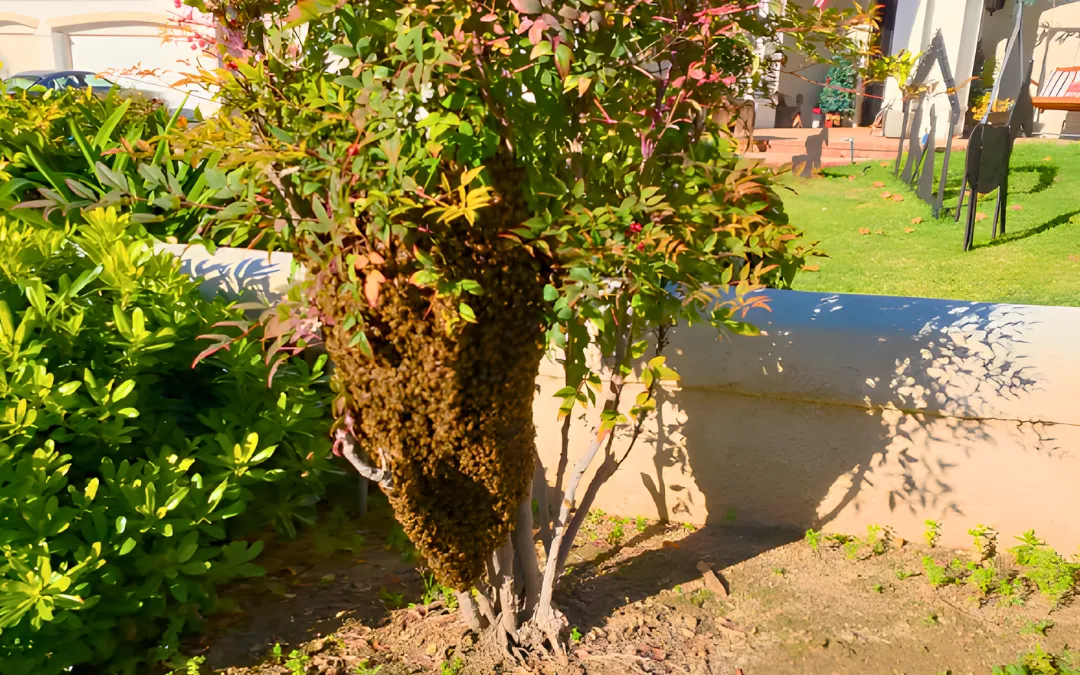
Most hobby beekeepers stick to swarms, and that makes sense. A swarm is a cluster of bees resting outside while scouts look for a new home. There's no comb yet, so a beekeeper can shake or brush the cluster into a box and drive away. An established hive is a different job. The bees have built wax comb, stored honey and raised brood inside your structure, and all of that has to come out.
Is it a swarm or a hive?
This is the first thing to figure out, because it decides who you should call.
- Swarm: a ball of bees hanging on a branch, fence, wall or car, sitting still. It usually shows up suddenly and may leave on its own within hours to a few days. See will a bee swarm leave on its own?
- Hive: bees flying steadily in and out of one opening, like a gap in the stucco, a soffit vent, a roof tile or a meter box lid, day after day. That colony is building comb inside. It won't leave by itself.
Will a beekeeper remove bees for free?
Sometimes, for an easy, low swarm that a beekeeper wants for their own apiary. Nobody removes a hive from a structure for free. It takes hours of careful work, protective gear, tools, ladders or a lift, and repairs afterward, and the colony from a wall often needs time and care before it's healthy in a box. I explain the real costs in is bee removal free?
Why most beekeepers won't open a wall
A structural removal is part beekeeping and part construction. You have to find exactly where the comb sits, often with a thermal camera, then cut into stucco, drywall, siding or roof without causing more damage than the bees did. Then you have to cut out the comb, keep the queen and brood alive, clean out the honey so it doesn't melt and attract pests, and patch the opening.
There's also the safety side. Africanized honey bees are established across Southern California, according to UC Riverside, and you can't tell them apart by looking. A defensive colony in a wall next to a sidewalk or a backyard full of kids needs someone with the gear and the experience to keep everyone safe while it's opened up.
What to ask before you hire a beekeeper for bee removal
- Do you remove all of the comb? Bees alone isn't enough. Comb and honey left in a wall melt, rot and attract ants, roaches and the next swarm.
- Do you seal the entry? The scent of an old hive draws new swarms to the same spot.
- Where do the bees go? In California, every beekeeper has to register their apiary with the county Agricultural Commissioner every year under Food and Agricultural Code section 29043, as the LA County Agricultural Commissioner explains. Ask whether the bees go to a registered apiary.
- Do you guarantee the work? Find out what is covered and for how long.
- What about repairs? Ask who patches the opening and what that includes.
- Can I see your work? Photos and videos of past removals tell you a lot.
Beekeeper or exterminator?
For honey bees in a structure, call a removal beekeeper. Spraying a hive in a wall kills the bees but leaves the comb and honey behind, and that causes its own problems. I go through the tradeoffs in bee removal vs extermination. Wasps and yellow jackets are different: they can't be relocated like honey bees, so their nests are removed instead. I handle those too through wasp removal and yellow jacket removal.
How I handle a removal
I'm on the LA County Agricultural Commissioner's list of live honey bee removal providers, and I work across Orange County, the Inland Empire and LA County. Every job starts with an inspection. Then I remove the bees alive along with all of the comb, relocate the colony to a vetted local beekeeper, and seal the entry.
- Swarms: $250. Swarm removals aren't guaranteed, because nobody can stop a new swarm from landing later.
- Hives inside a structure: $375 to $1,000, depending on where the comb is and how much has to be opened. These come with a 6-month guarantee that the bees won't come back.
- Repairs: I patch the opening myself. Patches depend on the condition of the structure and don't carry a structural warranty.
More on my process: bee hive removal and bee relocation.
Need a hand?
Have bees in your home and want them removed alive? Call or text me at (626) 487-6052 or request a free quote. I answer calls and texts seven days a week and do removals Monday through Saturday.
Frequently asked questions
Can a beekeeper remove bees from a wall?
Will a beekeeper take bees for free?
What does a beekeeper do with removed bees?
Should I call a beekeeper or pest control for bees?
How much does it cost to have a beekeeper remove bees?
Like these guides? Add Eli the Bee Guy as a preferred source on Google to see more of them in your search results.