A buzzing cloud forms near your front door, and a few minutes later it feels like your house has new tenants. Maybe it's a swarm settling on a tree branch. Maybe it's a colony that's been hiding in the eaves for a while and finally shows itself with a steady stream of bees in and out. Either way, when people and bees end up in the same tight space, what you do in the next hour matters for your safety, for your property, and for the bees.
Need help now? See emergency bee removal or call (626) 487-6052.
When it's actually an emergency
Not every bee you see is a crisis. In Southern California you'll see bees on flowering plants every day, and most of the time there's no real risk. The calls that need a bee emergency response service in California are the ones where people can't avoid the bees, exposure is high, or the colony has already moved into a structure.
If bees are inside the living space, moving around in the wall voids, or bunching up near a doorway, I'd call that urgent, not a nuisance. Same thing when they're near busy spots like school drop-offs, loading docks, pool decks, or apartment breezeways where people can't easily keep their distance.
Allergies are the biggest “it depends.” If anyone on the property has a history of severe reactions to stings, call a lot sooner. Even a normally calm colony can get dangerous when it's frightened, and an allergic reaction can go bad fast.
Swarm vs. hive: why the difference changes the response
A swarm is usually a rest stop. Thousands of bees cluster on a fence, a shrub, or a tree limb while scout bees go looking for a new home. Swarms look dramatic, but they're often less defensive than an established hive because they're in transit and don't have brood or honey to protect yet.
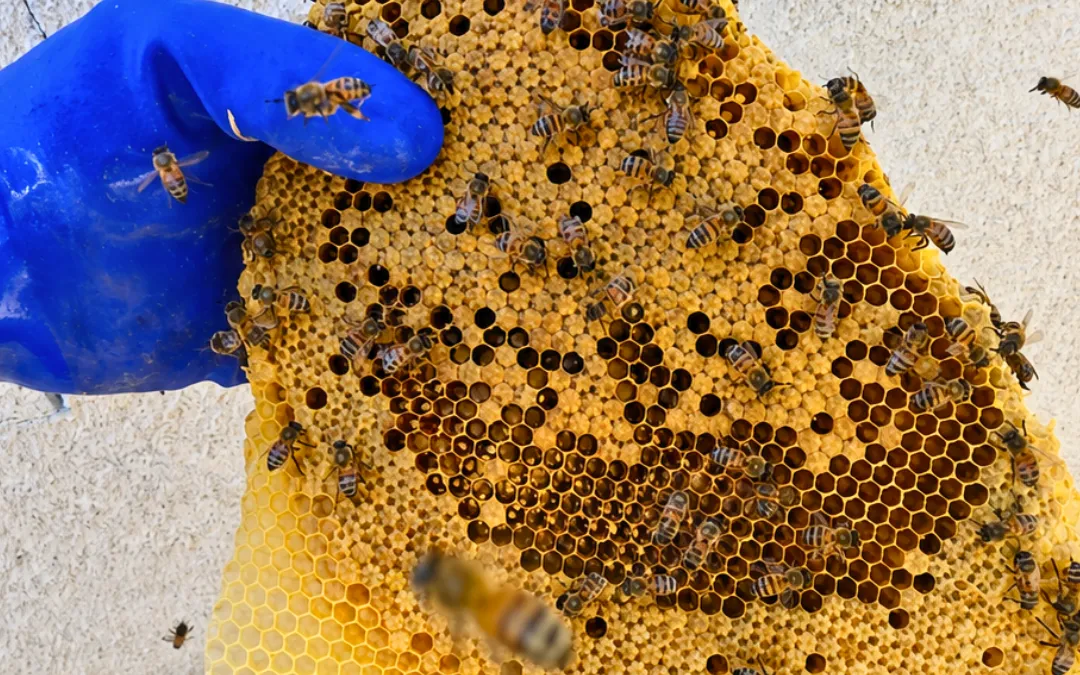
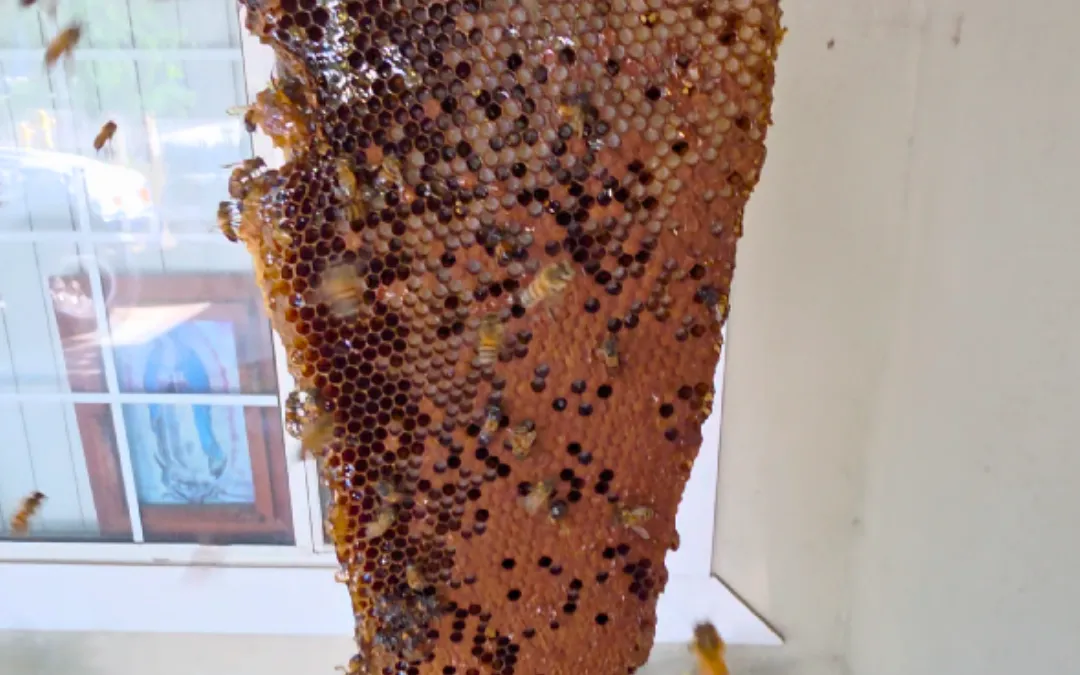
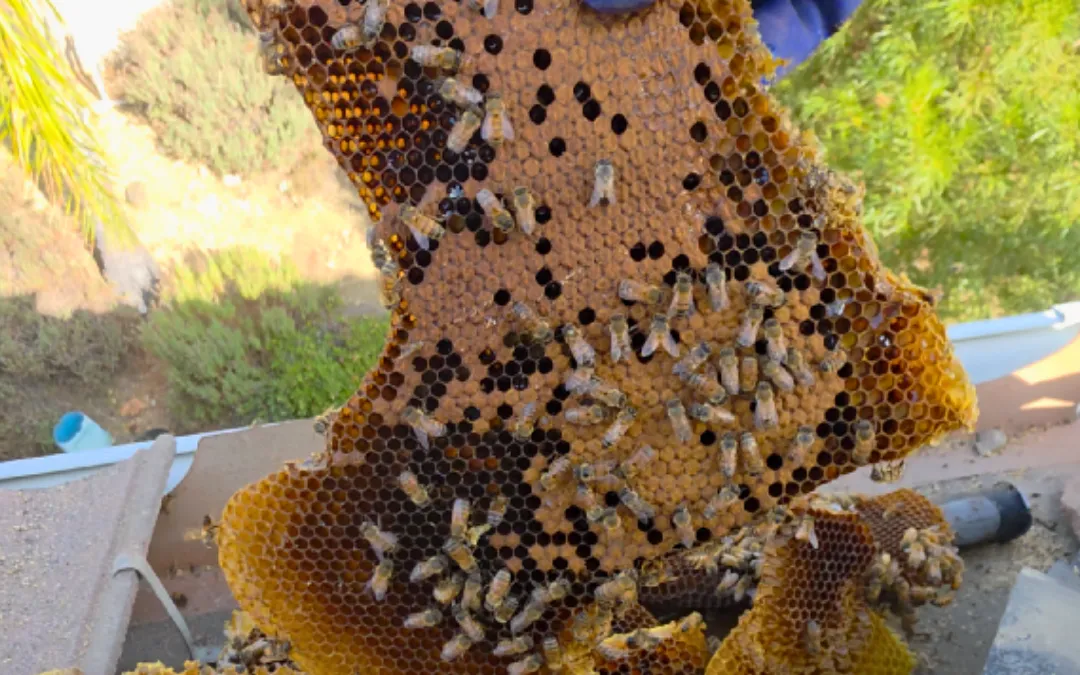
A hive (or colony) in a structure is a different animal. Once bees move into a wall, attic, soffit, chimney, or crawl space, they start building comb and storing honey. Leave that comb behind and over time you can get staining, odors, and secondary pests. Disturb that colony and it's more likely to get defensive, because now it has something to protect.
That's why a quick DIY move can backfire. Spraying a swarm can scatter bees all over the yard and push them toward openings in the house. Sealing the entry on an established colony can trap the bees in the wall, and then they work their way into the living space, which is a much harder problem to fix.
What to do in the first 15 minutes
All you're trying to do is keep people away from the bees while you get the right help lined up. Bring kids and pets inside and keep the doors closed. If the cluster is near a doorway, use a different exit and stay out of the flight path.
If bees are inside, close that room, turn the lights off in there, and keep people out. Don't swing at bees, vacuum them, or spray aerosols indoors. Stirring them up makes stings more likely and can push bees deeper into the structure.
If you can do it without getting close, snap a few photos from a safe distance. One of the cluster and one of where the bees are going into the structure will help me size up the situation over the phone. Then step away and keep the area clear.
What not to do (even if it seems reasonable)
A lot of emergency calls turn into bigger repairs because somebody tried a “quick fix” first. Here are the usual ones.
Don't use wasp spray, brake cleaner, gasoline, or other chemicals. They're inhumane and often illegal in practice, they can create a fire hazard, and they can contaminate surfaces. They also rarely fix anything if the colony is inside a wall.
Don't seal holes while bees are still using them. A trapped colony can push into the inside of the house or find a new way out, and sometimes that new way out is into your home.
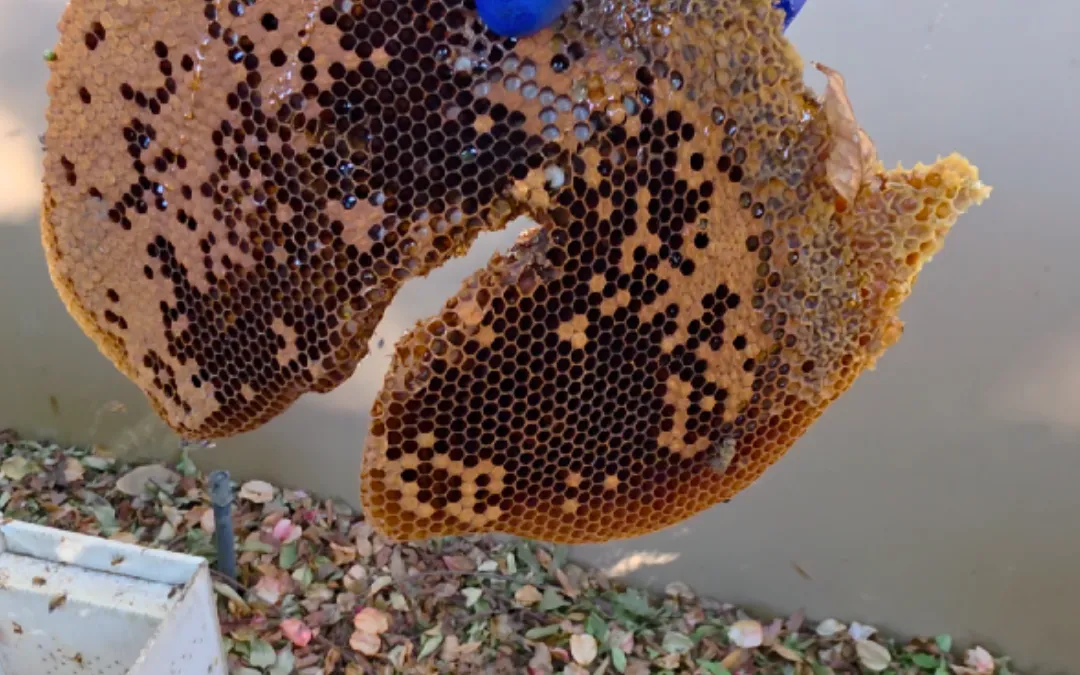
Don't knock down comb or cut into a wall unless you have a plan to get all of it out and clean up. Pulling out part of it leaves honey and brood behind, and that leads to odors, stains, and other insects.
Don't assume “nighttime is safest.” Bees are less active after dark, but working at night without the right gear and a plan can be risky. It's also easier to miss an active entry point or leave part of the colony behind.
What a real emergency response should include
A bee emergency response service in California should do more than “make the bees go away.” Doing it right comes in three parts: safe removal, relocation when the bees can be saved, and prevention, so you don't need a repeat visit next month.
A real look at the job before anything starts
The first step is figuring out what you've got: honey bees or yellowjackets, a swarm or an established colony, an outside cluster or a hive in the structure. Whoever comes out should also ask about allergies, where the bees are getting in, and whether they're showing up inside. Those questions decide the safest way to do the job, so expect them.
Humane removal and live relocation when possible
When it's honey bees, I go for live removal and relocation to an apiary, where the colony can keep living like a colony. That matters most with established colonies, where a careful extraction can save the queen and keep the colony together.
Humane removal takes longer than spraying and leaving. It can mean opening a wall or soffit, cutting out the comb, collecting the bees, and hauling them off for placement. That extra time is what gets you a fix that lasts, and the bees get to keep doing their job somewhere else.
Full hive extraction and cleanup
If the colony is in a structure, the job isn't done when the bees you can see are gone. Comb and honey left behind can melt in the heat, soak into insulation or drywall, and pull in ants and other pests. A full extraction means taking out the comb and dealing with the residue so that spot doesn't turn into an ongoing problem.
Sealing the entry point to prevent re-occupation
Bees are very good at finding the same gaps again. Part of the job is finding the entry point, and any weak spots nearby, and sealing them up. I see plenty of repeat colonies where somebody removed the bees before and never closed the way in.
Usually this is patch work, not construction, but it takes attention to detail. You just don't want to leave an open door for the next swarm.
Timing and trade-offs: when “same day” matters
Some situations really do need a fast response: bees in the living space, lots of foot traffic, or a severe allergy in the house. Others can wait a day if you can safely keep people away, like a swarm high up in a tree far from any walkway.
There's a cost trade-off too. Emergency scheduling and after-hours calls may cost more, but putting off a structural hive can mean more damage and a harder job. If you think bees are in a wall and you hear buzzing, see steady bee traffic, or notice staining near an entry point, moving sooner usually means less repair work overall.
How to choose the right provider in Southern California
When you call someone, you want more than removal. You want a clear plan. Ask how they confirm it's honey bees and not another stinging insect, whether they do live removals, and whether they take out the comb and seal the entry points.
Be careful with anyone who guarantees a one-step “treatment” without seeing the property or asking where the bees are getting in. Same with anyone who won't talk about what happens to the bees. If humane relocation matters to you, it should be part of the job from the start.
For property managers, paperwork and predictability matter. Ask how tenant notifications work, how access to utility rooms or attics gets handled, and how repairs are handled. Things go best when everybody knows the plan before anyone cuts or seals anything.
If you want a humane option across Los Angeles, Orange, Riverside, San Bernardino and nearby counties, you can contact me at Eli the Bee Guy for live removals, full extractions, relocations, and entry-point sealing, so the bees get rescued and the gaps get closed.
Special situations that change the approach
Schools, multi-family housing, and busy commercial sites
On these jobs, keeping people back is half the work. That can mean blocking off an area for a while, working off-hours, and coordinating with staff. A good plan keeps people from panicking and from trying to “help” in ways that get someone stung.
Pools, irrigation, and water sources
Bees need water, and they'll keep coming back to a reliable source. If bees are lining up at the pool edge or the sprinklers, removing the ones you see may not fix it if there's an established colony nearby. Whoever you hire should look at the broader pattern and not only the spot where the bees are showing up.
Repeat infestations
If bees keep coming back to the same corner of a roofline or the same wall, there's usually an open gap or leftover scent pulling in the scouts. That's why cleanup and sealing matter. For a repeat spot, removal has to come with prevention or you'll be calling again.
A calm plan beats a rushed reaction
Most bee emergencies get worse because people feel like they have to do something right now. The better move is to back off, keep the area quiet, and bring in someone who can remove the bees safely and humanely. The bees are just doing what bees do. Handle it right and you can protect everyone on the property and still give the colony a real shot at living somewhere else, and you get your yard or your wall back.
If it’s happening right now, call or text me at (626) 487-6052, or go to my emergency bee removal page. If it’s a swarm out in the open, swarm removal is $250.
Like these guides? Add Eli the Bee Guy as a preferred source on Google to see more of them in your search results.