Going after a wasp nest in the middle of a sunny afternoon with a broom or a can of spray is a good way to get stung. Some nests are fine to take down yourself and some really aren't.
Short answer: Small paper wasp nests early in the season and old mud dauber nests can be safe to remove yourself, at night, fully covered, with an escape route planned. Yellow jacket nests in the ground or in a wall, big or high nests, and anyone with a sting allergy are jobs for a professional. Skip the hardware-store sprays.
Should you remove the wasp nest at all?
Sometimes the safest move is to leave it alone. A nest that's out of the way and late in the season may die off on its own.
UC IPM's Pest Notes on yellowjackets and other social wasps say yellow jacket and paper wasp colonies normally live only one season. Penn State Extension adds that nests discovered in the fall will soon die off naturally, so management may not be needed. A paper wasp nest under a back eave nobody walks past can often just wait for winter.
A nest by a front door, a play area, a pool gate or a busy walkway is different. Penn State points out that nests near entrances and heavily traveled walkways are likely to get disturbed sooner or later.
What kind of wasp nest is it?
Identify the nest before you touch it, because the right approach depends on who built it.
| Nest | What it looks like | DIY? |
|---|---|---|
| Mud dauber | Mud tubes or mud lumps under eaves | Usually yes. They rarely sting. |
| Small paper wasp nest | Open, umbrella-shaped paper comb | Sometimes, early in the season while it's small |
| Large or high paper wasp nest | Open comb, many wasps, up on a second story | Better left to a pro |
| Yellow jackets in the ground | A hole with fast traffic in and out | No |
| Yellow jackets in a wall | Wasps going into a gap in siding or stucco | No |
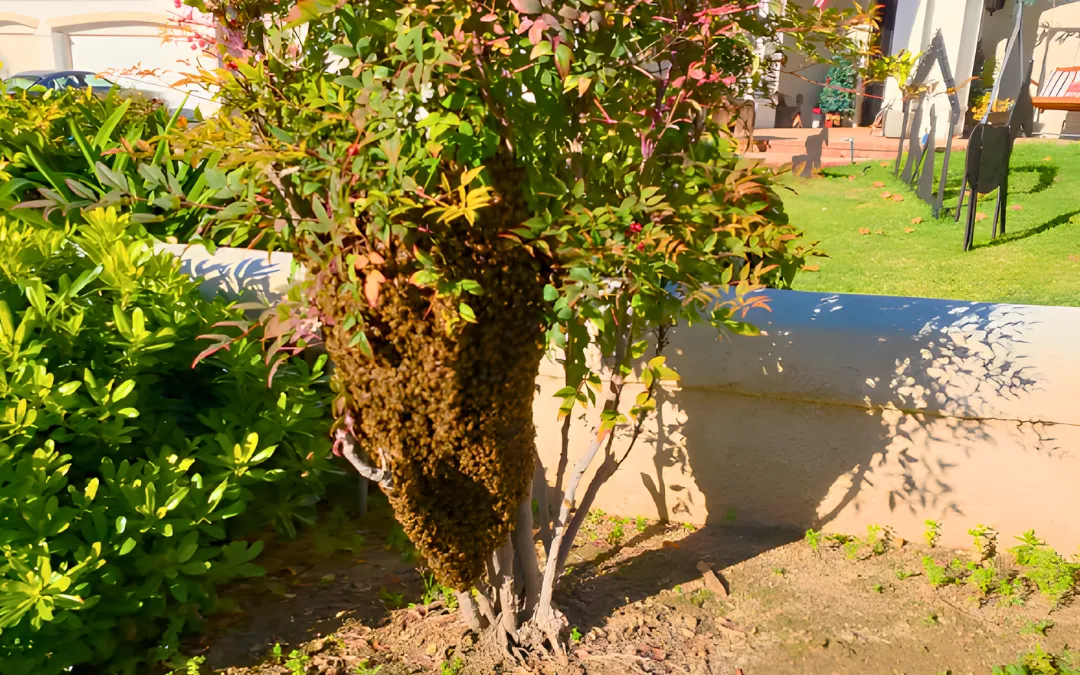
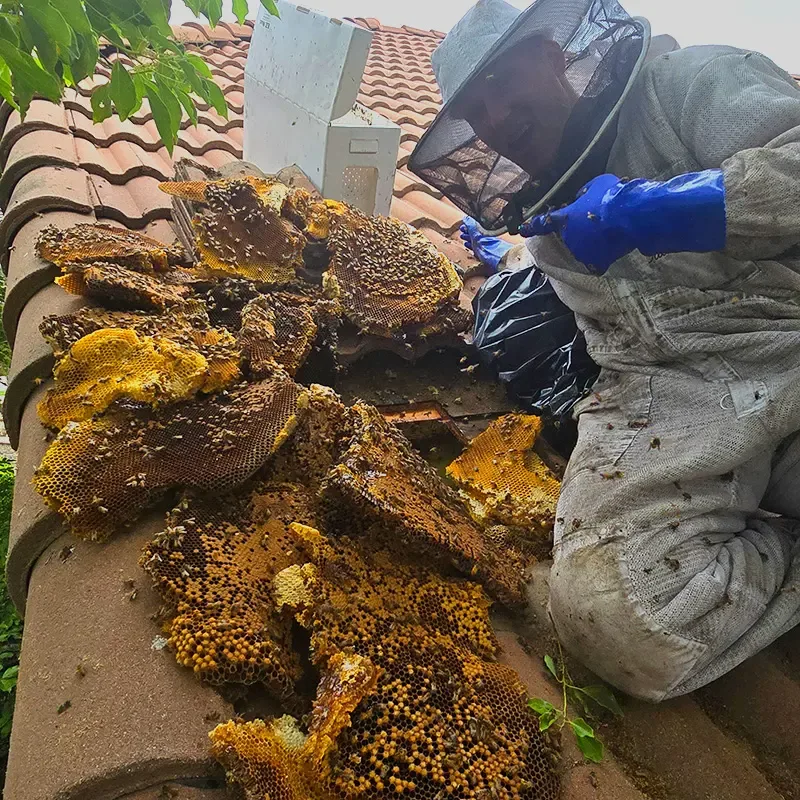
| Honey bees | Fuzzy brown bees, wax comb in a cavity | No. Call for live removal. |
UC IPM says mud daubers don't defend their nests and rarely sting, and that you can safely remove their nests in winter without spraying. If you're not sure whether you're looking at wasps or honey bees, check my honey bee vs. yellow jacket vs. wasp guide first. Honey bees should be removed alive, never knocked down or sprayed.
When is the safest time to remove a wasp nest?
Do it at night, and do it early in the season if you can. The wasps are home, calmer and can't see well in the dark.
Penn State's advice is to watch the area and plan during the day, then do the work at night, when the insects are less likely to fly and have trouble seeing. UC IPM agrees that wasps are most likely to be in the nest at night. Penn State also says most stinging insects have trouble seeing red, so a red light or a red filter over your flashlight helps keep them in the dark.
Timing in the year counts too. UC IPM says that early in the season, knocking down a newly started paper wasp nest makes the founding female go somewhere else, and Penn State says dealing with a nest early, while it's small, is safer and easier than waiting.
How do you remove a small wasp nest yourself?
If it's a small paper wasp nest or a mud dauber nest within easy reach from the ground, this is how I'd do it.
- Confirm it's wasps and not honey bees, and make sure nobody in the house has a sting allergy. Penn State says if you know you're allergic, don't try to remove a colony yourself.
- Scout it in daylight. Note exactly where the nest is, what's under it, and the clearest path away from it.
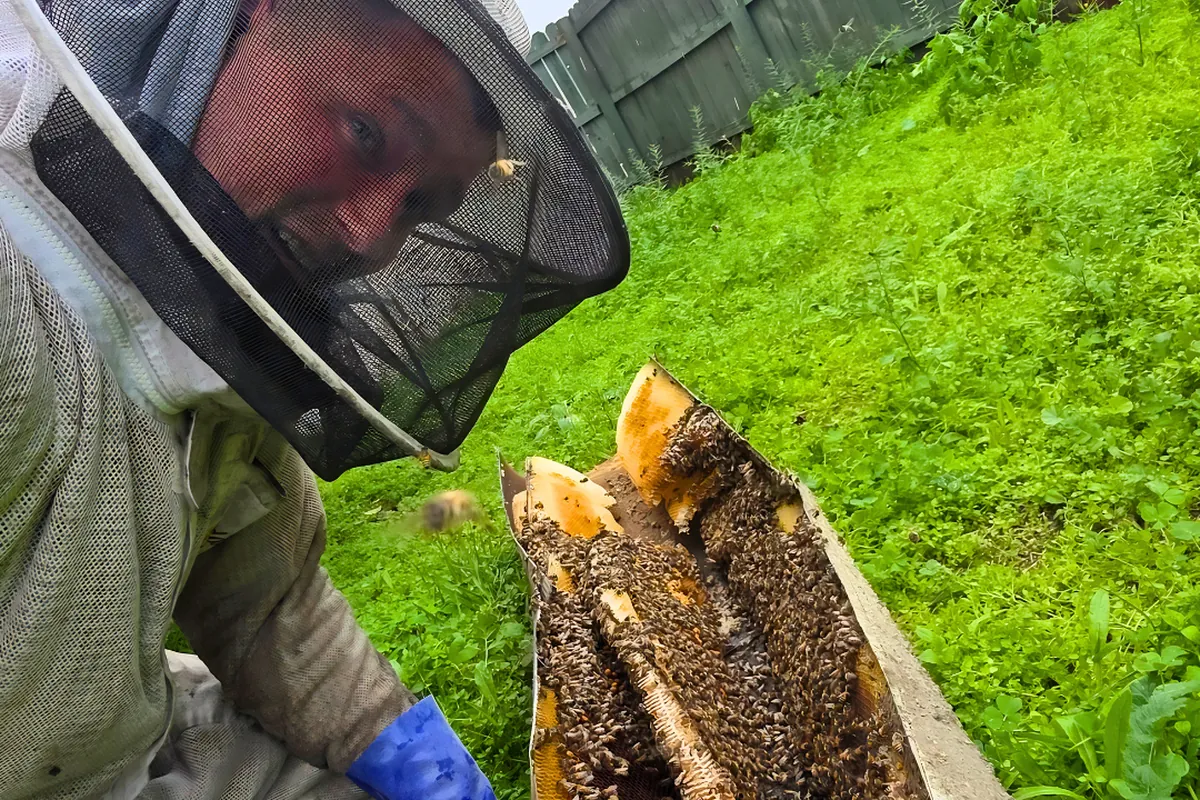
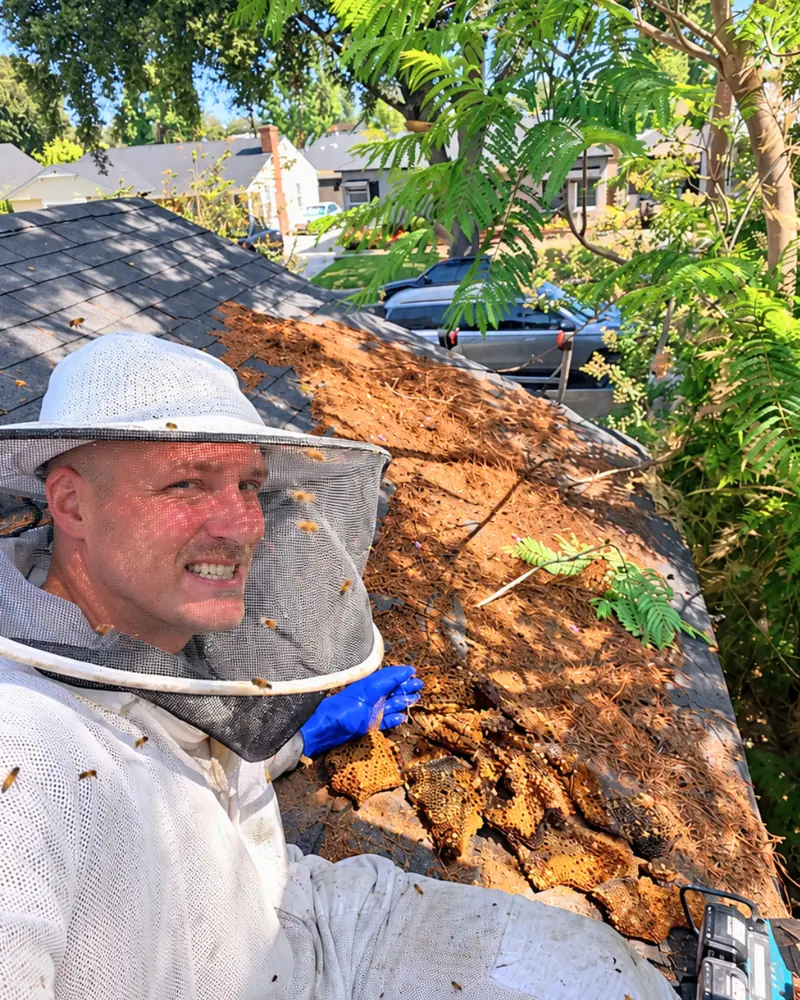
- Cover up. UC IPM recommends protective clothing over your whole body, including a veil over your face and gloves. Tuck pants into socks and sleeves into gloves.
- Go out after dark with a red light. Keep kids and pets inside.
- Scrape or knock the nest into a heavy bag with a long tool, close the bag right away, and walk off.
- If wasps come after you, Penn State says not to panic or swat. Walk calmly, quietly and quickly straight away from the nest.
- Check the spot the next day. If wasps are rebuilding there, it may be time to call someone.
Stay off ladders for this. Getting stung on a ladder in the dark is how a sting turns into a fall.
Why shouldn't you use wasp spray?
Hardware-store wasp sprays put pesticide into your yard, where pets, birds and kids are, and they don't always work.
UC IPM warns that wasps will attack if they sense a poison being applied to their nest, that even freeze-type products aren't guaranteed to stop every wasp that comes flying out, and that you can run into partly poisoned, agitated wasps some distance from the nest. With a ground or wall nest, the spray often doesn't reach the colony at all. I don't use pesticides on wasp jobs for the same reasons. I use food-grade products only.
When should you call a professional?
Call a pro for yellow jackets in the ground or in a wall, for big or high nests, and any time someone with an allergy is nearby.
- Yellow jackets underground or inside a structure. UC IPM notes these nests are underground or otherwise hard to get at, and says that if a wasp nest has to go, it's easiest and safest to call for professional help.
- A nest inside a wall. Penn State notes that sealing the outside first can push the colony indoors, and that a nest in a void has to be opened up and removed.
- Big colonies. UC IPM says yellow jacket colonies can reach 1,500 to 15,000 wasps, and that multiple-sting encounters are a real medical concern.
- Anyone at risk. UC IPM's guide to bee and wasp stings says reactions like difficulty breathing, dizziness or unconsciousness need immediate medical care.
- More than one or two nests, or nests you'd need a ladder to reach.
How much does professional wasp nest removal cost?
With me, paper wasp and mud dauber nests are $250, and that covers up to 8 nests. Digging a yellow jacket nest out of the ground is $375.
I use food-grade products only, with no pesticides, and every wasp removal comes with a 30-day warranty. You can read more on my wasp removal and yellow jacket removal pages. I answer calls and texts 7 days a week and do removals Monday through Saturday.
Found a nest and not sure if it's a DIY job? Call or text a photo to (626) 487-6052 and I'll tell you honestly whether you can handle it or need a hand.
Frequently asked questions
What is the safest time to remove a wasp nest?
Should I use wasp spray on a nest?
Will a wasp nest go away on its own?
Is it safe to remove a mud dauber nest myself?
How much does wasp nest removal cost?
Do you use pesticides to remove wasps?
Like these guides? Add Eli the Bee Guy as a preferred source on Google to see more of them in your search results.