You walk out into the yard and find a patch of little holes in the dirt, each with a tiny pile of soil around it, and bees zipping around low over the ground. Before you go for the spray can or the garden hose, take a breath. Most of the time those "ground bees" are about the gentlest neighbors you'll ever have.
Short answer: Most ground bees in Southern California yards are solitary native bees, such as mining bees, that rarely sting and fly for only a few weeks. If you can, leave them alone. The two look-alikes worth worrying about are ground-nesting yellow jackets and honey bees living in a valve box, meter box or old burrow.
What are ground bees?
"Ground bees" isn't one species. It's a catch-all name for the many native bees that dig their nests in soil. According to UC Master Gardeners, about 70% of native bees nest in the ground, and California has roughly 1,600 native bee species. The ones homeowners notice most are mining bees, sweat bees and plasterer bees.
What you need to know is that these bees are solitary. They have no queen, no hive and no honeycomb. Each female digs her own tunnel, packs it with pollen and nectar, and lays her eggs inside. They just like the same kind of ground, so you can end up with dozens or even hundreds of holes in one sunny patch. Think of it as a neighborhood of separate nests. There's no colony.
Signs you're looking at solitary ground bees:
- Lots of small holes, about 1/4 inch across, sometimes with a little ring of loose soil around them
- Bare, dry ground that drains well, or thin, patchy grass
- Bees that don't all look alike: some darker than a honey bee, some striped, some shiny metallic green, and a lot of them smaller than a honey bee
- Low, wandering flights, with one bee at a time going into its own hole
Are ground bees aggressive?
No. University extension services describe solitary ground bees as non-aggressive, and they seldom sting. Oregon State University Extension points out that male ground bees don't even have stingers. The cloud of bees you see hovering and darting over the holes in spring is often males doing a mating display. It looks like a lot, but they can't hurt you.
The females can sting, but it usually takes stepping on one barefoot or closing one in your hand, and the sting is mild. They don't have a hive to defend, so they won't come boiling up out of the ground the way a yellow jacket nest does.
They don't stick around long, either. The University of Maryland Extension says these bees only fly for about 2 to 4 weeks. After that the adults die off and the next generation develops underground until next year. In the meantime they're pollinating your garden for free.
Ground bees vs. yellow jackets vs. honey bees: how do you tell them apart?
This is the question that matters most, because each of the three needs a completely different response. Watch from a safe distance for a few minutes and compare what you see:
| Solitary ground bees | Yellow jackets in the ground | Honey bees in the ground | |
|---|---|---|---|
| Look | Varies: dark, striped or metallic green; often smaller than a honey bee | Smooth, shiny, bright yellow and black with jagged bands and a narrow waist | Fuzzy, golden-brown, less brightly striped |
| Entrance | Many small holes, often with a little soil mound | Usually one hole, often an old rodent burrow | A gap in a valve box, meter box, burrow or crack |
| Traffic | One bee at a time, each to its own hole | Steady stream in and out of the same hole | Heavy, steady stream; you may hear a hum |
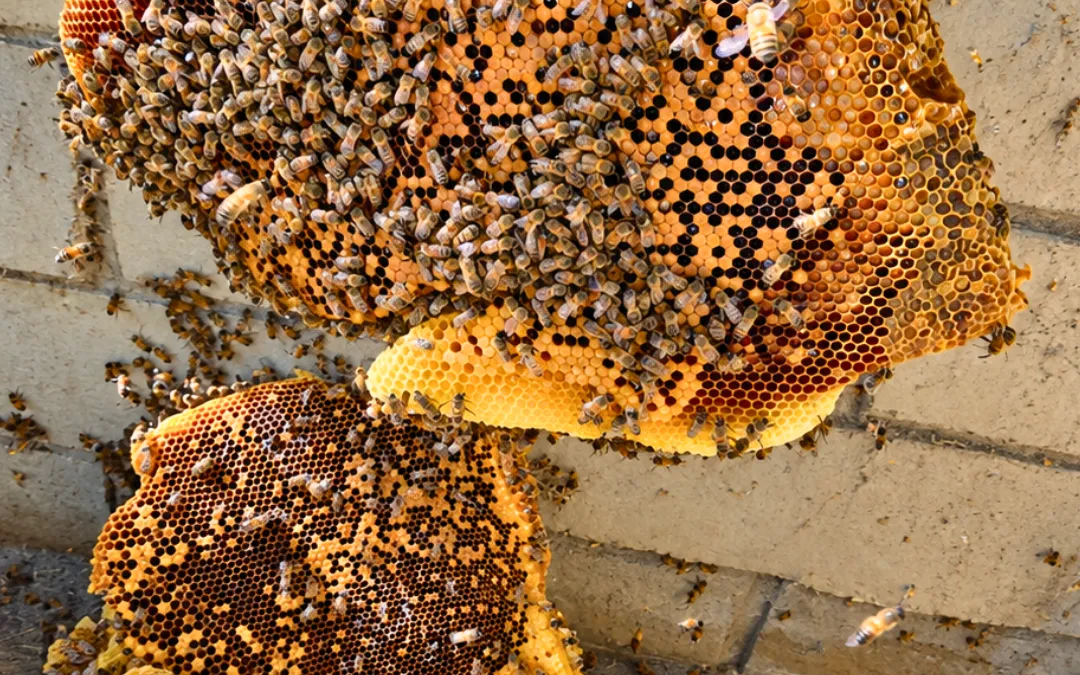
| Inside | Single tunnels with pollen for each egg | Gray paper nest | Wax honeycomb, honey and brood |
| Temperament | Very docile | Defensive, more so in late summer and fall; can sting over and over | Will defend the nest; treat every colony with respect |
| How long | A few weeks | Usually one season | Stays and grows until removed |
| What to do | Leave alone or discourage | Professional yellow jacket removal | Live honey bee removal |
Why ground-nesting yellow jackets are a different story
The most common yellow jacket in California is the western yellowjacket, and according to UC IPM it usually nests underground in spots like old rodent burrows. Inside is a paper nest that, depending on the species, can hold anywhere from 1,500 to 15,000 workers by the end of the season. Early in the year they hunt insects, and later they scavenge for sweets and protein, which is why they show up at your barbecue in late summer.
A yellow jacket's stinger has no barbs the way a honey bee's does, so one wasp can sting you again and again. A whole nest that feels threatened by a lawn mower, a weed trimmer or a foot in the wrong place can be dangerous. Don't pour gasoline down the hole, don't try to plug it, and don't mow over it. If you've got yellow jackets coming out of the ground, see my yellow jacket removal page or read up on yellowjacket control that actually works.
When "ground bees" are actually honey bees
Honey bees don't dig, but they love a dark, enclosed space, and our yards have plenty of those at ground level. Irrigation valve boxes, water meter boxes and old animal burrows can all end up with a honey bee colony inside. Orange County Mosquito and Vector Control lists water meter boxes and animal burrows among the places these colonies set up.
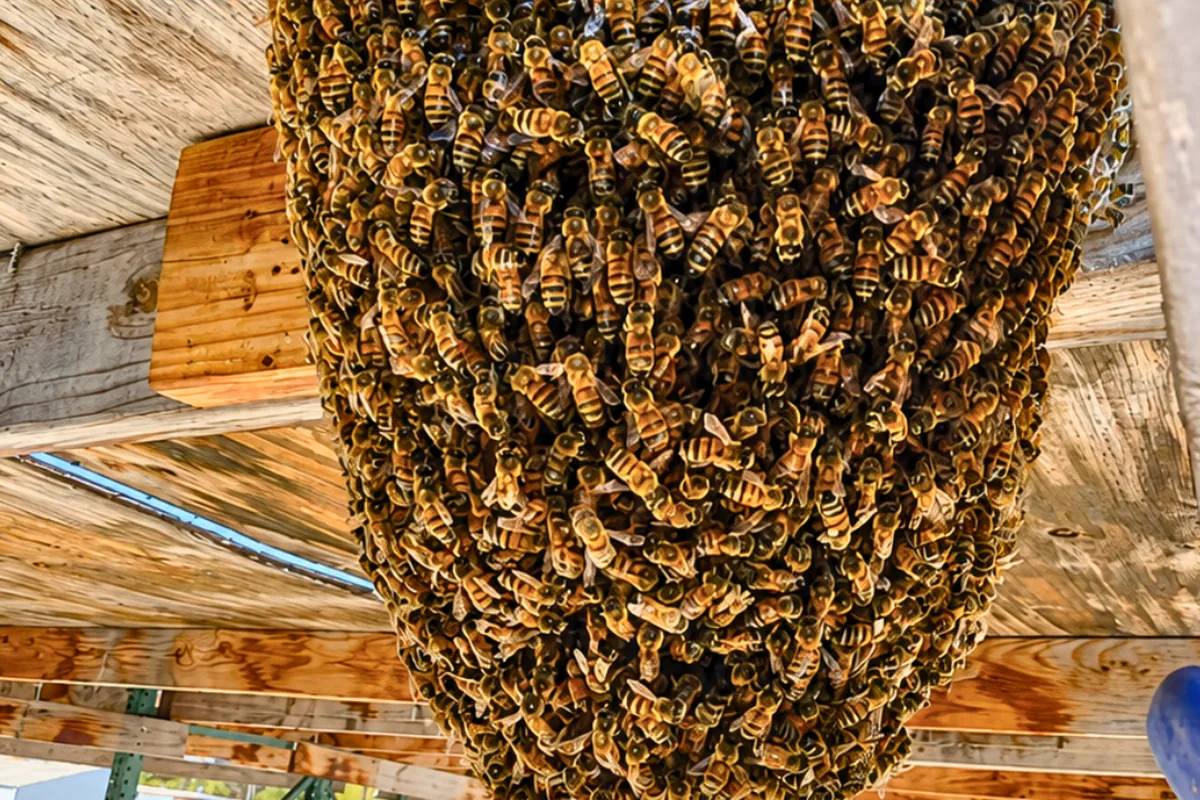
A honey bee colony in the ground won't just leave if you ignore it. The bees build wax comb, store honey, raise brood and stay put, and the colony keeps growing. Keep in mind too that here in Southern California, Africanized honey bees have spread through every county in the region, according to UC Riverside. You can't tell them from gentler bees by looking, so don't lift the lid on that sprinkler box to check.
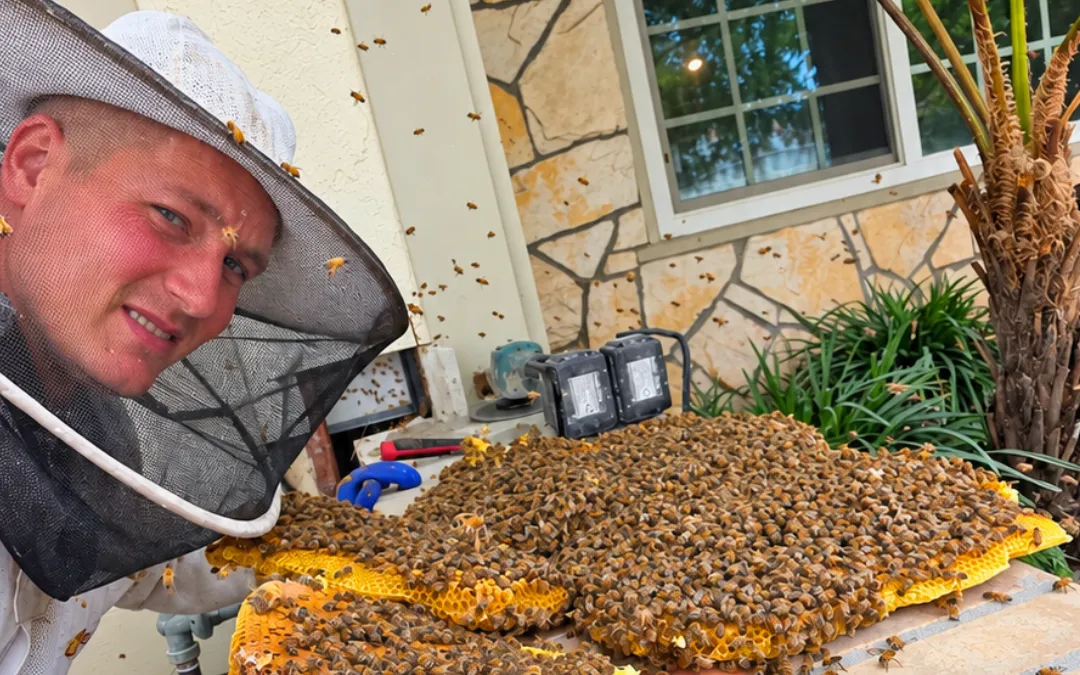
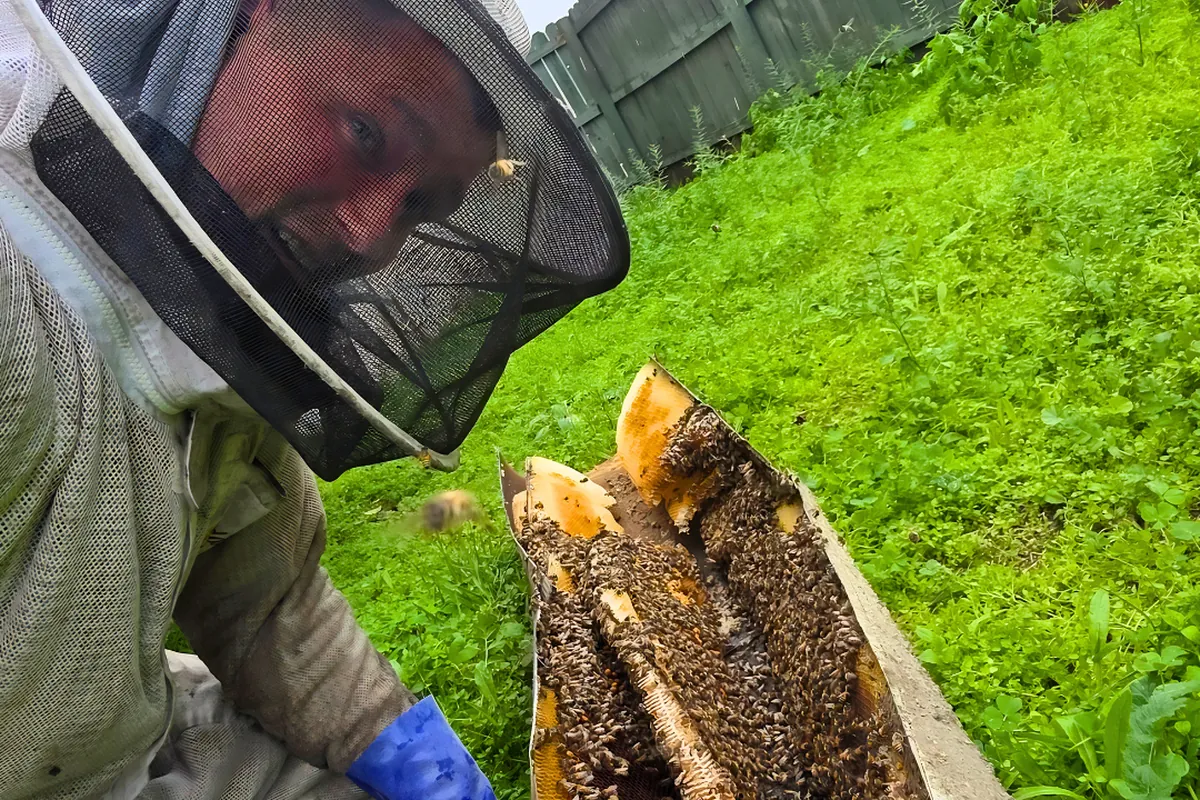
That's the kind of job I do. I take the bees out alive along with all the comb, then relocate the colony to a vetted local beekeeper. You can read how that works on my bee hive removal and bee relocation pages.
How do you get rid of ground bees?
With the solitary kind, you usually don't need to. They're gone in a few weeks, they rarely sting, and they're good for your plants. I don't offer removal of solitary ground bees as a service. If the nests are right where your kids play or your dog digs, though, here's what extension experts suggest:
- Wait it out. They don't fly for long. Mark off the area and use another part of the yard for a couple of weeks.
- Keep bare feet and pets off the patch, since that's how most of the rare stings happen.
- Water the area. Ground bees like dry soil, and heavy watering with a sprinkler discourages them from nesting. Just stay within your city's current watering rules.
- Cover the bare ground. To keep them from coming back, fill bare spots with dense turf, a groundcover or a heavy layer of mulch so there's no open soil to dig in.
- Skip the pesticides. These bees are important pollinators, and Utah State University Extension describes their nests as a minimal health risk to people.
How do you get rid of a bee hive in the ground?
That depends on who's living there. The quick version:
- Solitary ground bees (lots of small holes, each with its own little dirt pile): leave them for a few weeks, or water and cover the bare soil like I described above. They don't build a hive, so there's nothing to dig out.
- Yellow jackets (one hole, with a steady stream of wasps going straight in and out): don't pour anything into it and don't block it. See my guide to yellow jackets in the ground, or have me take care of it with yellow jacket removal.
- Honey bees (a busy entrance at a meter box, valve box, burrow or the base of a wall): there's wax comb and honey down there. The colony has to be opened up and the comb taken out, or new bees will move into what's left. That's a live removal, and I relocate the bees to a local beekeeper.
Whatever it turns out to be, skip the gasoline, the boiling water and the hose. They're dangerous to you, they rarely reach the whole nest, and with honey bees or yellow jackets they mostly just stir up a lot of angry insects.
When should you call a professional?
Call for help if you see any of these:
- One hole with a constant stream of insects going in and out
- Bright yellow and black, smooth-bodied wasps instead of fuzzy bees
- Bees coming and going from a valve box, meter box, block wall or burrow
- A hum coming from the ground, or comb you can see through a gap
- Anyone in the house with a serious sting allergy
If someone gets stung many times, or has trouble breathing or swelling in the face or throat after a sting, call 911 right away.
Need a hand?
Not sure what's buzzing around your yard? I'm a local beekeeper and I do free inspections. I'll come out, tell you what you've got, and give you a straight answer, even if it's "leave them be." If it turns out to be honey bees, I'll remove them alive with no chemicals. I help homeowners from Corona to Rancho Cucamonga and all over Orange County, the Inland Empire and LA County. Call me at (626) 487-6052 or request a free quote.
Frequently asked questions
How long do ground bees stay in your yard?
Do ground bees come back every year?
Do ground bees damage your lawn?
Should I pour gasoline or boiling water down a bee hole?
Are ground bees good for my garden?
How do I get rid of a bee nest in the ground?
Like these guides? Add Eli the Bee Guy as a preferred source on Google to see more of them in your search results.