Something striped and buzzing just flew past your head, and now you want to know: is that a honey bee, a yellow jacket or a wasp? Fair question, and it's one of the more useful things a homeowner can learn to tell, because the answer decides whether you leave it alone, call a beekeeper or call for wasp control.
Short answer: Honey bee vs yellow jacket comes down to fuzz and food. Honey bees are fuzzy and golden-brown, they visit flowers and build wax comb in cavities, and a worker usually stings once. Yellow jackets are smooth and bright yellow and black. They scavenge sweets and meat, nest in the ground or in walls, and can sting over and over.
Honey bee vs yellow jacket vs wasp: side-by-side comparison
Here's the cheat sheet. Under "wasp" I'm describing paper wasps, since they're the wasp people find around homes most, after yellow jackets.
| Honey bee | Yellow jacket | Paper wasp | |
|---|---|---|---|
| Body | Stocky, rounded | Compact, with a very narrow waist | Slender, with a thin waist and long, dangling legs |
| Color and hair | Golden-brown with soft bands; fuzzy | Bright yellow and black with sharp, jagged stripes; smooth and shiny | Usually golden-brown or darker with yellow or red markings; smooth |
| Nest type | Wax honeycomb inside an enclosed space | Paper nest inside a gray paper shell with one entrance | Open, umbrella-shaped paper comb with cells visible from below |
| Nest location | Wall voids, attics, trees, chimneys, valve boxes | Mostly underground in old rodent burrows; sometimes walls or ceilings | Under eaves and overhangs, in attics or under branches |
| Food | Nectar and pollen from flowers | Insects early in the season; sweets, meat and garbage later | Mostly other insects |
| Behavior | Calm while foraging; defends its nest | Defensive, especially late summer and fall | Less defensive; rarely stings unless the nest is disturbed |
| Sting | Barbed; a worker usually stings once and dies | No barbs; can sting repeatedly | No barbs; can sting repeatedly |
How do you identify a honey bee?
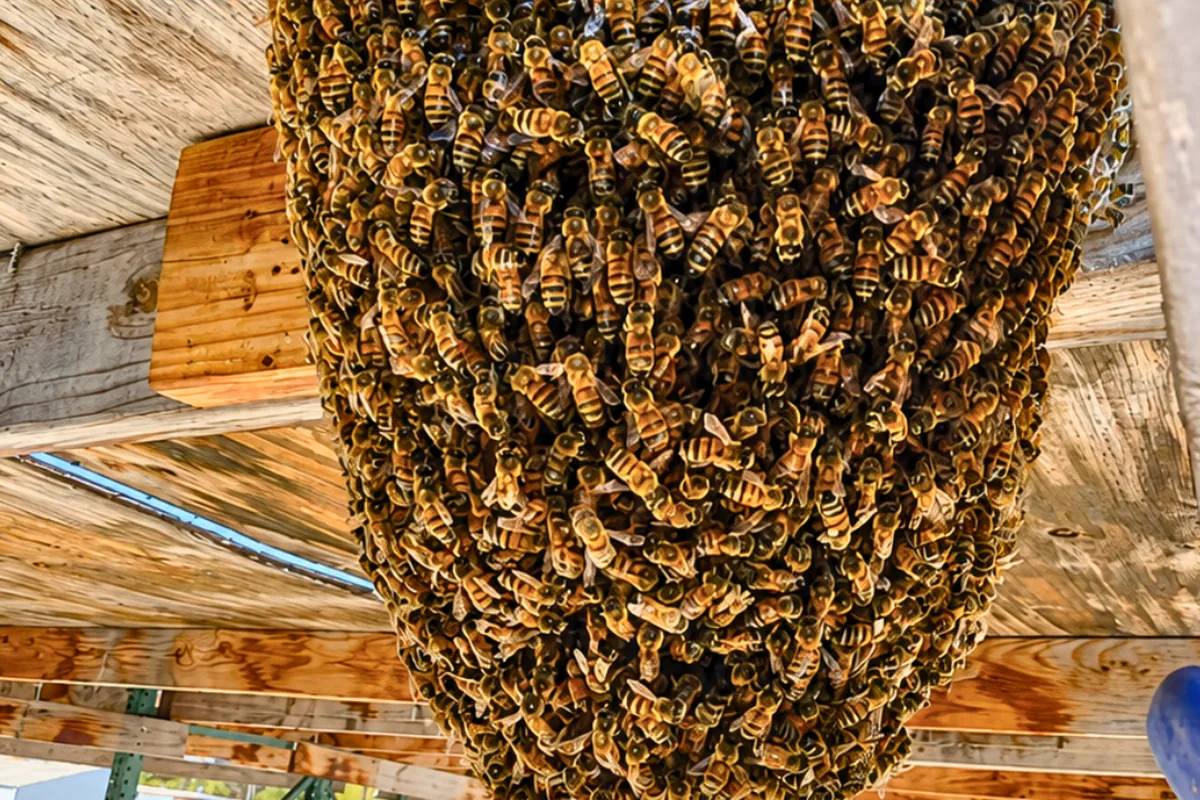
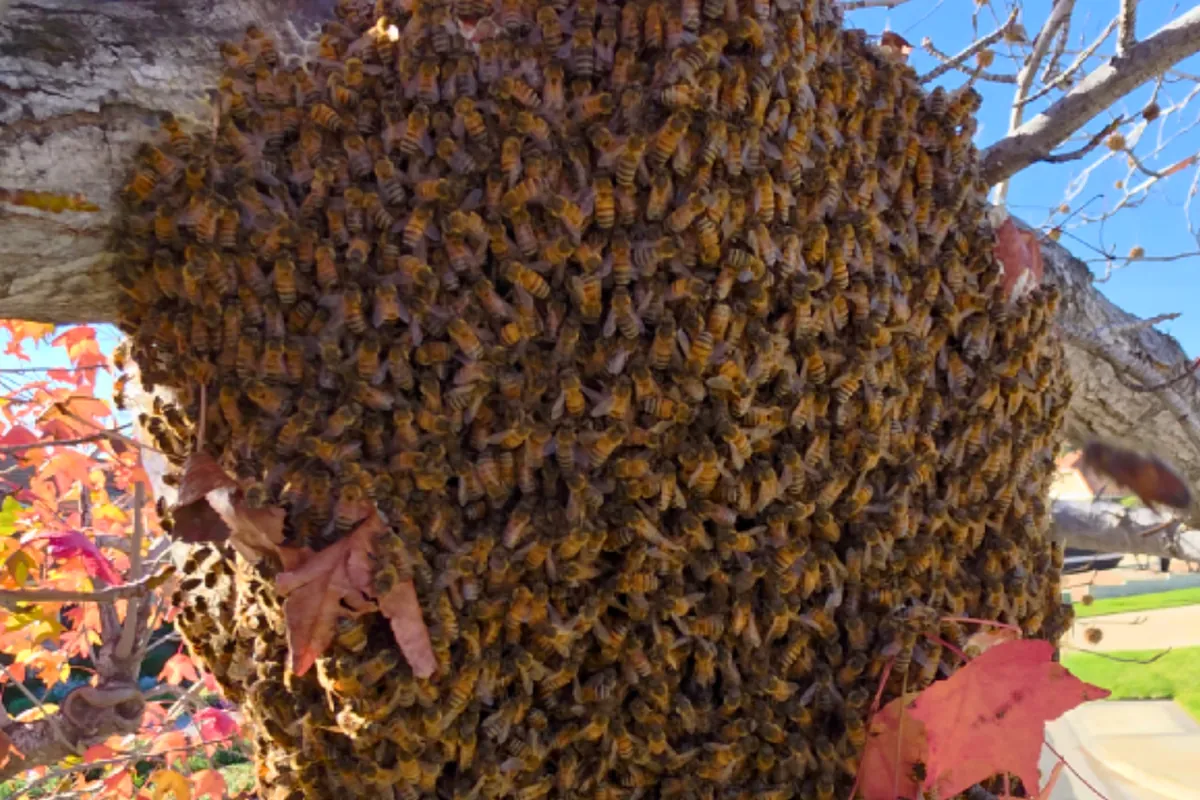
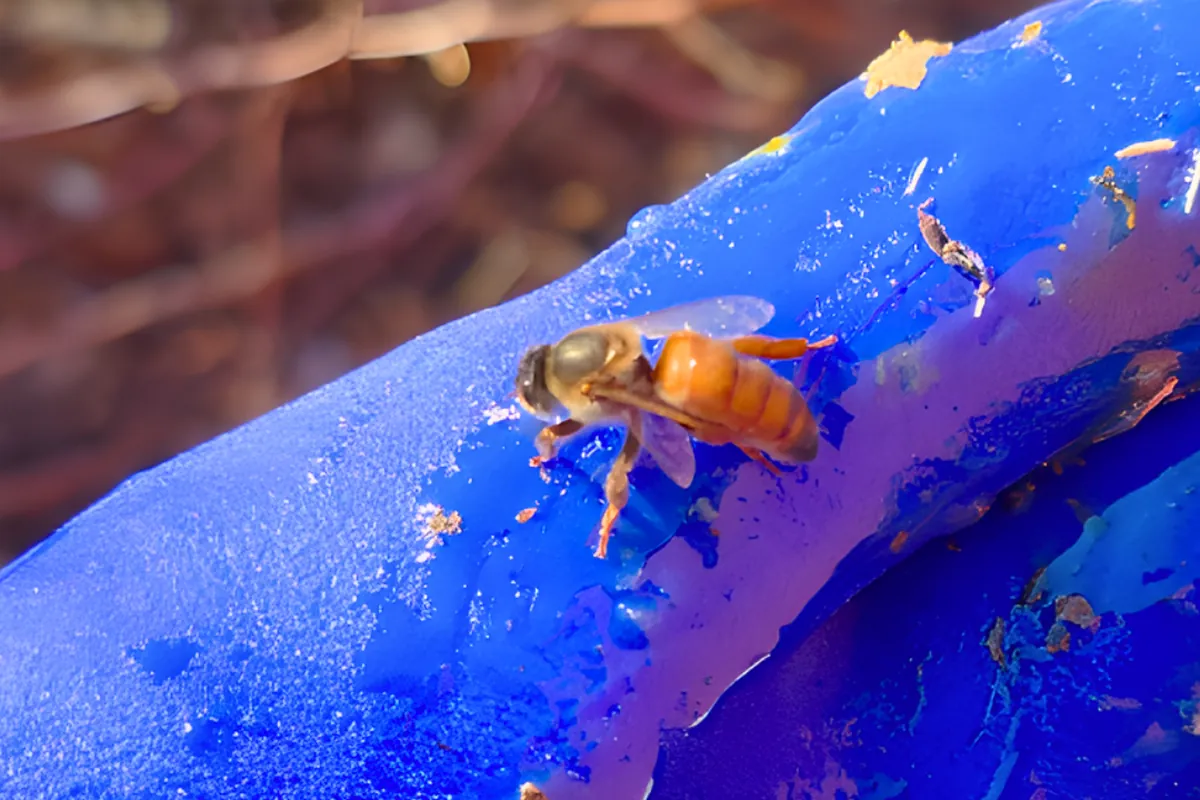
Honey bees are the fuzzy ones. They're golden-brown to brownish, with soft bands instead of neon stripes. According to UC IPM, honey bees are less brightly striped than yellow jackets and have more hair. On a forager you'll often see little balls of pollen packed onto the back legs.
You'll see them on flowers, at a dripping faucet or the pool, or streaming in and out of one gap in a wall, a roofline or a box. Honey bees usually don't care about your burger or your trash, though they might check out something sweet. If a striped insect keeps landing on your hot dog, that's a yellow jacket.
Where they live gives them away. A honey bee colony builds sheets of wax honeycomb inside an enclosed space and stores honey in it. An established colony doesn't pack up at the end of summer, it stays put and keeps growing. A swarm hanging on a branch is another thing: that's a colony on the move, usually resting before it heads to a new home. My guide on handling a bee swarm outside covers that.
One more Southern California note: UC Riverside reports that Africanized honey bees have spread through all of the region's counties. You can't tell them from other honey bees by looking, so give every colony room.
How do you identify a yellow jacket?
Yellow jackets aren't bees at all. They're social wasps. In California the one you'll see most is the western yellowjacket, sometimes called a "meat bee" because it shows up at picnics looking for protein.
- They're smooth, shiny and hairless, with crisp, jagged bright yellow and black stripes and a pinched waist.
- The nest is usually underground in an old rodent burrow, with workers zipping in and out of one hole. The German yellowjacket, which UC IPM says is becoming more common in urban California, often nests inside houses.
- Most colonies only last one season, but in mild coastal areas some can survive several years and get very large.
Yellow jackets get more defensive as the colony grows and food runs short, so late summer and fall are peak yellow jacket season. Don't ever mow over a ground nest, plug it or pour anything into it.
How do you identify a paper wasp?
Paper wasps are the long, skinny ones. They have slender bodies, a narrow waist and long legs that dangle below them when they fly. Western species are usually golden-brown or darker, with patches of yellow or red.
The nest is the easiest way to tell. Paper wasps build an open, umbrella-shaped comb that hangs from a short stalk, and you can see the open cells from underneath. You'll find them under eaves and other overhangs, in attics, and under tree branches or vines. UC IPM says these nests rarely get bigger than an outstretched hand.
Paper wasps are a lot less defensive than yellow jackets and rarely sting people. The trouble starts when they build right next to a door, a window or a play area, where somebody's going to bump into them.
You may also see mud daubers, which build hard mud nests on walls and ceilings. They don't defend their nests and rarely sting.
Which one can sting more than once?
There are a lot of myths about this one. A honey bee worker's stinger is barbed. When she stings a person, the stinger lodges in the skin, and as she pulls away, part of her abdomen tears off and she dies. As UC's Bug Squad blog explains, only female worker bees die this way. Queens can sting multiple times, and male drones don't have a stinger at all.
Yellow jackets and other wasps have stingers with no barbs, so one wasp can sting you again and again.
If you get stung by a honey bee, get the stinger out right away. The venom sac keeps pumping for 45 to 60 seconds, and how you remove it matters less than how fast you do it. A fingernail or the edge of a credit card works.
Call 911 if someone is stung many times, has trouble breathing, or has swelling of the face, mouth or throat.
Why does the ID matter for what you do next?
Because the right fix is different for each one:
- Honey bees on flowers: leave them be. Foragers rarely sting unless they're trapped or stepped on.
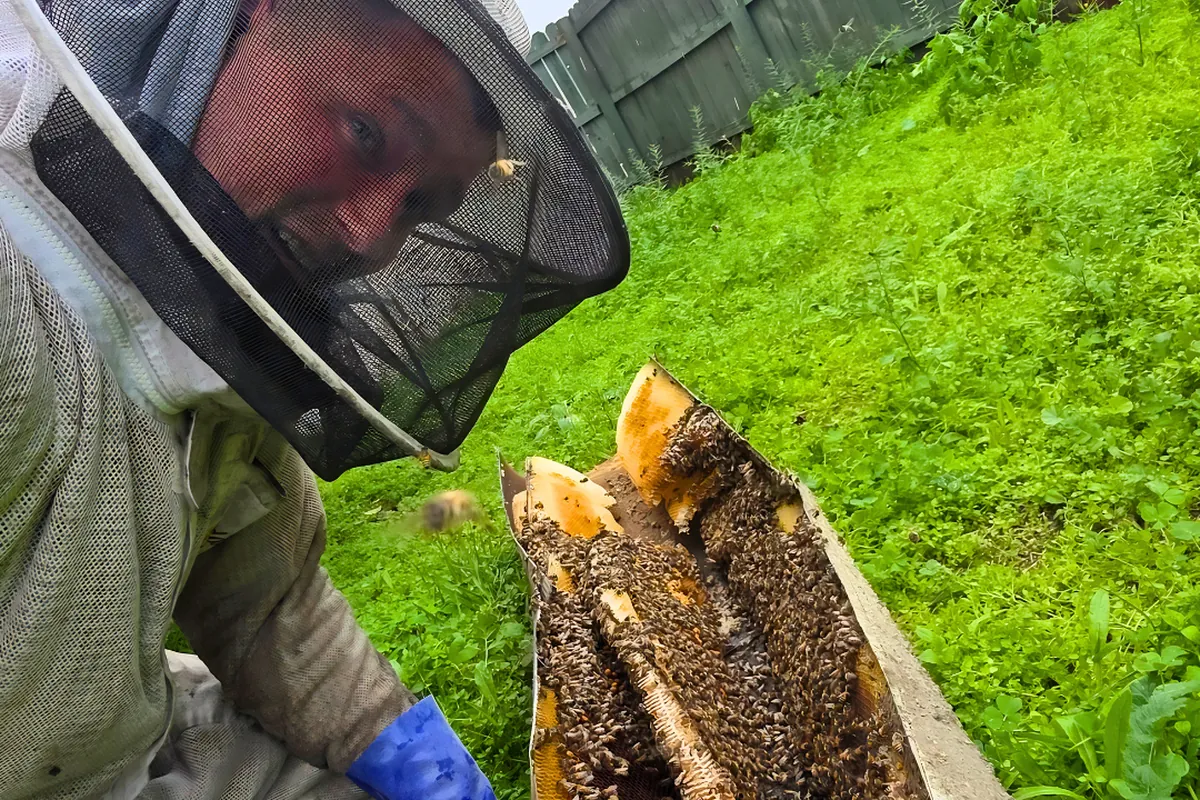
- A honey bee swarm or established hive: these are pollinators, and they can be saved. I remove honey bees alive, take out all the comb so nothing is left to rot or attract new bees, and relocate them to vetted local beekeepers through my bee relocation service.
- Yellow jackets: ground and wall nests can be dangerous to go after yourself. See my yellow jacket removal service.
- Paper wasps: if the nest is out of the way, it may not need to be dealt with at all. If it's by a doorway, check out my wasp removal service.
Please don't spray a honey bee colony. It kills bees that could have been relocated, and when they're in a wall, it leaves the honey and comb behind to cause trouble.
Need a hand?
If you're still not sure what you're looking at, don't get close to find out. I'm a local beekeeper, and the inspection is free. I'll tell you exactly what you've got and what makes sense to do about it. I work throughout Orange County, the Inland Empire and LA County, from Ontario to Huntington Beach. Call me at (626) 487-6052 or request a free quote.
Frequently asked questions
Are yellow jackets bees or wasps?
Why are yellow jackets attracted to my food?
Are honey bees aggressive?
Do male bees and wasps sting?
Is a single bee sting dangerous?
Like these guides? Add Eli the Bee Guy as a preferred source on Google to see more of them in your search results.