Bees in a tree can mean two very different things. Sometimes it's a big buzzing ball of bees hanging off a branch that wasn't there yesterday. Other times it's a steady line of bees going in and out of a knothole or a crack in the trunk, week after week. The ball on the branch is just passing through, and the bees in the trunk live there.
Short answer: A cluster of bees hanging on a branch is usually a swarm, and it often leaves on its own within a few hours to a few days. Bees flying in and out of a hole in the trunk or a big limb are an established colony living in a hollow. Those won't leave, and they need a live removal.
Here's how to tell which one you've got, what to do about each, and how bees get removed from a tree without killing them.
Is it a swarm on a tree or a hive inside the tree?
Look at where the bees are and what they're doing. A swarm hangs on the outside of the tree, and a colony lives inside it.
| Swarm on a branch | Colony in a hollow trunk | |
|---|---|---|
| What you see | A ball, beard or clump of bees hanging from a branch | Bees flying in and out of a hole, crack or knot in the trunk or a big limb |
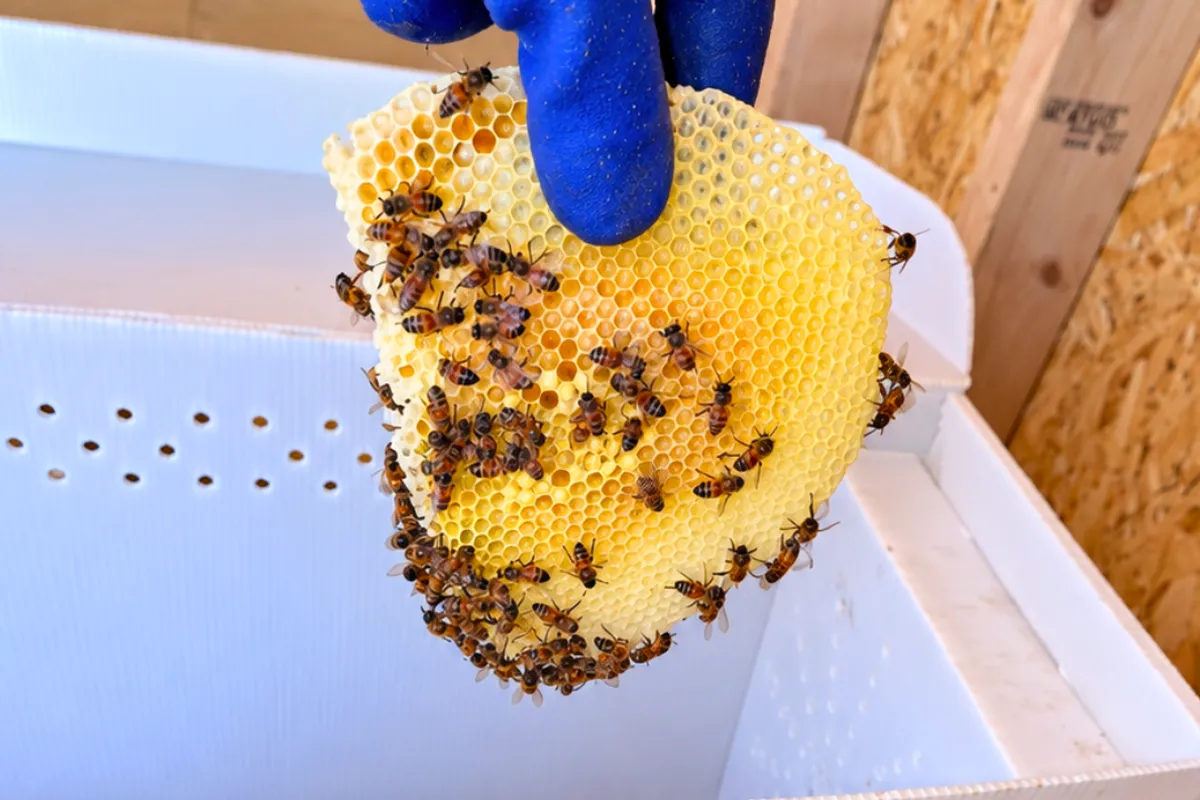
| Comb | None at first | Wax honeycomb inside the hollow, with honey and brood |
| How long | Usually a few hours to a few days | Stays and grows; can be there for years |
| Behavior | Usually calm, with scouts coming and going | Busy foragers; guards defend the entrance |
| What to do | Keep back and wait, or have it collected | Live removal of the bees and comb |
Why is there a swarm of bees in my tree?
The bees are between homes. Swarming is how a honey bee colony reproduces. The old queen leaves with a big group of workers, and they bunch up on something nearby while scout bees look for a new place to live. A tree branch is one of the most common places they stop.
UC IPM's honey bee Pest Notes describe swarms as temporary and say they usually move on within a few hours to a few days, once the scouts agree on a site. So a lot of the time, the best thing to do about a swarm on a tree is nothing, from a safe distance. I go into the timing in will a bee swarm leave on its own?
What should you do about a bee swarm on a tree?
Leave it room and give it time. While it's there:
- Keep people and pets well back from the tree
- Don't hose it, spray it, shake the branch or throw anything at it
- Don't mow, trim or run a leaf blower under it
- Check on it once or twice a day from a distance
Call to have it collected if the swarm is hanging over a doorway, driveway, pool or play area, if it hasn't left after a few days, or if you see comb starting to form on the branch. Once a swarm stays and starts building comb out in the open, it's turning into a colony. Swarm removal with me is $250, and the bees are collected alive.
Can bees live inside a tree trunk?
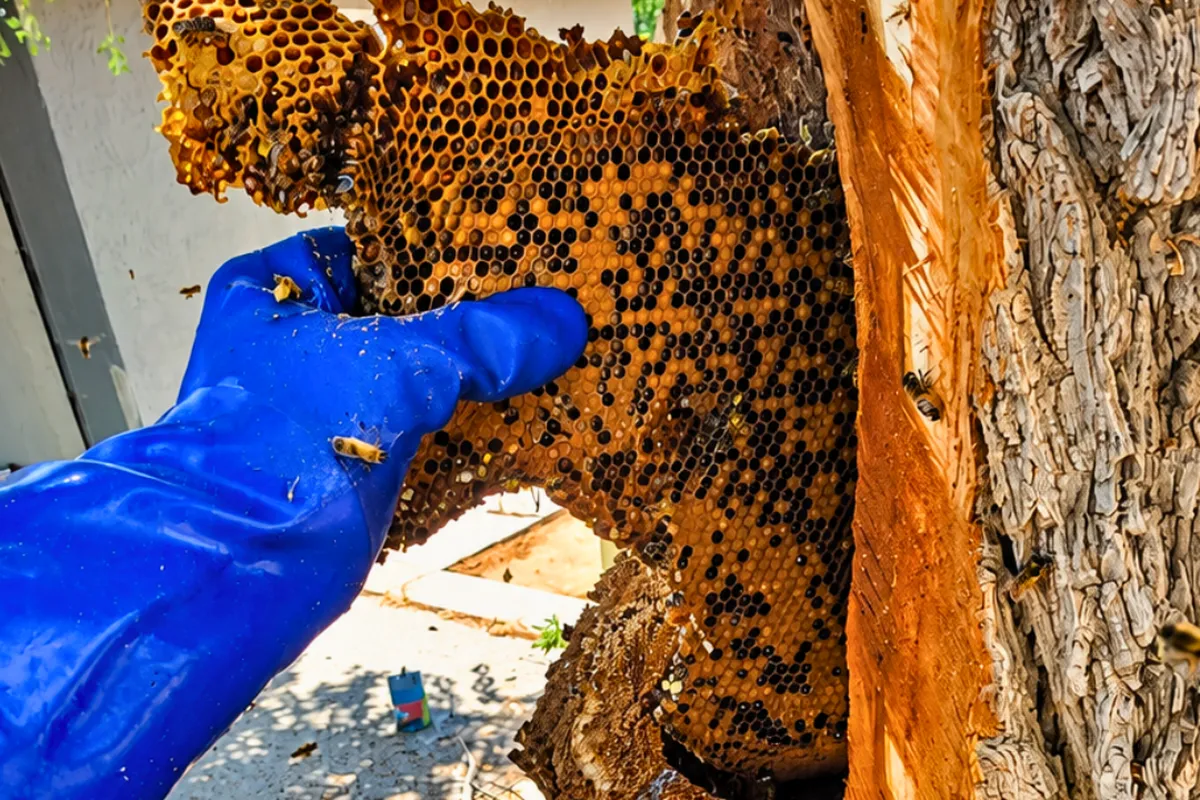
Yes. A hollow tree is about the most natural home a honey bee colony can get. Bees were nesting in tree cavities long before there were wall voids and meter boxes, and they still do. An old tree with rot pockets, broken limbs or a hollow trunk gives them a dark, protected space with a small entrance, which is just what scouts want.
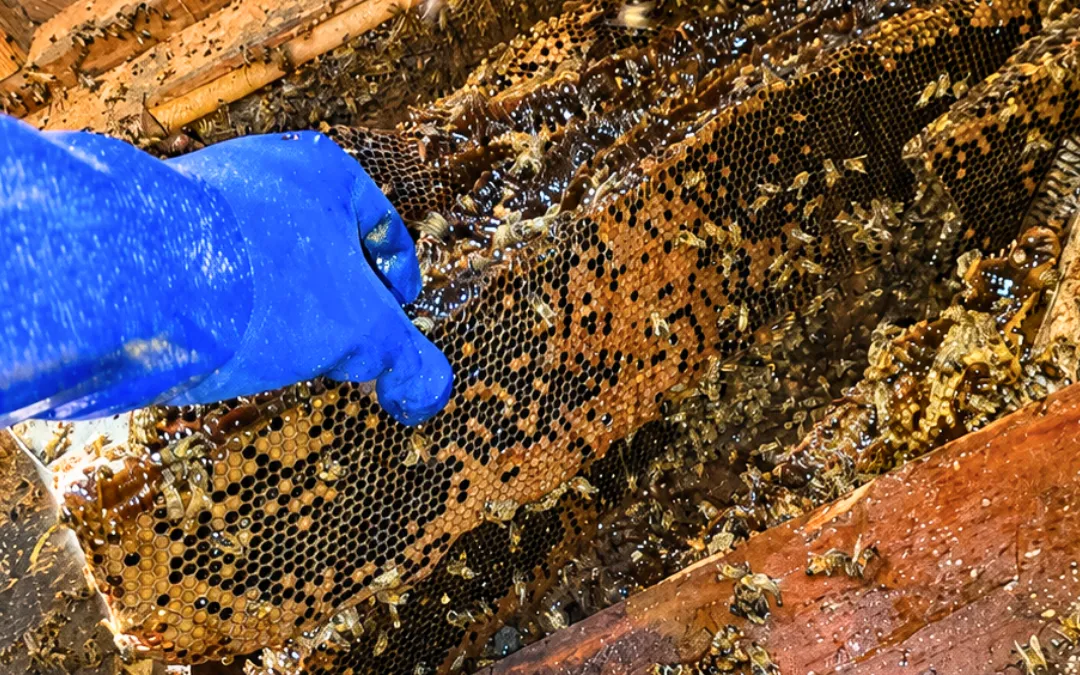
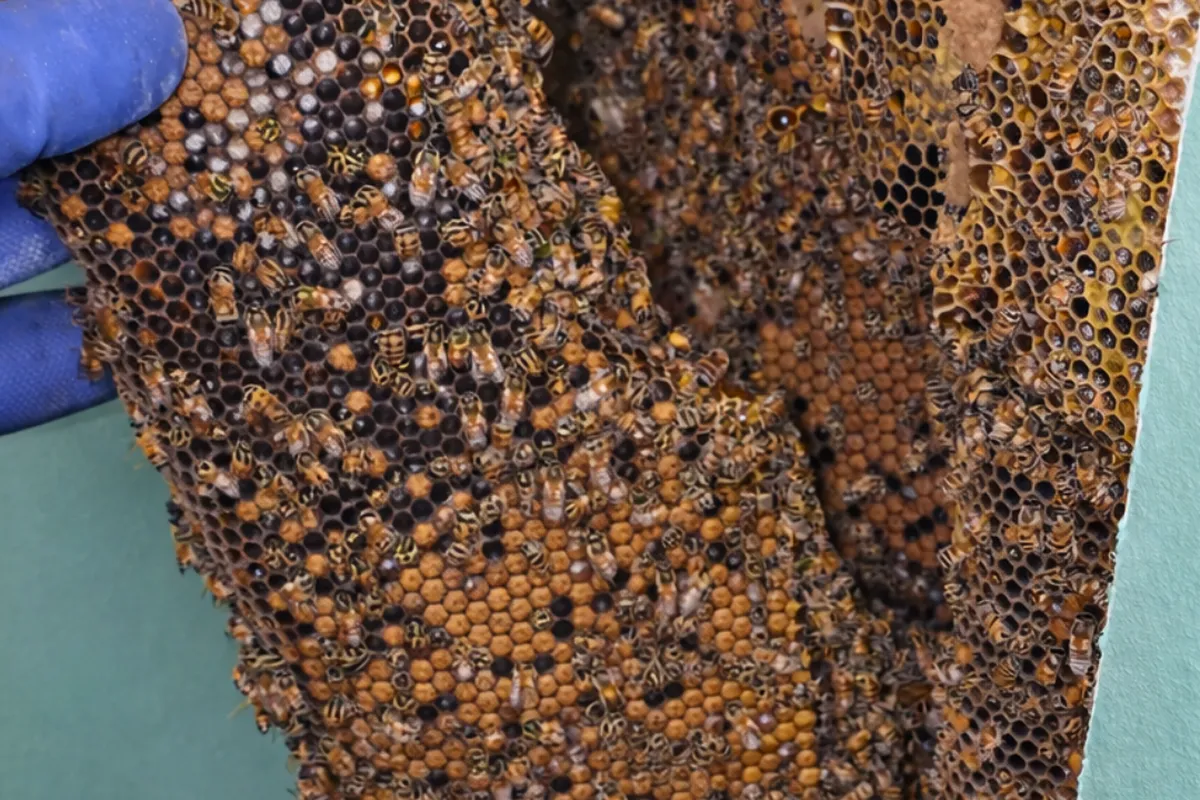
Once they're in, the colony builds sheets of wax comb, raises brood and stores honey. It won't leave on its own, and it can keep growing as long as there's room. If it gets big enough, it may send out swarms of its own.
What does a bee hive in a tree trunk look like?
From the outside, usually just a busy hole. You'll see bees flying straight in and out of one spot on the trunk or a big branch, often with a few guard bees at the entrance. Get close and you might hear a hum, but I wouldn't.
Inside is another story. The photo at the top of this post is from a job in Apple Valley, where the honeycomb was built inside a hollow tree trunk and I removed it by hand. That's how most tree removals go. The comb is stuck to the inside of the cavity and has to come out piece by piece.
How do you get rid of bees in a tree without killing them?
For a colony living inside the tree, live removal is the humane way to go. Generally it goes like this:
- I inspect the tree to confirm they're honey bees, find the entrance and get a feel for where the comb sits inside the trunk or limb.
- Then I get access. Depending on the tree, that can mean opening up the hollow, though sometimes the cavity is open enough to reach into. I'll go over what your tree needs before any work starts.
- The bees and comb come out alive. I take the comb with the brood and bees out by hand and move it into a bee box so the colony can be relocated. No chemicals or pesticides.
- I clean out the cavity, taking as much comb and honey as I can so the old scent doesn't pull in the next swarm.
- Last, the opening can be closed off or screened so bees don't move right back in.
The colony then goes to my bee relocation program instead of being destroyed. The cost depends on the tree and how hard the colony is to get to. The inspection is free, so you'll know what's involved before anything happens.
Should you spray or cut down a tree with bees in it?
No, not with the bees still in it. Spray hardly ever reaches the whole colony in a hollow trunk, and it leaves dead bees, brood and honey behind that can pull in another swarm. Cut down a tree with an active colony inside and an ordinary job can get dangerous fast, for you and for the tree crew. If the tree has to come down anyway, get the bees out first and then call your arborist.
Here in Southern California, keep in mind that you can't tell a gentle colony from a defensive one just by looking at it. Africanized honey bees have spread through all of the region's counties, according to UC Riverside, and I cover what that means in Africanized bees in California. Be careful around every colony.
Do you remove bees from trees in the High Desert?
Yes. Along with Orange County, Los Angeles County and the rest of the Inland Empire, I serve the High Desert, including Apple Valley, Victorville and Hesperia. Anywhere up there, a big yard tree with a hollow trunk or a broken limb can end up with a colony in it.
Need a hand?
If you've got bees in a tree, keep your distance and don't spray or cut it. Call or text a photo to (626) 487-6052, or request a quote online. From a photo I can usually tell right away whether it's a swarm that'll probably move on or a colony that needs removing. The inspection is free. I answer calls 7 days a week, and I do removals Monday through Saturday.
Frequently asked questions
How long will a bee swarm stay in my tree?
Will bees living in a tree trunk ever leave?
Are bees in a tree dangerous?
Can bees be removed from a tree without cutting it down?
Should I cut down a tree that has bees in it?
Like these guides? Add Eli the Bee Guy as a preferred source on Google to see more of them in your search results.