You sweep up a few dead bees from the windowsill, and the next morning there are more. Then you find some in the bathtub, or under a light fixture, or on the floor of a room nobody's been in. A dead bee or two can come in through an open door. If you keep finding dead bees in your house, though, they're coming from somewhere, and it's often closer than you'd think.
Short answer: If you keep finding dead bees in your house, there's often a honey bee colony nearby, inside a wall, attic, ceiling or vent. Bees wander out of the dark cavity toward light, get into the living space and die at windows. Check for an entry point outside and call for an inspection before it grows.
Here's why it happens, what to check, what's different in winter, and when to call me.
Why do I keep finding dead bees in my house?
The most common reason is a colony living in the structure of your home. Honey bees navigate by light. When a colony is inside a wall or attic, some bees get turned around in the dark, follow a gap toward light and come out inside the house instead of outside. Once they're in, they head for the brightest spot, usually a window, and bump against the glass until they run out of energy.
These are the usual ways bees get from a hive into your living space:
- Gaps around recessed lights, ceiling fixtures and fan housings
- Outlets and switch plates on an exterior wall
- Bathroom and kitchen exhaust fans
- Heating and air vents, and the ducts behind them
- Gaps around plumbing under sinks or behind tubs and showers
- Attic access hatches and openings around the chimney
There are other explanations. A bee can fly in through an open door, a torn screen can let a few in, or a swarm may have rested near the house for a day. Those usually give you a few bees one time, though, and then it stops.
Why are there dead bees by my windows?
Windows are where trapped bees go to try to get out. A bee inside your house wants to get back outdoors, the brightest thing in the room looks like the exit, and it keeps trying the glass until it's worn out. That's why most people first notice the problem on the windowsill.
Pay attention to which windows. If the dead bees keep turning up in the same room, or on the same side of the house, the colony is often in a wall, ceiling or attic space near that room.
What should you check if you find dead bees inside?
There are a few simple things you can check safely yourself:
- Keep track of where you find them: which rooms, which windows, which fixtures. If there's a pattern, it points toward the colony.
- Look at the bees. Fuzzy, golden-brown bees are honey bees. Smooth, shiny, bright yellow and black insects are more likely yellow jackets. My guide to honey bees vs. yellow jackets vs. wasps can help.
- Check outside. On a warm, sunny day, watch the outside of the house from a safe distance near that room. Look for bees flying in and out of one spot: a gap in stucco or siding, a vent, the roofline or a soffit.
- Listen. Put your ear near the wall or ceiling in that room. A steady hum can mean an active colony.
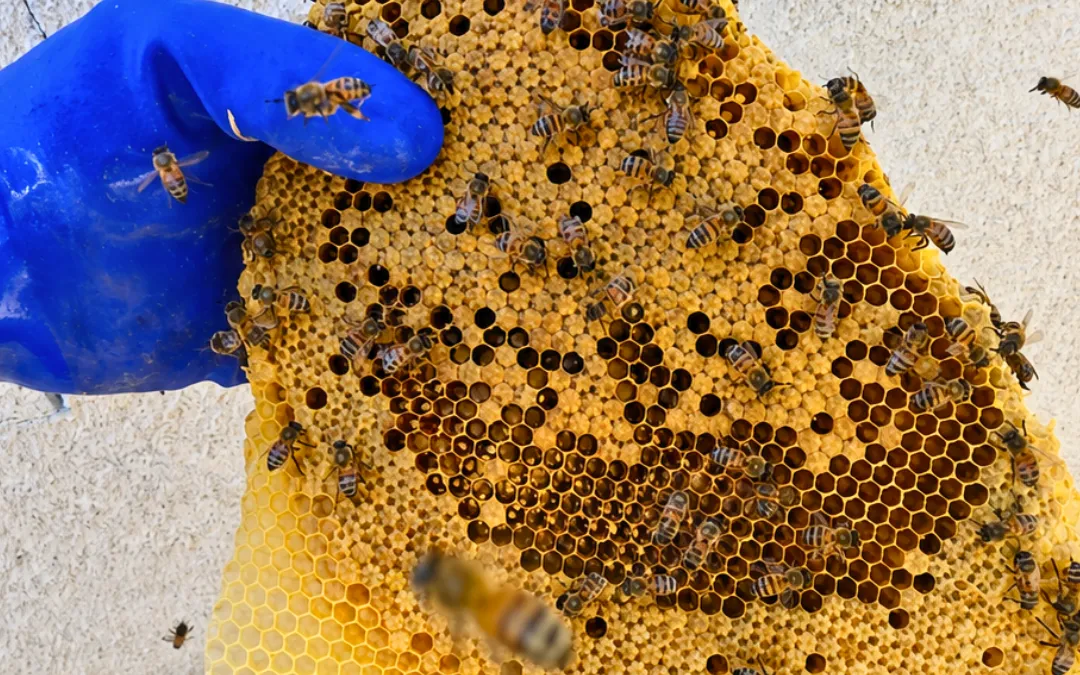
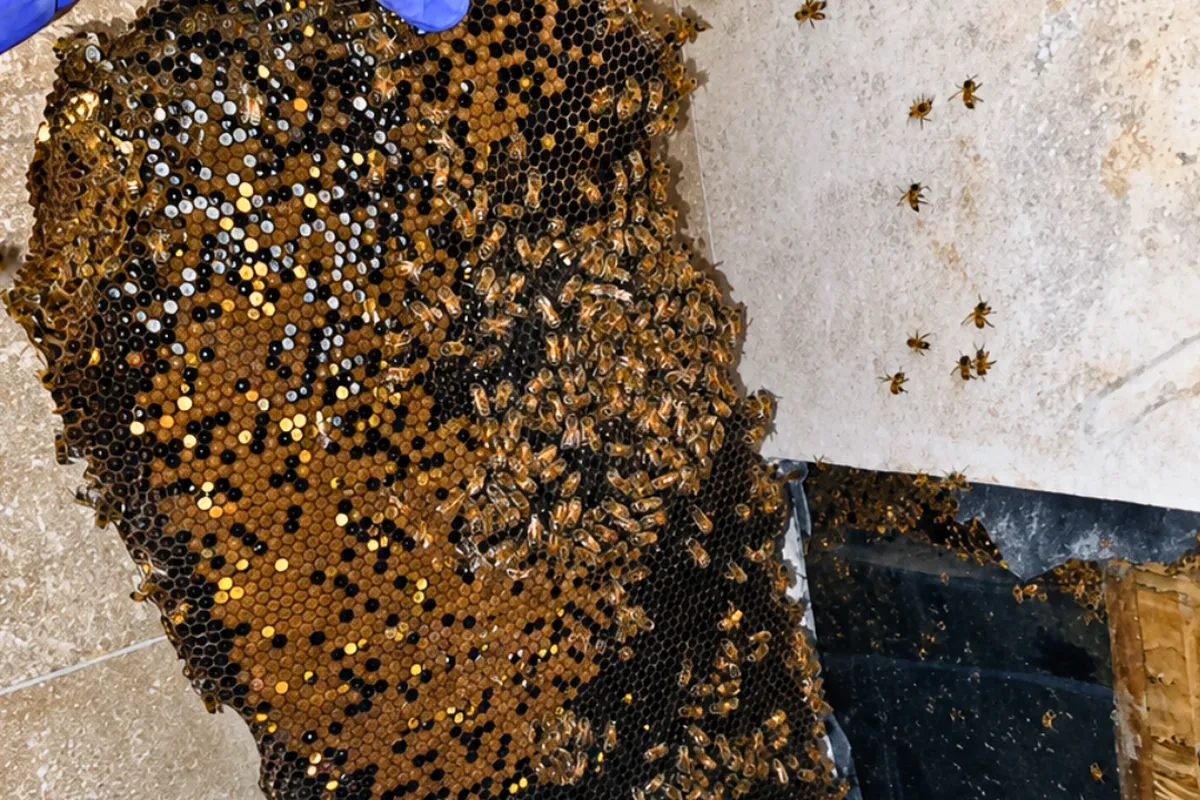
- Look for stains and sniff for smells. Dark stains, sticky spots or a sweet, fermented smell on a wall or ceiling can mean comb and honey behind it.
Don't open the wall or ceiling yourself, and don't seal the outside entrance. Blocking it can push more bees into the house.
Where is the hive usually hiding?
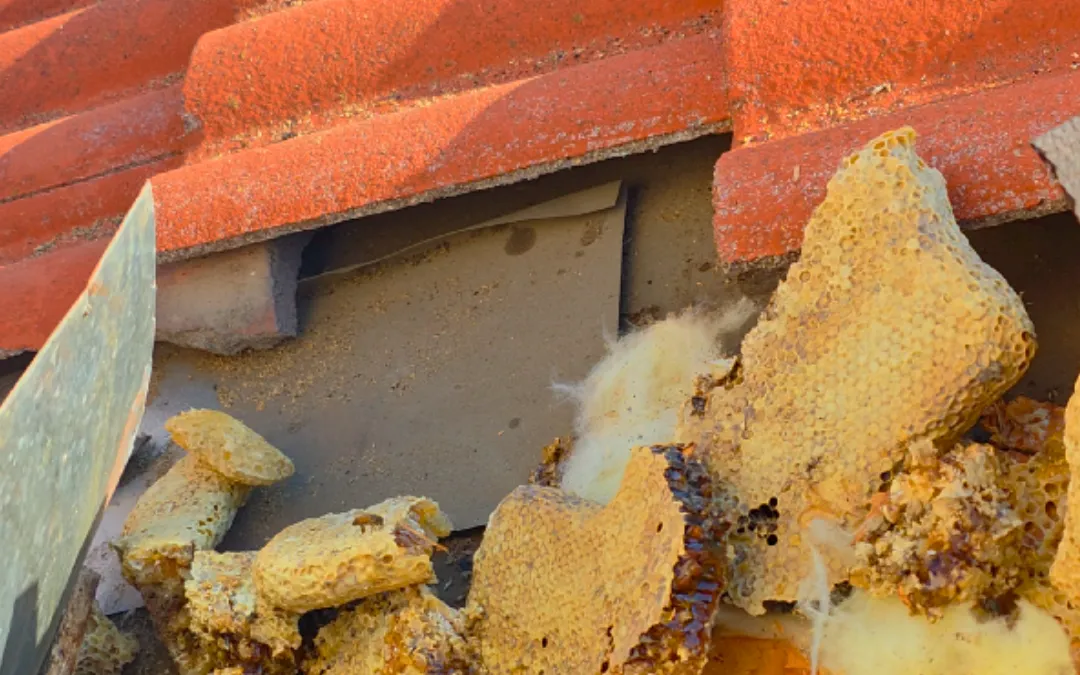
Anywhere there's a dark, protected cavity with a small way in. I find them in wall voids, attics, soffits, ceilings and the space around chimneys and vents, and sometimes in places you'd never guess.
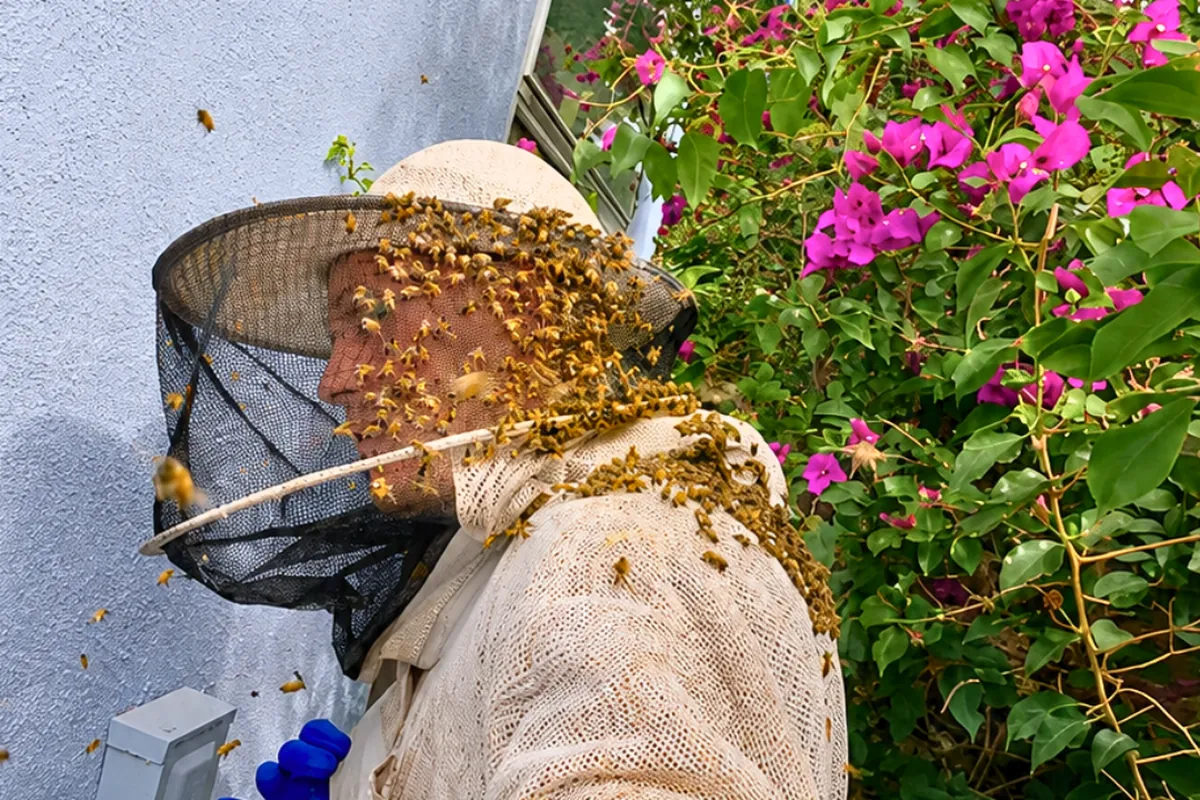
The photo at the top of this post is from a job in Upland, where I found a honey bee hive in the wall behind a bathroom shower. That colony was tucked behind tile and plumbing in a room the family used every day.
If the bees seem to be coming from overhead, see what to do if bees are in your attic. If they're coming from a wall, my guide on a bee hive in your wall walks through next steps.
Why are there bees in my house in winter?
The colony is still there. Honey bee colonies don't die off in winter the way yellow jacket colonies usually do. They cluster together, live on stored honey and stay put. Here in Southern California, our mild winters mean bees can fly on plenty of warm days, too.
So if you're finding bees indoors in winter, it usually isn't a swarm passing through, since swarms are much more common in spring. It's more likely a colony that has been in your walls or attic for a while. On a sunny winter day, a few bees wander toward the warmth and light inside and end up on your windowsill.
If what you're finding are yellow jackets rather than bees, that's a different situation. See my yellow jacket removal page.
Are dead bees in the house dangerous?
A dead bee isn't much of a threat, but you can still get stung by stepping on one barefoot, so sweep them up rather than picking them up. The bigger concern is what they're telling you. A colony in the structure keeps growing. Over time that can mean more live bees indoors, honey stains, and comb that gets harder to remove the longer it's in there.
| What you're seeing | What it likely means | What to do |
|---|---|---|
| One or two dead bees, once | A stray that got in through a door or screen | Sweep up and watch |
| Dead bees at the same window every few days | A colony in a wall, ceiling or attic nearby | Check outside and call for an inspection |
| Live bees around a light, vent or outlet | Bees finding a path from the hive into the room | Close that room off and call soon |
| Bees plus stains, drips or a sweet smell | Comb and honey behind the wall or ceiling | Call for removal |
Should you spray the bees or seal the gaps inside?
No. Spraying the few bees you see indoors doesn't touch the colony. Killing a colony in place can leave dead bees, brood and honey to rot and leak inside the wall, and UC IPM notes that leftover comb attracts future swarms. Sealing indoor gaps can keep bees out of a room for a while, but the colony is still in the wall, and blocking the outside entrance can push more bees indoors.
What fixes it for good is a live removal. The bees and all the comb come out, and the entry point gets sealed and patched on the same visit. Structural removals with me run $375 to $1,000, and the inspection is free.
Need a hand?
If you keep finding dead bees in your house, call or text a photo of the bees, and of any spot outside where you've seen them going in, to (626) 487-6052. You can also request a quote online. I'll come out for a free inspection, find where they're coming from and tell you what it'll take. I answer calls 7 days a week, and I do removals Monday through Saturday.
Frequently asked questions
Why are there dead bees in my house but no hive?
Why do I find dead bees by my windows?
Why are there bees in my house in winter?
Should I seal the gaps where bees come into the house?
How do I find where the bees are coming from?
Like these guides? Add Eli the Bee Guy as a preferred source on Google to see more of them in your search results.