Usually it starts with a hum that wasn't there yesterday. Then you notice bees at the edge of the glass, going in and out of a little gap in the window trim, a stucco seam, or the corner where the frame meets the siding. A colony next to a window gets personal fast, because that's the room where you sleep or work, or the spot where guests walk up and knock.
Bees working a window are also a pretty good sign they aren't just passing through. A swarm resting on a branch is temporary. Bees using the same crack beside a window day after day usually means comb is being built inside the wall, the header or the soffit. At that point, waiting it out isn't a plan anymore, it's a risk.
Why a hive near a window is different
A hive in the wall cavity next to a window brings safety problems and structural ones at the same time. People are in and out of windows all day, so the odds of bumping into the bees, and of the bees getting defensive, go up. Windows are also where a lot of people try a DIY fix, because the entrance is right there and looks easy to reach.
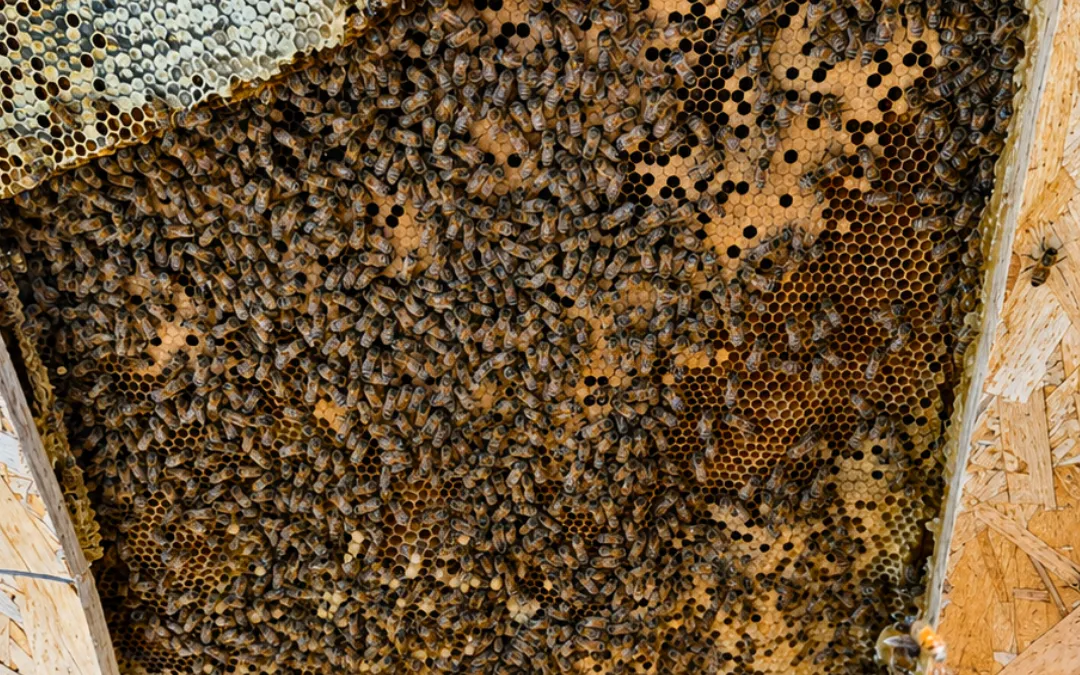
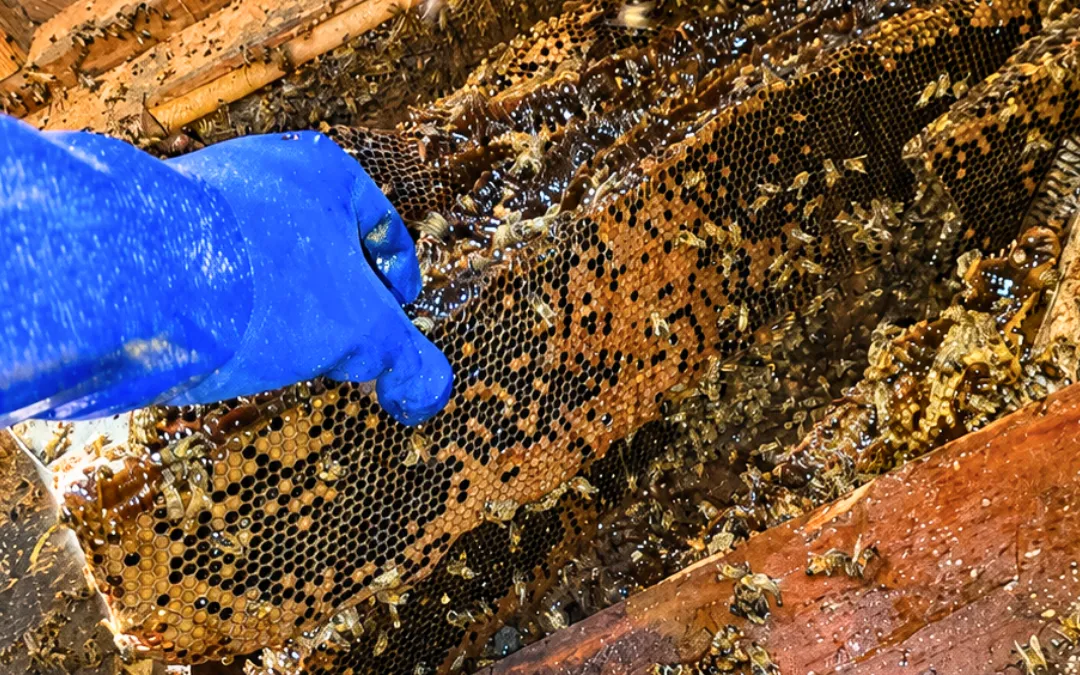
What you see outside is only the front door. The comb is usually further in, often spread across a couple of studs or sitting up above the window header where it's warm and protected. The bigger the colony gets, the more wax, honey and brood is in that wall. All that weight and moisture can cause staining, warped drywall, smells, and sometimes honey seeping through, especially in a heat wave.
If anyone in the house has had a bad reaction to a sting before, a hive in a window wall is urgent. Even without allergies, one surprised bee in a bedroom or a cluster on the windowsill can cause a panic, and panic is usually when people get stung.
A quick reality check: bees vs. wasps vs. “just a swarm”
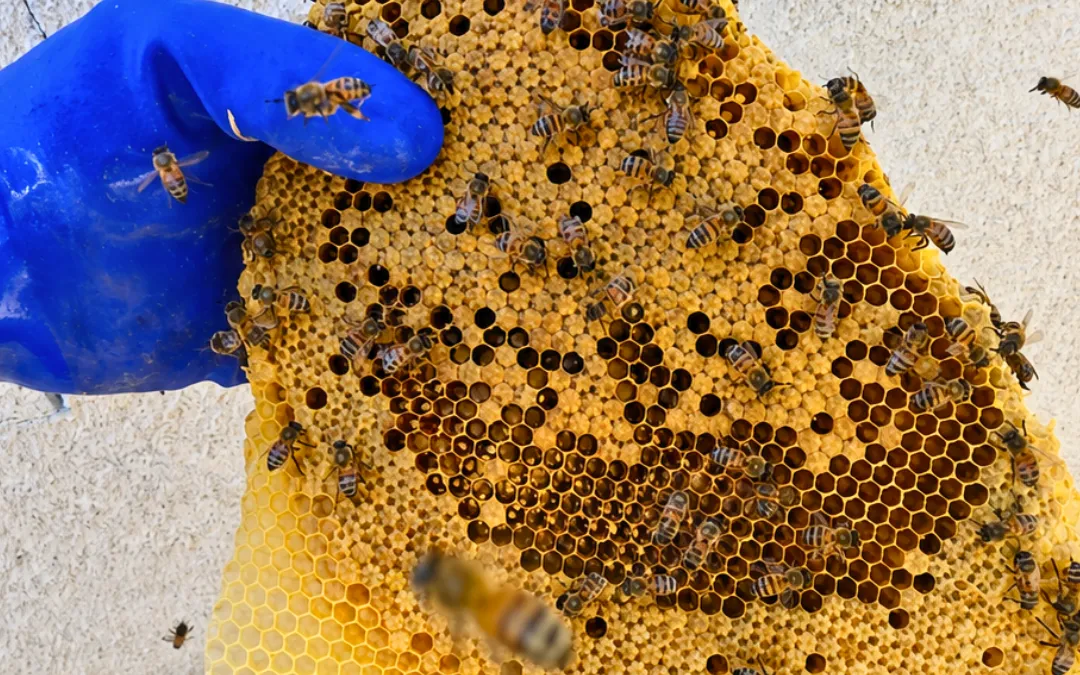
Before you set up bee hive removal near window areas, make sure of what you've actually got. Honey bees are fuzzy and golden brown, and they fly with purpose, usually in a steady line to and from the entrance. Wasps look sleeker and more angular, and they're the ones that get pushy around food and trash.
A swarm is a tight ball of bees resting on something for a short while as scouts look for a new home. It looks dramatic, but a swarm is often the easiest thing to deal with if somebody gets to it quickly. A hive in the wall by a window is a different animal. You'll see traffic all day, maybe some bits of wax, and it keeps going day after day.
If you're not sure which it is, don't walk up close to get a better look. A photo or short video from a safe distance is usually all I need to tell what's going on.
What to do right now (and what not to do)
If bees are going into a gap by a window, all you're trying to do is keep people safe and keep the bees calm until someone can get there.
Shut that window and leave it shut if you can. Move the pets to another part of the house. At night, keep bright lights away from that window, because light draws in any bees that have found a way inside.
Don't seal the crack with caulk, foam, tape or putty. I know it seems like the obvious move, but it usually backfires. Block the main entrance on an active hive and the bees will push into the interior wall, come out into the room, or find another exit somewhere else on the house. One entrance can turn into several.
Don't spray insecticide into the gap either. Bees are pollinators and I'd rather see them saved, but even setting that aside, spraying into a wall cavity leaves you a second problem: dead bees and poisoned comb inside a wall where you can't clean it. That means smells, other pests and residue. And the space is still just as attractive to the next colony.
Skip the idea of smoking them out, too. Smoke can stir bees up in a tight space, and things get dangerous quickly when you're on a ladder next to glass.
Why hives choose window walls in Southern California
In Los Angeles, Orange, Riverside and San Bernardino counties, honey bees stay active most of the year. A window wall makes a great nest site for them: it's warm, out of the wind, dry inside, and it has a small entrance that's easy to guard.
A few things about a building make it more likely:
Old window frames that have shifted a little over the years, gaps where the stucco meets the trim, and unsealed holes around exterior lights or shutters are exactly what scout bees are looking for. Once a colony moves in, the opening is only part of it. The cavity behind it is now home, and they'll defend it.
The humane approach: live removal plus sealing the entry
When people call me about bees at a window, they want two things: the bees gone, and the bees not coming back. Getting there takes more than pulling the bees out. You also have to deal with the opening and the old comb so another colony doesn't take the space.
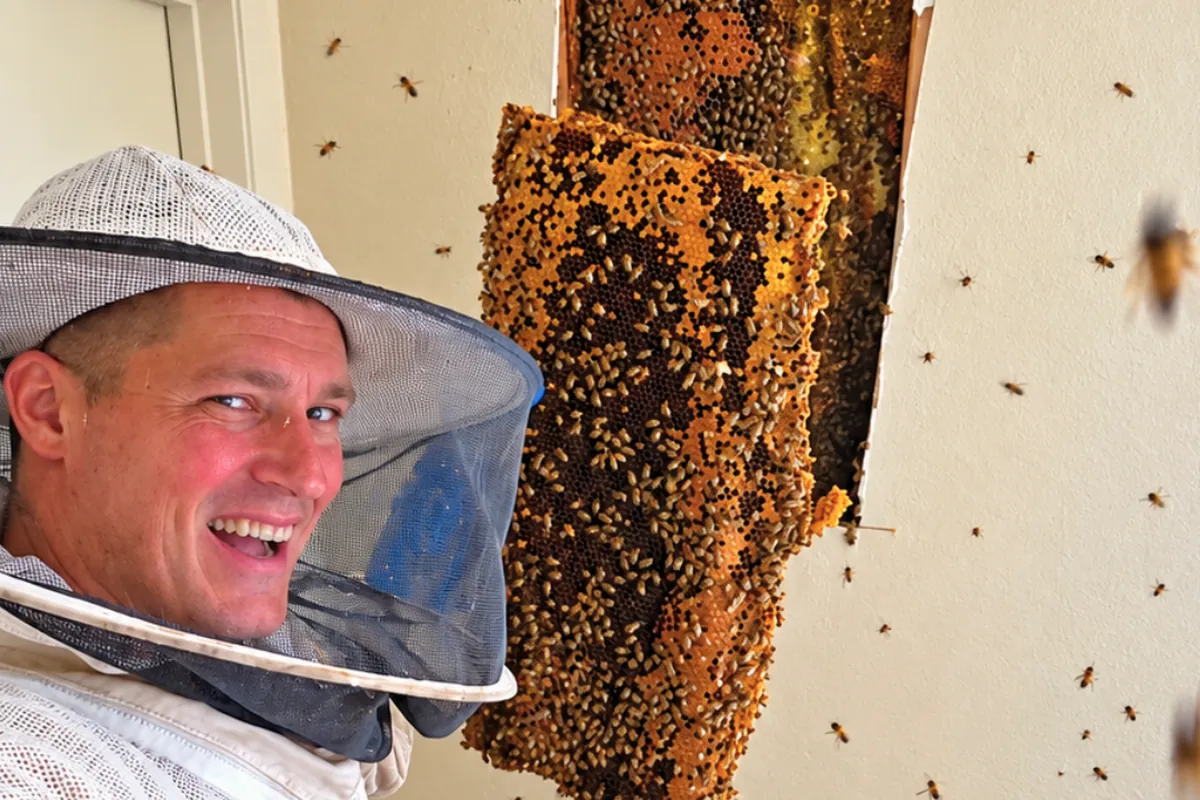
A professional live removal starts with finding the exact entrance, confirming where the hive sits, and then taking it out in a controlled way. Depending on the building, that can mean opening a section of siding outside or drywall inside next to the window so I can get at the comb. I take out the bees and all the comb, brood and stored honey included, and move the colony to an apiary where it can carry on like a normal colony.
After that, the cavity gets cleaned out and patched. This is where the cheap jobs fall apart. Comb left behind can melt, pull in ants and roaches, and smell. An entry point that isn't sealed well can let another swarm move in, sometimes the same season.
Sealing around a window takes some care, because windows have to shed water. The point is to keep bees out without trapping moisture in the wall.
What the process looks like when the hive is near a window
Every house is different, so it depends. The hive might be just behind the trim, or it might be above the header and spread wider than anyone expected. Most removals still go in the same calm, step-by-step order.
First I look. How the bees fly in and out at the window tells me where the entrance is, and from there I work out how far the cavity probably runs. Then I decide how to get in. Some houses are cleanest to open from the outside so the inside stays untouched. On others, opening the wall from inside next to the window is the safest, most direct way to the comb. I go with whichever means less risk and less damage.
Next comes the live removal and comb extraction. I move the bees carefully so most of the colony can be relocated, take the comb out a section at a time, and clear the cavity. Last, the area gets cleaned, the entry point sealed, and the opening patched so the wall is closed up again and that window doesn't attract the next colony.
Common questions homeowners ask (and honest answers)
Can I just wait until winter?
In Southern California, waiting rarely helps. We don't get much of a winter, colonies stay active for long stretches, and the hive can get a lot bigger in the meantime. The longer it's there, the more comb and honey build up, and the harder the removal and cleanup get.
What if the bees are “not bothering anyone”?
A hive by a window can seem calm right up until something changes: gardeners working nearby, kids playing, somebody opening the window, vibration from work on the house, or a hot spell that gets the whole colony going. And even if the bees stay gentle, the comb and honey in the wall keep adding up.
Will removal damage my window or wall?
That depends on where the comb is. I try to be precise and only open what I have to. But if the hive is inside the wall, I do have to get in there to take it out properly. A small, controlled opening now is almost always better than honey stains, smells, pests or a second colony later.
Is it safe to sleep in the room next to the hive?
If bees are getting into the room, don't use it until the hive is dealt with. If they're only active outside and the window stays shut, most households can go about their routine, carefully. If someone in the house has a severe allergy, treat it as higher risk and get help quickly.
How to choose the right help
When you're looking for bee hive removal near window areas, ask questions that tell you whether you're getting a quick fix or the whole job.
Whoever you call should be able to tell you where the hive probably is, how they'll get the comb out, what happens to the bees, and how they'll keep a new colony from moving in. Listen for live removal, relocation to an apiary, full hive extraction and sealing the entry point. If all you hear is “spray” or “treatment,” keep looking. In my experience, the people who handle bees properly are usually the same ones who think about keeping them out.
If you want the bees removed alive and the window wall closed up, Eli the Bee Guy is my business. I do live bee removals, full hive extractions, relocations to vetted apiaries and entry-point sealing, so the same window doesn't end up inviting the next colony in.
While you wait, keep things calm
If you've got someone booked and need to get through a day or two, keep things quiet around that side of the house. Keep kids and pets away from the window. Don't mow, trim or run loud tools near the entrance. If you have to walk past the window outside, go slowly and give the bees room.
Inside, leave that window shut and check that the screens are in good shape. If a bee gets in, don't swat it. Turn off the lights nearby, open a door to the outside if it's safe, and let it find its way out.
A hive by a window is unsettling, but it's fixable. Handle it the right way and your family stays safe, the bees get a new home, and you can open the curtains again without thinking twice.
Like these guides? Add Eli the Bee Guy as a preferred source on Google to see more of them in your search results.