Finding one bee inside is no big deal. Finding a few on the kitchen window today, more tomorrow, and more every afternoon after that means something's going on. When people call me about bees in the house, one of the first things they say is, "But we never leave the windows open." That detail tells me a lot.
Short answer: Bees in your house usually come from a colony living in a wall, attic, vent, soffit or chimney, slipping inside through gaps around lights, vents or outlets. Less often, a swarm flies in through an open door. Close off the room, keep people and pets away, don't spray, and have the colony and comb removed.
Below I'll cover where the bees are coming from, what to do right now, and what fixes it for good.
Why are there bees in my house?
Most of the time, it's because bees are living in or on the house itself. Honey bees look for dark, dry, protected cavities to build in, and UC IPM's honey bee Pest Notes list wall voids, attics, chimneys and soffits among the places colonies commonly set up. A house has plenty of spaces like that. Once a colony moves in, some bees wander the wrong way, follow the light, and end up in your living room when they meant to go outside.
The most common sources I see:
- A hive in a wall. Bees get into the wall cavity through a crack or gap outside, and some find their way in around outlets, switches, baseboards or trim.
- A hive in the attic or ceiling. Bees come down through recessed lights, ceiling fans, attic hatches and bath fan housings.
- A hive near a vent. Dryer, bath fan and other vents can give bees a path from the colony to the inside.
- A hive in the chimney. Bees work their way down the flue and out through the fireplace.
- A swarm through an open door or window. This one's less common. A swarm on the move can drift in through an open door, and suddenly you have a lot of bees at once.
Why are bees in my house when no windows are open?
Because they're coming from inside the structure. If you keep finding bees indoors with every door and window shut, there's a good chance a colony is living in a wall, ceiling or attic and the bees are leaking in through small gaps. Bees are drawn to light, so you'll usually find them at windows, skylights and light fixtures, often in the same room every day.
A few ways to narrow it down:
- Note which room the bees show up in, and whether they gather near a particular light, vent or outlet.
- Step outside and watch that side of the house, from a safe distance, for a steady line of bees going in and out of one spot.
- Listen at the wall or ceiling for a low hum.
- Look for stains, sticky spots or a sweet smell on a wall or ceiling, which can mean comb and honey behind it.
Finding the outside entrance helps a lot. My guide on how to find a bee entry point walks you through it. If you've spotted one larger bee that looks different from the rest, my post on spotting a queen bee inside your home explains what that could mean.
| What you see | Likely source | What to do |
|---|---|---|
| A few bees at a window every day, doors and windows shut | Colony in a wall, ceiling or attic | Watch outside for the entrance, then call for removal |
| Bees coming out of a light fixture or ceiling vent | Colony in the attic or ceiling | Turn that light off, close the room, call for removal |
| Bees in or around the fireplace | Colony in the chimney | Close the damper and don't light a fire |
| Lots of bees at once right after a door was open | A swarm that came inside | Leave the room, close the door, call |
| Stains or sticky drips on a wall or ceiling | Established colony with comb and honey | Call soon, before more damage happens |
What should you do right now if there are bees in your house?
Keep people and pets away, close off the room, and don't try to fight the bees. Here's what I tell people on the phone:
- Close the door to the room where the bees are, and put a towel along the bottom if there's a gap.
- Keep kids and pets out. A few bees at a window usually aren't looking for a fight, but stepping on one or grabbing one will get you stung.
- Give them a way out. Bees head toward light. In a room with just a few bees, turning off the lights inside and opening a window or door to the outside often lets them leave on their own.
- Don't spray. I'll get into why below.
- Don't plug the outside entrance. If you seal the hole the colony uses, the bees inside the wall go looking for another way out, and that's often into your house.
- Take a photo or short video of the bees, and of the spot outside where they're going in if you can see it safely. That helps me tell you what you're dealing with.
If someone is stung many times, has trouble breathing or is allergic, call 911.
What if a swarm of bees gets in the house?
Leave the room, close the door behind you, and call for help. A swarm is a group of bees looking for a new home, and swarming bees are busy with that search and don't have a nest to defend yet. Even so, don't swat at them or spray them. If the swarm has settled in the room, it can usually be collected. If the bees are disappearing into a gap in a wall or ceiling, they may be moving in, and that's when you want to act quickly, before they start building comb. My post on whether a bee swarm will leave on its own covers what swarms usually do.
Are honey bees in the house dangerous?
A handful of lost bees at a window usually aren't aggressive. They're mostly trying to get back outside. The risk goes up near the colony itself, especially if someone bangs on the wall, opens it up, or sprays into it. Here in Southern California, Africanized honey bees have spread through all of the region's counties, according to UC Riverside, and you can't tell them apart from gentler bees by looking. Treat every colony with respect, and leave opening the wall or ceiling to someone who does it for a living.
Why won't spraying get rid of bees in the house?
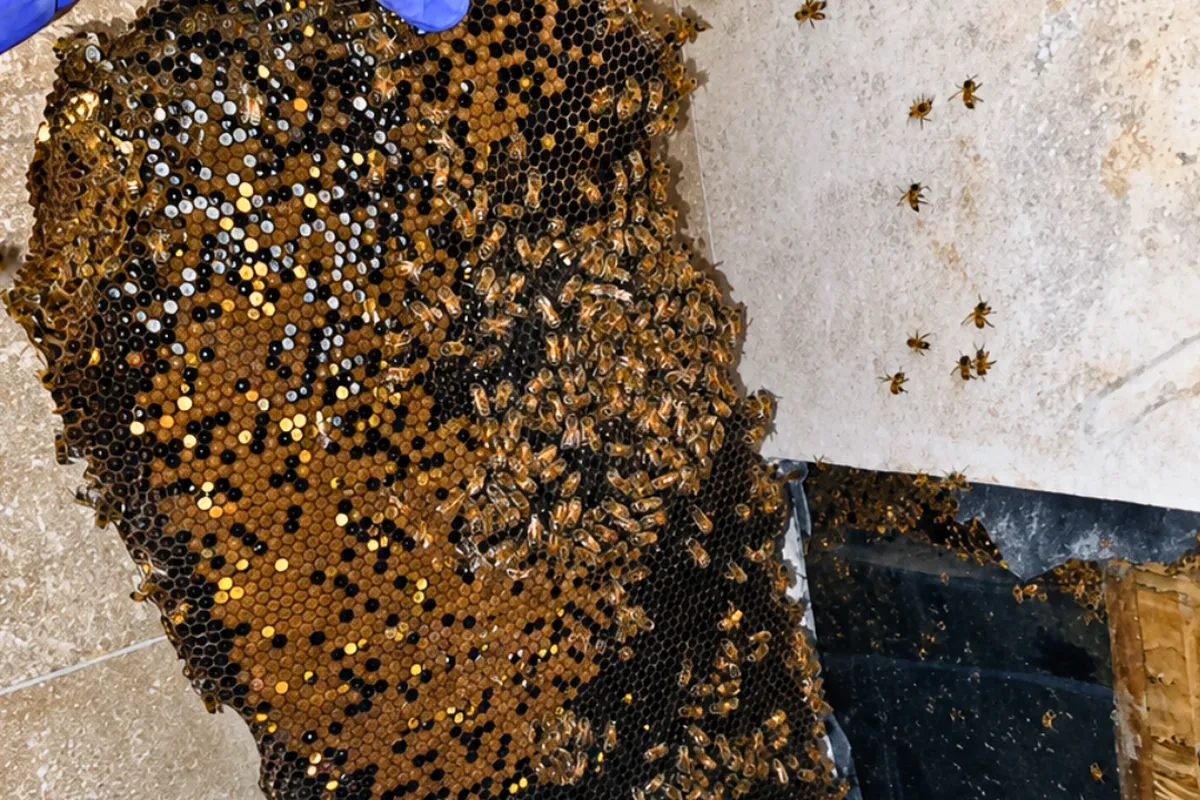
Spraying the bees you see indoors does nothing about the colony they're coming from. Spraying into the wall makes it worse. UC IPM says killing a colony in place "often leads to undesirable consequences." Dead bees and brood rot and smell, honey can ferment and seep through drywall and ceilings, and the leftover comb attracts pests and, later, a new swarm. I go into more detail in my post on what to do about a bee hive in your wall.
How do you get rid of a bee hive in your house for good?
You remove the colony and all of its comb, then seal the entrance. Getting only the bees out leaves the honey and wax behind, and those can rot, leak and draw in the next swarm. Here's how I handle it:
- Free inspection. I find where the colony is and where the bees are getting in.
- Live removal. I take the bees out alive, with no chemicals or pesticides.
- Full comb removal. All the comb and honey come out along with the bees.
- Seal and patch. I seal the entry points and do the patch work on the same visit.
- Relocation. The bees go to a new home. Nobody gets killed.
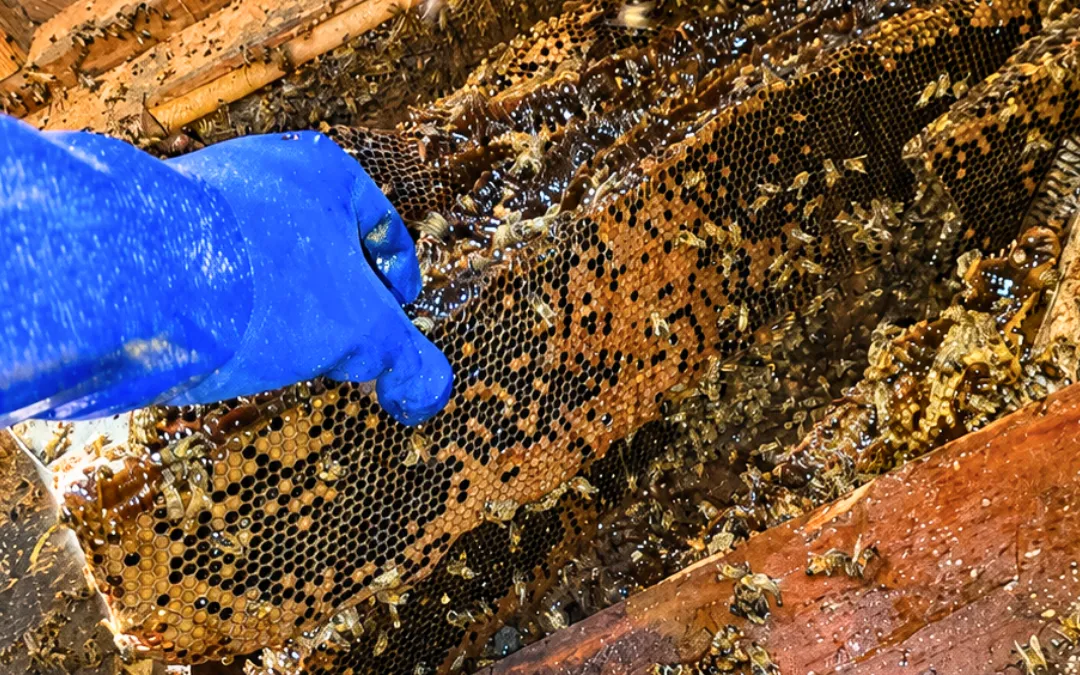
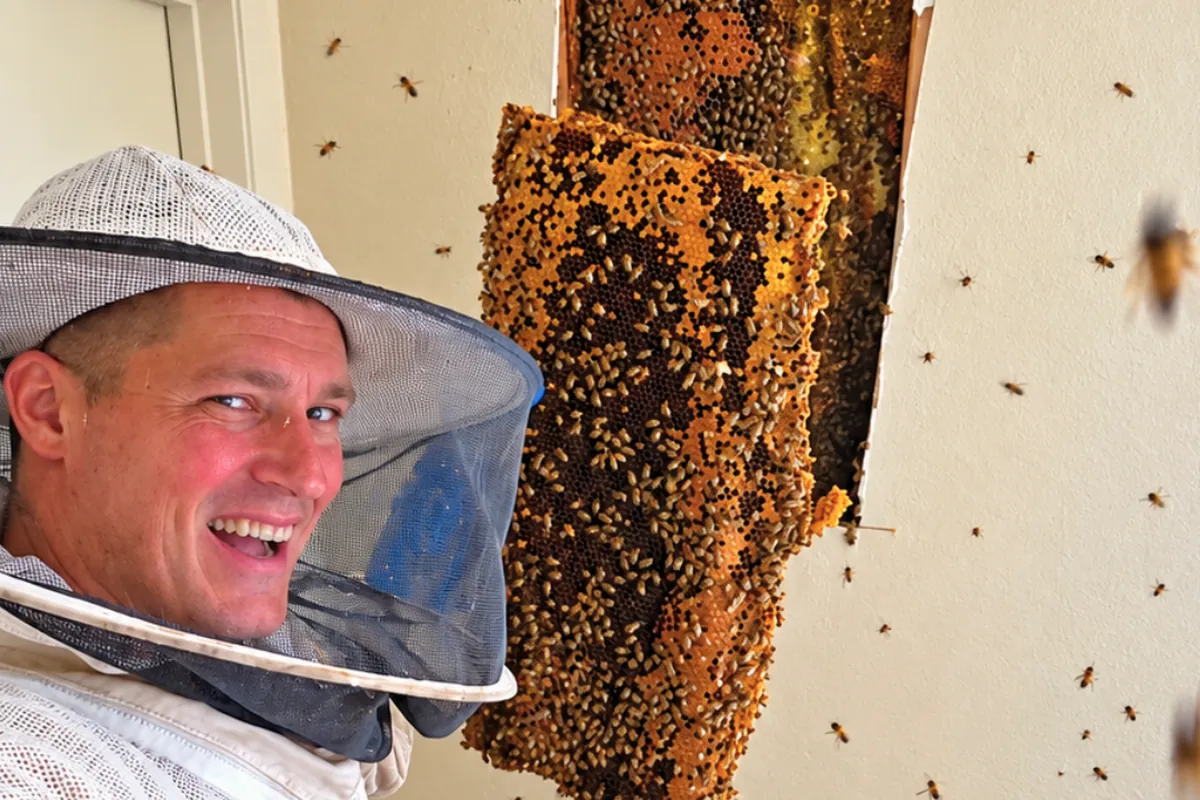
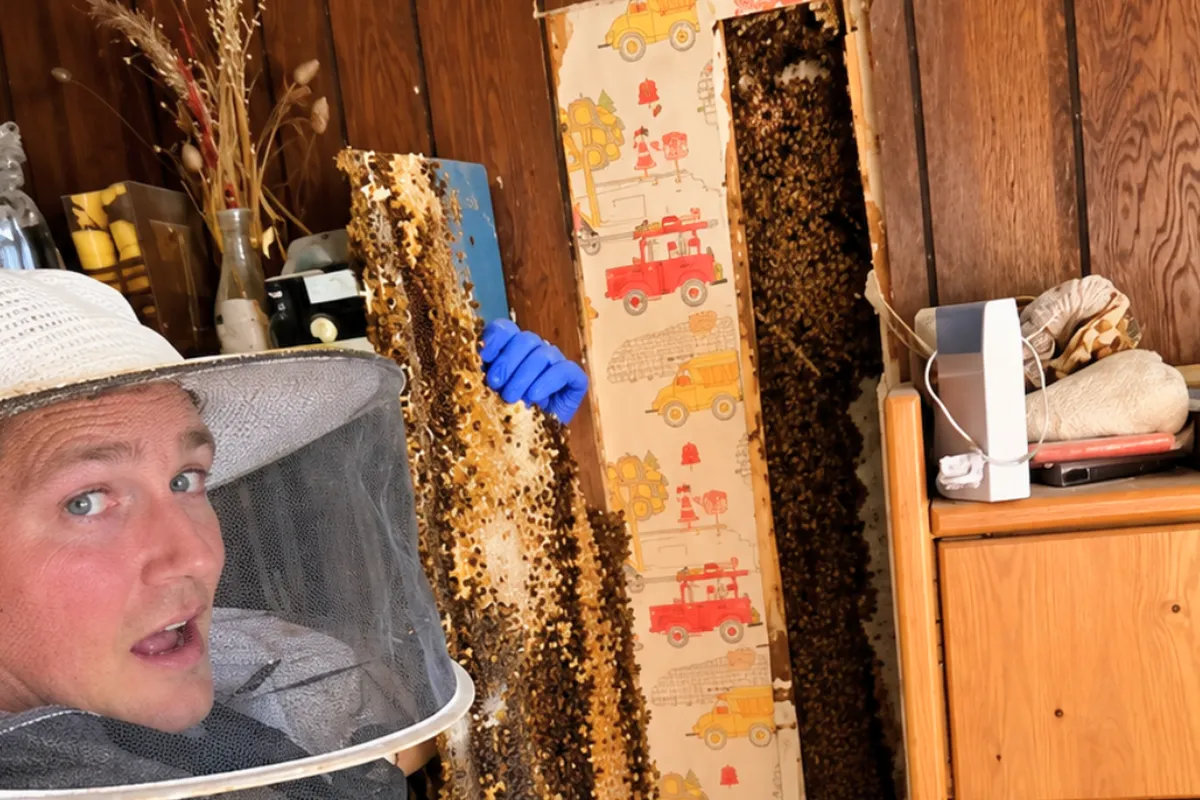
Sometimes the hive is right inside the living space. On one job in Carson, in Los Angeles County, the hive was inside an interior wall of the home, and that's where I removed it from. The photo at the top of this post is from that job. I work throughout Los Angeles County, as well as Orange County and the Inland Empire.
As for cost, a swarm removal is $250, and structural removals, like a colony in a wall or ceiling, run $375 to $1,000. The inspection is free.
Need a hand?
If bees keep showing up in your house, close off the room and call or text a photo to (626) 487-6052, or request a quote online. I'll come out for a free inspection, find where they're coming from, and tell you what it will take to get the bees and comb out and keep them out. I answer calls 7 days a week, 24 hours a day, and do removals Monday through Saturday.
Frequently asked questions
Why do I keep finding bees in my house every day?
Will bees in my house go away on their own?
Should I seal the hole where bees are getting into my house?
Can bees get through electrical outlets and light fixtures?
How much does it cost to get bees out of a house?
Like these guides? Add Eli the Bee Guy as a preferred source on Google to see more of them in your search results.