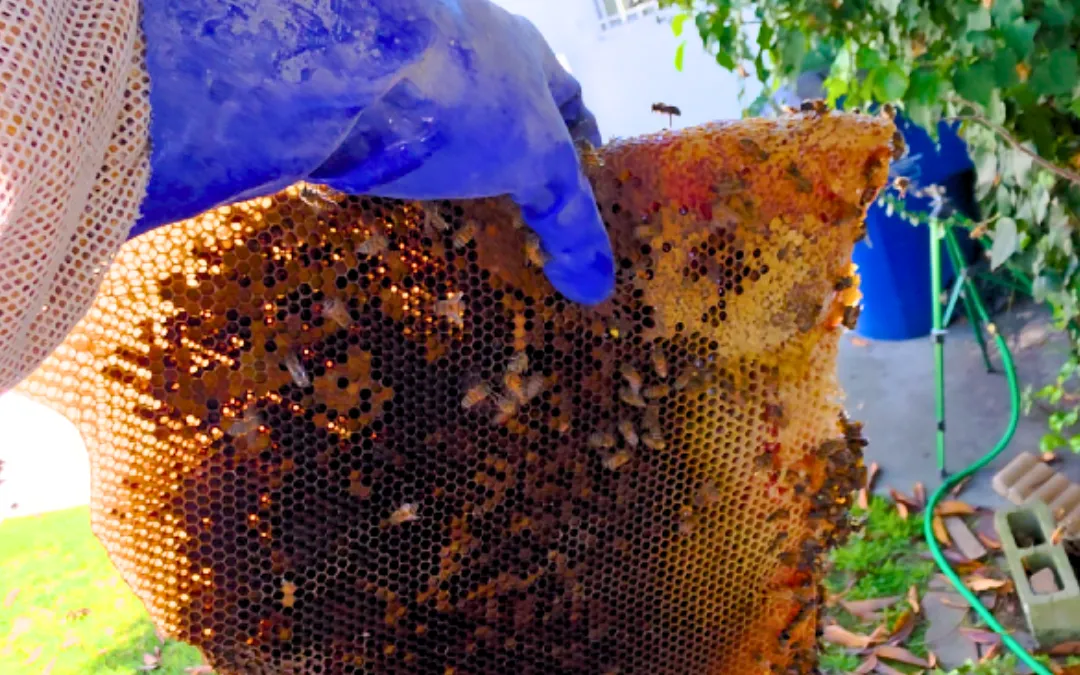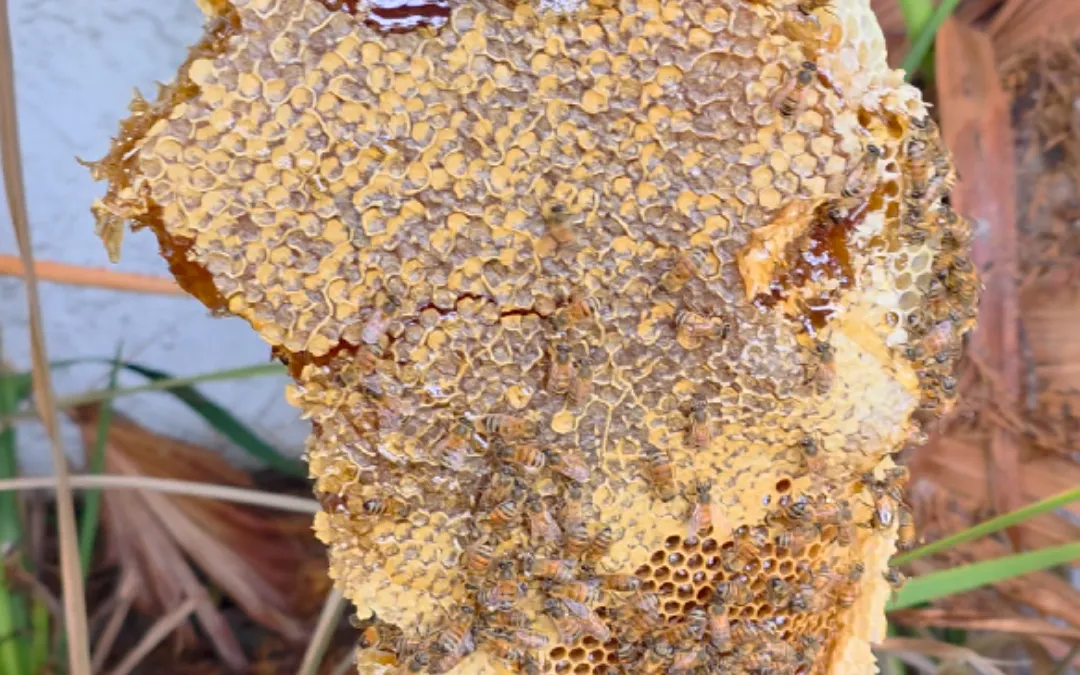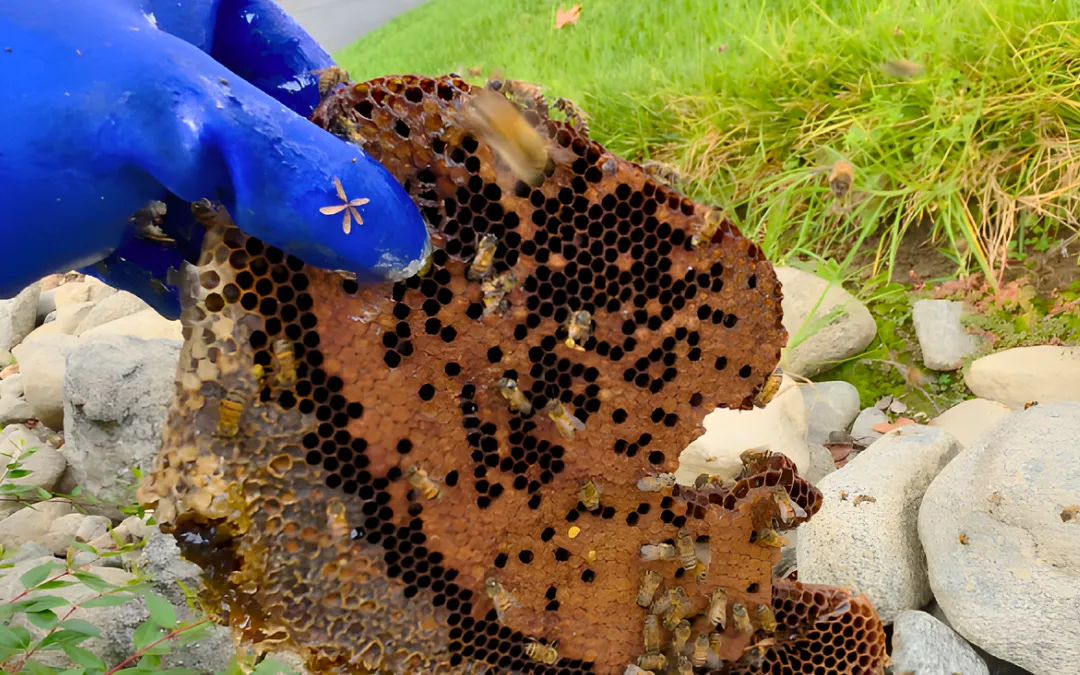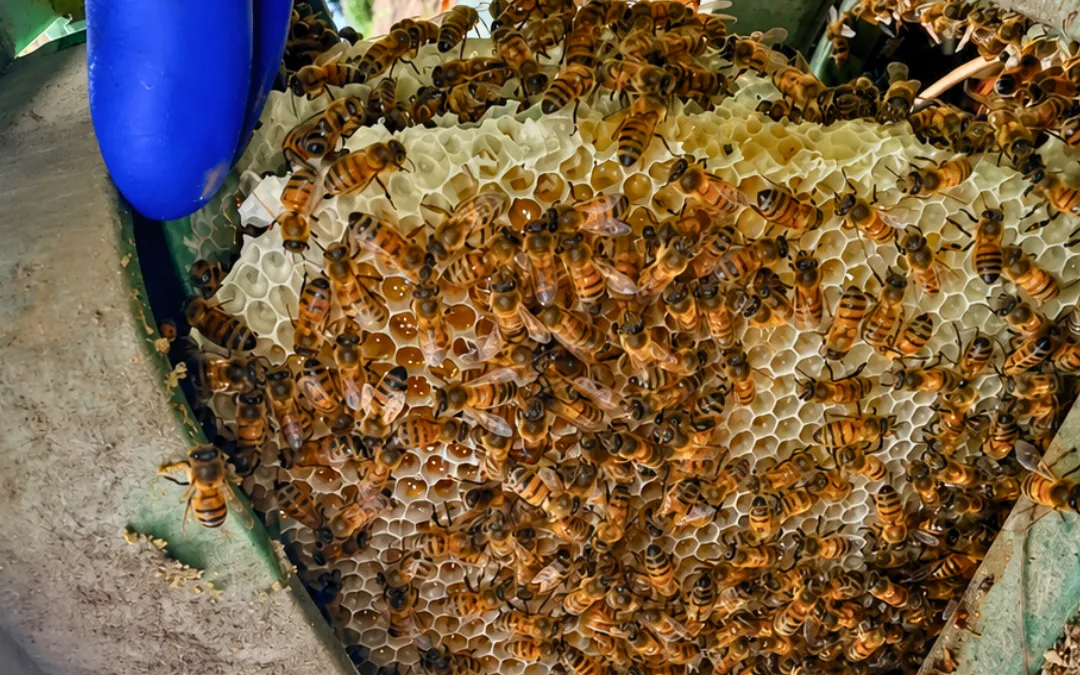
I pull honeycomb out of walls, roofs and meter boxes almost every week, and people always ask the same thing when they see it: how did the bees make all of this? I've been working with bees for over 15 years, and watching a colony build comb still impresses me.
Short answer: Worker honey bees make honeycomb out of beeswax that comes from their own bodies. After eating honey or nectar, young workers secrete thin wax scales from four pairs of glands on the underside of the abdomen. They chew and shape those scales into sheets of six-sided cells used for brood, pollen and honey.
What is honeycomb made of?
Honeycomb is made of beeswax, and the bees produce every bit of it themselves. They don't collect wax from plants or flowers the way they collect nectar and pollen.
According to the University of Tennessee's John Skinner, writing for the Extension Bee Health project, workers have four pairs of wax glands on the underside of the abdomen. The wax comes out as small, irregular oval flakes, or scales, that project between the overlapping plates of the last four abdominal segments. Brand new comb looks pale, almost white, when I find it. Comb in a hive that's been in a wall for a few years is usually dark brown.
Which bees make the wax?
Young worker bees do it. The same Extension Bee Health article says the wax glands are most developed and active in bees about 10 to 18 days old.
That lines up with the job schedule in the Texas A&M AgriLife Extension honey bee biology guide, which says wax glands start producing wax around 12 days after a worker emerges as an adult. Before that age she's mostly cleaning cells and feeding larvae. After it, she moves on to guarding and then foraging. Queens and drones never make wax. If you want the full rundown of a worker's career, I cover it in what a worker bee does in a hive.
How do bees turn wax into comb, step by step?
The bees eat, make wax, then chew and shape it into cells. It happens in this order:
- They fill up on sugar. Wax is secreted after a large intake of honey or nectar, according to the Extension Bee Health article. Comb builders are well fed bees.
- They stay warm. The same source notes that wax can only be secreted at relatively high temperatures, which is one reason comb building happens in the warm, crowded part of the nest.
- The scales come out. Flakes of wax form between the plates on the underside of the abdomen.
- They build with it. UF/IFAS Extension says workers produce wax scales on the underside of their abdomen and use those scales to construct the comb inside the colony.
- Thousands of bees work at once. One scale is tiny. A colony full of young workers adding wax at the same time is how a swarm can turn an empty wall cavity into rows of comb.
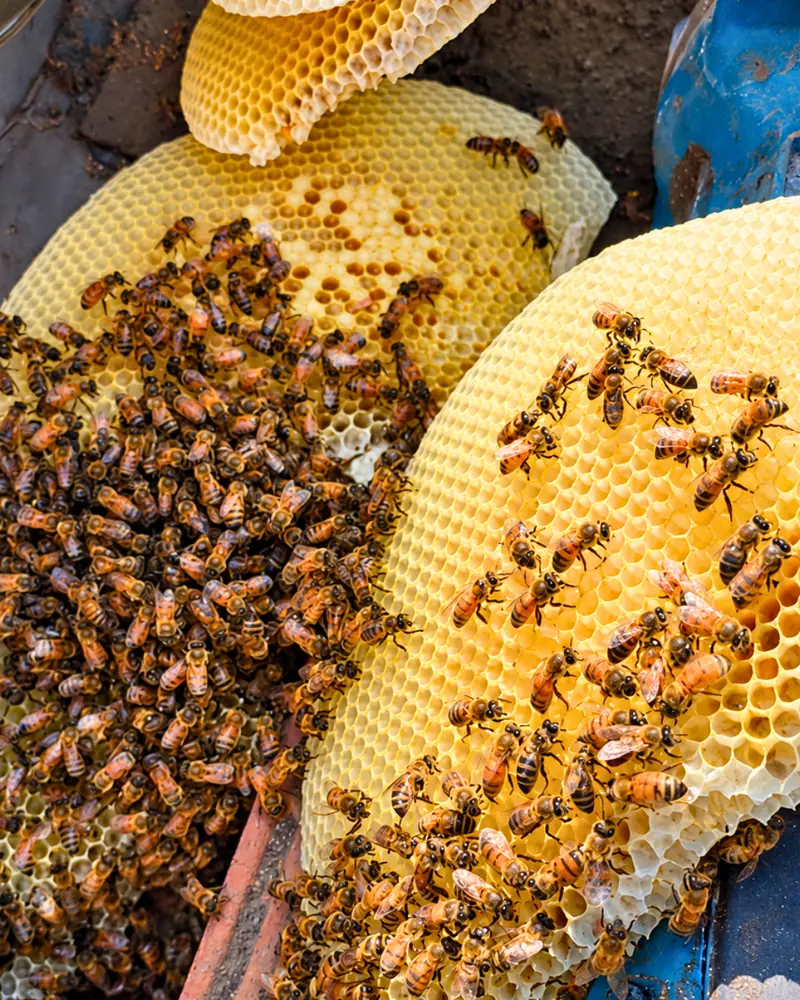
Why is honeycomb hexagonal?
Honeycomb cells are six-sided, and the comb itself hangs in flat, parallel sheets. Purdue Extension describes a honey bee nest as parallel sheets of wax comb, each made up of thousands of hexagonal cells.
The geometry is a big part of why it works. Hexagons fit together edge to edge with no gaps between them, so every wall is shared by two cells. That means the bees get a sheet full of usable cells out of a thin layer of wax, and the shape is strong enough to hold the weight of honey and growing brood. Each sheet has cells on both sides, built back to back off a center wall.
When I cut comb out of a wall, those parallel sheets are exactly what I find. They usually run in neat rows between the studs, a little like the pages of a book standing on end.
What do bees use honeycomb for?
Honeycomb is the colony's nursery, pantry and floor all in one. Purdue Extension notes that nectar is converted into honey and stored in the wax combs, and the same comb holds the colony's young. Here's the layout I usually see when I open up a hive:
| Part of the comb | What I usually find there |
|---|---|
| Center of the nest | Brood: eggs, larvae and capped pupae |
| Band around the brood | Stored pollen, which is the colony's protein |
| Top and outer edges | Honey, sealed under a wax cap once it ripens |
| Comb surfaces | Where bees walk, communicate and pass food |
Wax also gets reused. The Texas A&M guide notes workers use wax to build new comb and to cap cells, both capped honey and capped brood.
How fast can bees build honeycomb?
A swarm with plenty of food and warm weather can build a lot of comb quickly, which is why I tell people not to wait on a new hive. I can usually tell a young colony on sight. On one North Hollywood job the comb in a water meter box was so fresh it bent and broke like butter, a sign of a colony that had just moved in and was growing fast. You can see that one on the North Hollywood meter box video page.
Older comb looks different. It's darker, tougher and a lot heavier once the cells are packed with honey and pollen.
Why does honeycomb in a wall or roof matter?
Comb is the part of a hive that does the damage, so all of it has to come out. When bees move into a wall, a soffit or a roof, they fill the cavity with sheets of comb, and that comb fills up with honey, pollen and brood.
If the bees are killed and the comb is left behind, the trouble starts. UC IPM's honey bee Pest Notes warn that dead bees can rot in place and honey can ferment and leak through walls and ceilings, and the scent of old wax can attract future swarms. Spraying a hive doesn't remove any of that comb.
When I do a structural bee hive removal, I open the area, take out every piece of comb along with the bees, and keep the bees alive so they can be relocated to a beekeeper. I've pulled comb from a block wall in Upland, from under roof tiles in Ontario and out of a hollow tree in Apple Valley, and the process is the same each time: bees out, comb out, cavity cleaned, entry closed. If you'd like a patch afterward, I offer an optional courtesy repair for a flat materials-only fee with no labor charge.
Need bees and comb out of your house?
If you've got bees going in and out of a wall, roof or eave, call or text a photo to (626) 487-6052, or send me the details through the quote form. Inspections are free, I answer calls and texts 7 days a week, and I do removals Monday through Saturday across Orange County, the Inland Empire and Los Angeles County.
Frequently asked questions
What is honeycomb made of?
How old are bees when they make wax?
Why are honeycomb cells hexagons?
Do bees need honey to make wax?
Can honeycomb be left in a wall after bees are removed?
Like these guides? Add Eli the Bee Guy as a preferred source on Google to see more of them in your search results.