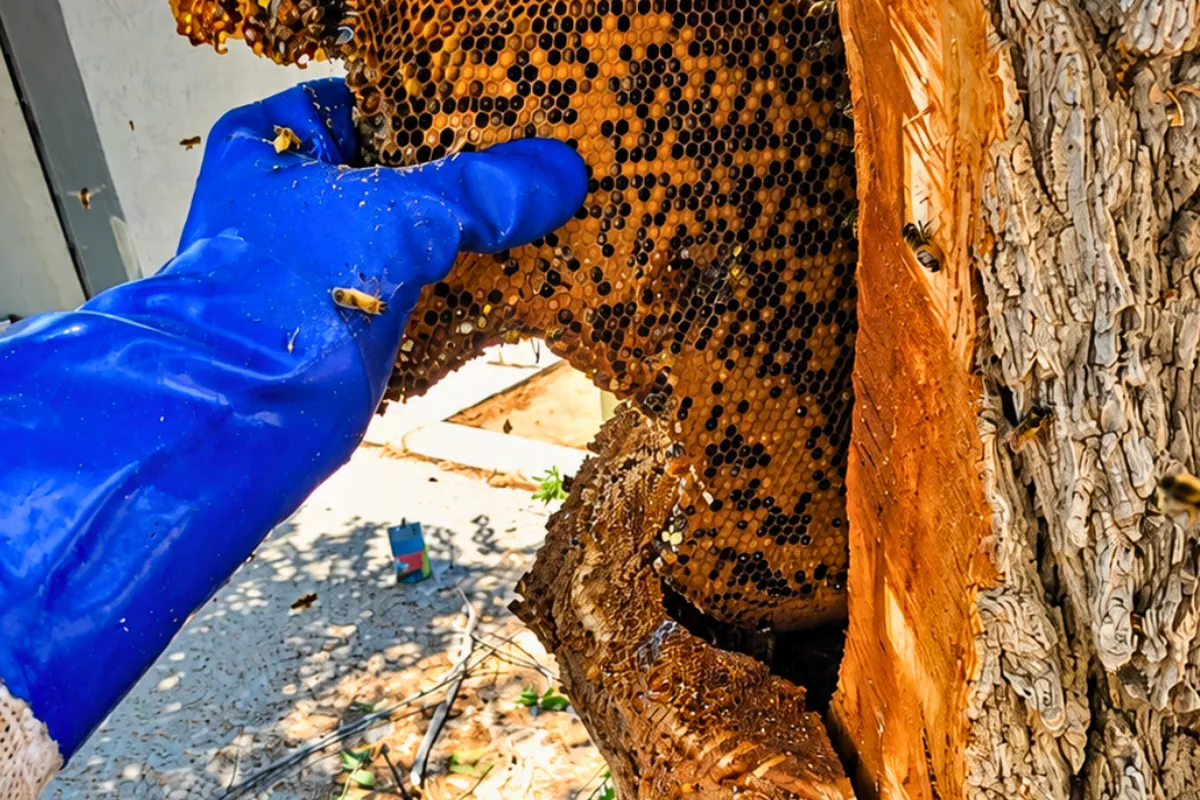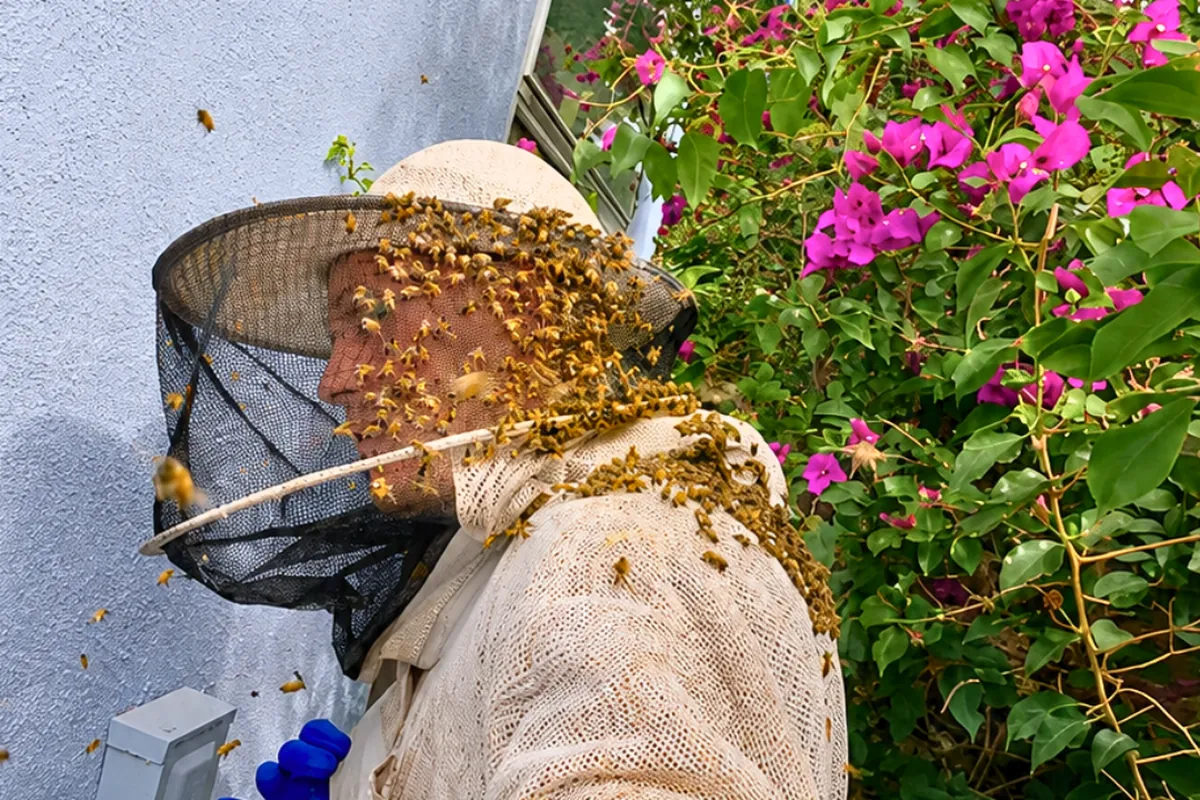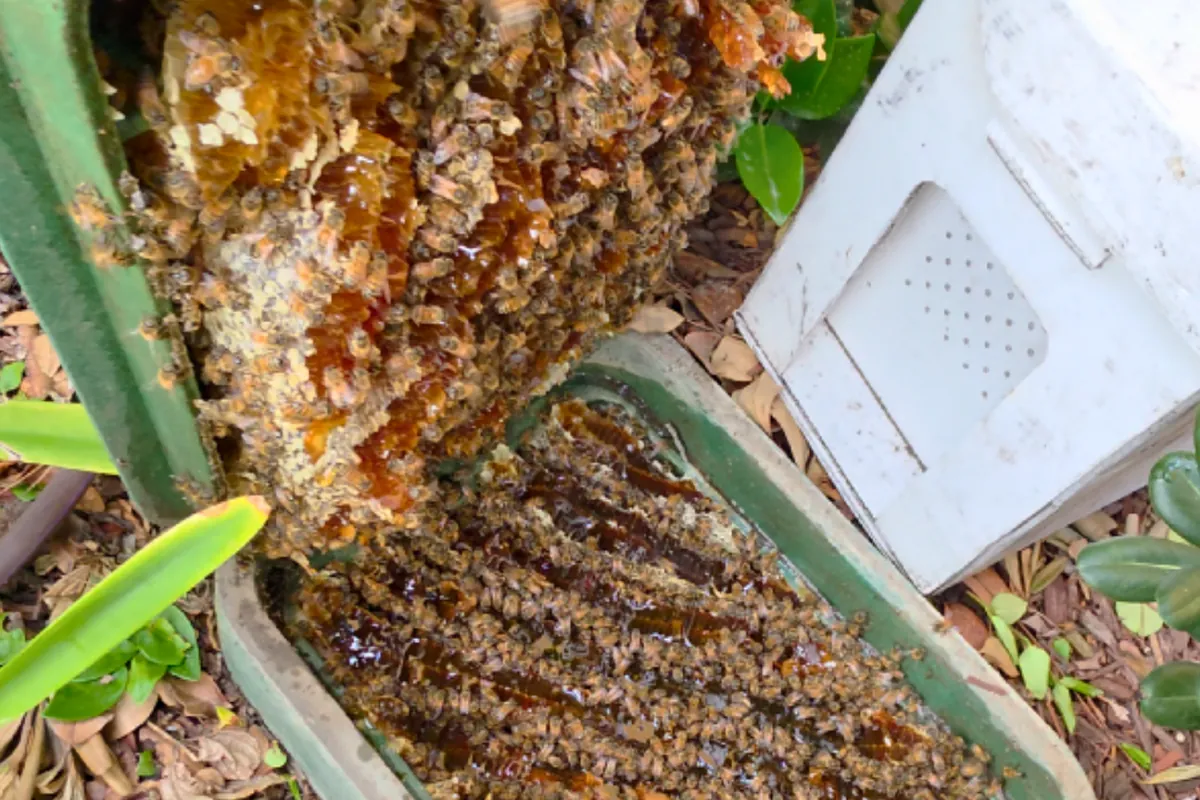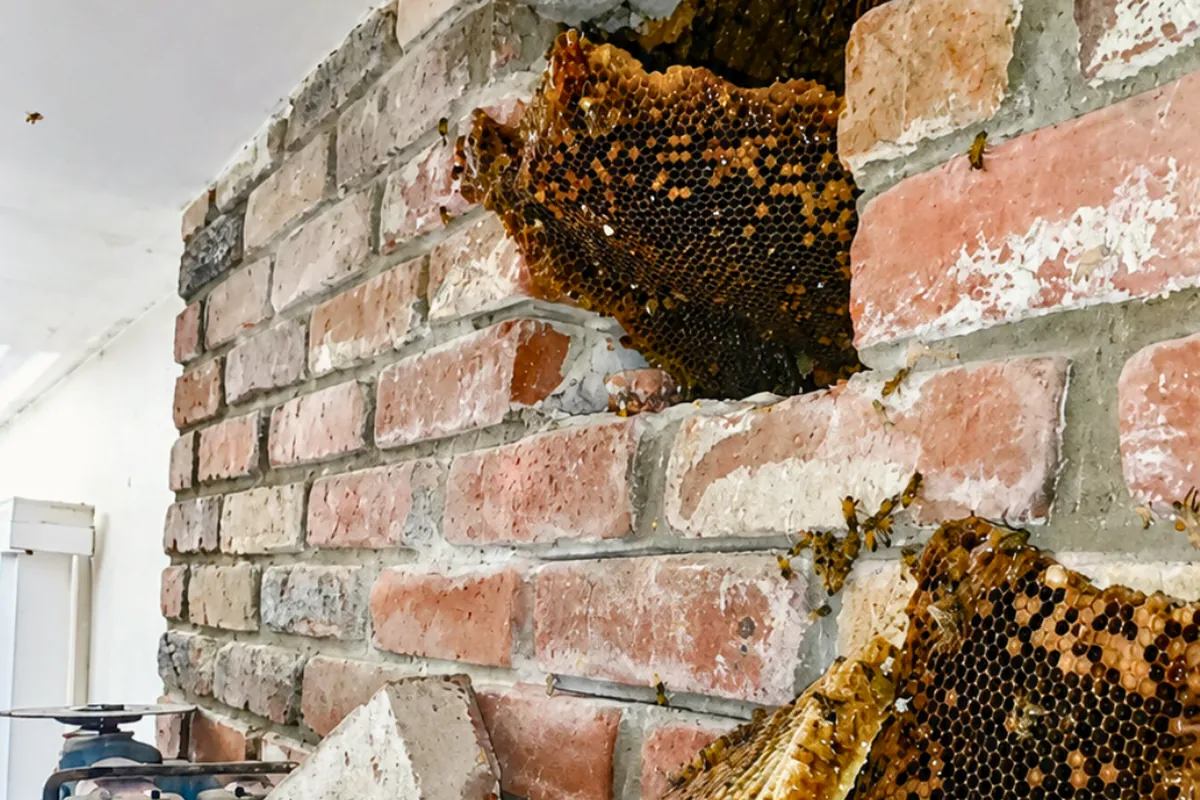
Here in Southern California, a lot of fireplaces sit unused for most of the year. To a honey bee scout, a cold, quiet chimney looks like a great place to live. If you've seen bees flying in and out of the top of your chimney, or heard buzzing behind the fireplace screen, you're not imagining it. I get chimney calls a lot more often than people expect.
Short answer: Bees move into chimneys because they're dark, dry, protected cavities. Don't light a fire to smoke them out; heat can melt comb and honey, push bees into your home, and create a fire hazard. Close the damper, keep away, and have a professional remove the bees and all the comb, then cap and screen the chimney.
Below I'll go over why bees pick chimneys, what to watch for, why lighting the fireplace is a bad idea, and how a proper removal goes.
Why do bees move into chimneys?
When a honey bee colony swarms, scout bees go house-hunting for a dark, enclosed cavity with a small, defensible entrance, ideally well off the ground. UC IPM's honey bee Pest Notes list "in or around chimneys" right alongside wall voids, soffits and under decks as common nest sites. A chimney has pretty much everything a scout is looking for:
- It's protected and dry. The masonry keeps out wind and rain.
- It's up high. The entrance sits well above the ground, which bees like.
- Nobody bothers it. In our mild climate, plenty of fireplaces go months, or years, without a fire.
- It's full of nooks. Smoke shelves, chases, gaps in the mortar, and the space between the chimney and the house wall all make good hollows.
The smell of old beeswax pulls them in too. UC IPM notes that scent attracts future scouts, so a chimney that's had bees before is more likely to get them again unless it gets cleaned out and sealed.
What are the signs of bees in your chimney?
Here's what to look for, from a safe distance:
- A steady stream of bees flying in and out of the chimney top, the crown, or a gap where the chimney meets the house
- A humming or buzzing sound coming from the fireplace or the wall beside it
- Live or dead bees on the hearth, in the firebox, or at windows in the same room
- Dark stains, sticky drips or a sweet, fermented smell around the fireplace or chimney
- A big cluster of bees on the chimney that gets smaller over a day or two without flying away, a sign they're moving in
| What you notice | What it likely means |
|---|---|
| A cluster resting on the outside of the chimney | A swarm stopping over; may leave in hours to a few days |
| Bees flying in and out of one spot every day | An established colony inside |
| Bees showing up inside the house near the fireplace | Colony in the flue or chimney cavity, finding a way indoors |
| Stains, drips or a sour-sweet smell | Honey and comb inside, possibly fermenting or leaking |
Not sure if that buzzing is bees? My post on what a bee infestation sounds like can help.
Can you smoke bees out of a chimney?
It's the first idea a lot of people have, and I get the logic. Lighting a fire to smoke bees out of a chimney still causes more problems than it solves:
- Beeswax burns. It's what candles are made of, and an established colony is packed with it. UC IPM says a well-established colony may contain many combs and up to 100 pounds of honey.
- Melted comb makes a mess, or worse. Beeswax melts at a little over 140°F, according to Britannica. Heat can soften the comb so it collapses, and send melted wax and honey running down the flue, onto the smoke shelf and into the masonry.
- The bees end up in your living room. Smoke and heat can drive stirred-up bees down the flue and out through the fireplace, and once they're inside they'll be bumping at your windows looking for a way out.
- It probably won't work anyway. An established colony with comb, eggs and honey to protect isn't going to pack up and leave over some smoke. Beekeepers use smoke to calm bees down. It doesn't evict them.
The same goes for a beekeeper's smoker, bug bombs or pouring anything down the flue. Leave the fireplace cold and the damper closed.
Should you spray or kill bees in a chimney?
I don't recommend it, and neither does UC. Killing a colony in place "often leads to undesirable consequences," according to UC IPM. The dead bees and brood rot and smell, and the honey can ferment and seep through masonry, walls and ceilings. Pesticide-treated honey, wax and bees may have to be handled as hazardous waste, and only licensed operators can apply those products to a structure. And the comb left behind works like a big "vacancy" sign for the next swarm.
That kind of slow leak is one of the sneakier problems I cover in hidden damage bees can cause.
How are bees removed from a chimney?
Every chimney job is a little different, depending on how the chimney is built and where the comb is. In general, it goes like this:
- Inspect. Figure out where the bees are getting in and where the comb sits: in the flue, on the smoke shelf, in a chase, or in the wall cavity beside the chimney.
- Secure the inside. Close the damper and any fireplace doors so bees don't come into the house.
- Get access. Depending on the setup, that may be from the roof, through the firebox, or through the wall or chase. Some chimneys need a chimney sweep or masonry contractor to open things up or put them back together.
- Remove the bees and all the comb. This is the step that counts most. Comb left behind means leftover honey, rot, pests and a scent that attracts the next swarm.
- Clean out the residue. The wax and honey residue comes out so it doesn't keep drawing bees.
- Seal and cap. Close up the gaps the bees used, and cap and screen the flue so they can't get back in.
My bee hive removal service handles the bees, the comb, the cleanup and the sealing of entry points, with no chemicals on honey bees. For more on how it works at a house, see residential bee removal.
How do you keep bees out of your chimney for good?
Once the colony and comb are out, you want to make the chimney a lot less inviting:
- Cap and screen the flue. A chimney cap with a spark arrestor screen keeps out birds and debris, but standard spark arrestor mesh can be coarse enough for a bee to slip through. For bee-proofing, UC recommends screen with six or more meshes per inch. Have a chimney professional choose and install a cap that works with your fireplace's draft.
- Seal the gaps around the chimney. UC's Africanized bee guidance recommends sealing openings wider than 1/8 inch in walls and around chimneys and plumbing.
- Fix cracked crowns and mortar, and close gaps where the chimney meets the siding or stucco.
- Keep the damper closed when the fireplace isn't in use.
- Get the chimney inspected every year. The Chimney Safety Institute of America recommends yearly inspections, which can catch nests and blockages early.
Whether you're in an older home in Fullerton or a newer tract house with a rarely used fireplace, these steps make a big difference.
Need a hand?
If you've got bees in your chimney, keep the fireplace cold, close the damper and give me a call at (626) 487-6052, or request a free quote online. I'll come out for a free inspection and let you know what it'll take to get the bees and comb out and keep them out. I'm open 24 hours Monday through Saturday.
Frequently asked questions
Will bees in a chimney leave on their own?
Can bees come down the chimney into my house?
Is it safe to use my fireplace after bee removal?
Do yellow jackets or wasps nest in chimneys too?
Like these guides? Add Eli the Bee Guy as a preferred source on Google to see more of them in your search results.