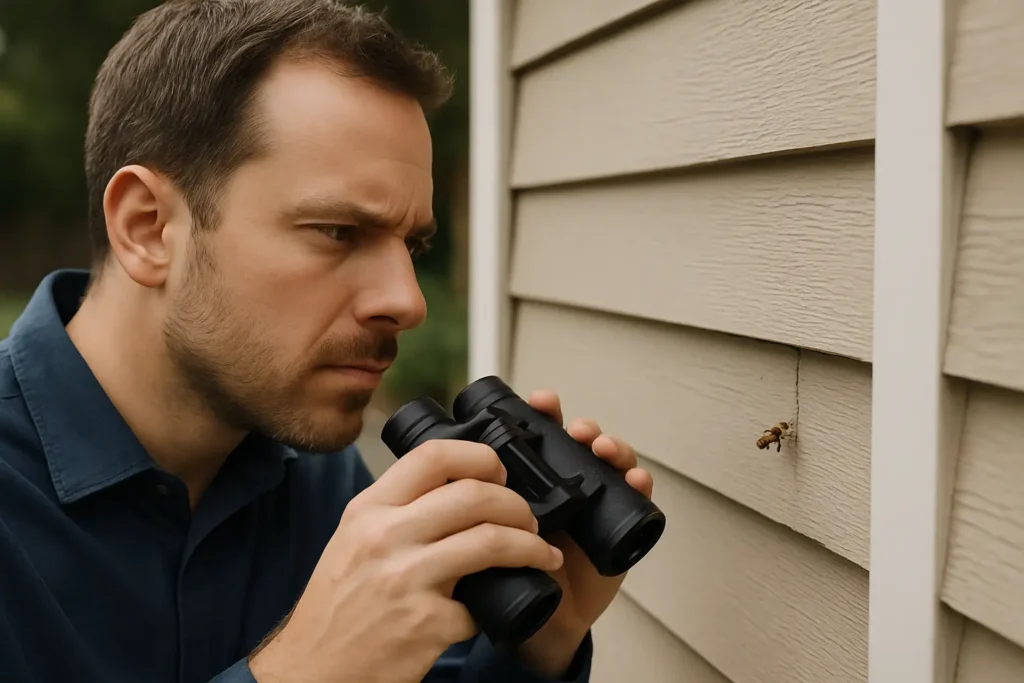
You notice a steady line of bees coming and going from one tiny crack in the siding. The buzzing seems louder near a light switch. Then the thought lands: there might be a hive inside the wall.
When that happens, the goal is simple: keep people safe, rescue the bees when possible, and solve the problem in a way that does not set you up for a repeat visit next month. Here is what to do if a bee hive is in your wall, step by step, with the real-world trade-offs that matter in Southern California homes.
First, make sure it is actually a hive in the wall
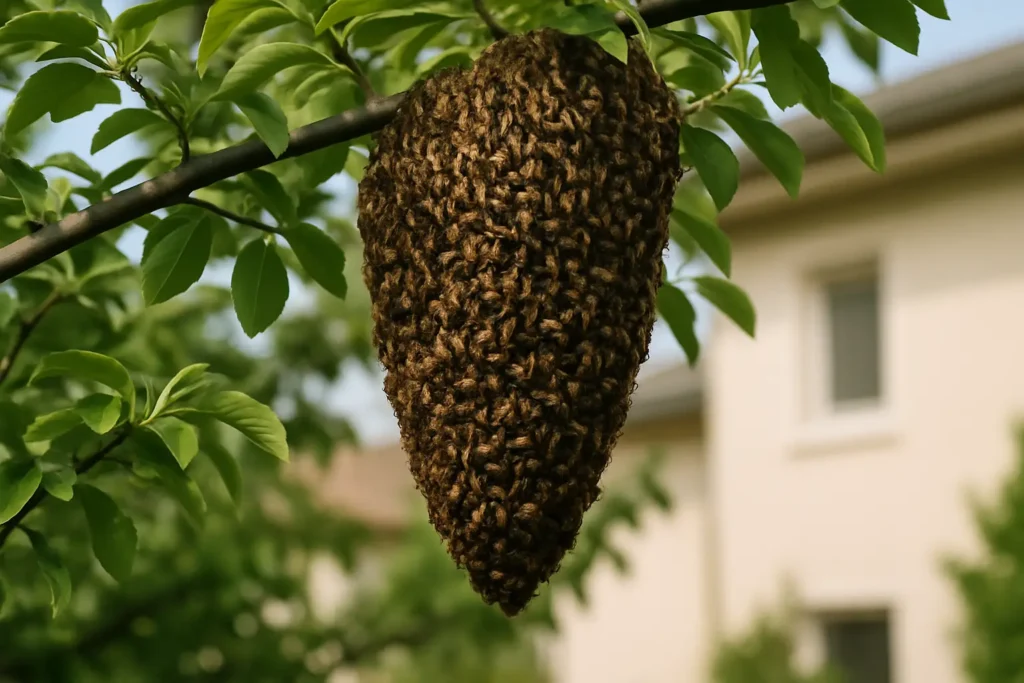
A single swarm clustered on a tree branch looks dramatic but is usually temporary. A hive in a wall behaves differently. You typically see consistent “traffic” – bees flying in and out of the same entry point all day, especially during warm, bright hours.
You may also notice a faint honey smell near the wall, or hear a low hum if you place an ear near the surface. In some cases, bees show up indoors near windows or light fixtures because they followed wiring or a gap in the drywall.
It is also worth ruling out look-alikes. Yellowjackets and paper wasps can use wall voids too, but their flight patterns and behavior are different, and the removal approach is not the same. If you are unsure, treat it as a stinging-insect situation and keep your distance until a professional identifies it.
Put safety first – especially if allergies are a concern
If anyone in the home has a history of severe reactions, do not “wait and see.” Limit activity near the suspected entry point and keep an epinephrine auto-injector accessible if it is prescribed.
Close nearby windows, keep curious kids and pets away from that side of the house, and avoid lawn work or anything that vibrates the wall. Bees defending a home can react to loud equipment, bumping, or sudden shadows near the entry.
At night, resist the temptation to tape over the hole. Blocking the entrance can force bees to search for a new way out – sometimes into your living space.
Do not spray, fog, or seal the wall
This is the part that feels counterintuitive, because the hardware store makes it sound easy. With a wall hive, sprays and foams are rarely a clean fix and can create bigger problems.
If chemicals kill the colony in place, you are left with comb, honey, pollen, and dead bees inside a warm wall cavity. That can lead to odors, staining, and melted honey that seeps through drywall. It can also attract ants, roaches, rodents, and wax moths. And if the hive is not fully eliminated, surviving bees may become more defensive.
Sealing the entrance without removing the hive has a similar downside. You may stop the visible traffic for a moment, but the material inside the wall remains. Another swarm can move into the same cavity later, drawn by the scent of old comb.
A permanent solution usually means removing the bees and removing the hive material, then repairing the entry point so your home stays protected.
Observe and document from a safe distance
Before you call for help, a few calm observations can speed up the process.
Stand back and note where the bees are entering. Many wall hives use an opening no wider than a pencil. Watch long enough to confirm the exact spot, because bees can disappear under trim or behind a downspout.
If you can do it safely, take a short video from several feet away. That helps confirm whether you are seeing honey bees, how active the colony is, and whether there may be multiple entry points. If bees are inside the home, note the room and any places they appear repeatedly – near a recessed light, a vent, or a window frame.
Avoid tapping on the wall to “test” it. That vibration can trigger defensive behavior and does not provide reliable information.
Call a bee removal specialist – and ask the right questions
Not all “bee control” is the same. For a hive in a wall, you want someone who can do live removal when possible, perform a full extraction, and handle the repair work that prevents re-occupation.
When you talk to a provider, ask whether they remove the comb and honey, not just the bees. Ask how they plan to access the hive (interior drywall vs exterior siding) and whether they repair the opening afterward. A humane provider should also be transparent about where the bees go – ideally to a vetted apiary where they can continue natural behaviors.
If you are in Southern California and want a humane, full-solution approach that focuses on bees rescued and peace and home restored, you can reach out to Eli the Bee Guy. One of the biggest differences with ethical removal is that it is not a “spray and leave” job – it is a careful process designed to protect people and preserve pollinators.
What professional wall-hive removal typically looks like
Every structure is different, but most proper removals follow the same logic: locate the colony, access it with minimal damage, remove bees and comb, and then close up the pathways.
A specialist will usually start by confirming the species and mapping the likely hive location. In many homes, bees choose cavities between studs, behind stucco, under siding, or near rooflines. Thermal tools and experience can help narrow down where the comb is built.
Next comes the live removal and hive extraction. That can involve carefully opening a section of wall to reach the comb. The comb is then removed, and efforts are made to capture the queen and as many workers as possible so the colony can be relocated. The goal is to avoid unnecessary harm while still making your home safe.
After the bees are out, a thorough cleanup matters. Removing residue and hive material helps reduce lingering odors and makes the space less attractive to future bees. Finally, the entry points are repaired so the same cavity is not offered again as a ready-made home.
Timing matters – and waiting can make it harder
A small, newly established hive can grow quickly. In warm months, a colony can build comb and store honey at an impressive pace. The longer a hive remains in a wall, the more comb there is to remove and the more likely you are to see staining or honey seepage during hot weather.
That said, “rush” does not mean “panic.” It means schedule a professional evaluation soon, limit disturbances in the meantime, and avoid quick fixes that create a mess behind the wall.
If you discover the hive during a heat wave, take extra care. High temperatures increase the risk of honey softening inside a wall cavity, especially if the comb is already large. Prompt removal can prevent expensive interior repairs later.
What to do if bees are already inside your living space
If bees are appearing indoors, the priority is to keep them contained and reduce the chance of stings.
Close doors to limit the area they can access, and keep lights off in the room if possible. Bees are drawn to light, so a bright window can become a gathering point. You can open a single window with the screen removed if it can be done safely, but do not stand in the bees’ path. If there are many bees indoors, leave the room and wait for professional help rather than trying to vacuum or swat them.
If someone is stung and has symptoms beyond normal localized swelling – trouble breathing, hives spreading across the body, swelling of the face or throat, dizziness – treat it as a medical emergency.
Cost and repair trade-offs: what homeowners should understand
Wall-hive removal is more involved than removing a swarm from a branch. The cost typically reflects access work, the time needed to extract comb and bees, cleanup, and the repair step that keeps bees from returning.
Sometimes the cleanest access is from the outside, sometimes from the inside. Stucco, brick, and tile areas can require more careful planning than simple siding. A good provider will talk through options and aim for the least invasive route that still allows full removal.
If someone offers a very low price but will not remove the comb, that is a red flag. The short-term savings can turn into long-term costs if honey leaks, pests move in, or another colony takes over.
Preventing the next hive once this one is gone
Bees do not choose walls at random. They are looking for a dry cavity with a protected entrance. Once your home has hosted a hive, the scent can remain attractive if the area is not cleaned and sealed properly.
After a full removal, prevention is usually straightforward: seal gaps, repair damaged vents or trim, and address any areas where siding meets roofing or where utility lines penetrate the exterior. Your goal is not to make the home airtight – it is to eliminate the obvious “front doors” to wall voids.
If you manage a commercial property, add exterior checks to routine maintenance, especially around parapet walls, signage mounts, and utility chases. Catching a small entry point early can prevent a large colony from settling in.
A hive in your wall can feel like your home has been taken over. The reassuring truth is that with a calm plan and humane, thorough removal, you can get your space back safely – and give the bees a better home than your drywall ever was.