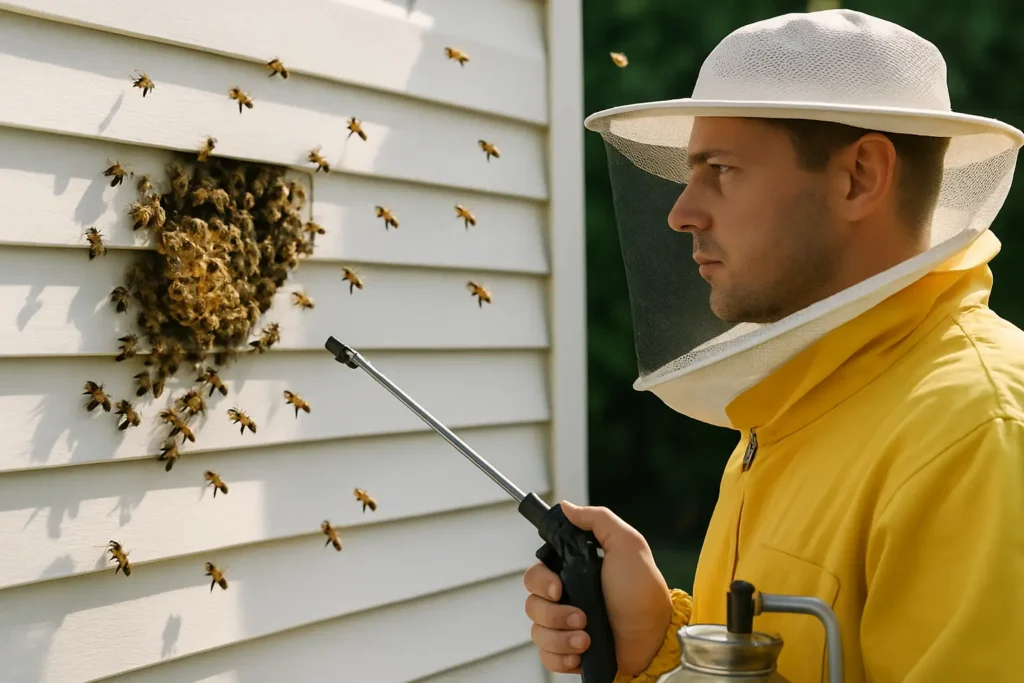
A quiet afternoon can change fast when a moving cloud of bees settles on a tree branch, a fence post, or the side of your house. Most homeowners feel two things at once: concern for their family and pets, and a gut-level fear of being stung. The good news is that swarms are usually a temporary stop – and with the right approach, you can protect people and give the bees a chance to be rescued and relocated.
What a bee swarm really is (and why it matters)
A swarm is typically a group of honey bees that has left an established hive with a queen to start a new home. In that “in-between” phase, they often cluster in a visible ball while scout bees search for a permanent cavity. That is why a swarm can appear suddenly and look dramatic, then disappear within a day or two.
For safety, the key detail is behavior. Swarming bees are often less defensive than bees living in a hive with stored honey and brood. They are focused on protecting the queen and staying together, not guarding a home. Still, they can sting if they feel threatened – especially if someone gets too close, vibrates the cluster, blocks their flight path, or tries to spray or knock them down.
Bee swarm safety tips for homeowners: the first 10 minutes
The first few minutes are where most mistakes happen. The goal is to lower excitement, reduce exposure, and avoid turning a calm swarm into a defensive situation.
Start by creating space. Bring kids and pets inside, and keep everyone away from windows that are close to the swarm. If the swarm is on a walkway or near a doorway, use a different exit and keep that area off-limits. It helps to think in terms of a buffer zone. If you can stay 20 to 30 feet away, you are typically far enough for comfort, though it depends on the size of the swarm and where it is clustered.
Next, resist the urge to “do something” to the bees. Do not spray water, pesticides, or soapy solutions. Do not try to smoke them, and do not hit the branch or object they are on. These actions can agitate the bees, increase the number of flyers, and raise the risk of stings. They also make it harder for a humane removal and relocation.
Finally, reduce attractants and traffic. Close outdoor trash lids, bring sugary drinks inside, and pause yard work. Mowers, blowers, and hedge trimmers create vibration and noise that can trigger defensive behavior, especially if the swarm is closer to the ground.
How to tell “swarm” vs “hive” on your property
A swarm is usually obvious – a dense cluster of bees hanging like a living football on a branch, eave, or fence. The area may have a few bees flying around, but the main mass is visible and stationary.
A hive is different. You might not see a cluster at all. Instead, you notice steady “traffic” of bees coming and going from a specific point: a hole in siding, a gap under roof tiles, a vent, a chimney area, or a crack near an exterior electrical box. That consistent flight path is a sign the bees have already moved in. This matters because a swarm may leave on its own, but a colony inside a structure will not. It will grow, build comb, and create a much bigger problem over time.
If you are unsure, watch from a safe distance for a few minutes. A swarm looks like a gathering. A hive looks like a commute.
What to do if someone is stung
Most stings are painful but manageable. The priorities are removing the stinger quickly, monitoring for allergic reaction, and keeping the person calm.
If the stinger is present, scrape it out promptly with a fingernail or the edge of a card. The method matters less than speed – the longer it remains, the more venom is delivered. Wash the area with soap and water, apply a cold pack, and consider an over-the-counter antihistamine if the person can take it safely.
Call 911 immediately if there are signs of anaphylaxis, including trouble breathing, swelling of the lips or tongue, widespread hives, dizziness, or vomiting. If the person has a prescribed epinephrine auto-injector, use it as directed and still seek emergency care.
Also take stings seriously when they involve the face, multiple stings, or very young children. Even without a known allergy, reactions can be unpredictable.
Special safety considerations for Southern California yards
In Los Angeles, Orange, Riverside, San Bernardino, and Ventura counties, swarms often show up in the exact places families spend time: citrus trees, patio covers, block walls, and eaves. Warm weather can extend bee activity through much of the year, which means “swarm season” can feel longer than people expect.
Pools and spas can also complicate things. Bees seek water, and a swarm may position itself near a water source while scouts search for a new cavity. If you see bees repeatedly landing at the waterline, do not try to “shoo” them away. Keep swimmers out of the area and handle the swarm first.
When you can wait – and when you should call right away
It depends. If the swarm is high in a tree, far from foot traffic, and everyone can comfortably avoid it, it may move on within 24 to 48 hours. Waiting can be reasonable when there is low risk, no allergy concerns, and no sign of bees entering a structure.
You should call for help quickly when the swarm is near a doorway, on a fence line shared with neighbors, close to a play area, or attached to the home itself. The biggest “don’t wait” situation is any sign that bees are exploring or entering a wall, attic, soffit, or roofline. Once they begin building comb inside a structure, the work shifts from simple capture to true hive removal and repair.
If someone in the home has a life-threatening allergy, treat any swarm as urgent. Even calm bees can become defensive if startled, and it is not worth gambling with a high-stakes health risk.
What not to do: common DIY moves that backfire
Homeowners are often told online to “just spray them at night” or “fog the area.” Beyond the ethical concern, these approaches can push bees deeper into the structure or scatter them into the neighborhood. Chemicals can also contaminate wall cavities, create lingering odor, and leave behind comb that attracts pests.
Another common mistake is sealing the entry point while bees are active. If you block the opening without removing the colony, bees may find a new way into the house or become trapped inside the wall, leading to dead bees, odors, and secondary infestations.
And while it may seem harmless, leaving out sugar water to “distract” bees near a swarm can encourage more bee activity and create a repeat stop in the same spot.
Humane removal: what it typically looks like
A humane approach focuses on safely collecting the bees, protecting the queen, and relocating the swarm to a managed apiary where they can continue natural behaviors. With a swarm, this is often straightforward when handled early. With a hive in a structure, a proper job usually includes removing the comb, cleaning the cavity, and repairing the entry point so the problem does not repeat.
That last part is what many homeowners miss. Bees are excellent at finding the same gaps again, and the scent of old comb can attract new swarms. Long-term peace and home restored usually requires both removal and prevention.
If you want a local option that prioritizes bees rescued and relocated, Eli the Bee Guy provides live removals, full extractions, and entry-point repairs across several Southern California counties.
Simple prevention that helps – without harming bees
You cannot prevent every swarm from passing through, but you can reduce the odds of bees choosing your structure as a home.
Walk your exterior a few times a year and look for gaps larger than a quarter inch near eaves, fascia boards, vents, and roof transitions. Pay special attention after storms or roof work. Also check utility penetrations and areas where different materials meet, like stucco to wood. If you see daylight from inside an attic or garage, bees can often find that path too.
Keep tree limbs trimmed away from the roofline when possible. Branches act like bridges and create sheltered, quiet pockets that scout bees like. Good airflow and fewer protected cavities make a home less appealing.
If you use outdoor water sources, consider placing a small shallow water dish away from doors and seating areas and keep it consistently filled. Bees often prefer reliable water. The trade-off is that any water source can attract bees, so placement matters. Putting it away from people can reduce surprise encounters.
A calm next step if a swarm shows up
Treat a swarm like a temporary visitor that deserves distance and respect. Keep people safe first, avoid quick-fix chemicals, and pay attention to whether the bees are simply resting or trying to move into your home. When you choose a humane solution, you are not just avoiding stings – you are giving a working colony a second chance somewhere it can thrive.