If you keep seeing bees in the same corner of your yard at 10 a.m. every day, it is rarely “just a few bees.” Bees are consistent. When a colony is established in a wall, soffit, or roof void, foragers run a tight route – out to feed, back to the nest, repeat. That consistency is exactly what helps you locate where they are getting in.
This guide walks you through how to identify bee nest entry points without putting yourself at risk or making the problem harder to solve later. The goal is simple: confirm whether you are dealing with an active honey bee colony, narrow down the likely access point(s), and avoid actions that trigger defensive behavior or trap bees inside your structure.
Start with safety and the right expectations
Before you start looking, treat every nest as active and every entrance as busy. Honey bees are usually not aggressive away from the nest, but they can become defensive if the entrance is blocked, the cavity is disturbed, or vibrations and loud noise are introduced.
If anyone on the property has a history of severe allergic reactions, keep the investigation gentle and at a distance. Close up outdoor dining, keep kids and pets away from the area, and avoid mowing, leaf blowing, or pressure washing near the suspected nest. The best “inspection tool” is patience, not a screwdriver.
Also, it depends on what you are actually seeing. A swarm clustered on a branch is different from a colony living in a structure. A swarm may not have an entry point at all – it may just be resting temporarily while scout bees search for a new cavity. The rest of this article is for situations where bees are repeatedly coming and going from a building, fence, tree cavity, or ground void.
What an entry point looks like (and what it does not)
An entry point can be surprisingly small. Honey bees can use gaps as narrow as about 3/8 inch. They favor protected openings that stay dry, warm, and out of heavy foot traffic.
Many homeowners look for a big hole. More often, it is a seam: where fascia meets roof decking, a crack behind a downspout strap, a warped piece of siding, or an unsealed penetration where a pipe or cable enters the wall.
It also helps to know what is not an entry point. If bees are hovering and zig-zagging in front of a stucco wall with no clear landing spot, they may be orientation flying (young bees learning the location) and the entrance may be around a corner, up under an eave, or behind a trim board.
The most reliable method: watch the flight line
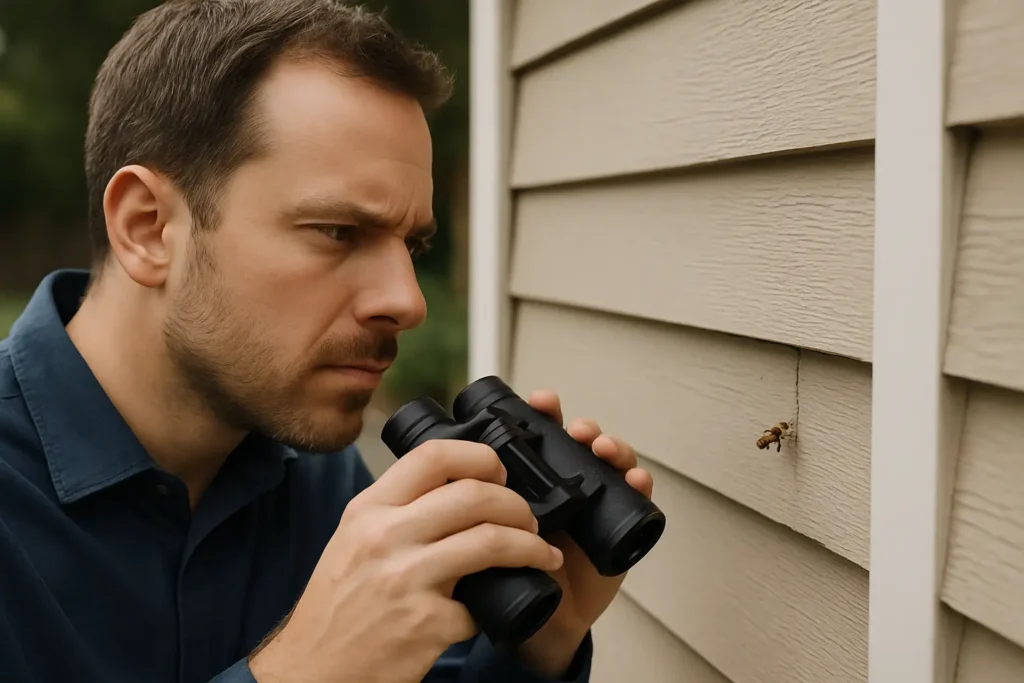
If you want the clearest answer to how to identify bee nest entry points, stand back and watch. Pick a spot 10-20 feet away where you can see the suspected area without being in the bees’ path.
Foragers leaving a nest tend to accelerate outward in a straight line. Returning bees often approach low, then rise slightly and “commit” to a specific point. When you have the right angle, you will see repeated traffic to the same seam, knot hole, vent edge, or crack.
Mid-morning through mid-afternoon is usually the easiest time to observe because foraging traffic is steady. Early morning and dusk can be quieter, which can make a small entrance harder to spot, but those times are useful if you are trying to listen for activity.
A helpful trick is to use a fixed visual reference. Line up the bees’ flight path with something that does not move – a gutter bracket, the corner of a window frame, a fence post. Over a few minutes, that “invisible highway” becomes obvious.
Listen for the colony before you touch anything
Established colonies can be audible. In quiet moments, you may hear a steady hum coming from a wall void, chimney chase, or soffit area. Put your ear near the surface, but do not press your face against a crack or vent.
Sound alone will not pinpoint the exact entry point, but it can confirm you are dealing with a cavity nest, not just bees visiting flowers nearby. If the hum is loudest near a particular corner or roofline section, it narrows the search area.
If the hum suddenly gets louder after you bump the wall, close a gate, or run a garage door, that is a sign the colony is close to that surface and vibration is traveling into the cavity.
Look for bee “traffic patterns” on the structure
Once you suspect a general area, scan for small signs that repeat:
Bees landing, not just flying
An entrance is a place where bees land with purpose. You may see them touch down, disappear into a seam, then a second later another bee does the same. Hovering alone can be misleading because bees often hover while locating the entrance.
Rub marks or staining
In dusty or painted areas, repeated bee contact can leave a slightly darkened smudge. Around some entrances you may see faint yellow-brown staining. That can also be old propolis or the earliest sign of honey staining behind the surface.
Wax crumbs or debris
During active comb building or during warm periods, bees sometimes drop tiny bits of wax or bring out debris. It is not always present, but if you see small pale flakes on a windowsill, patio cover, or on the ground directly below a seam, look up.
A “warm spot” that seems oddly attractive
Bees favor stable temperatures. A sun-warmed wall can be appealing, but so can a protected shaded void that stays warm from attic heat. If bees keep clustering around one specific warm cavity area, the entry point may be nearby even if it is not directly where you see the most hovering.
Check the most common entry point locations in Southern California
Construction styles vary, but in Los Angeles, Orange, Riverside, San Bernardino, and Ventura counties, a few entry areas show up again and again.
Eaves, fascia, and soffit returns
Gaps here are easy for bees to use because the underside is sheltered from rain and wind. Pay special attention to corners, areas near patio covers, and any place wood meets stucco.
Roofline penetrations and flashing edges
Plumbing vents, attic fan housings, and roof transitions can create small openings if flashing lifts or sealant fails. Bees do not need much. A tiny lift along flashing can be enough.
Exterior vents that are missing screening
Gable vents, eave vents, and dryer vents are frequent targets. Sometimes the vent is intact but the screen has torn or slipped, leaving a gap on one side.
Stucco cracks and utility penetrations
Cable lines, AC line sets, irrigation controls, and hose bibs can leave small voids around their entry points. Over time, sealant shrinks. Bees notice.
Chimney chases and fireplace surrounds
Chimneys can act like highways inside a structure. If bees are entering near a chimney cap, flashing, or a chase cover, treat it seriously – colonies in these spaces can grow large and create sticky, costly repairs if ignored.
Avoid the most common mistake: sealing the hole too soon
Once you think you found the entrance, the urge to caulk it shut is strong. For an active honey bee colony, sealing first is usually the wrong move.
Blocking the main entrance can force bees to:
- Find a secondary opening into another part of the building
- Push into interior walls and show up in living spaces
- Become highly defensive at the blocked entrance
- Die inside, leaving comb, honey, and odor that can attract ants, roaches, or new swarms
There is a time for sealing and repairs, but it comes after the bees are removed and the cavity is properly addressed.
How to confirm it is honey bees, not wasps or “just bees in the yard”
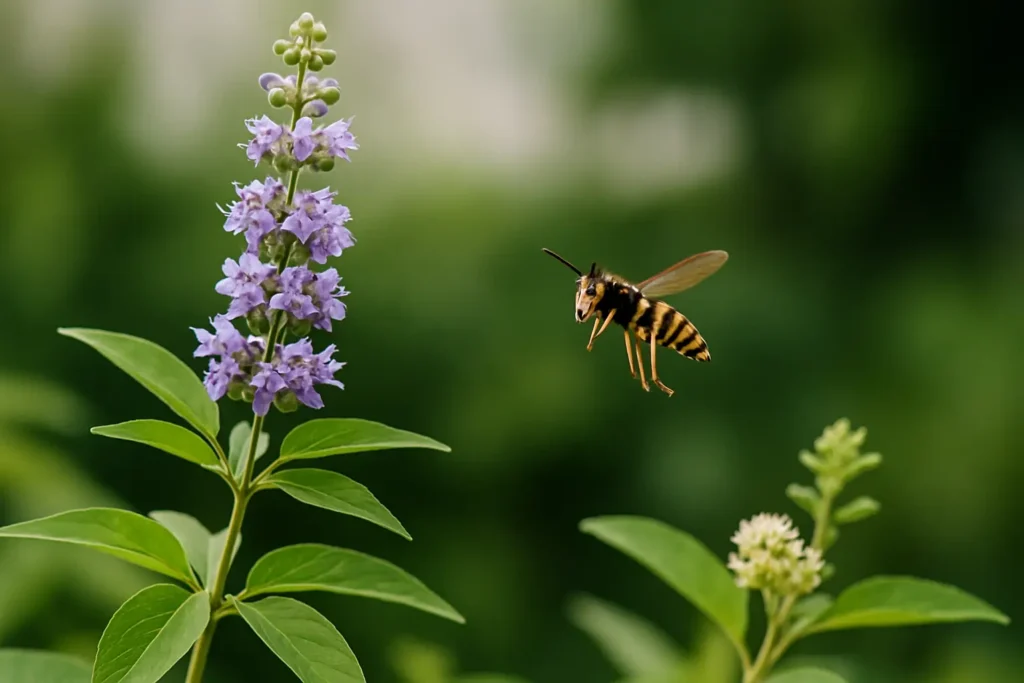
Honey bees are fuzzy and generally golden-brown, and you will often see steady back-and-forth commuting. Paper wasps and yellowjackets move differently and tend to be more darting and solitary at the entrance.
If you can safely observe from a distance, note whether bees carry pollen. Returning honey bee foragers often have visible pollen baskets on their hind legs. That is a strong sign of an established colony nearby.
If activity is heavy for weeks, especially in warm months, that is also a clue. Swarms typically do not remain exposed in one place for long, but a cavity colony will operate daily.
When the entry point is in the ground
Not all “bee entrances” are in buildings. In Southern California, people sometimes notice traffic in a lawn, slope, or planter bed. Honey bees can nest in ground voids, though more often ground entrances belong to yellowjackets.
Watch for a consistent hole with repeated in-and-out traffic. If the insects are fuzzy honey bees and the traffic stays steady, treat the area cautiously. Do not flood the hole or pour chemicals. Besides being inhumane and risky, it can drive defensive behavior and scatter the problem.
Take notes like you are handing the job to someone else
Even if you plan to call a professional, your observations matter. A quick phone video from a safe distance can show the flight line and entrance better than a verbal description. Note the time of day when activity is heaviest, the exact location (for example, “second-story eave, above the left garage corner”), and anything that changed recently like roof work, painting, or a storm.
Those details help determine whether there may be multiple entrances, whether the cavity is likely large, and what kind of repair will keep bees from returning.
When to stop investigating and bring in help
Stop and get help if you see dense traffic (dozens of bees per minute), if the entry is high up and would require a ladder, or if bees begin bumping your face or circling you. Those are signs you are too close to the nest zone.
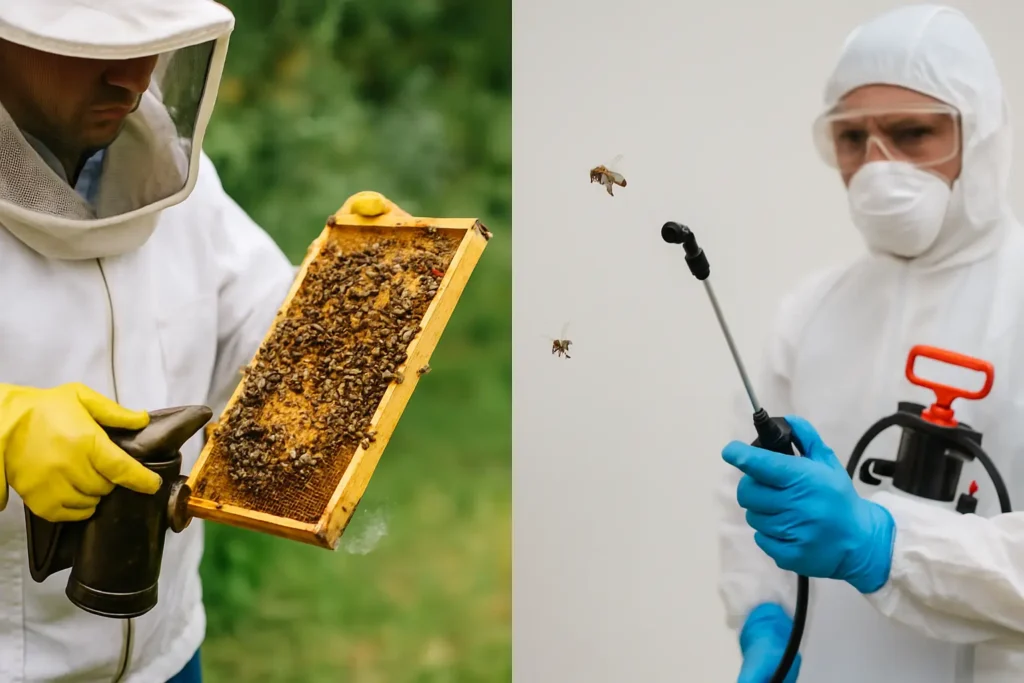
Humane removal matters here. A true solution is not just getting bees out of sight – it is removing the colony and addressing the cavity so your property is safe and the bees are treated ethically. If you want support from a specialist who focuses on live removal, relocation to vetted apiaries, and entry-point repairs that prevent re-occupation, you can reach out to Eli the Bee Guy for service across Southern California.
Close your inspection by giving the bees space, keeping the area calm, and remembering that careful observation is often the quickest path to peace and home restored – for you, and for the bees that deserve a safe relocation.