You can usually tell, within five minutes of reading reviews, whether a “bee-proofing repair” actually held up – or if the homeowner is about to be calling for round two.
The tricky part is that most reviews are written right after the panic has passed: the buzzing stopped, the crew left, and everyone can breathe again. That timing can hide the difference between a temporary calm and a repair that truly prevents re-occupation. If you are a homeowner or property manager in Southern California, reading bee proofing repair contractor reviews well is one of the best ways to protect your building, your budget, and the bees.
What bee-proofing repairs really are (and aren’t)
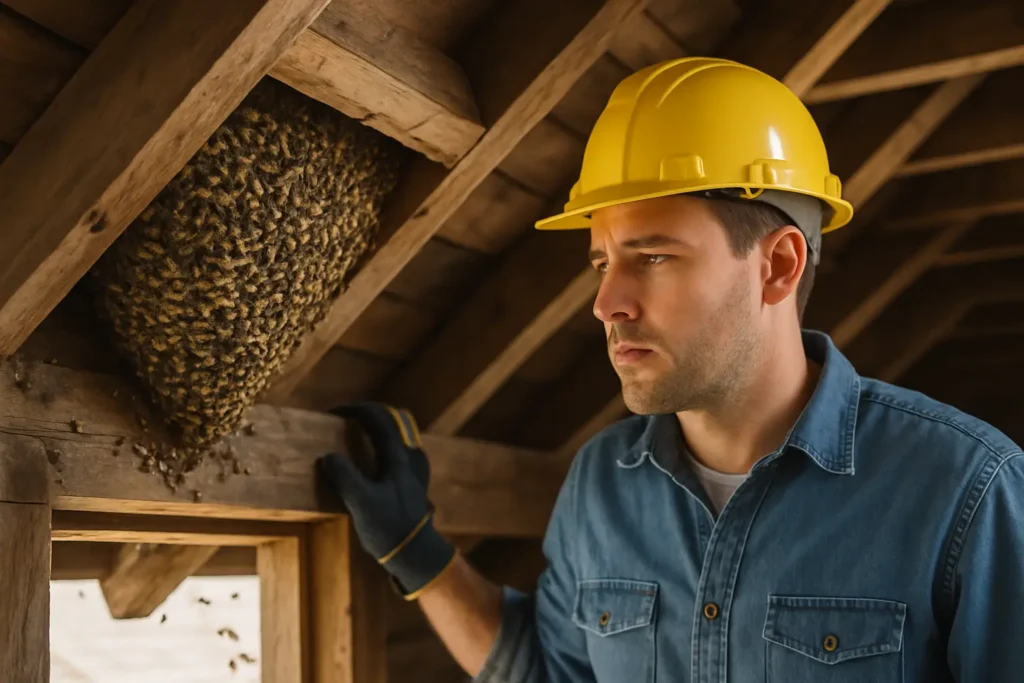
Bee-proofing repairs are the physical corrections that keep bees from returning to the same void, wall, soffit, roofline, chimney, or eave once a colony has been removed. In practice, that usually means closing or rebuilding entry points, replacing damaged materials, and sealing gaps in a way that matches how bees actually travel and how buildings actually move.
What it is not: a quick bead of caulk over an active entry, a spray-and-pray approach, or a patch that looks fine from the ground but still leaves a hidden route into the same cavity. A proper repair has to respect two realities at the same time. First, bees are persistent and will follow scent back to a proven shelter. Second, Southern California heat, sun exposure, and roof movement can turn a “sealed” gap into an open door in one season.
When you read reviews, you are trying to find evidence that the contractor understood both.
Why “no more bees” is not enough
A lot of five-star reviews sound like this: “They came fast, bees are gone, highly recommend.” Speed and relief matter, especially if someone in the building has a serious allergy. But for repair work, the best signal is not just the immediate outcome – it’s whether the fix held after time passed.
A lasting repair should survive at least one of these tests: a heat wave, a windy week, a rainstorm, or the next swarm season. Reviews that mention a follow-up weeks or months later (even casually) are gold because they indicate the homeowner had time to see whether the bees tried to return.
How to spot the most trustworthy bee proofing repair contractor reviews
Look for “before and after” details, not just emotion
Strong reviews include specifics: where the bees were entering, what materials were repaired, and what the crew did to prevent re-entry. It might read like, “They opened the soffit, removed comb, replaced damaged fascia, and sealed the roofline gap where they were coming in.” That kind of detail is hard to fake because it reflects real observation.
Reviews that only describe feelings – “amazing,” “lifesaver,” “super nice” – may still be honest, but they do not prove the repair was thorough.
Watch for language that implies exclusion work, not cosmetic work
“Sealed entry points,” “closed gaps,” “rebuilt the access,” “repaired the eave,” “screened vents,” or “replaced rotted wood” points to exclusion. “Sprayed,” “treated,” or “fogged” can be a warning sign if the job is being sold as a repair solution.
Chemicals can kill bees, but chemicals do not rebuild a structure. If your goal is peace and home restored without repeat visits, the review should suggest real repair work happened.
Time stamps matter more than star counts
A contractor can have a high rating and still be doing short-term fixes. When reading bee proofing repair contractor reviews, pay attention to when the review was posted and whether the reviewer updated it.
If you see language like “It’s been three months and nothing has returned,” or “We made it through summer with no activity,” that is a better proof point than “same-day service.” Ideally, you want a mix: quick response plus durability.
Reviews that mention what the contractor refused to do are often the most credible
Ethical, skilled contractors sometimes say no: no sealing while bees are still inside, no trapping bees behind a wall, no quick patch that would push the problem into another part of the structure. When a reviewer writes, “He explained why that would make it worse,” that usually means you are dealing with someone who understands bee behavior and building science.
Red flags that show up again and again
Some problems are so common that you can treat them like a pattern.
If multiple reviews mention bees returning within days or weeks, that points to incomplete removal, missed entry points, or unaddressed scent and comb issues. If reviewers say they were told the job was “bee-proofed” but later found new holes, that suggests the repair may have been cosmetic or rushed.
Another red flag is a review that describes sealing first and investigating later. Blocking an entry before confirming the entire colony is removed can force bees deeper into the building or create new exits inside living spaces.
Finally, be cautious when reviews repeatedly mention “cheapest,” “quick spray,” or “one-and-done” without any mention of structural repair. Price matters, but a repair that fails is the most expensive option.
The questions your reviews should answer (even indirectly)
The best reviews will naturally answer the same questions you should be asking on the phone.
Did the contractor locate and address the primary entry point and any secondary gaps nearby? Bee traffic often uses one obvious route and several less obvious ones.
Did they remove comb and hive material when needed? Leaving comb in a cavity can attract future swarms and create odor or staining issues.
Did they explain what they repaired and why? Education is part of quality work because it helps you maintain the fix.
Did they respect the bees? If humane relocation matters to you, reviews should reflect that the bees were rescued and moved, not poisoned.
“It depends” scenarios that reviews can’t fully settle
Even excellent contractors cannot control every variable. A fair read of reviews includes room for context.
If a building has extensive dry rot, failing soffits, or multiple roofline gaps, the “bee-proofing” may require broader carpentry than a simple seal. Some reviews might mention additional repair recommendations or a staged approach. That is not a negative – it can be a sign of honesty.
If a property sits near heavy forage areas or has a history of swarms, you may see more attempted re-entry pressure. A strong repair prevents access, but the presence of scouting bees around the exterior does not automatically mean the repair failed.
And if the colony was deep inside a wall with limited access, the scope can be more complex. Reviews that mention careful opening, clean work practices, and proper restoration are a better comparison than reviews for easy, exposed hives.
How to compare contractors when reviews look similar
When several providers have similar ratings, look for the difference in process.
A contractor who consistently earns reviews mentioning inspection, locating the hive, live removal, and then entry-point repairs is typically operating with a complete system. A contractor whose reviews focus on speed and “spraying” may be solving the moment, not the root.
Also notice how reviewers describe communication. Repair work goes best when the contractor sets expectations: what will be opened, what will be repaired, what might be discovered once the area is accessible, and what the homeowner should watch for afterward. The calmest jobs – the ones that truly restore peace at home – usually start with clear explanations.
What to do after reading reviews: a simple decision filter
After you narrow your list using bee proofing repair contractor reviews, your next step is to confirm the same things directly. Ask how they confirm the colony is fully removed, what materials they typically repair or replace, and whether they provide documentation or photos of the repaired entry points.
If humane handling is important, ask where the bees go. “Relocation to a vetted apiary” is a very different commitment than “we got rid of them.” If the answers are vague, reviews may have been doing the heavy lifting for marketing rather than reflecting a consistent practice.
For homeowners and property managers who want ethical removal plus real prevention, Eli the Bee Guy is one example of a service approach that combines live removal, safe relocation, and entry-point repairs designed to prevent re-occupation.
A closing thought that helps when you’re stressed
When bees show up in a wall or roofline, it is easy to treat the repair like an afterthought once the buzzing stops. Give the repair the same weight as the removal. The right review does not just reassure you that someone was polite or fast – it shows you that the work held up, the structure was respected, and the bees were handled in a way you can feel good about when peace is finally restored at home.