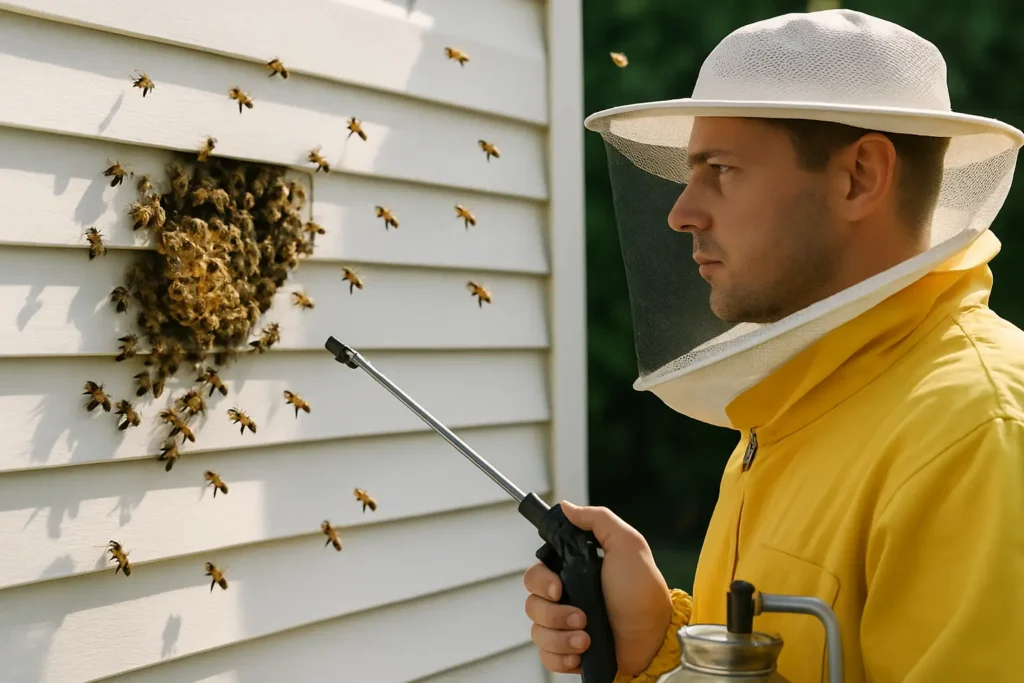
A cluster of bees on a tree branch can look dramatic, but the real stress usually starts when you hear buzzing in a wall or notice bees slipping in and out of a small gap near your roofline. Homeowners and property managers across Southern California run into the same dilemma: you want your space safe again, and you do not want to harm the bees that are doing important work in the environment.
Humane bee removal services are built for that exact moment. The goal is not just “getting rid of bees.” It is rescuing a colony when possible, relocating it responsibly, and fixing the conditions that allowed the bees to move in so they do not return.
What “humane bee removal services” really means
When people hear “humane,” they sometimes picture a simple catch-and-release. With honey bees, it is more involved than that. A honey bee colony is a living system made up of thousands of individual bees, stored honey, brood (developing bees), and a queen. If the colony is established in a wall, soffit, attic, chimney void, or commercial façade, a humane outcome means removing the colony in a way that preserves it and reduces unnecessary loss.
In practice, humane bee removal services prioritize live removal and relocation, avoid pesticide use whenever possible, and include repairs that stop re-entry. Done correctly, it protects people, pets, tenants, and customers, while also protecting the colony.
It also comes with an honest note of nuance: not every hive can be saved in every situation. Sometimes the structure is unsafe to open, the colony is already collapsing, or an emergency safety risk requires faster action. A truly ethical provider will explain options and trade-offs clearly, not sell a one-size-fits-all promise.
Swarm vs. hive: why the difference matters
A swarm is usually temporary. It is a group of bees that has left an existing colony and is resting while scouts look for a permanent home. Swarms often look like a football-shaped cluster on a branch, fence, or exterior wall. The bees are typically less defensive during a swarm because they are not protecting stored honey or brood.
A hive is established. You will often see steady “traffic” at one specific entry point, and you may hear buzzing through drywall or notice staining near a gap where wax and honey are inside. Established hives are more likely to become defensive if disturbed because they are protecting a home they have built.
This difference affects timing and approach. Swarms can often be collected quickly and relocated with minimal disruption. Established hives usually require a full extraction to prevent lingering honey and wax from becoming a long-term problem.
Why spraying is a short-term move with long-term consequences
Some companies still rely on chemical treatments or “kill and seal” tactics. It may sound efficient, but it often creates bigger issues later.
If a colony dies inside a wall, the comb, honey, and brood remain. That can lead to odor, staining, and secondary pests like ants, roaches, or rodents. In warm weather, honey can liquefy and seep into insulation and drywall. Even worse, if the entry point is not properly addressed, new bees can move into the same cavity because it still smells like a suitable nesting site.
Humane bee removal services are focused on permanence. A proper live extraction with cleanup and repairs is usually more work up front, but it is often the path that restores peace and keeps it restored.
What a professional humane removal typically includes
1) Inspection and a clear plan
A real solution starts with understanding where the bees are, how they are getting in, and what is happening behind the surface. The inspection should identify likely comb location, entry points, and any structural considerations like electrical lines, plumbing, or difficult access.
You should also expect a realistic timeline. Some removals are same-day. Others, especially in tight cavities, require careful staging to minimize damage and improve the survival of the colony.
2) Live removal and full hive extraction when needed
For an established colony in a structure, humane work usually means opening the area where the comb is built, removing bees and comb carefully, and capturing the queen when possible. This is the difference between “bees are gone for now” and “the problem is actually solved.”
Many homeowners are surprised by how much material can be inside a wall. A strong colony can build a significant amount of comb in a relatively short time, especially during nectar flow seasons.
3) Safe relocation to an appropriate apiary
Relocation is not simply “drop them somewhere.” Bees need a managed environment where they can be monitored and supported. Responsible providers relocate rescued colonies to vetted apiaries and settings where natural bee behaviors are supported and the colony has a chance to thrive.
This is one of the most meaningful parts of humane bee removal services: bees are not treated as disposable. They are treated as livestock and pollinators with value.
4) Cleanup and removal of attractants
After extraction, leftover wax, honey residue, and scent can attract other insects or even new swarms. Cleanup reduces those triggers. The level of cleanup depends on access and how extensive the comb was, but the intent is the same: remove what invites future problems.
5) Entry-point repairs to prevent re-occupation
Bees are persistent when they find a good cavity. If the entry point is left open, you may get another swarm within weeks. Repairs might include sealing gaps, replacing damaged wood, screening vents, or reinforcing vulnerable areas where bees commonly enter.
This step is where humane and “permanent” meet. Without it, even a beautifully handled live removal can turn into a repeat call.
Safety: what to do while you wait for help
If you are dealing with active bee traffic in or around a building, the safest choice is to give them space and avoid vibrations or impacts near the colony.
Keep children and pets away from the area. Avoid running equipment close to the entry point. Do not plug the hole, spray foam, or attempt to smoke them out. Those actions can trap bees inside living spaces, drive them deeper into the structure, or provoke defensive behavior.
If someone in the home or workplace has a life-threatening allergy, treat the situation with extra urgency. Reduce foot traffic near the bees and plan a safe path in and out of the building until a professional arrives.
How to choose a humane bee removal provider in Southern California
You are not just hiring someone to remove insects. You are hiring someone to work inside your property and make decisions that affect safety, structure, and a living colony.
Look for a provider who explains whether you are dealing with a swarm or an established hive, and who can describe their process in plain terms. Ask what happens to the bees afterward. Ask whether the job includes entry-point repair and what that repair covers.
It is also fair to ask about realistic outcomes. A trustworthy professional will tell you when a live removal is likely and when conditions make it difficult. Humane does not mean careless. It means making the best ethical choice available while protecting people first.
For property managers, documentation and communication matter too. You want a provider who can coordinate around tenants or business hours and who understands that preventing repeat issues is part of the service, not an add-on you discover after the second incident.
Common “it depends” situations (and why they matter)
Some of the hardest bee situations are the ones that look simple from the outside.
If bees are in a chimney, the approach depends on whether the chimney is active, accessible, and lined in a way that allows safe extraction. If they are in a two-story wall near electrical wiring, careful access planning is essential. If a colony has been in place for a long time, there may be extensive comb and honey storage that increases cleanup needs.
Season also plays a role. Warm months can mean more activity and more rapid comb building. Cooler periods can slow activity but do not necessarily mean the bees are “gone.” In Southern California, bees can remain active through much of the year.
A humane provider will factor all of this in and recommend the approach that protects your structure and gives the colony the best chance possible.
A local option built around rescue and repair
If you are looking for a service that centers live removals, responsible relocations, and entry-point repairs that help keep bees from coming back, Eli the Bee Guy focuses on safe and humane removals across multiple Southern California counties with an emphasis on bees rescued and peace and home restored.
The goal: peace restored, bees protected, and no repeat visit
When humane bee removal services are done right, you get more than a quieter wall or a cleared patio. You get the confidence that the colony was handled ethically, the property was protected, and the original entry problem was actually corrected.
If you are standing in your driveway watching bees disappear into a tiny gap in stucco, take that as a clear sign to act sooner rather than later. The best time to solve a bee problem is when it is still manageable, and the best solutions are the ones that leave both your property and the bees with a safe place to go.