You step outside to enjoy the hummingbirds and instead get a tight little knot in your stomach – the feeder is crawling with bees. The birds hover nearby, then bail. If you have kids, pets, or anyone with sting allergies on the property, it is more than annoying. The good news is you can usually solve this without harming bees, and without giving up on hummingbirds.
This is a practical, humane approach to how to keep bees away from hummingbird feeder setups in Southern California yards, where warm weather and long bloom seasons can make bee pressure feel nonstop. Some of these fixes work instantly. Others work best as a combination.
Why bees are choosing your feeder
Bees are not “picking a fight” with hummingbirds. They are foraging efficiently. A feeder is a predictable, high-sugar source that does not move and does not run out (at least not quickly). If the nectar is strong, leaking, warm, or easy to access, bees will recruit more bees, sometimes within a day.
It also depends on what you are seeing. Honey bees tend to show up in steady numbers and can build over time. Yellowjackets and paper wasps show up later in the season and act more aggressive around food sources. The solutions overlap, but the urgency changes if you are dealing with stinging insects that defend territory.
Start with the nectar – sweet enough for hummingbirds, less tempting for bees
If your mix is extra strong, you are basically ringing a dinner bell for every sugar-loving insect.
Use the standard ratio: 1 part white granulated sugar to 4 parts water. No honey, no brown sugar, no dye. Hummingbirds do well on the standard mix, and it is less attractive than the “super sweet” recipes that circulate online.
If bees are already mobbing the feeder, do not try to “dilute your way out” by going weaker than 1:4 for long periods. You might reduce bee interest a little, but you can also shortchange the birds, especially in hot weather when they burn energy fast. Instead, keep the proper ratio and focus on access and placement.
Check for leaks – the #1 reason infestations explode
A feeder that drips creates a sugary scent trail and a sticky landing zone. Bees can feed from the outside without ever touching the ports, which makes “bee-resistant” features pointless.
Take the feeder down and inspect it like you would a garden hose fitting. Look for cracked plastic, warped bases, worn gaskets, and threads that do not seat cleanly. After you refill, hold it over the sink for a full minute. If it drips at all, fix that first.
A simple trade-off: some glass feeders look great but can be more prone to small seal issues if the base is overtightened or cross-threaded. Tight should be snug, not forced.
Choose (or convert to) a feeder style bees struggle with
Not all “bee-proof” claims mean the same thing. Bees need a place to land and a way to reach nectar with their short tongues. Hummingbirds can hover and reach deeper.
Look for feeders with recessed ports or built-in nectar guards that keep liquid slightly farther from the opening. Saucer-style feeders can work well too, but only if they seal perfectly and the ports are truly recessed.
If your current feeder has wide-open ports, you can sometimes retrofit it with port guards made for that model. It is not a magic shield, but it often reduces the number of bees that can feed successfully, which reduces recruitment.
Move the feeder to change the “easy route”
Bees navigate by routine. If they have a clean flight path to a sunny, warm feeder near flowers, they will keep coming.
Try relocating the feeder 10 to 15 feet away and putting it in brighter shade. Hummingbirds will still find it quickly, but bees tend to prefer warm, sunlit feeding stations where the nectar is more aromatic and easier to process.
Also consider the human factor. If the feeder is near a doorway, patio table, pool gate, or trash cans, you are concentrating activity where people are most likely to get stung. Even if you cannot eliminate every bee, you can often restore peace by moving the activity zone.
Time your refill and cleaning to break the pattern
Once bees have “mapped” your feeder, topping it off midday can keep the buffet open continuously.
Instead, take the feeder down in the evening, rinse and refill, and hang it again at first light. Early morning tends to be when hummingbirds reestablish their routes. You are giving the birds first access and making it harder for bees to maintain a constant presence.
In hot Southern California weather, clean more often. When nectar starts to ferment, it can smell stronger and attract more insects. Many households do well cleaning every 2 to 3 days in heat waves and every 4 to 5 days when it is mild.
Use a bee guard or moat – and know its limits
A bee guard (small plastic mesh over the port) can reduce access, but if your feeder leaks, bees will ignore the ports and drink from the drip.
A moat (a small water reservoir above the feeder) is designed for ants, not bees. It is still worth using for overall feeder hygiene, but it will not solve a bee problem by itself.
If you use any add-on, keep it clean. Sticky guards become scent sources.
Skip the “repellent hacks” that backfire
Homeowners are often told to use essential oils, sticky traps, or sprays near the feeder. The risk is that you repel hummingbirds, contaminate nectar, or injure beneficial insects.
Avoid spraying insecticides anywhere near hummingbird feeding areas. Besides the obvious safety concerns, chemical residue can end up on the feeder surfaces the birds touch.
Also be cautious with “natural” repellents. Strong scents like peppermint, clove, or citronella may reduce insect activity, but they can also deter birds and create a yard that feels hostile to pollinators. If you try scent-based deterrents at all, keep them well away from the feeder and never on the feeder itself.
Offer bees a better option, away from people
This is the most humane pivot – and it often works surprisingly well.
If your yard is dry and nectar sources are scarce, bees may be using your feeder as a lifeline. Consider setting up a separate bee water station far from your patio: a shallow dish with water and plenty of landing spots like pebbles or corks. Change it often so it stays clean.
You can also lean into planting. When blooms are abundant, bees are less likely to fixate on a feeder. Native and drought-tolerant flowering plants help spread out foraging pressure. The trade-off is timing: new plantings take a season or two to really change the equation.
What to do when the feeder is already swarmed
If the feeder is covered in bees right now, start with a calm reset.
Bring the feeder inside. Do not swat. Wait a bit so the bees disperse outside, then wash the feeder thoroughly with hot water and a bottle brush. Fix any leaks, switch to recessed ports if needed, and relocate it to shade.
When you hang it back up, keep an eye out for the “scout” bees that return first. If they cannot access nectar easily, they are less likely to recruit more.
If yellowjackets are involved (especially late summer and fall), treat it as a safety issue. They can become defensive and they do not behave like honey bees. In that case, removing the feeder for a few days can be the safest move until their seasonal pressure drops.
When a feeder problem is actually a hive problem
Sometimes the feeder is not the root cause. It is just the easiest food source near an active colony.
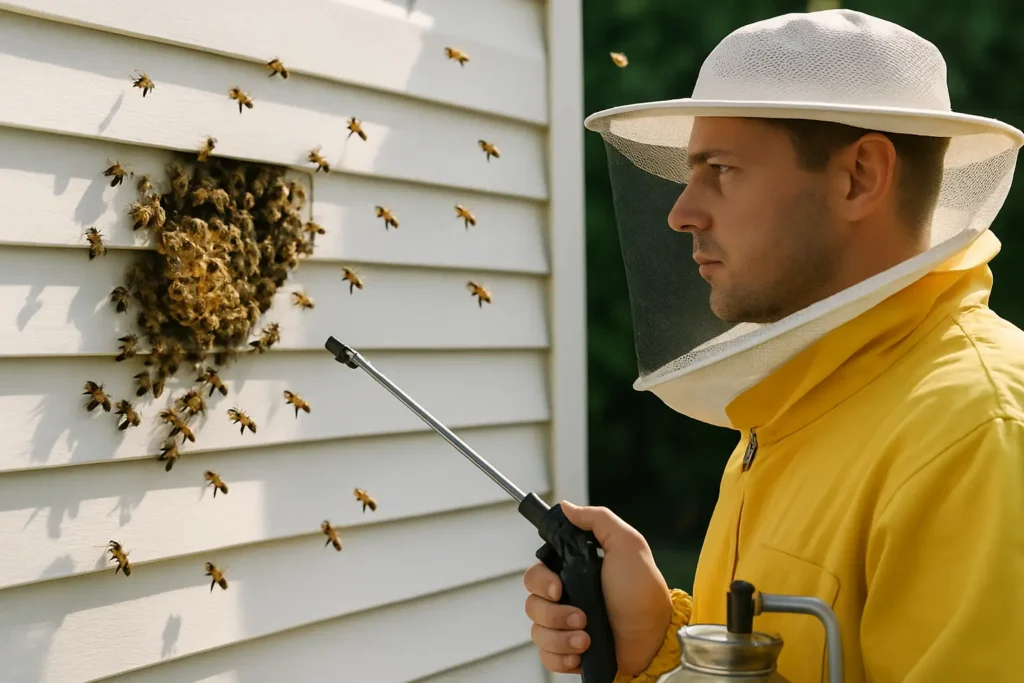
You may have a nearby hive if you notice bees consistently flying to and from the same spot on a wall, roofline, palm tree, irrigation box, or shed. You might also hear a low buzzing in a cavity, or see bees disappearing into a crack.
If a colony is established in a structure, DIY sprays and foams are a common mistake. They can drive bees deeper into walls, create bigger repair costs, and put people at higher sting risk. Humane live removal is also time-sensitive – the earlier a colony is addressed, the simpler the extraction and the better the outcome for both the property and the bees.
If you suspect a hive in or on a building and want an ethical, permanent solution, this is the moment to call a professional who relocates bees safely and repairs entry points. For homeowners and property managers across Southern California, Eli the Bee Guy focuses on live removals, full hive extractions when needed, and prevention work aimed at keeping peace and home restored.
A quick reality check: you may not get to zero bees
A few bees in a yard are normal and healthy. The goal is not to wipe them out. The goal is to stop the feeder from becoming a high-traffic insect bar that pushes hummingbirds out and raises sting risk.
When you combine a non-leaking feeder, standard nectar ratio, shaded placement, and smart timing, most homes see a dramatic drop within a week. If you still see heavy activity after you have addressed those basics, that is when it is worth looking beyond the feeder and asking what is happening in the immediate area – blooms, water scarcity, seasonal wasps, or a colony nearby.
The best yards are the ones where hummingbirds can sip in peace, people can relax outside, and bees can do their work where they belong – on flowers, not at your back door.