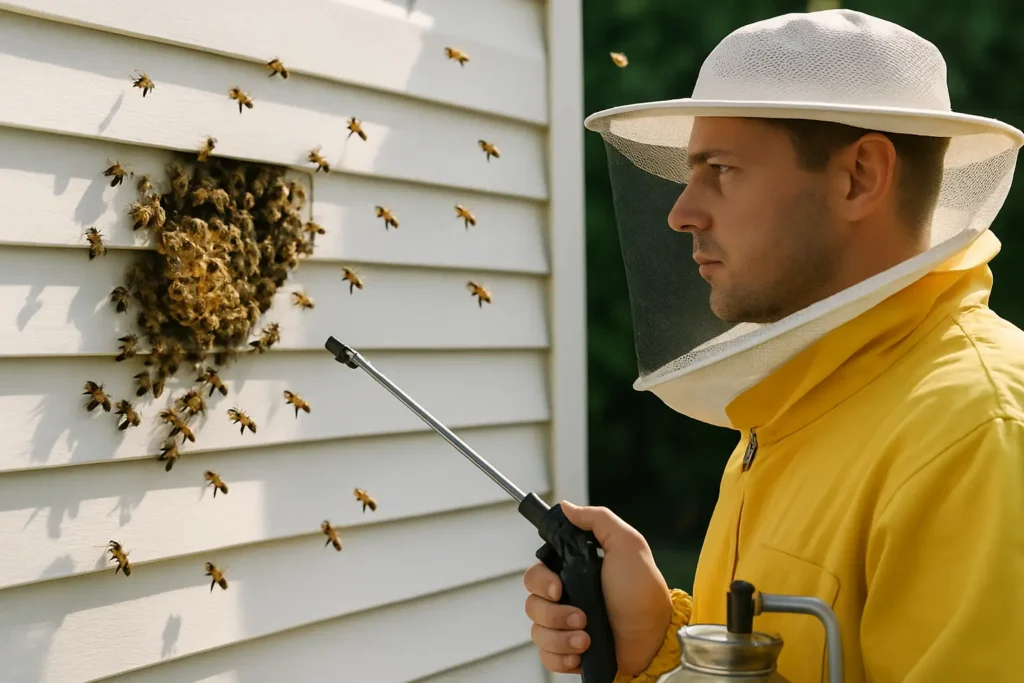
If you have bees in a wall, a soffit, or a tree near a busy walkway, the reviews start to matter fast. Not the vague ones that say “great job,” but the ones that tell you whether the bees were actually relocated, whether the problem stayed solved, and whether your property was treated with care.
Orange County has plenty of “bee” listings, but the service behind the listing can range from true live relocation to quick-kill pest control marketed as removal. If you are trying to protect people on the property and also protect pollinators, you need to know what to look for in bee relocation service reviews Orange County residents leave – and what those reviews sometimes leave out.
What “bee relocation” should mean in Orange County
A real relocation job is not just getting bees out of sight. It is a process that removes the colony, addresses why they chose that spot, and reduces the odds of a new colony moving into the same void next season.
In most Orange County homes, the issue is not the swarm you see outside. The real problem is the established hive hidden inside a structure – behind stucco, under roof tiles, in an eave, or inside a chimney chase. A service that only vacuums visible bees or sprays the entrance may reduce activity for a week, but it can also leave comb, honey, and brood inside. That leftover material can attract ants, roaches, rodents, and even another swarm later.
When you read reviews, you are trying to confirm that the provider does more than “make the buzzing stop.” You want peace and home restored in a way that is safe, humane, and lasting.
How to read bee relocation service reviews Orange County homeowners trust
The best reviews tend to include concrete details. They mention where the bees were nesting, what the technician did to remove them, and what was done to prevent re-occupation. They also describe how the person communicated, because bee situations are stressful – especially if children, tenants, customers, or allergy concerns are involved.
Look for proof of live removal, not just “removal”
Many people assume “bee removal” means “the bees were saved.” Reviews can help you confirm whether that happened. Strong signals include mention of live capture, a hive or comb extraction, or relocation to an apiary. Some customers will note that the bees were placed into a box or that the colony was transported off-site.
If multiple reviews mention “sprayed,” “treated,” “exterminated,” or “no bees the next day” without any mention of relocation, that is a clue the service may be pest-control-first. That may be a choice some property managers make in certain situations, but it is not the same thing as humane relocation.
Separate swarm calls from hive extractions
A swarm on a branch can sometimes be collected quickly because it has not built comb yet. A colony inside a wall is a different job entirely. Reviews that only discuss easy swarm pickups can make a company look fast and inexpensive – until you need a full extraction.
As you read, ask yourself: are reviewers describing removals from walls, attics, chimneys, and rooflines? Are they describing opening and repairing an area? Those details matter because most long-term problems require more than a quick capture.
Pay attention to “two weeks later” language
The most useful reviews are the ones that mention what happened after the job. Phrases like “a month later and still no activity” or “they came back to check the area” are meaningful because bees are persistent. If a void still smells like honey or the entry point is not sealed properly, you may see scouts return.
Also watch for the opposite: “bees came back,” “still hearing buzzing,” or “they stopped answering.” A single negative review does not always tell the whole story, but patterns do.
Respect for the property shows up in the details
A humane bee relocation provider usually treats the home with the same care they treat the bees. Reviews that mention clean work, careful cutting, protecting landscaping, and explaining the repair options are worth extra weight.
For commercial properties, look for comments about minimizing disruption, working around customer traffic, or coordinating with maintenance teams. In Orange County, where retail and hospitality spaces often have tight schedules, that kind of professionalism is part of the value.
What reviews often miss (and what you should ask anyway)
Even good reviews rarely cover the technical “why” behind a permanent solution. Before you choose a provider, use reviews as a starting point and then ask a few direct questions.
First, ask what happens to the comb and honey. If they are left in place, you may trade bee activity for secondary pests and odors. Next, ask whether the queen is expected to be captured. In a true relocation, capturing the colony with its queen is the difference between a colony that re-groups and one that collapses.
Finally, ask about entry-point repairs. Some providers remove bees and leave the opening unaddressed. Others can repair or at least identify the gaps that allowed the bees in, so you can seal them properly.
These points do not always make it into reviews because customers are relieved the immediate danger is gone. But if you want a long-term result, they are worth clarifying.
Red flags you can spot from reviews alone
A review section can tell you a lot even before you call.
If pricing reviews mention “quote changed after they arrived” repeatedly, that is a sign to be cautious. Bee work can involve surprises once an area is opened, but ethical providers explain the variables upfront, such as how far comb extends or whether access requires additional labor.
If you see multiple comments about strong chemical smells, dead bees everywhere, or “they just sprayed the hole,” that is also a warning if your goal is relocation.
Another red flag is heavy emphasis on speed with no mention of inspection. A careful provider usually inspects the structure, watches flight paths, and identifies the true entry point before doing anything. Fast is not automatically bad, but “in and out in five minutes” is rarely compatible with a complete extraction.
Why Orange County makes bee situations tricky
Orange County’s mild climate gives bees long productive seasons. That means colonies can grow quickly, and a small issue can become a heavy hive before you realize what is happening. Stucco exteriors, tile roofs, and layered eaves can also create ideal protected voids that are hard to access.
For property managers, the stakes are higher because foot traffic, tenant relationships, and liability are involved. For homeowners, the worry is often personal: kids playing outside, pets near a hive entrance, or a family member with a sting allergy.
Reviews that mention calm communication and clear safety guidance matter here. A good bee relocation provider will tell you what to do immediately – keep distance, restrict access, avoid spraying, and postpone pressure washing or sealing until the colony is addressed.
What “fair pricing” looks like in reviews
Bee relocation is not a one-price service, and reviews can help you understand why. Swarm collection is often less involved than a structural extraction that requires opening a wall, removing comb, cleaning out residue, and then repairing or preparing the area for repair.
When you see reviews that complain about cost, look for context. Was the hive in a second-story soffit? Did it require ladder work, attic access, or careful cut-outs? Did the provider remove a large amount of comb? The more complex the access and the larger the colony, the more labor and time are involved.
A trustworthy review often reads like this: the customer understood the scope, the provider explained options, and the final result prevented a repeat problem. Cheap jobs can be expensive if bees return or if leftover honey causes damage.
Choosing a humane provider without guessing
If your goal is bee rescue plus safety, use reviews to narrow the field and then confirm the approach on the phone. A provider should be willing to explain whether they perform live removals, whether they do full hive extractions, and how they handle prevention.
In practice, the best outcomes usually come from a combination of humane removal and responsible repairs. That is how you get the feeling customers describe in their best reviews: the home is calm again, the risk is reduced, and the bees are not treated as disposable.
If you want an example of a service built around that philosophy, Eli the Bee Guy focuses on live bee removals, full hive extractions, safe relocation to vetted apiaries, and entry-point repair guidance so the same spot does not become a revolving door.
A few review-inspired questions that save time
When you call the top one or two providers from your shortlist, ask how they determine whether it is a swarm or an established hive, and what their plan is for comb removal and cleanup. Ask what repair work is included versus what you will need a contractor for, and whether they offer follow-up if activity continues.
The tone of the answers should match the tone you want in the work: calm, clear, and honest about trade-offs. Sometimes full extraction is the right call; sometimes access limitations mean you discuss staged work or alternative approaches. What you do not want is false certainty paired with a quick fix.
If the reviews helped you find someone who treats both people and bees with respect, you are already most of the way there – and the next step is simply choosing the path that restores safety now while keeping the colony’s story from ending unnecessarily.