A steady stream of bees disappearing into a crack in your stucco, a fence post, or the eaves is not a “wait and see” situation. It is a functioning colony building comb, storing honey, and defending a home. And if that home is in a wall, soffit, irrigation box, or commercial structure, the real risk is not only stings – it is what happens when the hive grows, overheats, or gets disturbed.
If you are searching for how to relocate a bee hive safely, the safest approach is also the most humane one: move the bees without poisoning them, avoid leaving comb behind, and repair the entry point so the problem does not return. There are times a homeowner can respond safely (mostly with swarms), and there are times relocation should be handled by a professional with the right tools, permits, and apiary connections.
First: know what you are dealing with
A lot of stress starts with a simple mix-up. People often call any cluster of bees a “hive,” but swarms and established colonies behave very differently.
A swarm is a temporary cluster – often on a branch, a fence, patio furniture, or a car wheel well. Swarming bees are usually focused on protecting their queen and finding a new home, not defending comb and honey. Swarms are often the most straightforward to collect and relocate.
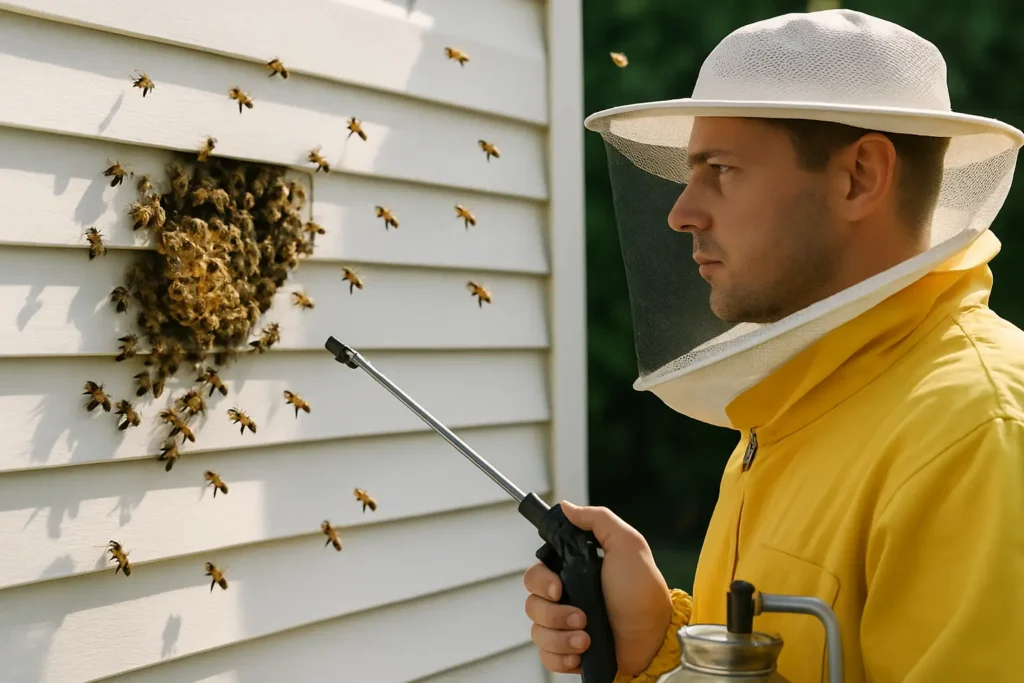
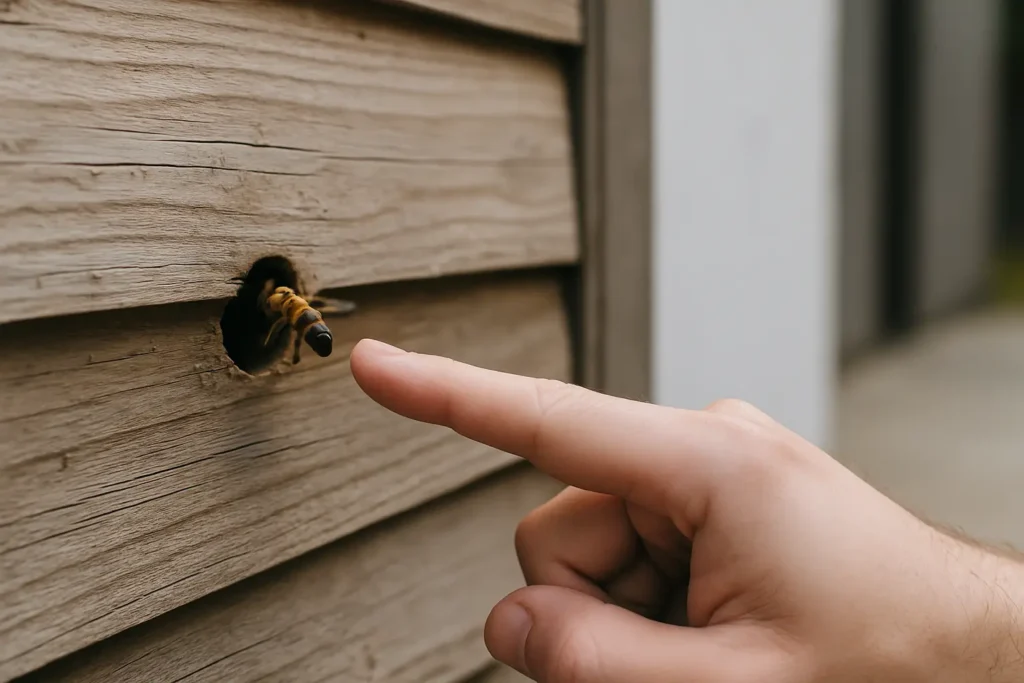
An established hive (a colony) is bees living inside a structure or cavity and actively building comb. You will typically see consistent flight paths in and out of a single entry point, and activity will be steady through the day. This is where homeowners get hurt: a wall colony can contain tens of thousands of bees, and vibrations from DIY work can trigger defensive behavior fast.
If you are not sure which one it is, treat it like an established hive until proven otherwise.
When DIY relocation is not the safe choice
Relocation is not just “put the bees in a box.” Safety depends on access to the comb and queen, controlling the bees during the move, and not leaving attractants behind.
You should pause and call a professional if any of the following are true: the bees are inside a wall, attic, chimney, soffit, tree cavity, or underground; anyone on site has a history of severe allergic reactions; the area is high-traffic (apartment walkway, school, loading dock); or the colony has been present longer than a few days.
The trade-off is simple. DIY might feel quicker, but partial removals often lead to lingering bees, comb melting into walls, odors, ants, roaches, and another colony moving into the same scent trail later.
How to relocate a bee hive safely: the core principles
Whether you are coordinating with a bee removal professional or evaluating what is possible on your property, safe relocation comes down to four principles.
First, timing matters. Bees are calmer in cooler temperatures and when most foragers are back in the hive. Second, the queen must be moved or the colony will not truly relocate. Third, comb and honey need to be removed from structures when possible, because leftover comb invites pests and future bees. Fourth, the entry point must be repaired and sealed only after bees are fully out, or you can trap bees inside.
Those principles are why “spray and walk away” is not a relocation – it is extermination, and it often creates a bigger mess.
If it is a swarm: the safest relocation most homeowners can understand
A swarm on an exposed surface is the scenario where relocation can be relatively straightforward – and also where people get overconfident.
If you are dealing with a swarm, do not spray it with water, do not hit it with chemicals, and do not start cutting branches while people are nearby. Keep children and pets indoors, close windows, and give the bees space.
A proper swarm collection typically involves gently moving the cluster into a ventilated hive box or bee-safe container, then transporting it to a suitable apiary location. The key detail is ventilation and containment – a sealed plastic tote in the sun can overheat bees quickly. Another key detail is making sure the queen is in the box. If she is not, the swarm will regroup outside and you will be right back where you started.
Even with swarms, it depends. A small swarm low to the ground is very different from a large swarm twenty feet up over a driveway. Height, access, and foot traffic change the risk profile.
If it is an established hive: why safe relocation is more like an extraction
When bees are living in a structure, “relocation” usually means a live removal with a full extraction. That is because the colony is attached to comb. Comb is where brood is raised and honey is stored, and it is also what triggers defensive behavior when it is damaged.
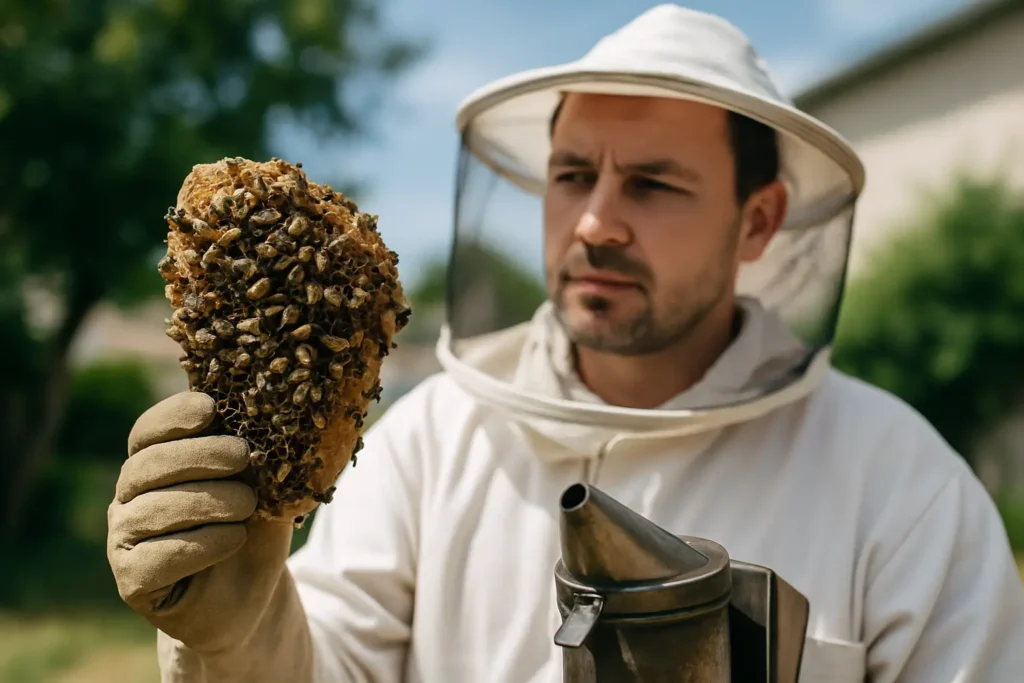
A humane extraction generally involves carefully opening the area to access comb, removing and securing brood comb into frames (so the colony can continue naturally), collecting the bees with controlled methods, and making sure the queen is transferred. The work area is managed to keep bees from spreading through the structure and to minimize risk to occupants.
After the bees are removed, leftover comb and honey are addressed. Leaving them behind can cause heat-related dripping, strong odors, and pest activity. Finally, the entry point and vulnerable gaps are repaired so the property does not advertise “vacancy” to the next swarm.
That last step is where lasting peace and home restored really happens. Without it, relocation is only temporary.
Safety steps before any relocation attempt
Even if you never touch the hive yourself, these steps protect you, your neighbors, and the bees while you wait for removal.
Create distance and reduce triggers
Give the hive a wide buffer zone. Rope off the area if needed, and redirect foot traffic. Avoid mowing, weed whacking, hammering, or using loud equipment near the entry point. Vibrations and exhaust can provoke defensive behavior.
Avoid sealing the entrance
It is natural to want to caulk the hole. Do not. Sealing bees into a wall can drive them into the living space and create a much harder removal. Let the entrance remain open until the colony is properly removed.
Plan for pets, kids, and deliveries
If you have gardeners, pool service, or delivery drivers, notify them. Keep dogs on leash and away from the flight path. A surprised dog in the wrong place can turn a calm situation into an emergency.
The relocation location: where bees should go
A safe relocation is not just about getting bees off your property. It is about placing them where they can thrive and where they are not immediately considered a nuisance again.
Vetted apiaries and responsible beekeepers can provide proper spacing, water sources, ongoing care, and monitoring for pests and disease. A random release “somewhere far away” is not a plan, and it can be illegal depending on local rules and land access.
If you care about ethical outcomes, ask where the bees will be relocated and how the colony will be managed after the move. It is a reasonable question, and a good provider will answer it clearly.
What “humane” really means in bee relocation
Humane relocation is not sentimental – it is practical. Colonies are complex superorganisms. When relocation is done with respect for their biology, it tends to be more stable and less risky for people.
Humane practices generally include minimizing unnecessary killing, preserving brood when possible, keeping the colony intact with its queen, and avoiding chemicals that contaminate comb or harm surrounding wildlife. It also includes making sure the colony does not return to the same scent-marked cavity, which is why thorough clean-out and repairs matter.
The prevention piece that most people skip
Once bees have chosen a structure, it is because it offered what they need: a protected cavity, a manageable entrance, and a stable temperature. If you remove the bees but leave the conditions unchanged, another swarm can move in during the next season.
Prevention is usually simple but specific: repair soffit gaps, replace rotted fascia boards, screen vents correctly, seal unused pipe chases, and close cracks that lead into wall voids. Done right, it is not about making a home airtight – it is about removing the obvious invitations.
This is also where commercial properties benefit from a documented approach. Property managers can reduce repeat incidents by pairing removal with a repair plan, especially around loading docks, signage penetrations, and roofline gaps.
Choosing a professional without guesswork
Not all bee removal is relocation. If you want bees rescued and moved responsibly, you need to ask the right questions.
Ask whether the plan is live removal and relocation, whether comb will be removed when the hive is in a structure, and whether repairs are included to prevent re-occupation. Also ask how the area will be kept safe during the work and what guidance you will get for the hours after removal.
If you are in Southern California and want an ethical, durable solution, Eli the Bee Guy focuses on live removals, full extractions, safe relocations to vetted apiaries, and entry-point repairs so your space is truly restored.
What to do if someone gets stung while you are waiting
Most stings are manageable, but reactions vary. Move the person away from the hive area immediately. Remove the stinger promptly if present (a quick scrape is fine), wash the area, and apply a cold compress.
If there are symptoms of a severe allergic reaction – trouble breathing, facial or throat swelling, widespread hives, dizziness, or vomiting – call 911. If the person has an epinephrine auto-injector, use it as directed.
The best safety step is prevention: distance, calm, and professional help when the hive is established.
A closing thought
When bees choose your home, they are not being aggressive – they are being bees. The goal is not to “win” against them. The goal is to get your safety back while giving the colony a real chance to live somewhere appropriate. If you treat relocation as a careful transfer of a living community, not a quick removal, you end up with the outcome everyone wants: peace at home, and bees rescued to keep doing their quiet work.