You notice it first in the sound—a steady, electric hum in a wall, eave, or tree that wasn’t there last week. Or you step outside and see a swirling cluster on a branch, and suddenly your yard doesn’t feel like your yard anymore. If you manage a property, you may also be thinking about liability, tenant safety, and the next service call if the bees come right back.
Safe live bee relocations are built for exactly this moment: getting people back to calm, usable spaces while giving the colony a real chance to survive somewhere it can thrive.
What “safe live bee relocations” really mean
A relocation isn’t simply “moving bees.” Done well, it’s a humane, safety-first process that removes the colony, addresses the reason they chose your structure, and prevents re-occupation.
Safety is two-sided here. It’s about protecting residents, staff, and passersby from stings—especially anyone with a known allergy. It’s also about protecting the bees from being poisoned, sealed into a wall to die, or scattered so widely the colony collapses.
“Live” matters because honey bees are managed livestock and critical pollinators. Killing them might feel like the quickest fix, but it often creates new problems: dead comb attracts pests, rotting honey can leak, and the smell can draw in new swarms. Humane relocation avoids that cycle.
Swarm vs. established hive: why the right call depends
Relocation looks very different depending on what you’re dealing with.
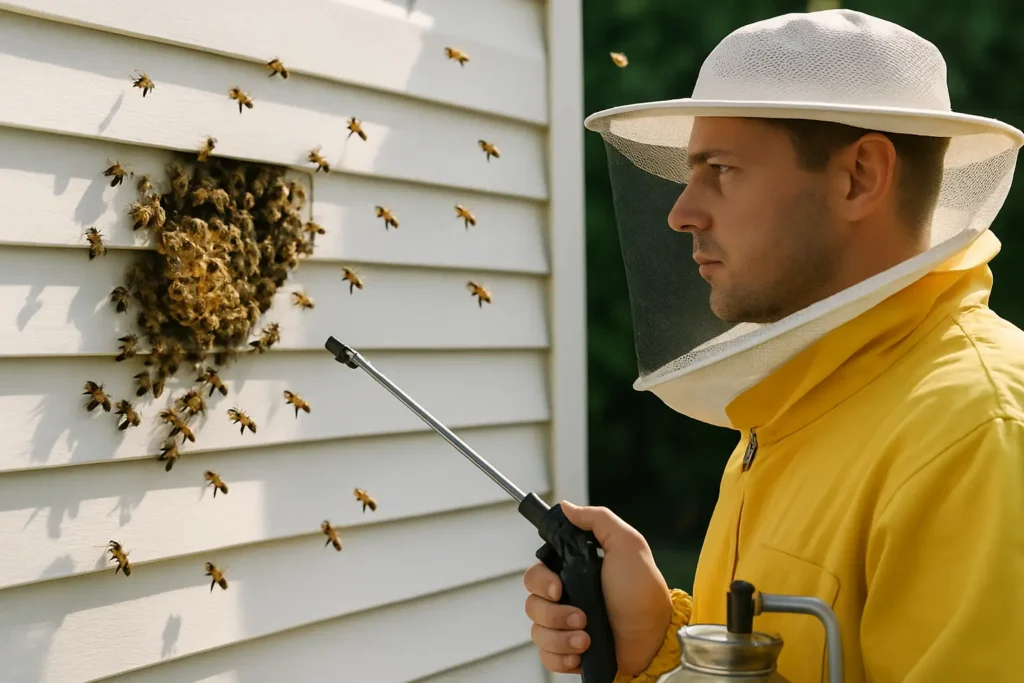
A swarm is a temporary cluster of bees—usually gathered around a queen while scouts search for a permanent home. Swarms can look dramatic, but they’re often less defensive because they’re in transit and focused on protecting the queen rather than guarding honey stores. Many swarms can be safely collected and relocated with minimal disruption.
An established hive inside a wall, attic, soffit, chimney, or utility box is another story. The colony has comb, brood (developing bees), and stored honey. They’ve invested in that location, and they will defend it if they feel threatened. Removing a structural colony typically requires a true extraction, not a quick “catch and release.”
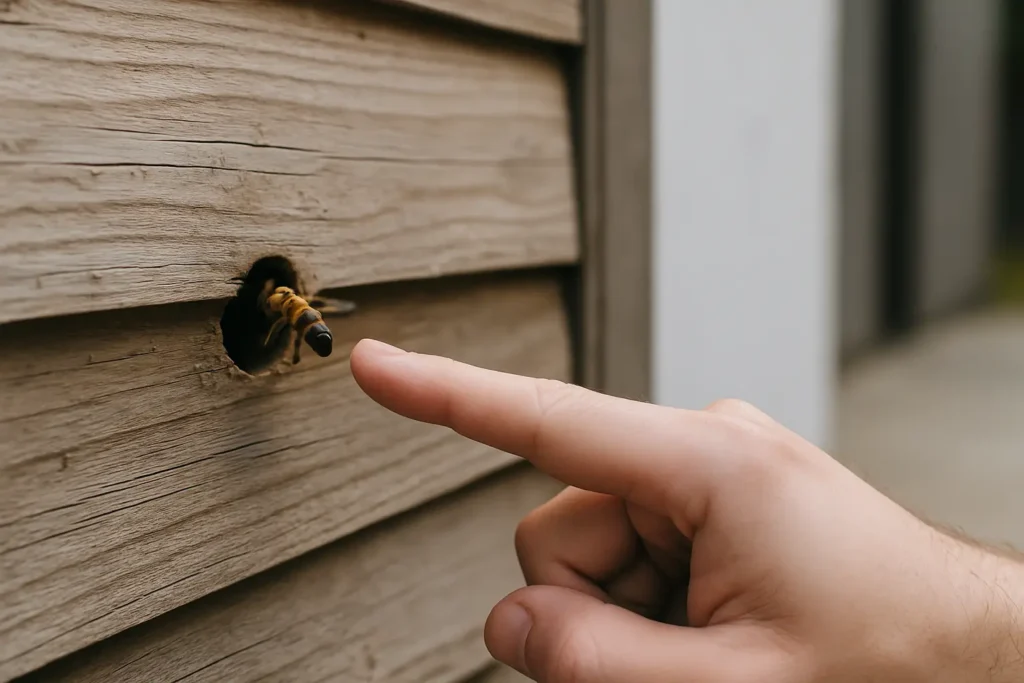
If you’re unsure which you have, the timing and the behavior help. A swarm appears suddenly and may move on within a day or two. A hive typically has consistent traffic at an entry point—bees coming and going in a straight “flight path,” often for weeks.
Why DIY “relocation” so often goes wrong
Most homeowners aren’t trying to be careless; they’re trying to solve an urgent problem. The trouble is that common DIY approaches tend to escalate risk or create a mess that lasts.
Sprays and dusts can kill bees, but they rarely address the comb and honey inside a cavity. Even worse, chemicals can push bees deeper into a structure or trigger defensive behavior.
Sealing an entry hole while bees are active is another frequent mistake. If you close the front door on a living colony, they don’t politely leave—they look for a new exit. That can mean bees inside living spaces, a second entry point somewhere worse, or a trapped colony that dies and creates odor, stains, and pests.
Then there’s the “smoke them out” approach. Smoke has a purpose in beekeeping, but using it to force bees out of a wall usually scatters the colony, doesn’t remove the queen reliably, and can increase aggression. You may get a short lull, then the same problem returns.
If anyone on the property has a history of anaphylaxis, DIY attempts also carry a medical risk that’s not worth it.
What a professional relocation looks like (and why it’s calmer)
A professional approach is designed to reduce chaos. The goal is controlled removal—keeping the colony together as much as possible and moving it to a safe destination.
Step one: confirm the species and situation
Not every stinging insect is a honey bee. Yellowjackets, paper wasps, and hornets behave differently and require different tactics. Even with honey bees, a swarm on a fence post is a different job than a hive behind stucco.
A quick inspection focuses on entry points, bee traffic patterns, how long activity has been present, and whether there’s comb inside the structure.
Step two: plan for safe access and containment
Relocation should protect the people who live or work there. That typically means setting a work perimeter, choosing the right time of day, and using proper protective equipment. For commercial properties, timing can matter: early mornings or low-traffic windows reduce exposure for customers and staff.
Containment is also about protecting the colony. A good relocation minimizes crushing and avoids leaving large numbers of bees behind.
Step three: remove bees and comb the right way
For exposed swarms, the work often involves gently collecting the cluster, ensuring the queen is captured, and moving the bees into a secure box for transport.
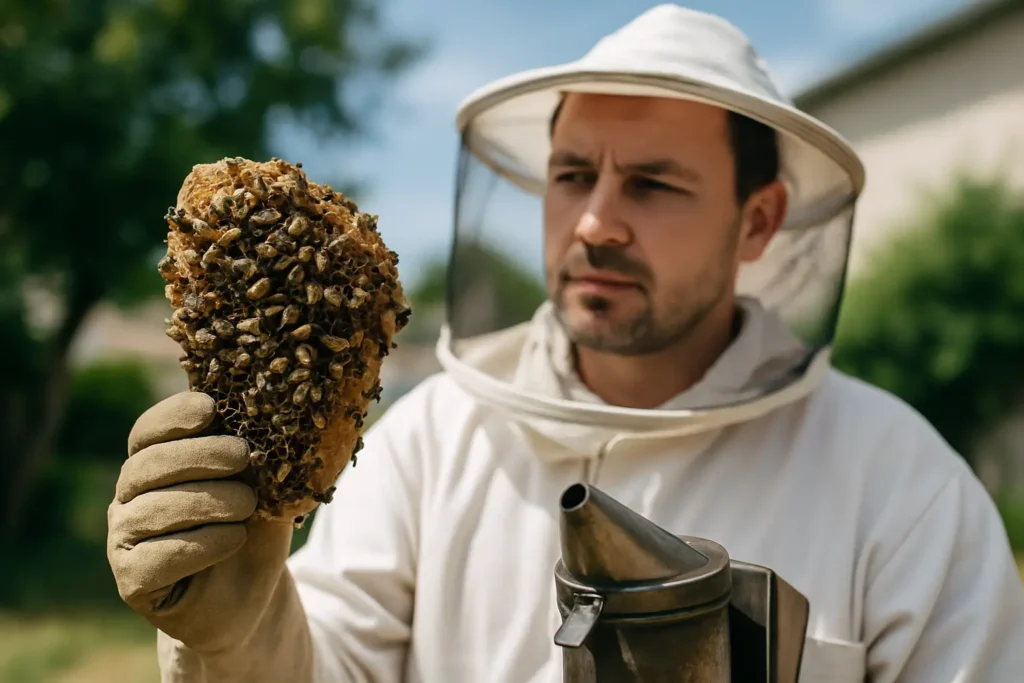
For structural hives, “live removal” generally includes removing comb—especially brood comb—so the colony can reestablish quickly at the new location. Leaving comb behind is one of the biggest reasons bees return or other pests move in.
This is where humane work also becomes “permanent solution” work. Removing the hive is only half the job; restoring the structure matters just as much.
Step four: transport to a vetted apiary
Relocation isn’t complete when bees leave your property. They need a place designed for colonies: managed boxes, space from heavy human traffic, and care that supports natural bee behaviors.
When bees are moved to vetted apiaries, they’re not dumped into the wild or placed where they’ll become someone else’s emergency. They’re integrated responsibly.
Entry-point repairs: the difference between temporary relief and real peace
Bees are excellent at finding cavities that smell like “home.” If an old entry point remains open—or if the structure still offers an inviting gap—another swarm can move in.
Repairs typically focus on sealing the original access point and addressing nearby vulnerabilities. What that looks like depends on the building: fascia gaps, soffit returns, roofline intersections, poorly fitted vents, or old utility penetrations.
There’s also the scent factor. If honey and wax remain, they can attract new bees and other insects. Proper removal and cleanup reduce that lingering “beehive signal.”
For property managers, this is where budgets and outcomes meet. Paying once for thorough removal and repairs is often less expensive than repeated callouts, tenant complaints, and ongoing risk.
Timing and seasonal realities in Southern California
In our counties—Los Angeles, Orange, Riverside, San Bernardino, and Ventura—bee activity can feel nearly year-round. Still, spring and early summer tend to bring more swarms, while established hives can be discovered anytime.
It depends on weather, local forage, and how protected the cavity is. A shaded wall void can support a colony longer than people expect.
If you see a swarm, time matters because it may move on. But if it’s on a high-traffic walkway or near a playground, waiting it out isn’t always safe. For a structural hive, waiting can allow the colony to grow, making removal more involved.
Safety for families, tenants, and pets
If bees are near entrances, patios, pool equipment, or common walkways, treat the area as temporarily restricted.
Keep kids and pets away from the activity zone and avoid vibration near the suspected hive area (mowers, leaf blowers, banging doors). If a bee gets indoors, open a window and let it leave rather than swatting—crushing a bee can release alarm pheromones that draw others.
If you know someone on-site has a severe allergy, plan as if a sting could happen. Have their prescribed medication accessible and avoid experimenting with DIY fixes.
Questions that help you choose the right provider
Not every “bee removal” company is set up for ethical relocation. A few questions can quickly clarify what you’re getting.
Ask whether the plan is chemical treatment or live removal, where the bees will go, whether comb will be removed for structural hives, and what repairs are included to prevent re-occupation. If the answer sounds like “we’ll spray and seal,” you’re likely buying a short-term quiet period, not a resolved problem.
If you want a service built around bees rescued and peace and home restored, a provider like Eli the Bee Guy focuses on live removals, full hive extractions, safe relocations to vetted apiaries, and entry-point repairs that help keep bees from returning.
The trade-offs: what humane, thorough work can require
Safe live bee relocations are the gold standard, but they can be more involved than a simple treatment. Structural extractions may require opening a section of wall, eave, or soffit to access comb. That can mean more labor and follow-up repairs, especially on older buildings with layered materials.
There’s also the reality that bees are living creatures. Even with careful handling, some loss can happen during removal. The difference is intention and method: humane relocation aims to preserve the colony, keep the queen with her workers, and give them a stable next home.
And sometimes, it truly depends. A colony’s location, structural complexity, and public safety concerns can shape what’s possible on a given day. A trustworthy provider will explain those constraints clearly rather than promising a one-size-fits-all fix.
A safe property and a living colony don’t have to be competing goals—when the work is done with patience, the outcome is usually the same feeling homeowners and managers want most: the space is yours again, and the bees are still out there doing what bees do.