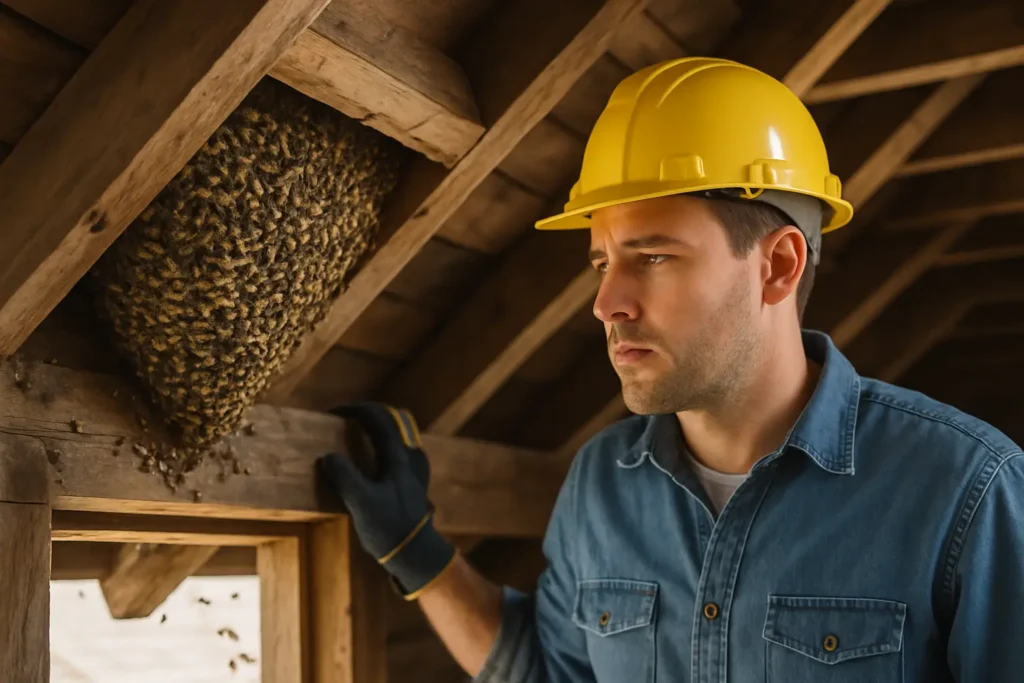
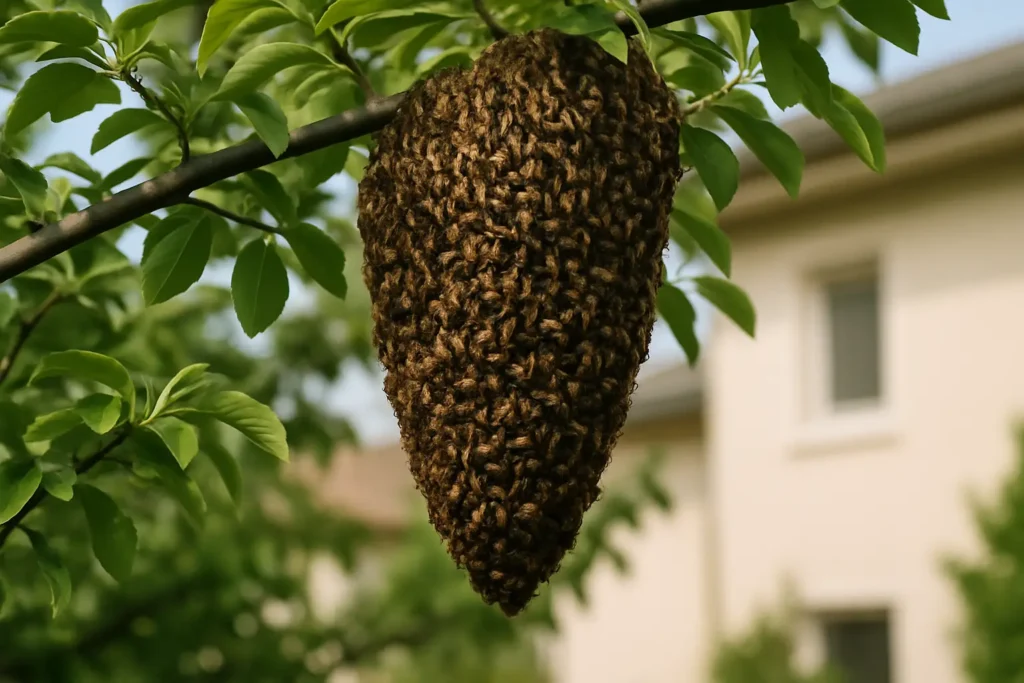
That faint, steady buzzing above the ceiling is easy to ignore – until it isn’t. Maybe you notice a few bees at a recessed light, a sticky spot forming on drywall, or a line of bees traveling to one corner of your roof. When bees move into an attic, time matters, but so does how you respond. The goal is simple: protect the people in the home, rescue the bees, and restore peace and home for the long term.
First: confirm it’s bees (not wasps)
In Southern California, homeowners often say “bees” when the real issue is paper wasps or yellowjackets. The difference matters because the safest solution, the level of defensive behavior, and the repair plan can change.
Honey bees tend to fly in and out of one consistent entry point and follow a predictable path. You may also notice pollen on their legs in daylight hours. Wasps are often more erratic, may have multiple entrances, and build different nest structures. If you can safely observe from the ground outside, watch for a “bee highway” – that steady traffic into a fascia gap, a roof vent, or under a loose tile.
If you’re unsure, treat it as bees until a professional confirms otherwise. A cautious approach prevents stings and avoids harming beneficial pollinators.
What to do immediately if bees are in the attic
When people search “what to do if bees are in attic,” they’re usually balancing two fears at once: safety today and damage tomorrow. Here are the first moves that protect both.
Start by keeping your distance. Don’t open the attic hatch “to look.” Attics are tight, hot spaces where bees can feel trapped and defensive. If the colony has built comb, the vibration of footsteps and the sudden light can trigger a protective response.
Next, reduce traffic through the area below the attic access. If the hatch is in a hallway, keep kids and pets away and close interior doors when you can. If anyone in the household has a history of severe allergic reactions, make sure an epinephrine auto-injector is accessible and consider relocating that person to a different part of the home until the situation is assessed.
Finally, do not spray pesticides into vents, cracks, or the attic. Besides the ethical issue of killing pollinators, chemicals often create a bigger problem: dead bees and abandoned honeycomb can melt in heat, seep into insulation and drywall, and attract ants, roaches, and rodents. Even worse, spraying at the entry can block returning foragers outside, causing agitated bees to look for a new way in – sometimes through wall cavities and into living spaces.
Swarm vs. established hive: why it changes the plan
Not every “attic bee” situation is the same. A swarm is a temporary cluster of bees looking for a home. It can appear suddenly, be loud for a day or two, then vanish if they move on or are captured.
An established hive is different. Once bees are bringing pollen in consistently and using a roofline or vent as a doorway, there’s a strong chance they’ve started building comb. At that point, waiting rarely improves the situation. Colonies grow, comb expands, and by late spring and summer the heat in a California attic can turn stored honey into a mess that stains ceilings and creates lingering odors.
If you’ve seen steady entry-and-exit traffic for more than a couple of days, or you’re seeing bees indoors, assume it’s established until proven otherwise.
Signs your attic hive is becoming urgent
Some situations need same-day attention. Others can be scheduled within a reasonable window. Here’s what typically pushes it into “act now” territory.
If bees are entering living spaces, you may have a secondary opening from the attic into recessed lighting, vents, or small construction gaps. That can escalate quickly, especially if someone tries to seal the wrong spot.
If you notice brownish stains on a ceiling, a sweet smell, or damp-looking drywall, it may indicate honey or brood comb close to the interior surface. In hot weather, this can worsen fast.
If the buzzing gets dramatically louder at night, it can mean the colony is large and active, or that sound is carrying through a void near the ceiling. It doesn’t always mean aggression, but it often means size.
And if anyone on site is highly allergic, urgency is about people, not the bees. The safest choice may be professional help immediately.
What not to do (even if the internet suggests it)
Most DIY advice fails because it treats bees like a simple pest instead of a living colony that has already invested in a location.
Avoid sealing the entry hole while bees are still inside. Trapped bees will search for a way out and may appear inside the home. If a colony dies behind a sealed space, the leftover comb can create months of odor, pests, and staining.
Avoid smoke, “bee repellent” sprays, and ultrasonic devices. Smoke can make bees more defensive in an enclosed attic. Repellents often scatter bees without removing the comb, and devices rarely solve the root issue: an attractive cavity with a usable entrance.
Avoid opening the attic and shining a light around. Aside from stings, you can fall through ceiling drywall or step through insulation over a joist. The risk isn’t worth it.
The humane, permanent solution: live removal plus repairs
A lasting fix has two parts: safely removing the bees and addressing what made the attic accessible in the first place.
A humane live removal focuses on relocating bees rather than poisoning them. Done correctly, the colony is moved to an apiary where the bees can continue their natural behaviors. This approach matters for pollinators, and it also tends to be the cleaner, more predictable outcome for the homeowner.
For an established attic hive, the “permanent” part is just as important as the removal. Bees often choose a home because of a specific gap – a separated fascia board, an unscreened vent, a roofline crack, or a small opening around a utility penetration. If that entry point isn’t repaired properly, another swarm can move into the same space later, especially if lingering scent remains.
In many cases, a complete solution includes carefully removing accessible comb and residue. That step helps prevent future pests and reduces the chance of new bees being attracted back to the same cavity.
How professionals approach attic bees (what you can expect)
Homeowners often worry they’ll be pressured into a one-size-fits-all plan. A reputable bee removal pro should start with inspection and a clear explanation.
Typically, the process begins by identifying the primary entrance and estimating whether you’re dealing with a swarm or an established colony. From there, the plan may involve controlled removal and relocation, followed by cleanup considerations and entry-point repair. The order matters. The goal is to remove bees without driving them deeper into the structure, then prevent re-occupation.
You should also expect a calm discussion about trade-offs. Some hives are accessible and straightforward. Others are located in tight rooflines or deep cavities where opening a section is the only way to fully remove comb. A transparent pro explains why that’s recommended, what areas may be affected, and how repairs prevent the same issue from repeating.
If you’re in Los Angeles, Orange, Riverside, San Bernardino, or Ventura County and want a humane, long-term solution, Eli the Bee Guy offers live removals, full hive extractions, relocations to vetted apiaries, and entry-point repairs at https://elithebeeguy.com/.
While you wait for help: small steps that reduce risk
You can’t “fix” attic bees without the right training, but you can lower the chance of a bad moment.
Keep windows closed near the suspected entry side of the house, especially if you’ve seen bees exploring indoors. If you need ventilation, open windows on the opposite side of the home.
Turn off attic fans if bees appear to be using vents in that area. Airflow can influence how scent travels and may affect bee traffic patterns.
If bees are collecting at interior lights, turn those lights off. Bright fixtures can draw them if there’s a path from the attic.
And if someone is stung, remove the stinger quickly by scraping (not squeezing), wash the area, and monitor for signs of an allergic reaction such as facial swelling, trouble breathing, or widespread hives. When in doubt, treat it as urgent.
Preventing attic bees in the future (without over-sealing your home)
Prevention is about smart exclusion, not sealing every crack with foam. Homes need ventilation, and many attics rely on roof and gable vents to manage heat.
A solid prevention plan focuses on screening and repair. Vents can be protected with proper mesh, roofline gaps can be closed, and fascia boards can be secured. The key is doing it in a way that doesn’t trap moisture or create new problems for your roof system.
It also helps to address the “invitation signals.” Old comb odor, sticky residue, and unsealed cavities can attract future swarms. That’s why removal and cleanup work together. When the space is truly restored, the home stops advertising itself as a ready-made hive site.
If there’s one guiding principle to follow, it’s this: move slowly, prioritize safety, and choose a solution that rescues the bees and protects the structure. When the right steps are taken, you don’t just get the buzzing to stop – you get your quiet back, with the confidence that the same issue won’t return next season.