The Top 5 Questions to Ask Before Hiring a Beehive Removal Service: How to Choose a Humane and Licensed Bee Removal Company
Finding an unexpected hive is stressful — it puts people, pets, and property at risk and creates an ethical problem for local pollinators. This guide walks you through the five questions to ask any beehive removal company so you can protect your home, preserve bees when possible, and hire a provider who follows the law and best practices. You’ll learn how to confirm licensing and insurance, spot genuine live-relocation methods, read transparent quotes, and follow the typical inspection-to-repair workflow so there are no surprises. The guide uses practical checklists, clear comparison tables, and step-by-step sequences designed for quick, confident decisions. Keywords like beehive removal service near me, humane bee removal, live bee relocation, and licensed bee remover are woven in to help you find reputable local options. Read on for precise, action-focused questions and verification steps you can use on the phone or during a free inspection.
Are They Licensed and Insured for Safe and Legal Bee Removal?
Working with a licensed, insured provider reduces homeowner liability and helps ensure removals comply with local and state rules — especially where killing bees is restricted. A license shows regulatory compliance and professional standards; insurance covers property damage or worker injury that can happen during extractions. Ask for documentation and confirm the policy covers both liability and property restoration so cleanup costs don’t come as a surprise. Verifying these items before any work begins is the simplest way to shift risk away from you and set clear expectations for results and follow-up service.
Why Licensing and Insurance Matter for Bee Removal Services
Licensing and insurance matter because removing a hive can lead to structural repairs, worker-injury claims, or regulatory penalties where pollinators are protected. A licensed operator signals accountability to local authorities and use of expected protocols; insurance helps cover accidental damage or bodily harm that can occur when working in attics, walls, or cramped spaces. Without these protections, homeowners may pay repair bills or face liability if someone is hurt on site. Verifying credentials protects both your property and the bees by encouraging careful, legally compliant methods.
What Credentials Should You Verify Before Hiring?
Before you hire, ask for a short, specific verification checklist: a license number, a certificate of insurance showing coverage types and limits, proof of beekeeper training, and recent references or photos of completed removals. Take notes during the call so you record provider names, dates, and document details for later verification. If anything is vague or the company won’t share documentation, treat that as a red flag and consider other options. A clear set of credentials reduces negotiation friction and speeds scheduling for a safe removal.
Do They Practice Humane Bee Removal and Live Bee Relocation?
Humane bee removal means live capture and relocation of honey bees to established apiaries instead of chemical extermination — a choice that preserves colonies and supports local pollination. Humane providers use live-extraction tools, nontoxic techniques, and documented relocation destinations with vetted beekeepers or apiaries, which aligns with conservation-minded rules in many areas. Choosing a humane service reduces ecological harm and often gives better long-term prevention because technicians remove comb and seal entry points rather than leaving nests to recur. Ask for specifics on capture boxes, transport procedures, and proof of apiary partnerships so you can confirm the relocation is real and responsible.
What Defines Humane Bee Removal and Why It’s Important
Humane removal is non-lethal: live capture, minimal pesticide use, and transfer to a managed apiary where bees continue to pollinate and thrive. This protects local crops and biodiversity and respects legal protections that prohibit killing bees in some jurisdictions. Humane methods also lower re-infestation risk because trained beekeepers remove brood and comb correctly instead of only driving bees away. Look for providers who can explain their relocation chain of custody and how rescued colonies are integrated into receiving apiaries.
How Does Live Bee Relocation Protect Pollinators and Ecosystems?
Live relocation preserves functioning colonies that pollinate gardens, farms, and wild plants, keeping ecosystem services that benefit communities and local agriculture. Moving a hive to a vetted apiary maintains genetic diversity and foraging behavior while avoiding the ecological loss caused by extermination. Vetted apiary partners provide long-term care for rescued colonies and can report on colony health, which supports regional pollinator monitoring and conservation. When a provider can explain where colonies go and who cares for them, you gain confidence that the removal protects both your property and the local ecosystem.
| Removal Method | Characteristic | Typical Outcome |
|---|---|---|
| Live Relocation | Live capture and transfer to a vetted apiary | Colony preserved; pollination benefits retained |
| Mechanical Removal | Hive and comb physically removed from the structure | Faster property restoration; requires a plan for hive disposal |
| Chemical Extermination | Use of pesticides to kill bees in place | Colony loss; possible ecological harm and higher re-infestation risk |
This comparison shows humane live relocation as the conservation-friendly choice while noting trade-offs that affect restoration speed and recurrence.
After checking humane credentials, use local examples: Eli the Bee Guy emphasizes live bee relocation to vetted apiaries and nontoxic methods — the kind of provider you should look for and question during an inspection.
How Is the Cost of Bee Removal Determined and Are Quotes Transparent?

Cost depends on several objective factors — hive size, access difficulty, bee species, urgency, and required property repair — so transparent providers itemize each driver. A trustworthy quote lists inspection fees (if any), extraction labor, disposal or relocation charges, and any structural repair or sealing costs so you can compare offers side-by-side. Be wary of vague flat fees with no breakdown; ask for written estimates and a payment timeline. Clear pricing builds trust and prevents surprise invoices, especially when repairs or follow-ups are needed to prevent reinfestation.
What Factors Influence Bee Removal Costs?
Key factors that shape cost include hive size and age, location (attic, wall, or tree), accessibility for safe extraction, the need for structural repair, and the urgency of the call (emergency vs. scheduled). For example, an attic hive that requires insulation removal and structural patching will cost more than a small tree hive with easy access. Species identification matters, too — Africanized bee situations often require special protocols that affect staffing and equipment. Knowing these drivers helps you evaluate itemized estimates and choose the best value for humane, compliant removal.
| Cost Driver | Attribute | Typical Impact on Price |
|---|---|---|
| Hive size | Small to large comb volume | Low to high increase |
| Access difficulty | Open tree vs. enclosed attic | Moderate to high increase |
| Urgency | Same-day emergency vs. scheduled | Moderate increase |
| Repair needs | Structural patching or sealing | Moderate to high increase |
How to Get a Clear, No-Obligation Quote from a Bee Removal Service
To get a transparent quote, request an on-site inspection, ask for an itemized written estimate, and confirm repair and follow-up scope in writing. Use this simple three-step approach during initial calls: schedule an inspection, obtain an itemized quote, and get any recheck or warranty terms in writing. Ask whether the provider offers free inspections or no-obligation assessments so you can compare multiple vendors without cost. Companies that document their assumptions and process are usually the most dependable and easiest to hold accountable.
Note: Eli the Bee Guy offers free inspections and clear, itemized quotes and stresses trained-beekeeper expertise rather than a typical pest-control approach — a good model for the kind of written estimate you should request.
Although this guide focuses on residential situations, businesses and public institutions face larger, different challenges with beehive infestations. For larger properties and commercial rules, look for providers that offer dedicated commercial bee removal solutions.
Top 5 Questions to Choose a Licensed and Humane Bee Removal Service
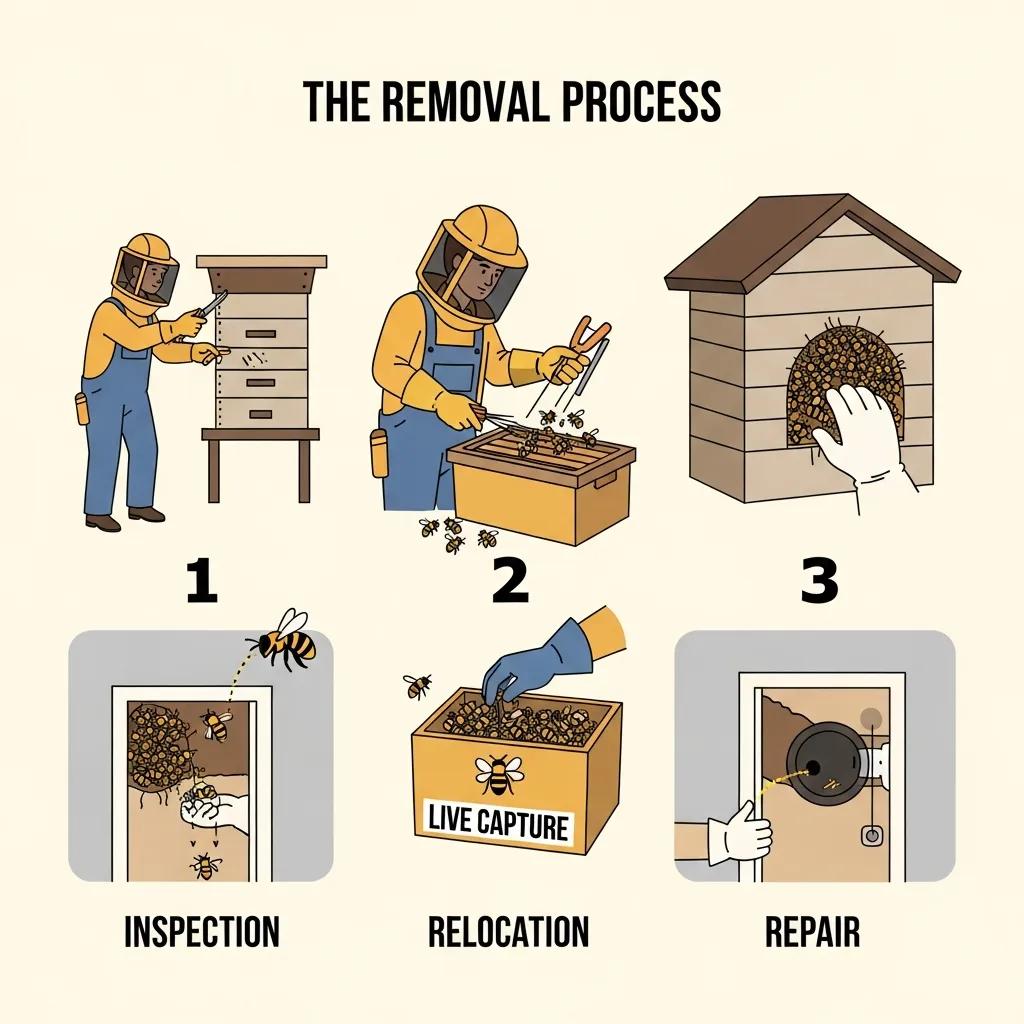
A reliable removal follows a clear sequence: a site inspection to identify species and access; a planned extraction using live-capture or mechanical removal as appropriate; relocation or disposal per humane standards; and property restoration plus prevention measures. Each stage should say who does what, how long it takes, and what guarantees exist for follow-up. Knowing the sequence and expected timeline lowers homeowner anxiety and clarifies responsibility for repairs, debris removal, and sealing entry points. Ask providers to map their process before work starts so you have documented expectations and a timeline.
What Happens During the Initial Site Inspection?
The initial inspection pinpoints bee species, hive size, exact location, access challenges, and any immediate safety risks like structural compromise or human allergies. Inspectors will also note nearby water sources, reinfestation risk, and legal constraints in your area. This assessment determines whether live relocation is feasible or whether structural repair will be needed after extraction. A thorough inspection sets the removal plan and the written estimate you should receive.
| Process Step | Time Needed | Expected Outcome |
|---|---|---|
| Inspection | 30–90 minutes | Species ID, access plan, written estimate |
| Extraction | 1–6 hours | Hive removed, bees captured or contained |
| Relocation/Transport | 1–3 hours | Bees moved to a vetted apiary or managed site |
| Repair & Sealing | Same day to several days | Structural patching, entry sealing, follow-up plan |
How Are Bees Safely Removed, Relocated, and Property Restored?
Safe removal pairs protective gear, calm techniques (and controlled smoke when needed), mechanical comb removal, and secure live-capture containers for transport to a receiving apiary. After extraction, technicians clean comb residue, seal entry points, and complete agreed structural repairs to prevent return. Transporting colonies to a vetted apiary and handing them to trained beekeepers ensures responsible integration and ongoing health checks. Ask for a short follow-up visit window so the technician can confirm there’s no residual activity and that repairs are holding — that completes the removal lifecycle.
- Inspection: Confirm species and plan the extraction.
- Extraction: Remove bees and comb with safety protocols in place.
- Relocation: Transfer live bees to a vetted apiary.
- Repair & Follow-up: Seal openings, restore structure, and monitor for recurrence.
Once you’ve reviewed the process and timelines, consider contacting a humane specialist if you prefer live relocation and thorough repair work. Eli the Bee Guy provides 24/7 emergency assistance in Southern California, emphasizing trained-beekeeper expertise and eco-friendly methods. For a free inspection or to learn more about live relocation and repair options, check the company’s online presence or Google Business Profile, or visit their website for contact details — and always request a written, itemized quote before scheduling work.