The Hidden Damage Bees Can Cause to Roofs, Attics, and Walls: Real Job Examples and Repair Insights
I still remember prying back a loose soffit and finding a honeycomb the size of a suitcase tucked into the eave—its honey already staining the insulation and creeping toward the ceiling drywall. In this article I walk through how honeybees and carpenter bees create that kind of hidden structural damage, why catching it early saves money, and how focused cleanup and repairs restore the building without inviting the same problem back. You’ll learn the usual entry points and the visual or audible clues that show a hive is developing, how honey and wax cause mechanical and moisture-driven harm to rafters, insulation, and drywall, and realistic repair options from simple patching to stud-level reinforcement. Practical checklists, repair-cost comparisons, and anonymized job summaries show the stakes and outcomes other providers often skip. Finally, I explain how humane removal plus coordinated repairs lower long-term costs and reinfestation risk, and where to get a free inspection if you suspect an active hive. Read on to spot trouble early and choose the right fix.
This article covers:
- How honeybees and carpenter bees create hidden structural damage.
- Why catching infestations early saves money.
- How focused cleanup and repairs restore buildings without inviting reinfestation.
- Identifying usual entry points and diagnostic clues of a developing hive.
- Understanding how honey and wax cause mechanical and moisture-driven harm to rafters, insulation, and drywall.
- Exploring realistic repair options from simple patching to stud-level reinforcement.
- Learning about humane removal and coordinated repairs to lower long-term costs and reinfestation risk.
What Are the Common Signs and Entry Points of Bee Infestations in Roofs, Attics, and Walls?
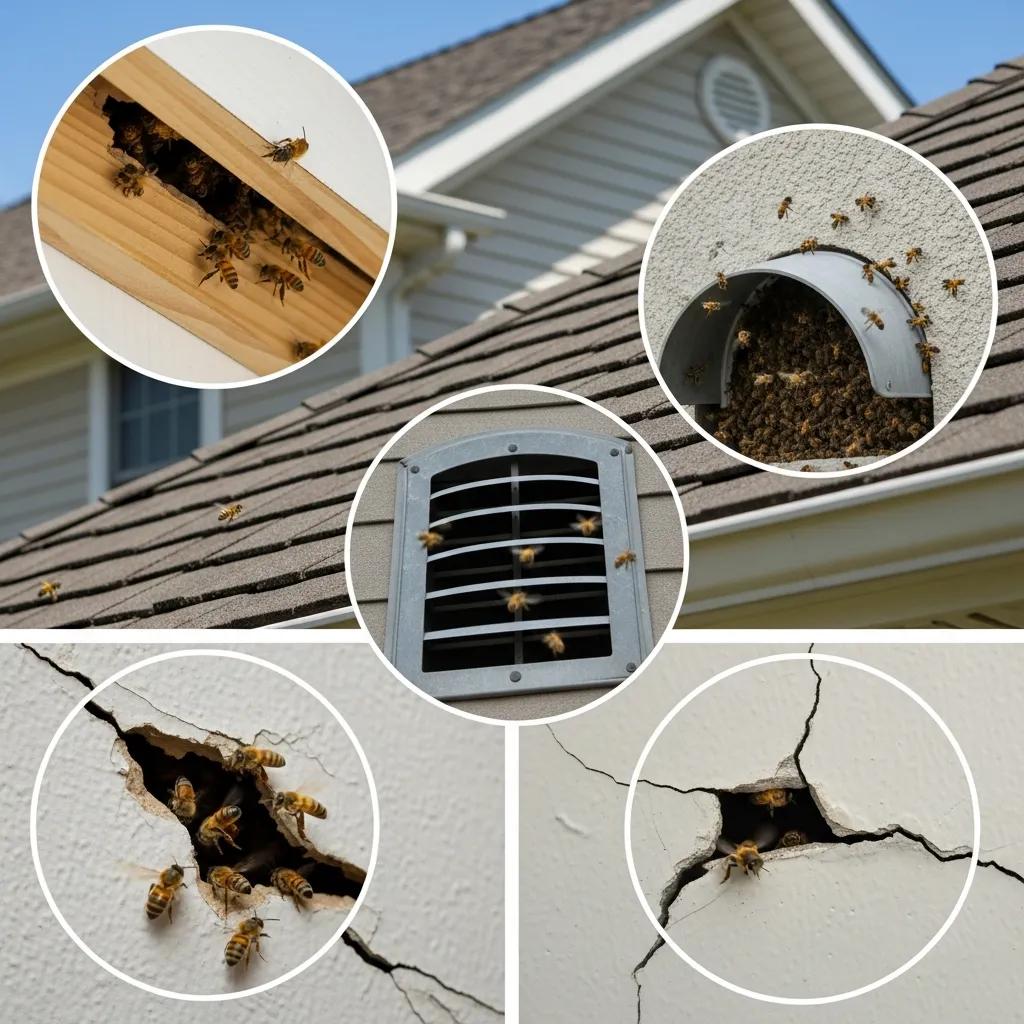
Bees most often take advantage of small gaps and sheltered cavities—soffits, eaves, roof vents, damaged flashing, wall cracks, and chimneys all make attractive entry points because they offer dry, protected space for comb. The process is straightforward: a tiny opening leads into a void where a colony establishes itself, and as the hive grows the added weight and honey seepage produce visible symptoms. Early detection usually saves a lot of time and money because smaller hives are cheaper and easier to remove and less likely to cause mold or structural failure. Below are the typical entry points and diagnostic cues to help homeowners decide when to inspect or call a pro.
Common entry points and diagnostic signs include:
- Soffit and eaves gaps: Tiny openings under eaves where bees come and go.
- Roof vents and flashing gaps: Sheltered seams and vent cavities bees will exploit.
- Wall cracks and damaged siding: Narrow portals that lead straight into wall cavities.
- Audible buzzing and concentrated bee traffic: Repeated flights to one spot usually mean a nearby nest.
- Sweet, fermented odors and yellow-brown stains: Strong indicators of honey seepage behind surfaces.
Use these markers as a practical checklist to decide whether to investigate further or contact a professional before damage gets worse.
How Do Bees Enter and Nest in Roofs, Attics, and Wall Cavities?
Bees get in through hairline gaps, failing caulk, unsealed vents, and damaged soffits; once inside they prefer cavities that stay dry and sheltered from direct rain. Colonies often start small—just a few thousand bees—and build comb outward into whatever voids they find between rafters or studs. Over weeks and months the comb fills with honey and wax, increasing weight and putting pressure on framing, insulation, and drywall. Knowing how nests grow helps you prioritize inspections around vulnerable details and avoids surprises like ceiling collapses when panels are removed.
What Are the Key Signs of Bee Activity in Your Home’s Structure?
Look for these key signs of bee activity:
- A concentrated flight path to a single spot.
- Steady buzzing inside walls or ceilings.
- Staining on exterior siding under eaves.
- A sweet, fermented smell in enclosed areas, indicating honey fermentation.
- Soft spots in ceilings, sagging drywall, or damp insulation (interior signs).
Catching these signs early keeps comb growth manageable and reduces the chance of secondary pests like ants and rodents moving in. When several signs appear together, it’s time to schedule a professional inspection to avoid hidden structural losses.
How Do Bees Cause Structural Damage to Roofs, Attics, and Walls?
Bees damage structures in three main ways: the weight of accumulated comb causes deflection and sagging, honey seepage soaks wood and drywall and promotes rot and mold, and carpenter bees tunnel through wood removing material from structural members. These mechanisms combine to weaken framing, lower insulation R-value, and invite secondary moisture and pest problems that make repairs more complex. Recognizing each damage mechanism clarifies whether a job needs a simple patch or structural reinforcement. The comparison table below summarizes typical mechanisms and their immediate effects on roof and attic components.
The following table compares damage mechanisms and immediate effects in roof and attic areas.
| Component Affected | Damage Mechanism | Typical Effect |
|---|---|---|
| Honeycomb in rafters | Added static weight | Rafter sagging or joint stress |
| Honey seepage under shingles | Moisture penetration | Deck staining and wood rot |
| Attic insulation | Saturation with honey/wax | Reduced R-value and odors |
| Ceiling drywall | Honey migration | Staining, softening, collapse |
What Roof Damage Results from Honeycomb Weight and Honey Seepage?
The weight of comb puts downward force on rafters and joints and can cause visible sagging—especially where joists are already undersized or stressed. Honey tracks along seams and penetrations and can eventually seep under shingles or into roof decks, where moisture contact speeds rot and mold growth. Short-term responses are temporary shoring and removing heavy comb; long-term fixes may include sistering rafters, replacing sheathing, and resealing flashing. Watch for localized roof sag, wet stains on attic framing, and honey stains on exterior eaves as the earliest signs.
How Does Bee Infestation Affect Attic Insulation and Ceiling Stability?
When honey and wax saturate insulation, it loses thermal performance and becomes a substrate for mold, which reduces energy efficiency and can harm indoor air quality. Heavy, saturated insulation can also press up on ceiling panels from below, increasing the risk of sagging or partial collapse if comb sits above the ceiling plane. Cleanup usually requires full removal of contaminated insulation, targeted deodorization, and replacement to restore R-value and eliminate mold risk. Addressing insulation and ceiling issues early prevents broader structural repairs and reduces pest attraction caused by lingering honey.
What Types of Damage Do Bees Cause Inside Walls and How Are They Repaired?
Inside walls, honeybee comb can fill cavities and release honey that stains and softens drywall and feeds mold, while carpenter bees bore tunnels that remove wood and weaken studs or siding. These problems need different priorities: comb and honey require thorough removal and mold-safe cleaning, while tunneling often means replacing or reinforcing damaged framing or siding. Effective repairs balance containment, decontamination, and structural restoration so reinfestation and long-term decay are prevented. The repair-cost table below outlines common wall damages, typical repairs, and ballpark cost ranges to help homeowners plan.
| Damage Type | Typical Repair | Estimated Cost Range |
|---|---|---|
| Honeycomb in cavity | Remove comb, clean honey, replace drywall & insulation | $400–$2,000 |
| Drywall staining/softening | Cut out affected drywall, treat framing, replace panels | $300–$1,200 |
| Mold from honey moisture | Mold remediation, HEPA cleaning, anti-microbial treatment | $500–$3,000 |
| Carpenter bee tunnels | Replace or sister affected studs/siding, seal entry points | $250–$1,800 |
How Does Honeycomb and Carpenter Bee Tunneling Damage Drywall and Wood Studs?
Honeycomb deposits push against and introduce moisture into drywall cores, causing delamination, staining, and eventual collapse when gypsum softens. Carpenter bees create clean tunnels through siding and studs, removing structural material and increasing deflection risk under load. Both issues can interfere with wiring and insulation, creating electrical hazards and reducing thermal performance. In practice, honey-driven wall failures often need cavity access, complete honey extraction, and mold-safe drying, while tunneled studs sometimes need partial or full replacement to restore proper load paths.
What Are the Repair Solutions for Wall Damage from Bees?
Repairs start with full hive extraction and thorough honey cleanup to stop ongoing moisture damage, followed by drying, mold treatment when required, and replacement of compromised insulation and drywall. Structural fixes range from drywall patches and cavity insulation to sistering or replacing studs and reinforcing framing where tunneling occurred. Sealing entry points and adding vent screening finishes the job and reduces reinfestation risk. Homeowners should call licensed contractors for structural or mold-related work and leave small drywall touch-ups to skilled handymen only after a professional clearance.
How Can Professional Bee Removal Prevent Further Damage and Save Repair Costs?
Professional removal stops ongoing honey deposition, lowers mold risk, and eliminates energy losses from contaminated insulation—so homeowners often save money by avoiding repeated or escalating repairs. A coordinated approach—inspection, humane removal, thorough honey and wax cleanup, then repair planning—cuts the number of trades needed and shortens the total restoration timeline. Pros also spot hidden framing or utility damage homeowners might miss, preventing costly surprises during future renovations.
Key service steps and their benefits include:
- **Full inspection:** Prevents missed hidden comb, ensuring an accurate scope and avoiding surprises.
- **Humane extraction:** Stops ongoing moisture damage by removing remaining honey and wax.
- **Cleanup & deodorization:** Reduces remediation needs by preventing mold and pests.
- **Repair coordination:** Consolidates costs and time by preventing repeated repairs.
Although this article focuses on homes, commercial buildings can suffer similar or greater damage from bee infestations. Commercial bee removal services address the special challenges of larger structures and aim to keep business disruption to a minimum.
What Is Eli the Bee Guy’s Humane Removal and Repair Process?
Eli the Bee Guy starts with targeted inspections to find comb and assess structural exposure, then uses humane live-removal methods to relocate colonies to caring apiaries instead of exterminating them. After extraction the workflow includes careful honey and wax cleanup, recommendations for insulation replacement or drywall repair where needed, and sealing entry points to prevent reinfestation. The service prioritizes transparency—no hidden fees—offers free inspections and quotes, and can arrange same-day help in urgent situations, including 24/7 support for life-threatening allergic emergencies. If you want a free inspection or same-day service, Eli the Bee Guy invites homeowners in Southern California to request a quote through the usual contact channels on the site.
What Real Job Examples Show Successful Bee Damage Removal and Repairs?
Below are anonymized summaries of real jobs that show outcomes and cost savings from prompt professional work. Bee removal services.
- Attic hive near Los Angeles County: Large comb removed before ceiling collapse; insulation replaced and a joist sistered, avoiding a full roof deck replacement and saving thousands.
- Wall cavity honey in Orange County: Comb removal and mold-safe cleanup allowed targeted drywall and insulation replacement, reducing overall remediation compared with delayed detection.
- Carpenter bee tunnels in Ventura County siding: Localized stud replacement and siding reinforcement stopped progressive wood loss and eliminated ongoing structural weakening.
Each example shows how humane removal, immediate cleanup, and targeted repairs stop cascading failures and lower total restoration costs compared with partial or delayed fixes.
Eli the Bee Guy provides humane live bee removal and relocation to caring apiaries, safe non-toxic wasp control, and professional repairs across Southern California, including Los Angeles, Orange, Riverside, San Bernardino, and Ventura Counties. If you suspect active bees and want a free inspection or same-day service to stop damage quickly, request a quote or inspection to get an accurate scope and repair plan.
To address a bee infestation and prevent damage: FAQs for bee removal services
- Call for a free inspection: Request a professional assessment to find hidden comb.
- Choose humane removal: Live relocation protects pollinators while removing the colony.
- Schedule cleanup and repairs: Coordinate cleanup, insulation replacement, and structural repair to restore integrity.