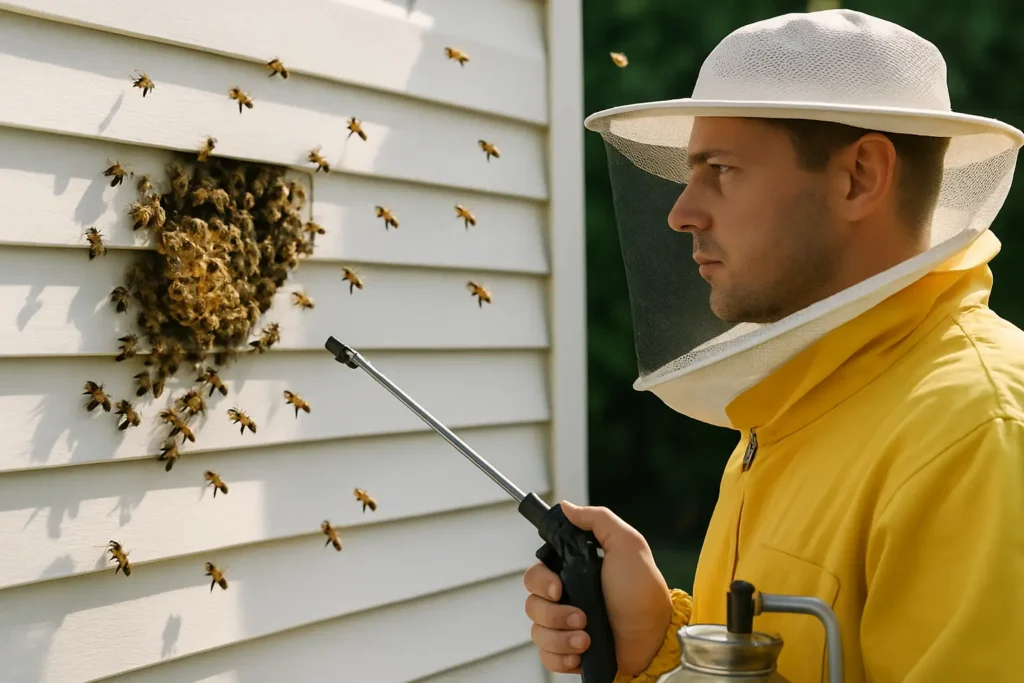
A normal afternoon in Los Angeles can turn into a full-stop emergency fast: you hear a deep, steady buzzing behind a wall, or you step outside and find a tight cluster of bees hanging from a tree limb near your front door. Maybe a tenant calls because bees are pouring in through a light fixture. The situation feels chaotic—especially if someone in the building has a severe allergy.
Emergency bee removal isn’t just about getting bees “gone.” It’s about restoring peace and home, protecting people, and doing it in a way that doesn’t punish a vital pollinator for doing what bees naturally do. Here’s how to tell what you’re dealing with, what to do in the first minutes, and what a real, lasting solution looks like in Los Angeles.
When “emergency” bee removal is truly an emergency
Not every bee sighting needs lights-and-sirens response. In Southern California, it’s common to see bees around flowering plants, fruit trees, or outdoor trash cans. That’s not an emergency; it’s just nature.
It becomes an emergency when the risk of stings or property damage rises quickly. The clearest red flags are a hive in or on a structure (walls, attics, soffits, roofs, eaves, chimneys), heavy bee traffic through a single crack or vent, or bees inside living spaces. The urgency jumps again if the bees are in a high-traffic area like a school walkway, apartment stairwell, loading dock, patio dining area, or a backyard where kids and pets play.
Allergies change the math. If anyone on-site has a known anaphylactic allergy, a “small” problem can become urgent because a single sting can turn medical fast. In those cases, treating the situation as emergency bee removal in Los Angeles is reasonable even if the hive is not huge.
Swarm vs. hive: the difference that changes everything
A swarm is a temporary cluster of bees—often the size of a football to a beach ball—resting while scout bees look for a new home. Swarms can look dramatic, but they’re typically less defensive than an established colony because they don’t have brood or stored honey to protect. In many cases, a swarm may move on within hours or a day.
A hive (established colony) is different. If bees are repeatedly coming and going from a specific opening, they’ve chosen your building as home. Once they begin building comb inside a wall or attic, they can expand quickly. That’s when you’re not only dealing with stings—you’re dealing with structural mess: honey seepage, stained drywall, odors, and pests attracted to leftover comb.
This is why “wait and see” works sometimes for a swarm but is risky for a hive. If you’re unsure which you have, treat it cautiously and get a professional assessment.
What to do right now (and what not to do)
If you need emergency bee removal in Los Angeles, the first goal is simple: reduce contact between bees and people. Close doors and windows near the activity. Keep kids and pets indoors. If the bees are inside, isolate that room if possible and avoid turning on bright lights at night that can draw them toward windows.
Try not to “test” the bees by poking the cluster or spraying water. Agitating bees can flip a manageable situation into a defensive one, especially if the colony is established. And while it’s tempting to reach for a can of pesticide, chemical sprays are a bad trade-off in most home and commercial settings. They can drive bees deeper into wall voids, leave you with dead bees and comb you still need to remove, and create exposure issues for people and pets.
Also avoid sealing the entrance as a quick fix. Blocking the entry point traps bees inside, and they will look for alternate exits—often into living spaces. Even worse, if the colony dies inside the structure, you’re left with comb, honey, odor, and secondary pests.
If someone is stung and has difficulty breathing, swelling of the face or throat, widespread hives, dizziness, or vomiting, treat it as a medical emergency and call 911. Bee removal can’t wait on a health crisis.
Why Los Angeles properties are prone to urgent bee calls
Los Angeles has long stretches of mild weather, extended bloom seasons, and plenty of irrigated landscaping even during dry months. That means forage—nectar and pollen—can be available much of the year, which supports strong colonies.
At the same time, our buildings offer countless attractive cavities: stucco cracks, gaps around rooflines, older soffits, attic vents, and wall voids warmed by the sun. A small opening can be enough. Once bees start using it, they’ll return and reinforce the scent trail.
For commercial properties and multi-unit housing, the stakes are higher. One hive near an entrance or breezeway becomes a liability issue quickly. So “emergency” often reflects the location and exposure, not just the size of the colony.
What professional emergency bee removal should include
A real solution is more than removing visible bees. The goal is to rescue the bees when possible, remove the colony and comb, and prevent re-occupation so you’re not repeating the same emergency a month later.
1) Safe, humane live removal whenever possible
Bees are essential, and many clients in Los Angeles want a solution that protects people without wiping out pollinators. Humane removal focuses on relocating the colony alive to a suitable apiary where it can continue natural behaviors. This approach is especially meaningful when you’re dealing with a healthy colony that simply chose the wrong address.
There are scenarios where conditions, access, or safety constraints affect what’s possible. But when live removal is feasible, it’s the most ethically sound option—and often the cleanest long-term approach.
2) Full hive extraction (not just “moving the bees”)
If bees have built comb inside a wall or attic, removing only the adult bees leaves the real problem behind. Wax comb and honey can melt in heat, seep through drywall, and attract ants, roaches, moths, and rodents. Odor can linger and invite new swarms.
Full extraction means removing comb and addressing the interior space so the structure isn’t left as a ready-made hive cavity.
3) Entry-point repair and prevention
The difference between a temporary fix and peace restored is what happens after the bees are removed. A professional should identify how the bees got in and repair or recommend repairs that close the loop—sealing gaps, reinforcing vulnerable points, and making the site less attractive for future colonies.
This step matters in Los Angeles because bee pressure can be steady through warm seasons. If the entry point remains open, the next swarm scouting for housing may choose the same spot.
Common emergency situations we see in Los Angeles
Wall hives are a frequent culprit: steady streams of bees entering a small crack along stucco, fascia, or near a window frame. People often notice it only after the colony has grown—when buzzing becomes audible indoors.
Attic colonies show up when bees find an open vent or a gap at the roofline. In commercial settings, rooftop HVAC areas can attract bee activity, and tenants may only see the spillover near stairwells or doors.
Outdoor swarms are common in spring and early summer, but they can occur whenever colonies split. They often appear on trees, fences, patio furniture, or parked vehicles. The best response is to keep distance and arrange removal before the swarm relocates into a wall or roof void.
How fast should you act?
If bees are inside occupied areas, if the hive is at an entrance, or if someone on-site has severe allergies, act the same day. The risk profile is simply too high.
If it’s an outdoor swarm away from foot traffic, you may have a little time—but waiting is a gamble. A swarm that rests on a branch today can be inside a wall tomorrow. When that happens, removal becomes more invasive and more expensive.
What it means to handle bees ethically
Ethical bee work isn’t just a marketing phrase. It means approaching the situation with respect for the colony and the environment while still prioritizing human safety. It also means not leaving behind comb and honey that create more problems for the homeowner later.
In practice, ethical removal typically looks like calm handling, careful extraction, relocating viable colonies to vetted apiaries, and taking prevention seriously so you don’t end up in a cycle of repeat calls. If you’re looking for that approach, Eli the Bee Guy focuses on safe, humane live removals, full hive extractions, and entry-point repairs so your space can feel normal again.
FAQs that come up during emergency calls
Will the bees leave on their own? A swarm might. An established hive almost never “just leaves,” especially once comb is built. Even if adult bees are removed or die off, the leftover comb remains a magnet for pests and future bees.
Are all bees aggressive? No. Defensive behavior depends on the species, the presence of brood, weather, vibration, and how close people get to the entrance. A calm-looking hive can become defensive if disturbed.
Is smoke or DIY spray a good idea? For emergencies, no. Smoke and sprays can agitate bees or push them deeper into structures. Sprays also create cleanup and exposure issues. The safest path is creating distance and getting professional help.
Why can’t I just seal the hole after dark? Because bees may be inside and will seek alternate exits—often into interior rooms. Sealing can also trap comb and honey inside the wall, creating odor and pest problems.
If you’re dealing with emergency bee removal in Los Angeles, you don’t need to choose between safety and doing the right thing for the bees. The best outcomes happen when you slow the situation down—create distance, avoid quick chemical fixes, and bring in someone who can remove the colony fully and prevent a return. When the buzzing stops and the entry points are secured, the goal is simple: peace restored, and bees rescued to a better home.