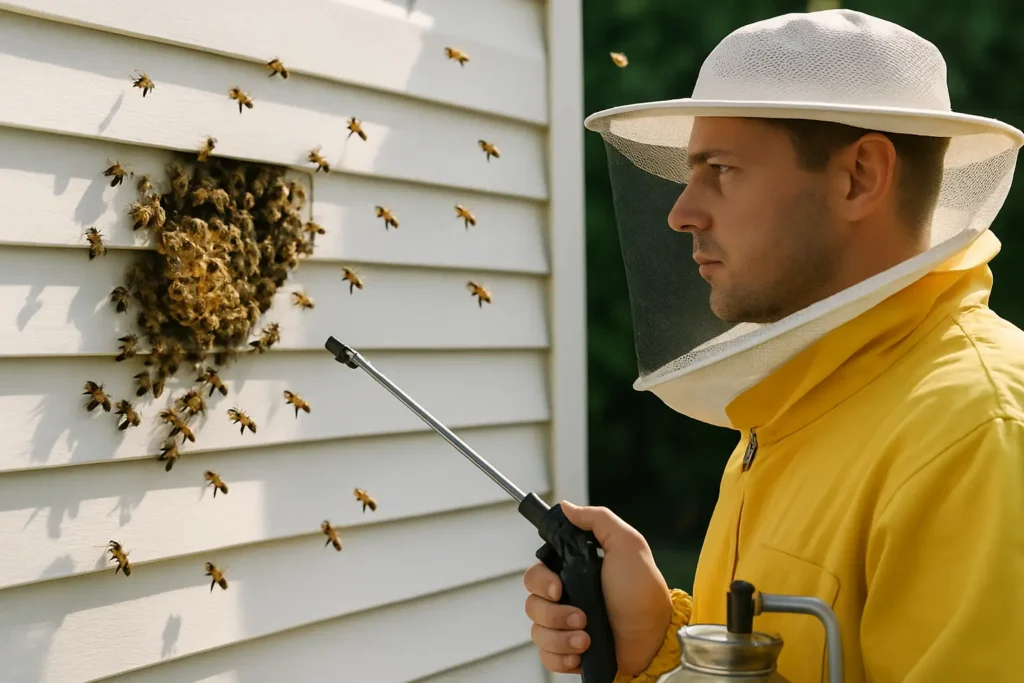
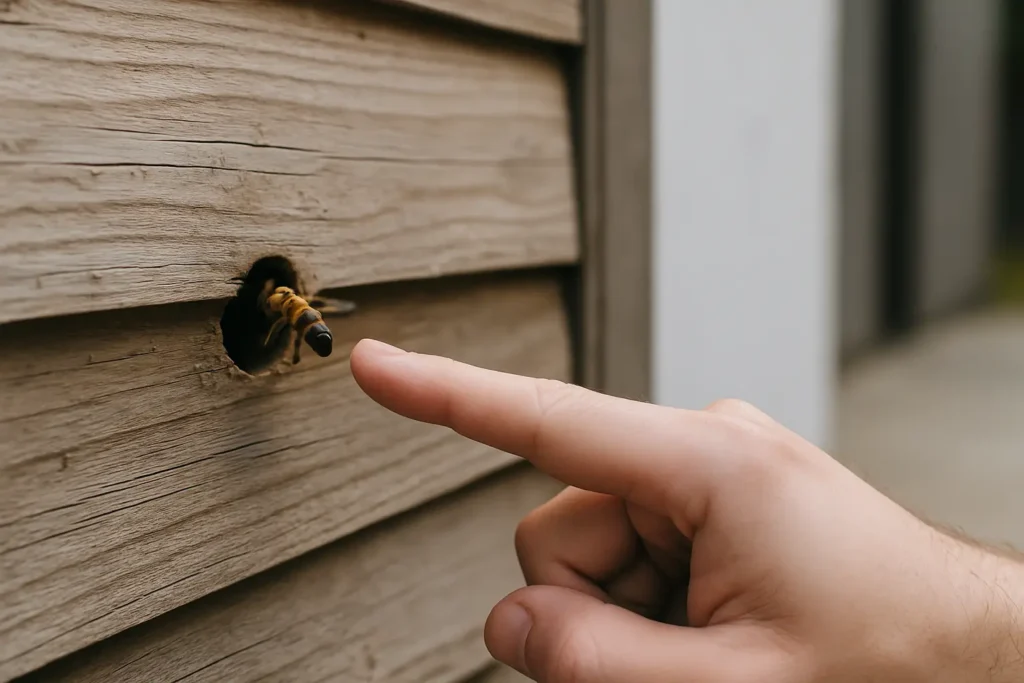
That low, steady hum in a wall or the sudden swirl of a swarm in the yard can flip a normal day into a high-stakes decision. If you manage a property in Southern California, you are not just thinking about bees – you are thinking about tenants, liability, kids and pets, allergies, and how fast this problem can get worse.
The phrase people search for is “bee removal vs extermination,” but the real choice is usually simpler: do you want a permanent fix that protects people and avoids creating a bigger mess, or do you want the fastest stopgap and accept the trade-offs? The best answer depends on what kind of bee you are dealing with, where they are nesting, and what “safe” means for your household or site.
Bee removal vs extermination: the real difference
Live bee removal is the process of taking a colony out of a structure or off a property and relocating it so the bees can continue their natural behavior somewhere appropriate. Done correctly, it focuses on full hive extraction: the bees, the comb, and the stored honey are removed, and then the entry points are repaired so the colony (or a new one) does not move right back in.
Extermination is the deliberate killing of the colony, typically with insecticides or dusts. In some cases it is marketed as “treatment” or “spraying,” but the goal is the same – eliminate the bees where they are.
Here is the part many people do not realize until after the fact: killing bees in a wall does not remove the hive. The comb, brood, and honey stay behind. That can lead to odor, stains, pests, and even fermentation that seeps into drywall. You may end up paying twice – once to kill, and again to clean out the structure and fix what the bees were living in.
Why removal is usually the more permanent solution
If bees have moved into a wall, soffit, attic, or eave, they did not pick that spot randomly. They found a protected cavity with a usable entrance. If that cavity stays intact and still smells like hive, it can attract new swarms in the next season.
A true removal addresses the cause, not just the symptom. That means eliminating the colony safely, removing the comb and honey, and then closing and repairing the entry point. When that full sequence happens, you restore peace and home – and you dramatically lower the odds of re-occupation.
Extermination, on the other hand, often stops flight activity quickly, which feels like “problem solved.” But without removing the hive material, you can be left with a hidden cleanup problem that shows up days or weeks later.
When extermination gets considered (and why it is complicated)
There are situations where people consider extermination because they are afraid, they have a severe allergy in the home, or they need immediate risk reduction for customers and staff. Those concerns are valid. Safety comes first.
The complication is that extermination can create its own safety and property risks. Agitated bees may become more defensive during chemical application. If the colony dies inside a wall, other insects can move in. Ants, roaches, and wax moths are not rare follow-on problems. Honey can melt and run when temperatures rise, which is not unusual in Southern California.
Also, not everything that looks like a “bee problem” is actually honey bees. Yellowjackets and paper wasps are different insects with different nesting habits. If the insect is not a honey bee, relocation may not be feasible or appropriate, and the control approach can change.
Swarm vs established hive: your next move depends on this
A swarm is a temporary cluster of bees, often hanging from a branch, fence, or the side of a building. Swarming bees are typically on the move, looking for a new home. They do not have comb built inside your structure yet.
An established hive is a colony that has moved into a cavity and built comb. You may notice consistent traffic in and out of a single opening, staining around an entry point, or a persistent hum behind a surface.
Swarm situations are often the easiest to resolve humanely, and fast action matters. If a swarm is removed quickly, you can often prevent it from becoming an established hive inside a wall.
Established hives take more work and usually require opening the area where the colony is living to remove the comb and properly clean the cavity. That is where “quick spray” solutions tend to backfire, because the physical hive remains.
What property managers should think about: liability and repeat calls
If you manage apartments, retail spaces, warehouses, or offices, the decision is not just personal preference. It is risk management.
Live removal with entry-point repair is usually the most repeatable, defensible approach because it aims to solve the underlying access issue. If a tenant or customer is stung after a chemical-only treatment that left attractants behind, you can be dealing with a second incident that feels avoidable.
A professional removal also gives you clearer documentation of what was done: where the colony was located, what was removed, what repairs were completed, and what future prevention steps were recommended. That matters when multiple stakeholders are involved.
Allergies, kids, pets: how to prioritize safety without panic
If someone in the building has a history of severe allergic reactions, you should treat any active hive as urgent. That does not automatically mean extermination is the safest route. The safest route is the one that reduces sting risk while the problem is being addressed and prevents it from recurring.
In practical terms, that usually means restricting access to the area, keeping pets indoors, and avoiding vibrations near the nest site until a professional arrives. Attempting a DIY spray can push defensive bees into living spaces or cause them to spread to new voids inside the structure.
If a hive is near a doorway, playground, pool equipment, or a high-traffic walkway, a fast professional response is especially important. The goal is to reduce risk immediately and restore normal use of the space as soon as possible.
The hidden costs of extermination inside structures
People often compare the cost of removal to the cost of extermination without factoring in what comes next.
If bees are killed in a wall and the comb is left behind, you can see:
- Odor from dead bees and fermenting honey, especially during warm spells
- Staining that spreads through drywall, plaster, or ceilings
- Secondary pests drawn to honey and brood
- Sticky seepage that can damage insulation and finishes
- A new swarm moving back in because the cavity still smells like a hive
When you add up repair work, pest follow-ups, and tenant disruption, the “cheaper” option can become the expensive one.
What humane removal looks like when it is done right
Humane removal is not just “catch some bees.” It is a sequence designed to protect people and rescue the colony.
First comes correct identification and location. Then the bees are removed in a controlled way, the comb is extracted, and the cavity is cleaned as much as practical. Finally, the access points are sealed and repaired so the space is no longer inviting.
Relocation also matters. Moving bees to a vetted apiary gives them a chance to continue healthy colony behavior rather than being dumped somewhere they cannot survive. That is the ethical difference homeowners often care about, and it is also a practical difference – responsible relocation reduces the chance that stressed bees end up becoming a problem somewhere else.
If you want a local, ethical option for live removals and full hive extractions across Southern California counties, Eli the Bee Guy focuses on safe relocations and entry-point repairs so peace and home can be restored without unnecessary harm to the bees.
How to decide quickly: a calm checklist in your head
You do not need to be an expert to make the right call, but you do need to recognize what you are looking at.
If you see a hanging cluster that appeared within the last day, it is likely a swarm. Keep distance and arrange removal soon so it does not move into a wall.
If you see steady traffic into a crack, vent, or roofline for multiple days, assume it is an established hive. At that point, prioritize full removal over surface treatments. Ask whether the provider is removing the comb and honey and whether they will close the entry point afterward.
If you are unsure whether they are honey bees or wasps, do not guess. A misidentification can lead to the wrong approach and a worse outcome.
Prevention after the bees are gone
Bees are excellent at finding gaps you did not know existed. After removal, prevention is mostly about denying access.
Sealing openings around rooflines, repairing damaged vents or screens, and addressing gaps where pipes or cables enter the building can make a major difference. In many cases, simple repairs are what turn a one-time event into a solved problem.
If you have had bees more than once, ask for an inspection mindset, not just a removal. The question is not only “where are the bees today?” but “why do they like this structure, and how do we keep it from happening again?”
A decision that protects both people and pollinators
Bees can feel like an emergency because they can be an emergency – especially around high traffic areas or when allergies are involved. But the choice between removal and extermination is not just about getting rid of a nuisance. It is about choosing the approach that keeps your property safe, avoids hidden damage, and respects a species that plays a real role in our food system.
If you are standing in your yard right now watching bees come and go from a wall, the most helpful next step is also the simplest: keep your distance, keep others away, and get a professional assessment focused on full hive extraction and repair. When the job is done right, you get your space back – and the bees get a new home where they belong.