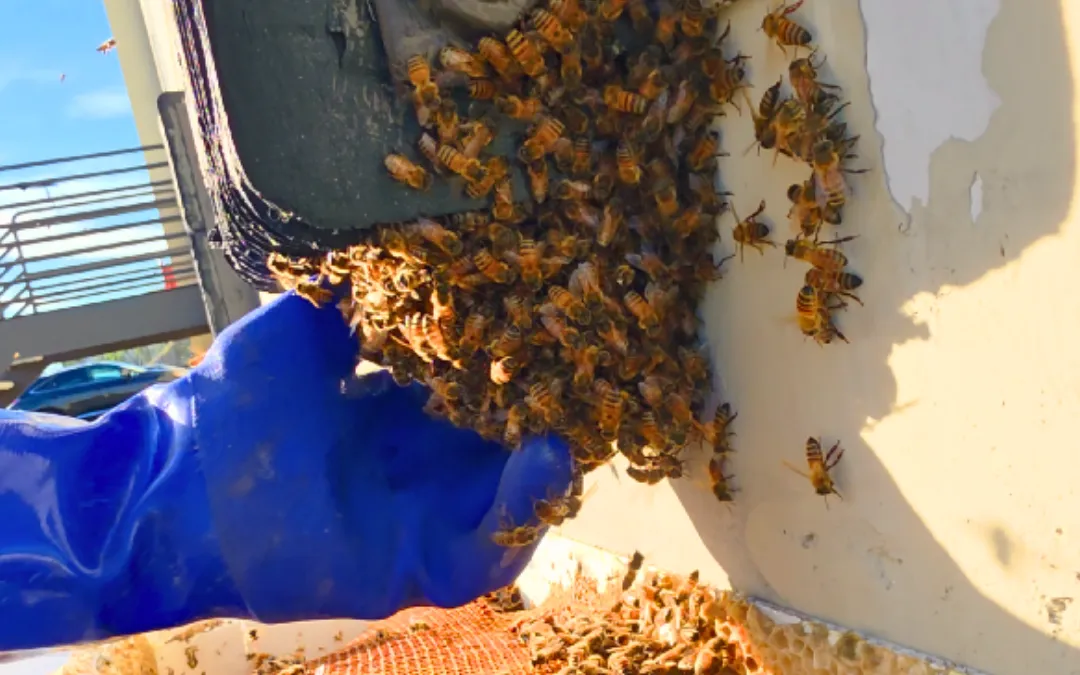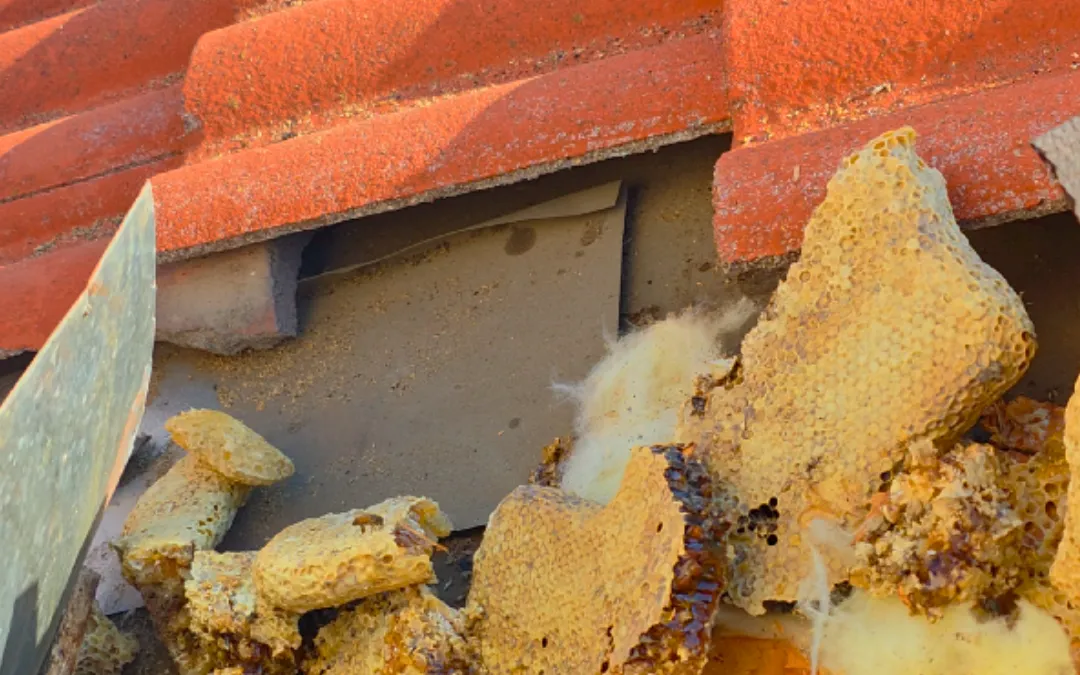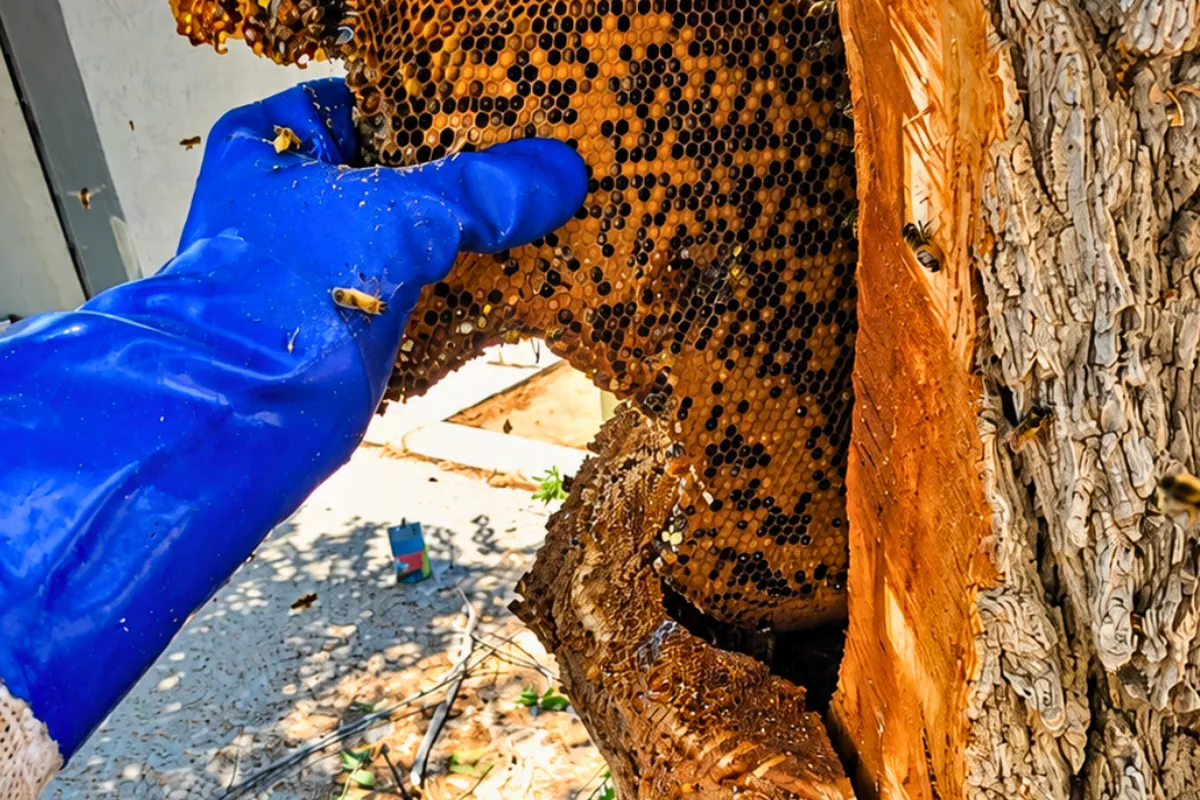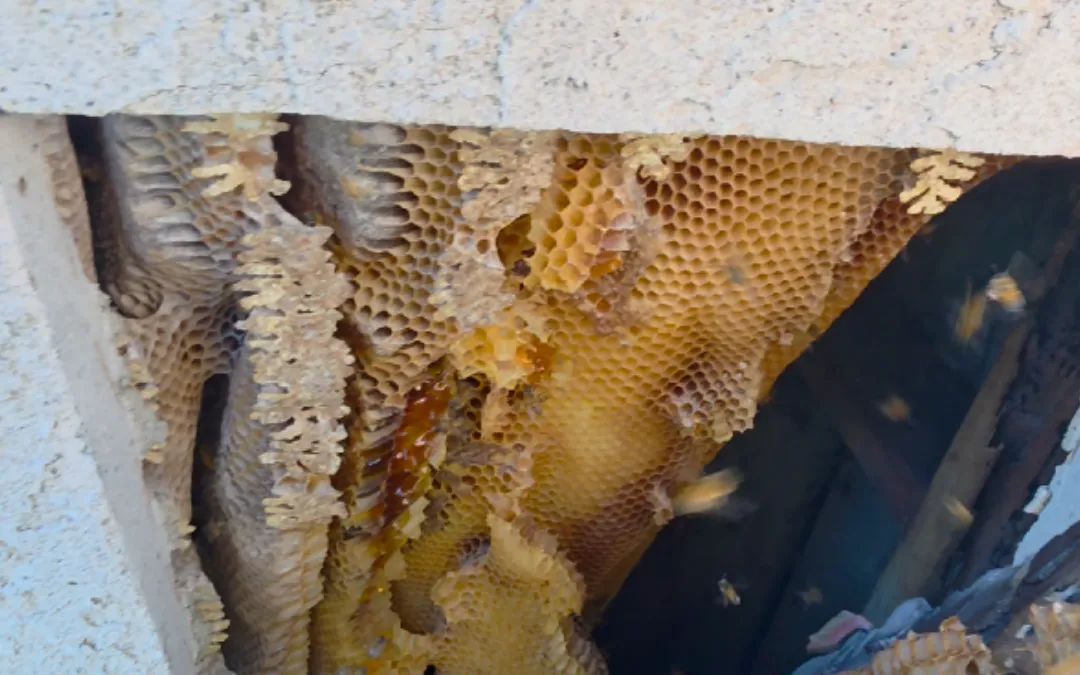
Bee problems don’t usually start with bees everywhere. They start with one crack nobody noticed, where a steady line of workers starts going in and out. It’s quiet and out of sight, until there’s a lot of buzzing behind a wall.
That’s why entry-point bee prevention methods are worth knowing. Bees aren’t the bad guys here. A house or business just isn’t a good place for a colony to build. You want your walls back, and the bees should come out of it alive.
Why bees choose certain entry points
Honey bees aren’t trying to break in. Scout bees go looking for a protected cavity that stays dry, holds heat and has an opening they can defend. Southern California buildings give them a lot of choices: stucco weep screeds, gaps along the roofline, old fascia boards and vents with nothing over them.
Once the scouts pick a spot, the colony moves in for keeps. After that, quick fixes like spraying or plugging the hole can backfire. The bees may find another way out into the building, and if there’s brood and honey inside, you can end up with odors, stains or other pests moving in after the bees die or leave the comb.
Entry-point bee prevention methods that actually hold up
No single product or afternoon of work does it. Good prevention means getting rid of whatever draws them, closing off the way in, and still keeping the building ventilated the way code requires. This is how it works in practice.
Start with observation, not panic
Before you seal anything, spend a few minutes watching. Are bees going in and out of one spot over and over, especially on warm days? That’s a strong sign there’s an active colony in a void. If you see a cloud of bees bunched up on a branch, that’s more likely a swarm resting for a while.
It matters which one it is, because prevention and repair should come after the bees have been removed properly. Seal an active entrance and you can trap bees inside, and then they’re more likely to turn up somewhere you really don’t want them, like an inside light fixture or a wall outlet.
Seal the “usual suspect” gaps carefully
Most entry points in a structure are small. A 3/8 inch gap can be enough for bees. The hard part is sealing it so the seal survives heat, sun and the building moving.
Where stucco meets siding, a good exterior sealant can work if the gap is stable and dry. Along rooflines and fascia, caulk usually isn’t enough. If there’s rot or warping, it has to be fixed or the gap opens back up. Where two materials meet (wood and stucco, metal flashing and wood), they expand and contract at different rates, so flexible sealant and flashing that’s fastened right will last longer than a brittle patch.
If you’re not sure a gap is inactive, assume it isn’t. Better to check first than make a bigger problem by sealing the wrong opening.
Upgrade vents and screens, don’t “block airflow”
Bees get in through attic vents, gable vents, roof vents and bathroom exhaust outlets all the time. What you want here is something that keeps bees out and still lets the building breathe.
Metal screening (hardware cloth) with the right mesh size usually works well because it holds up to chewing and weather. How it’s installed matters as much as what it’s made of. Screens have to be secured so strong wind can’t pull them loose, and framed or fastened cleanly so the edges don’t curl.
Dryer vents and exhaust outlets need a damper that works. A vent cover that’s broken or stuck open is an open door. Don’t stuff vents with foam or other filler, though. That can cause moisture problems and may break building code.
Address roofline and eave vulnerabilities
Southern California heat and sun wear out roofing parts faster than most people expect. Small separations at the eaves, missing bird stops, gaps near the returns and flashing that doesn’t fit right can all turn into entry points bees use again and again.
If you’ve had roof work done, check the edges afterward. Roofers aren’t careless; a bee-sized gap is just too small to notice unless you’re looking for it. A slow, careful walk around the perimeter catches a lot, especially where the roof meets stucco or fascia.
Don’t ignore “attractants” around the structure
Holes are only part of it. Certain conditions draw bees in, and if you cut those down, scouts are less likely to zero in on your property.
Old comb is a big one. If a colony lived in a wall void before and the comb never came out, that smell can keep pulling bees back year after year. Standing water with minerals in it is another, because bees collect water to cool the hive and for other jobs inside. Leaky irrigation, a dripping hose bib or a spot that’s always damp can turn into a bee highway.
Fruit trees bring bees around too, which is usually good out in the yard. When overripe fruit drops and ferments next to the building, though, you’ll get more bees around doors, patios and the spots where utilities come through the wall. Picking up fallen fruit and keeping bins closed keeps them out in the yard and away from your eaves.
Use timing to your advantage
Around here, bees get busier in warm stretches and during spring swarm season. Don’t go sealing blindly in the middle of peak activity. Get the routine outside maintenance done ahead of time: screens, sealant and fascia repairs, before there’s a problem.
If you manage commercial properties, put a bee exclusion check on the seasonal maintenance list next to the roof inspection and HVAC service. It costs a lot less than opening walls later.
When prevention becomes repair: the re-occupation problem
A lot of property owners find out the hard way that removal and prevention are two different jobs. Even after the bees are safely out, the original entry point is usually still there. Leave it open and scouts can find it again.
Real prevention covers:
- Closing the exact entrance the bees used, and not only the gaps near it
- Making sure no other exits are still open (bees often have more than one)
- Dealing with any scent left from old comb, when there is some
If you know there used to be a hive in that spot, the last one matters most. Otherwise you can get rid of today’s bees and still get tomorrow’s scouts.
DIY vs. professional help: where the line is
Some entry-point bee prevention methods are fine for a handy homeowner: replacing torn screens, putting on vent covers, sealing small cracks you know are inactive during the slow season, and keeping plants trimmed back from the roofline.
In some situations, though, calling a professional is safer and better for the bees.
If bees are actively using an entrance
A steady stream going in and out usually means there’s a colony inside. Don’t seal it, spray it or set off any kind of “repellent.” Besides the risk of pushing bees into the living space, chemicals can hurt other pollinators and usually don’t fix the real problem anyway.
If the entrance is high, steep, or requires opening structures
Roof peaks, second-story eaves and attic work come with fall risk and electrical hazards. When getting the bees out means cutting into stucco, soffits or drywall, the job is as much construction as bee work.
If allergies or high-traffic areas are involved
If someone in the family has a sting allergy, or the property has customers, tenants or employees, you need the job done quickly and under control. A DIY attempt that might not work adds risk when the whole point was to reduce it.
If you need humane removal and then the entry points sealed so bees don’t move back in, that’s the work I do at Eli the Bee Guy across the Southern California counties I cover. You can learn more at https://elithebeeguy.com/.
What “humane prevention” means in practice
It’s fair to ask whether prevention can be ethical. It can, if you respect the job bees do in the environment and don’t make them suffer for no reason.
In practice, that means you don’t poison a colony in a wall and walk away, and you don’t trap bees in a void with no way out. When a colony is already established, you get it relocated to a responsible apiary first.
It also means being realistic. Sealing up a house won’t mean you never see a bee in the yard again, and you shouldn’t want that. Bees belong in our landscapes. What you’re after is no more nests in the structure and no repeat infestations.
A simple way to think about your next step
If you see a bee now and then around the flowers, enjoy it from a distance. It’s doing its job.
If you see bees going steadily and purposefully into a crack, vent or gap at the roofline, treat it as what it is: a way into your building that can turn into a big problem quickly. Get the bees out safely first, then close the entry point properly.
Done in that order, you get quiet walls, and the bees get a home somewhere better suited to them than the inside of your house.
Like these guides? Add Eli the Bee Guy as a preferred source on Google to see more of them in your search results.