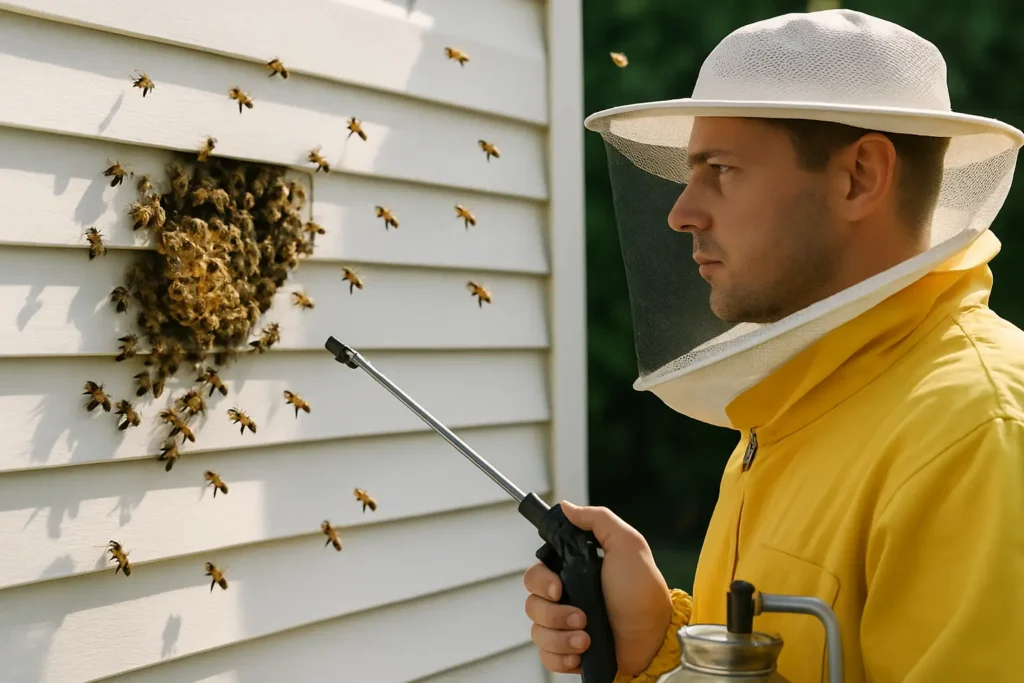
A swarm on a tree branch can look calm – until it moves into a wall, a soffit, or a busy entryway. That is usually the moment homeowners and property managers start asking two questions at once: “How fast can this be handled?” and “What am I allowed to do legally?” In California, the answer depends on where the bees are, what methods you use, and whether pesticides enter the picture.
This guide is about understanding bee removal laws in California in a practical, real-world way. The goal is simple: keep people safe, keep the property protected, and give bees the best chance to be rescued and relocated instead of wiped out.
Understanding bee removal laws in California
California does not have one single “bee removal law” that reads like a step-by-step rulebook for homeowners. Instead, bee removal sits at the intersection of a few categories: pesticide regulations, nuisance and property responsibilities, local ordinances, and (in certain contexts) rules about managed honey bees and apiaries.
The biggest legal line most people accidentally cross is not “removing bees.” It is using the wrong method to remove them – especially using pesticides without proper credentials, applying chemicals in a way that risks human exposure, or creating environmental contamination.
For most property situations, you are generally allowed to address bees on your own property. But “allowed” is not the same as “wise,” and it is definitely not the same as “safe.” If the colony is established in a structure, removal often involves cutting into building materials, managing live insects, handling honey and comb, and sealing entry points so the problem does not repeat.
Swarm vs. hive: the legal and practical difference
A swarm is typically a temporary cluster of bees resting while scout bees look for a new home. A hive (or colony) is established: bees have comb, stored honey, brood, and a long-term plan.
From a legal standpoint, you are not usually facing different laws for swarms versus hives on a residential property. But from a decision standpoint, it matters because a swarm can often be captured and relocated quickly with minimal disruption, while a hive extraction is a construction-level job that can involve repairs, debris, and sanitation.
There is also a human-safety factor. A swarm is often less defensive because it is in transit. A hive defending its home – especially if it has been disturbed repeatedly – can be a much higher sting risk. When someone on-site has a history of severe allergies, the “do-it-yourself” option often stops being an option.
The big legal tripwire: pesticides and who can apply them
Most people do not realize that the fastest way to get into legal trouble is to treat bees like any other pest and start spraying.
In California, pesticides are regulated closely, and many products used for insect control come with label directions that function like legal requirements. If a label restricts use to certified applicators, or specifies where it can and cannot be applied (especially around people, food areas, or water), ignoring that is not just a “bad idea.” It can be a violation.
On top of that, applying pesticides as a business generally requires licensing, and there are separate rules for structural pest control and for agricultural applications. That is why reputable humane removal providers focus on live removal and relocation rather than chemical knockdowns. Even when a pesticide is legally available over the counter, using it in a wall void or attic can create lingering contamination, dead-bee odor, and secondary pest issues – plus it often fails to solve the real cause: an open entry point.
If your plan involves any pesticide at all, it is worth pausing and asking: Is this product legal for this use, and is it being applied by someone authorized to do so? When there is any doubt, the safest move is to switch to a live-removal approach.
Are you required to remove bees?
California generally expects property owners and managers to maintain reasonably safe premises. That does not automatically mean you must remove every bee that appears outside. But if a colony creates a foreseeable risk – for example, a hive in a wall next to a daycare entrance, a loading dock, or a high-traffic patio – it becomes harder to justify delaying action.
For commercial properties, the expectation is typically higher because you are managing risk for employees and the public. Documentation matters, too. If tenants or staff report stinging incidents, “we were going to deal with it later” can look negligent.
There is also a structural protection issue. A long-established colony can build heavy comb and store significant honey. If the comb collapses, it can cause staining, odors, and costly repairs. Addressing a hive early is not just a comfort issue – it can prevent real property damage.
What about “protected” bees and endangered species?
Honey bees are not an endangered species in the way certain native species can be. Still, there is growing public and industry pressure to protect pollinators, and many counties and cities encourage non-lethal solutions.
Bumblebees and other native bees are a separate conversation. Some native bee species have specific protections, and their nesting habits can differ from honey bees. Misidentification is common, which is one more reason professional identification is valuable. The legal risk is not just “getting stung.” It is taking action against the wrong insect with the wrong method.
Local rules, HOA restrictions, and fire-related concerns
State rules set the broad boundaries, but local factors can affect what you can do and how quickly you need to do it.
Some HOAs have restrictions on exterior work, contractor access, and repairs – all of which can affect a proper hive extraction and entry-point sealing. In wildfire-prone areas, property access and construction timing can also be influenced by seasonal work rules or defensible-space projects.
None of these issues usually prevent bee removal. They just change the planning. A legitimate provider will typically coordinate scheduling and access so the removal, cleanup, and repairs happen with minimal disruption.
Humane removal and relocation: what “best practice” looks like
The law may not force a humane approach in every scenario, but for many California homeowners and property managers, ethics matter. Humane removal is also often the most sustainable option because it addresses the full problem: bees removed alive, comb removed, and the entry points repaired so another swarm does not move right back in.
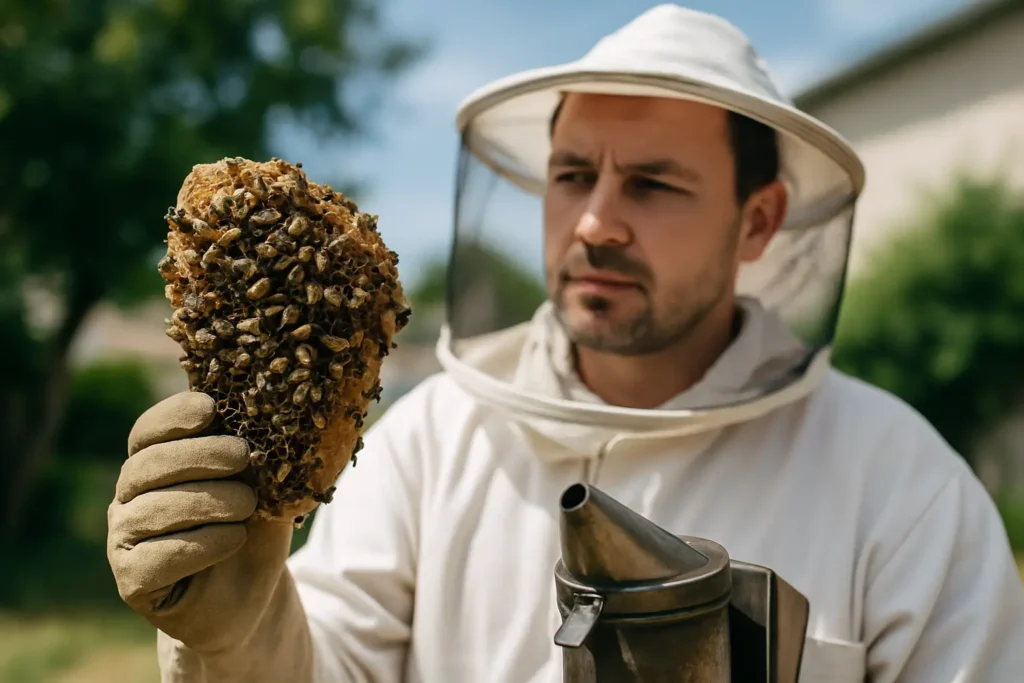
A complete, responsible job usually includes opening the affected area carefully, removing bees and comb, vacuuming stragglers safely, cleaning the cavity to reduce odors, and then repairing and sealing. If you skip steps – for example, if you remove only the visible bees and leave comb behind – you can end up with odor, leaking honey, ants, roaches, and a repeat colony.
That is why “spray and walk away” is not only rough on bees. It often leaves the property owner with a second problem that costs more than the first.
When DIY crosses the line (even if it is your property)
Homeowners can do many things on their own property, but there are practical limits that quickly become safety limits.
If bees are inside a wall, ceiling, chimney, or attic, removal usually requires tools, protective equipment, and a plan for managing comb and honey. If you open a cavity and do not control the bees, you can trigger defensive behavior and create a public safety problem, especially in dense neighborhoods.
If you manage a commercial site, DIY also raises liability issues. An employee attempting removal and getting injured, or a customer getting stung because a disturbed colony became aggressive, can become more than a maintenance issue.
A good rule is this: if removal requires cutting into a structure, if there is any chance people will be exposed during the work, or if anyone on-site has anaphylaxis risk, it is time to treat it as a professional job.
Questions to ask before you hire anyone
California has plenty of people who claim to “do bees,” but the approach matters. If your priority is peace and home restored, you want someone who treats the situation as a full removal and prevention project, not a quick dispatch.
Ask whether they perform live removal and relocation, what happens to the bees afterward, whether they remove comb and honey, and whether they repair the entry point so you are not calling again in two months. It is also fair to ask how they handle situations where live removal is not possible due to structural danger or extreme aggression. Sometimes “it depends” is the honest answer, and a trustworthy provider will explain the trade-offs instead of promising a one-size-fits-all solution.
If you are in Southern California and want a humane, full-scope approach, Eli the Bee Guy focuses on live removals, full hive extractions, relocations to vetted apiaries, and entry-point repairs designed to keep bees from re-occupying the same spot.
What to do right now if you suspect a hive
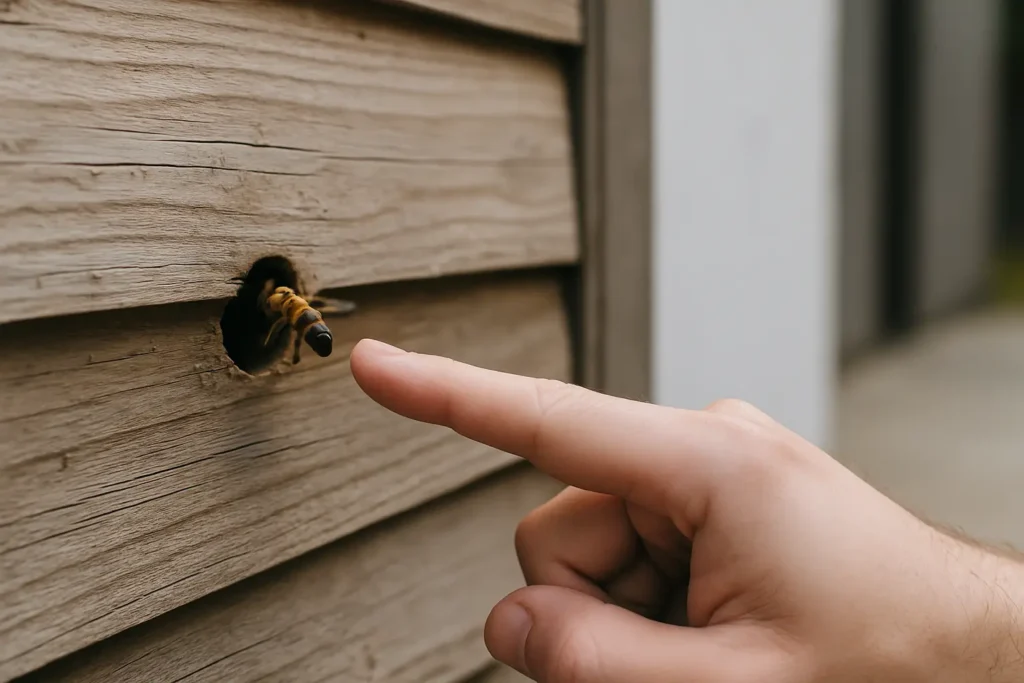
If you see steady bee traffic going into a crack, vent, or roofline, treat it as an established colony until proven otherwise. Keep people and pets back, especially from the flight path. Do not seal the entrance if bees are actively using it – that can drive them into living spaces or other parts of the structure.
If it is a swarm resting out in the open, give it space and time if it is not in a high-traffic area. Many swarms move along within a day. But if it is near a doorway, a playground, or a worksite, prompt removal protects the public and protects the bees from becoming a panic situation.
Take a photo or short video from a safe distance. That can help a professional identify whether you are dealing with honey bees, wasps, or another species – and it can speed up the plan for safe removal.
Closing thought: when bees show up on your property, the best outcome is rarely “bees gone.” It is people safe, property protected, and bees rescued in a way that prevents the same problem from repeating – the kind of fix that lets everyone get back to normal without leaving harm behind.