A quiet Saturday can turn stressful fast when you notice a steady stream of bees slipping under a roof tile, disappearing into a stucco crack, or clustering near a patio light. The worry is immediate – especially if you have kids, tenants, customers, or anyone with a serious allergy. The next question is usually the same: do we need bee removal right now, and how do we handle it without making things worse?
Here in Southern California, bees are active much of the year. That means the difference between a temporary nuisance and a full-blown colony inside a wall can happen faster than most people expect. The good news is that with the right approach, peace and home can be restored and the bees can be rescued instead of destroyed.
Swarm or hive? That changes everything
A swarm looks dramatic but is often the easier situation. You might see a dense cluster hanging from a branch, a fence post, a lawn chair, or even the side of a building. Swarming bees are typically not defending a home yet. They are in transition, scouting for a permanent nesting spot, and they often move on within a day or two.
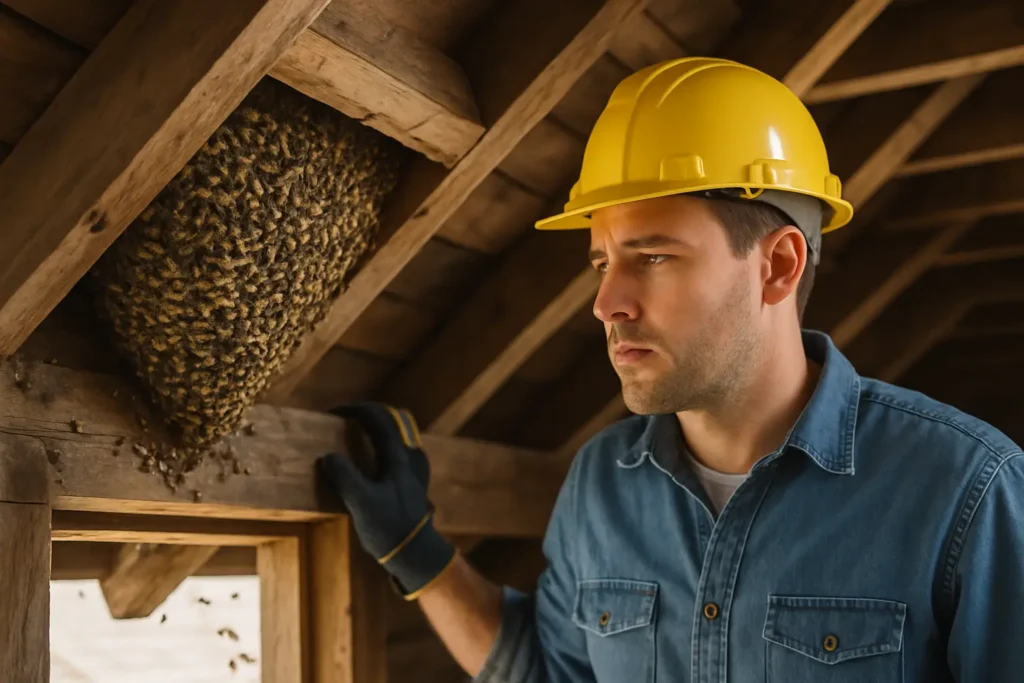
A hive, on the other hand, is a functioning colony that has chosen your structure as home. If bees are repeatedly entering and exiting a specific gap in a wall, soffit, chimney, or eave, that is a strong sign they have comb inside. At that point, you are no longer dealing with a temporary stopover. You are dealing with a living structure that can grow, create odor issues, attract pests, and keep reappearing if the entry point is not addressed.
It depends on the situation, but here is a practical way to think about it: a swarm is a time-sensitive opportunity for a humane capture, while a hive is a building problem as much as it is a bee problem.
Why DIY bee removal so often backfires
Most people who try to handle bees themselves are not being reckless. They are trying to protect their household and fix a problem quickly. The issue is that bees respond to threats in very predictable ways, and common DIY tactics tend to escalate the risk.
Sprays and chemicals can agitate a colony, drive bees deeper into cavities, and leave behind comb and honey that continue to cause trouble after the bees are gone. Blocking the entrance rarely “traps them out” the way people hope. More often, it forces bees to find another way in, or it traps them inside where they can die in place. When that happens, the colony can create lingering odor, staining, and secondary pest issues like ants, roaches, or wax moths.
Even seemingly harmless actions like banging on the wall, blasting them with a hose, or trying to vacuum them can push a manageable situation into a defensive one. If there is any chance someone on the property has a history of severe reactions, it is simply not worth the gamble.
What humane, professional bee removal looks like
People sometimes picture “removal” as a quick sweep and a bag. Responsible work is more methodical than that, because the goal is twofold: reduce human risk and preserve the bees.
A humane approach starts with correctly identifying what is present. Honey bees and wasps behave very differently, and even within bees, a swarm and an established colony require different handling.
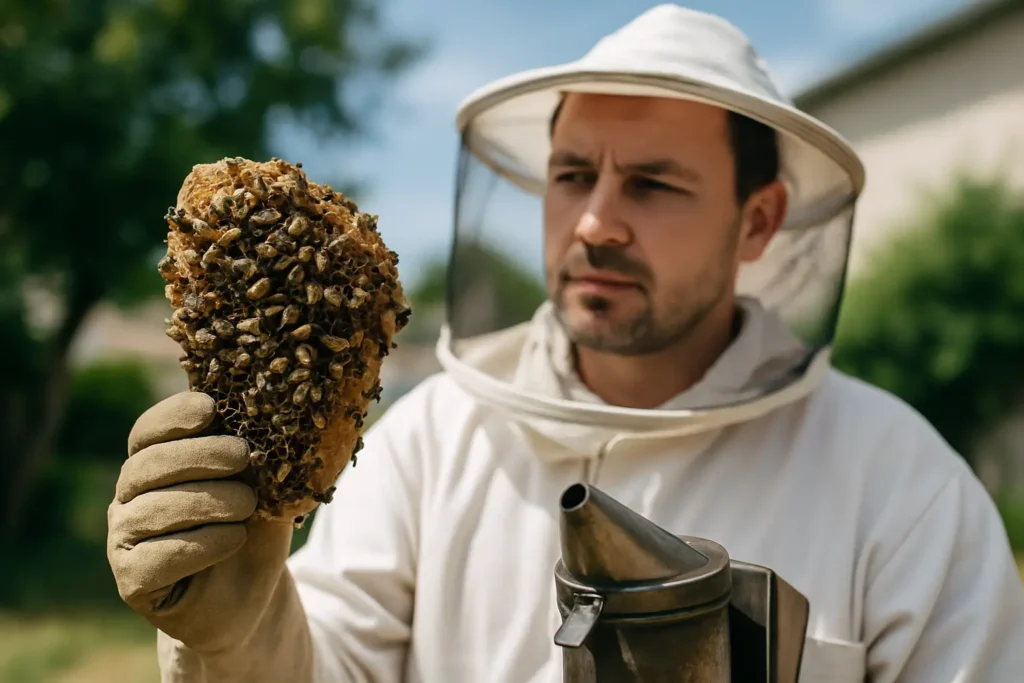
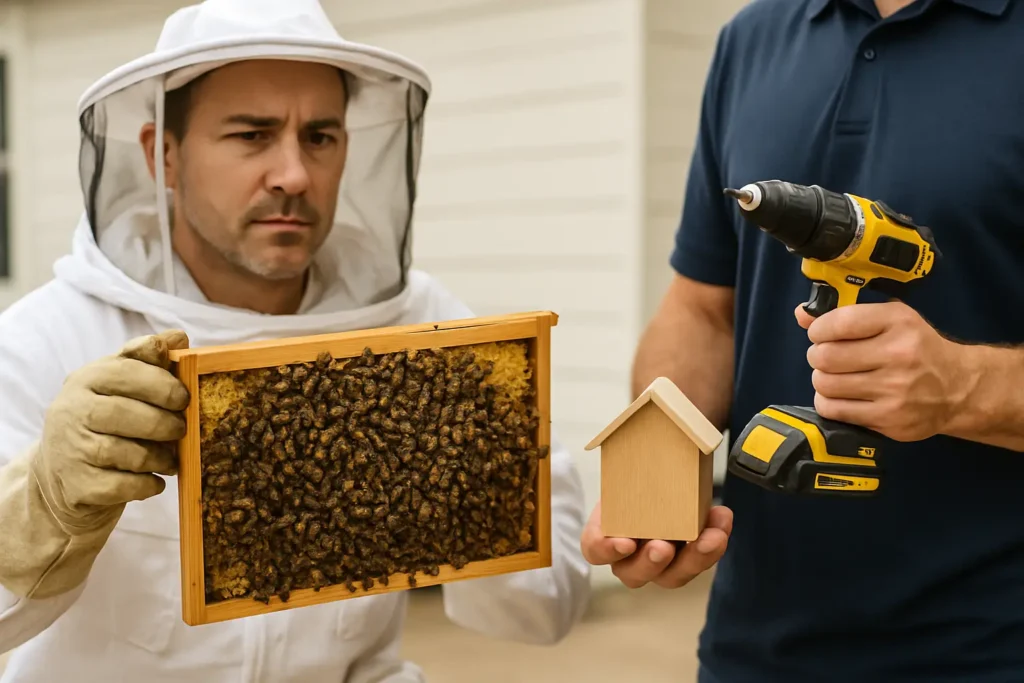
For an established colony in a structure, a true solution usually involves live removal and a full extraction of comb. That matters because the comb is the foundation of the colony. Leaving it behind is one of the main reasons homeowners deal with recurring issues. It can also lead to honey seepage, fermenting odor, and staining that spreads through drywall or stucco.
After the bees are safely collected, ethical relocation means they are placed where they can continue natural behaviors. A reputable bee professional will relocate colonies to vetted apiaries or beekeeping partners who can support the bees long-term, rather than treating the job as simple extermination.
The part most people miss: the entry point is the real “nest”
If bees used a gap once, they can use it again. In Southern California, structures expand and contract with heat, roofing materials shift, and tiny openings appear around utility penetrations, fascia boards, vents, and roof transitions.
That is why permanent bee removal is not just about getting the bees out. It is also about repairing or sealing the entry point so the next swarm does not get the same idea. This step is where “we got rid of them” turns into “they stayed gone.”
The right repair depends on the building. Sometimes it is sealing a crack and reinforcing an area that repeatedly opens. Other times it involves replacing damaged wood, addressing a loose vent screen, or correcting a small construction gap near the eaves. The details matter, because bees only need a small opening to move in.
Timing matters in California homes and commercial properties
There is a big difference between catching a new colony early and waiting until it has had time to build out.
If you call when you first notice traffic at a single entry point, the colony may still be relatively small. That can reduce the scope of extraction and limit how much repair is needed.
If you wait weeks or months, the colony can expand significantly, especially in warm conditions with steady forage. More comb means more bees, more honey, and usually a more complex extraction. The risk to occupants can increase as well, because established colonies have more to defend.
Commercial properties have an added pressure point: foot traffic. Bees near loading docks, outdoor dining areas, entrances, or dumpster enclosures can create liability quickly. Fast, humane action helps protect customers and staff while keeping the solution aligned with environmental responsibility.
What to do right now if you spot bees
If bees are clustered in a swarm, give them space and keep pets and children away. Do not spray them. If you can, take a photo from a safe distance. Swarms are often calm, but they are still bees, and sudden motion can trigger defensive behavior.
If you see steady in-and-out flight into a wall, eave, or roofline, treat it as an established colony until proven otherwise. Keep distance from the entry area and avoid vibrations like drilling, hammering, or slamming doors near the suspected cavity.
If someone on the property has a known anaphylactic allergy, treat any bee activity as urgent. Make sure an epinephrine auto-injector is accessible if prescribed, and consider moving vulnerable individuals indoors and away from the area until the situation is assessed.
What a responsible estimate should cover
Not all services described as “bee removal” are the same. Some providers offer a quick kill-and-seal approach that can create bigger problems later. A responsible plan should address the full lifecycle of the issue.
You should feel comfortable asking how the bees will be handled, where they will go, whether comb will be removed, and what repairs are included or recommended. If the answer is vague, that is a sign the job may be treated as a surface-level fix.
A professional should also explain trade-offs. Sometimes a full extraction requires opening an area of drywall or soffit to reach comb safely. That can sound intimidating, but it is often the cleanest path to a lasting result. The alternative – leaving comb inside – may cost less upfront and cost more later.
Bee removal and wasps: don’t assume it’s the same problem
Homeowners often use “bees” to describe any stinging insect, but the solution changes if you are dealing with wasps or yellowjackets. Wasps can be more aggressive around food and trash, and their nests are built differently. A humane bee relocation plan will not apply the same way to wasps.
Accurate identification is part of safety. It prevents the wrong treatment and helps ensure the right steps are taken for both the people on the property and the insects involved.
A humane standard you can feel good about
If you want bees gone because you are scared for your family, that is valid. If you also want to avoid harming an essential pollinator, that is valid too. You should not have to choose between safety and ethics.
That is the heart of responsible bee work: a calm, careful process that removes the colony alive when possible, extracts the comb so the structure is truly cleared, and repairs the access point so your home does not become the next stop for a new swarm.
For homeowners and property managers across Los Angeles, Orange, Riverside, San Bernardino, and Ventura counties, Eli the Bee Guy focuses on safe, humane live removals, full hive extractions, relocations to vetted apiaries, and entry-point repairs designed to keep bees from re-occupying the same spot.
If bees have moved in, take a breath, give them space, and choose the path that restores peace at home while respecting the life you are removing.