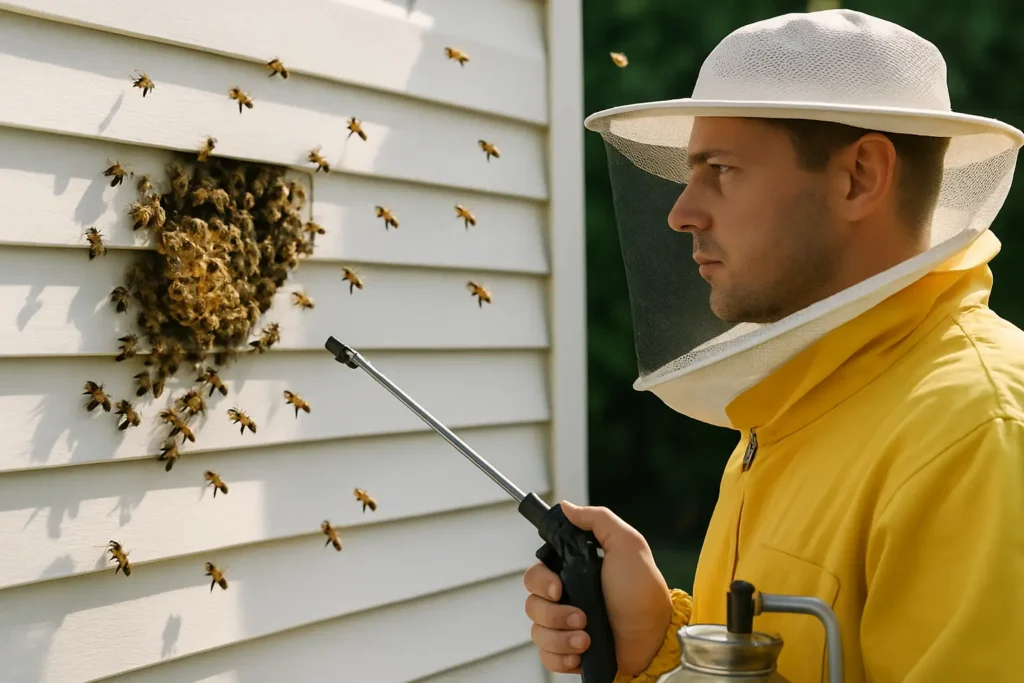
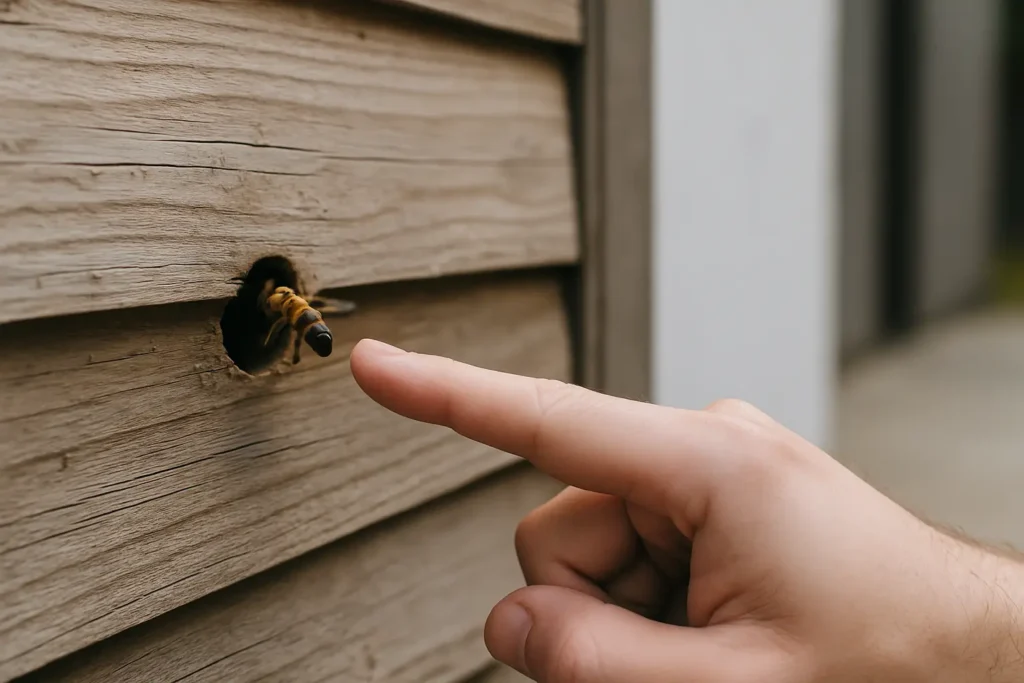
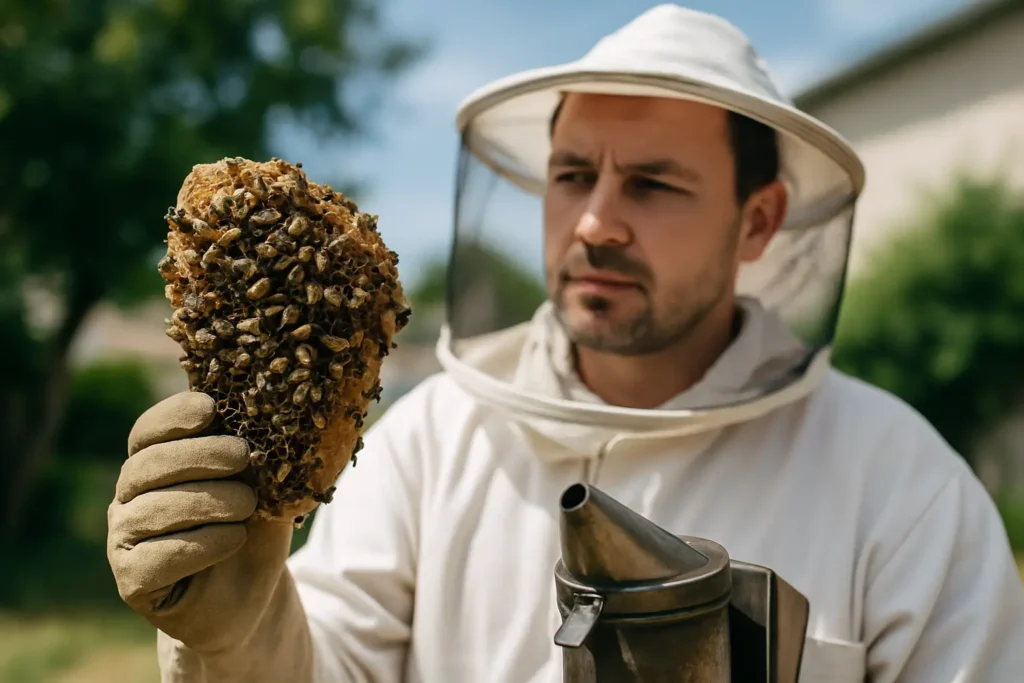
You step outside and hear it – that steady, busy hum coming from a wall, a soffit, or a tree branch that wasn’t buzzing yesterday. If you’re like most Southern California homeowners and property managers, your first thought is safety. Your second thought is usually, “Can they be moved without being killed?”
That’s exactly where beekeeping friendly bee relocation comes in. Done correctly, it protects the people who live and work on the property while giving the bees a real chance to survive and keep doing what they do best.
What “beekeeping friendly bee relocation” really means
Not every “removal” is a relocation, and not every relocation is truly bee-friendly.
Beekeeping friendly bee relocation means the colony is handled in a way that preserves as much of the living hive as possible – the queen, the brood (developing bees), and enough workers and resources for the colony to rebound. It also means the bees end up somewhere appropriate, with a beekeeper or apiary prepared to receive them, monitor them, and keep them from immediately failing.
There’s a big difference between sweeping a swarm into a box and calling it good versus carefully removing a colony from a structure, minimizing harm, and placing it into a proper hive setup where it can rebuild. One is a quick capture. The other is an ethical rescue.
Swarm vs. hive in a structure: why the plan changes
A swarm looks dramatic, but it’s often the simplest scenario. A swarm is a traveling group of bees temporarily clustered while scout bees search for a new home. If you catch it early, it can often be collected and relocated with minimal disruption.
A hive inside a wall, attic, chimney, or roofline is a different level of problem. At that point, the colony has built comb, stored honey and pollen, and raised brood. Removing those bees without addressing the comb and the entry points can leave you with lingering odors, pests, staining, and a strong chance another colony moves right back in.
This is where “it depends” matters. Some situations allow for cleaner, more complete live removal. Others involve difficult access, fragile building materials, or heat and tight cavities that raise the risk for both bees and people. A beekeeping-friendly approach still aims to save the colony, but it also respects the realities of the structure and the safety of the occupants.
Why humane relocation still needs to be a permanent solution
It’s completely normal to want the fastest fix – especially if someone on the property has a serious sting allergy. But temporary measures almost always backfire.
Sprays, repellents, and quick patch jobs can agitate bees, drive them deeper into the structure, or leave behind comb that attracts ants, roaches, and rodents. Even if the bees are gone, the scent of old comb can act like a billboard for the next swarm looking for a ready-made home.
Beekeeping friendly bee relocation is not just “move the bees.” It’s “restore peace and home” by solving the whole issue: safe live removal, full hive extraction when needed, and repairs that prevent re-occupation.
How professional bee relocation works (and why it’s safer)
A true relocation starts with identifying what you’re dealing with. Honey bees are often confused with wasps or yellowjackets, and the right strategy depends on the species and location. Once it’s confirmed honey bees, a professional assesses access points, hive size, and the safest route for removal.
For a swarm, collection often involves carefully placing the cluster into a ventilated container or hive box, ensuring the queen is included. If the queen is missed, the swarm may simply return to the original spot or split.
For a hive in a structure, live removal usually involves opening the area where the bees are established. The comb is removed piece by piece, brood comb is preserved as much as possible, and the bees are transferred into a hive body. The goal is to move the living “engine” of the colony – especially brood and queen – so the bees have a reason to stay with their new home.
The final step is the one people don’t always expect: cleanup and prevention. Removing comb remnants, addressing honey residue, and repairing entry points is what keeps the problem from repeating.
What makes a relocation truly “beekeeping friendly”
The phrase gets used loosely, so it helps to know what to look for. A relocation is more bee-respectful when it prioritizes colony survival over convenience.
First, the bees should be moved alive and intact whenever feasible, not “driven out” with chemicals or smoke-heavy tactics that scatter the colony. Second, the comb should be handled thoughtfully. Brood comb is the future of the colony, and saving it can be the difference between a thriving relocation and a slow collapse.
Third, the destination matters. “Relocated” doesn’t mean “released somewhere.” Honey bees need a managed setup to survive – a proper hive, a stable location, and follow-up care if the colony was stressed by removal. Vetted apiaries and responsible beekeepers are set up for that.
Finally, the property needs to be restored. A relocation that leaves behind pheromones, wax, or open access points is not friendly to you or the bees – it invites another colony to move in, starting the cycle over.
Common mistakes homeowners make (and how to avoid them)
When bees show up, people often try to solve it with whatever is on hand. The problem is that bees respond fast, and the wrong move can turn a manageable situation into an emergency.
If you see a swarm, the biggest mistake is getting too close to “see what they’re doing” or letting kids and pets wander nearby. Swarms are often gentle, but they can still sting if threatened. Give them space and call for help.
If you suspect a hive in a wall, avoid sealing the entrance. Blocking the entry can push bees into living spaces, and if bees die inside the cavity, you can end up with odors and pest problems that last for weeks.
Also avoid flooding the area with over-the-counter pesticides. Aside from being harmful and often ineffective, it can contaminate honey and wax inside the structure and make professional cleanup more difficult.
Timing matters in Southern California
Our climate changes the bee calendar. In Southern California, swarm season can start early and run long. Warm days in late winter and spring often kick off heavy activity, and strong colonies can swarm multiple times.
The sooner you address a swarm, the easier it is to relocate. A swarm that settles for a few hours is very different from one that’s been there long enough to start building comb in a wall void or roofline.
For established hives, early intervention can reduce the size of the colony and the amount of comb inside the structure. That can mean less disruption to the building and a higher chance of relocating more of the living hive.
Questions to ask before hiring a bee relocation service
You don’t need to become a bee expert to choose the right help. A few direct questions can reveal whether the approach is truly humane and permanent.
Ask if the service performs live removals and where the bees go afterward. “We take them away” is vague. A beekeeping-friendly provider can explain the relocation destination and what happens to the colony.
Ask whether the job includes full hive extraction when bees are inside a structure. If comb and honey are left behind, the problem is not really solved.
Ask what repair work is included or recommended to prevent re-entry. Even a perfect relocation can fail as a “solution” if the original access point stays open.
If you’re in Los Angeles, Orange, Riverside, San Bernardino, or Ventura County and want a humane, permanent approach, Eli the Bee Guy focuses on live removals, careful relocation to vetted apiaries, and entry-point repairs designed to keep bees from coming right back.
When relocation may not be straightforward
There are cases where the most bee-friendly outcome is still complicated.
If the colony is in an unsafe location for access, high in a narrow chimney, deep in a wall packed with wiring, or in a spot where opening the structure would cause major damage, the plan may require staging, partial opening, or coordinating with a contractor.
There are also moments when public safety has to lead. If bees are actively entering living spaces, or if there’s a high-risk allergy situation with frequent bee contact, you may need a faster containment step before the full relocation can be completed.
A good provider will explain these trade-offs plainly: what can be saved, what needs to be removed for safety, and what steps reduce the chance of bees returning.
A calm approach helps everyone
Bees are not looking to “take over” your home. They’re following scent trails, warmth, and available cavities – the same features that make a building comfortable for people. When you respond with a plan that’s both safe and humane, you get the best of both worlds: your property becomes yours again, and the bees get a chance to keep living.
If you’re staring at a new swarm or hearing that telltale hum in a wall, take a breath, keep your distance, and choose the route that protects your household while treating the colony like what it is – a living community worth rescuing.