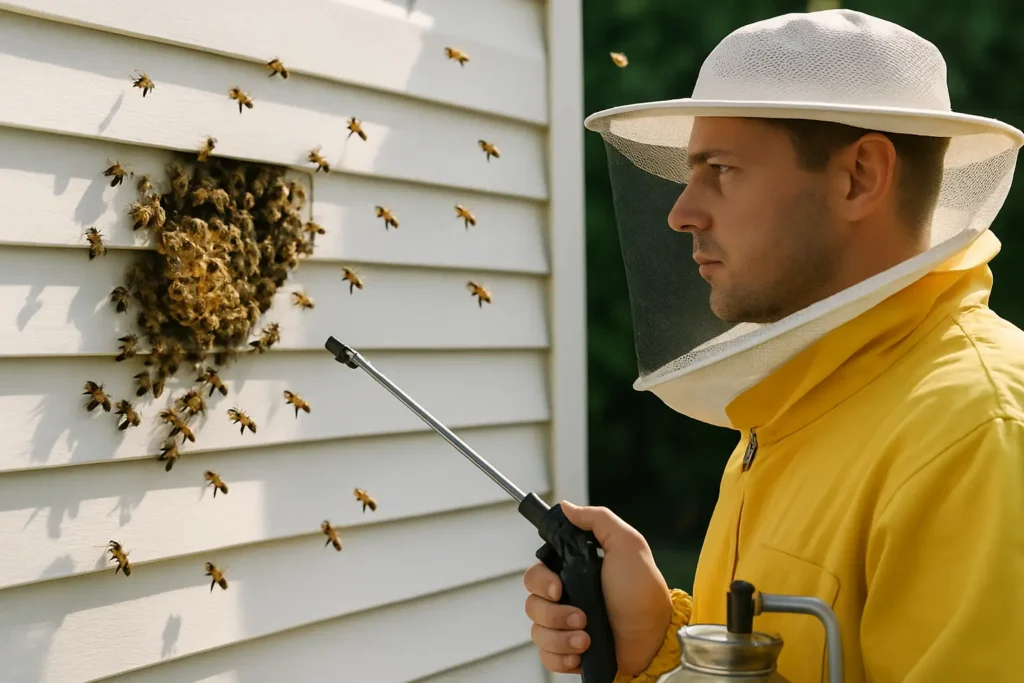
If bees have moved into your wall, soffit, or eaves, you’re not just dealing with a “pest problem.” You’re dealing with a living colony that can grow fast, create heavy comb, and attract more insects if it’s handled the wrong way. And if someone in the building has a serious allergy, the stakes feel even higher.
The good news: the best humane bee removal services can restore peace and home—without wiping out a healthy colony or leaving behind the hidden mess that causes repeat infestations. The trick is knowing what “humane” and “best” actually look like in real life, not just in marketing.
What “humane bee removal” really means
Humane bee removal isn’t simply “we don’t spray.” It’s a complete approach that protects people and preserves bees by removing them alive, relocating them responsibly, and leaving the structure in a condition that doesn’t invite a new colony next month.
A truly humane provider aims to keep the colony intact when possible, including the queen and as much of the brood (developing bees) as they can safely save. That usually means opening the area where the hive is located, removing bees and comb, and transferring them into a managed hive body for relocation.
Humane also means realistic. Some situations are complex—tight cavities, high access points, unstable structures, or colonies that have been there for a long time. The “kindest” outcome is still the one that prevents recurring stress to the bees and ongoing risk to the people living or working there.
Why “spray and forget” isn’t just unethical—it’s temporary
When bees are killed inside a wall or ceiling, what’s left behind doesn’t disappear. Wax comb can melt and seep into drywall. Honey can ferment and smell. Dead bees attract ants, roaches, and other scavengers. And the scent of wax and honey can draw new swarms to the same spot.
Even when chemicals seem to solve the immediate buzzing, they often create a second problem: the structure becomes contaminated, and the original entry point remains open. If you’re paying for a service call, you deserve a solution that lasts longer than the next warm weekend.
The best humane bee removal services do a full hive extraction
If you take one idea from this article, make it this: a swarm hanging on a branch is not the same as a hive living inside a structure.
A swarm is a temporary cluster looking for a home. A structural hive is established—comb built, honey stored, brood reared, and traffic patterns formed. For an established hive, the best humane bee removal services don’t just remove flying bees; they remove the comb.
A full extraction typically includes:
Removing and saving comb where practical (especially brood comb)
Capturing the queen or ensuring she’s transferred with the colony
Vacuuming/collecting remaining bees carefully (not crushing them)
Cleaning the cavity so lingering scents don’t invite re-occupation
If a company tells you they can “humanely remove” a wall hive without opening the wall, ask how they remove the comb. If the answer is vague, you’re likely looking at a partial job that leaves the most important part behind.
Relocation matters—where the bees go is part of being humane
Relocation isn’t humane if the bees are dumped somewhere they can’t survive, or if they’re placed with unmanaged colonies that spread disease and mites.
The providers worth trusting will explain where colonies are taken, how they’re housed, and how they’re supported afterward. Responsible relocation often means partnering with vetted apiaries or beekeepers who can monitor the colony, provide appropriate space, and manage pests like Varroa mites.
It’s also worth asking whether the provider relocates bees in a way that supports natural behaviors. Bees need stable housing, adequate ventilation, and room to expand. “They’ll be fine” is not the same as a plan.
Repairs and prevention: the difference between removal and resolution
A humane removal that doesn’t include prevention can still leave you calling again later.
Bees usually enter through gaps at fascia boards, rooflines, attic vents, utility penetrations, or cracks where different building materials meet. Once a colony has occupied a spot, the scent can linger and attract scouts from future swarms.
The best humane bee removal services treat repair as part of the job, not an upsell after the fact. That can include sealing the entry point, replacing damaged wood, screening vulnerable openings, and advising on property conditions that attract bees.
If a provider doesn’t offer repairs, they should at least coordinate a clear plan for who will do them—and how fast. Waiting weeks to close an entry point is how “problem solved” turns into “they’re back.”
Safety isn’t optional—especially for allergies and high-traffic sites
Humane doesn’t mean casual. A professional should manage the situation with a calm, safety-first process that protects residents, neighbors, tenants, customers, and pets.
For homeowners, that may look like setting expectations about keeping distance, closing windows near the activity, and planning removal during times when bees are less likely to be out foraging.
For commercial property managers, safety planning often needs more structure: scheduling around peak foot traffic, placing temporary signage or barriers, and ensuring staff know what to do if someone is stung.
If there’s a known severe allergy on-site, the right provider will take it seriously—discussing distance, timing, and risk reduction without trying to pressure you into panic decisions.
How to spot the “best” vs. the “good enough”
Most people only hire a bee removal service once, so it’s hard to know what excellence looks like. Here are the questions that reliably separate truly humane, comprehensive work from quick fixes.
1) “Do you do live removal and full comb extraction?”
You want a direct answer. “We remove the bees” isn’t the same as “we remove the hive.” If the colony is in a structure, comb removal is the core of permanent, humane work.
2) “What happens to the bees after you remove them?”
Listen for specifics: placement into a managed hive, relocation to an apiary, and ongoing care. If it sounds improvised, it probably is.
3) “Will you repair the entry point so they can’t come back?”
Prevention is part of restoring peace. At minimum, there should be a plan to close access points promptly.
4) “How do you protect the property during the extraction?”
Removing a structural hive often involves opening a wall, soffit, or roof area. A professional should talk about minimizing damage, explaining access points, and keeping the worksite clean.
5) “Can you tell the difference between honey bees and other stinging insects?”
This matters more than people realize. Honey bees, yellowjackets, paper wasps, and bumble bees require different approaches. A provider should be able to identify what you’re dealing with before recommending a plan.
It depends: situations where humane removal is more complex
Some colonies are straightforward: a fresh swarm on a tree, or a small hive in an accessible cavity. Others require more planning.
If bees are high on a multi-story building, in a narrow chimney void, or deep in a wall packed with insulation, humane extraction may take longer and cost more. That’s not a red flag—it’s reality.
Older colonies also tend to have more comb and stored honey. Removing that material safely can be labor-intensive, but leaving it behind creates the long-term problems you’re trying to avoid.
The “best” service is the one that explains these trade-offs clearly, gives you options, and doesn’t pretend every job is identical.
What you can do right now while you wait for service
If you’ve confirmed it’s bees and not an immediate emergency, a few small choices can reduce risk.
Avoid spraying anything. Over-the-counter sprays can agitate bees, scatter the colony, and make humane removal harder. Also avoid plugging the entry hole. Trapping bees inside can drive them deeper into the structure—or force them to find a new exit into living spaces.
Instead, keep people and pets away from the flight path, close nearby doors and windows, and note where the bees are entering and exiting. If it’s safe to do so, take a clear photo from a distance. That helps a professional plan the right approach.
A local note for Southern California properties
In Los Angeles, Orange, Riverside, San Bernardino, and Ventura counties, warm weather stretches the season and makes swarm activity more common. That means two things: acting quickly matters, and choosing a provider who focuses on long-term prevention matters just as much.
If you’re looking for a humane specialist who focuses on live removals, full hive extractions, safe relocations, and entry-point repairs, Eli the Bee Guy is one example of a service built around bees rescued and peace restored—without shortcuts that leave your property vulnerable.
When bees show up, you don’t have to choose between protecting your household and protecting pollinators. The right humane removal brings both back into balance, and there’s something genuinely reassuring about hearing the buzzing fade—knowing the bees didn’t have to.