Can one hive split into multiple colonies? How swarming works and what safe relocation looks like
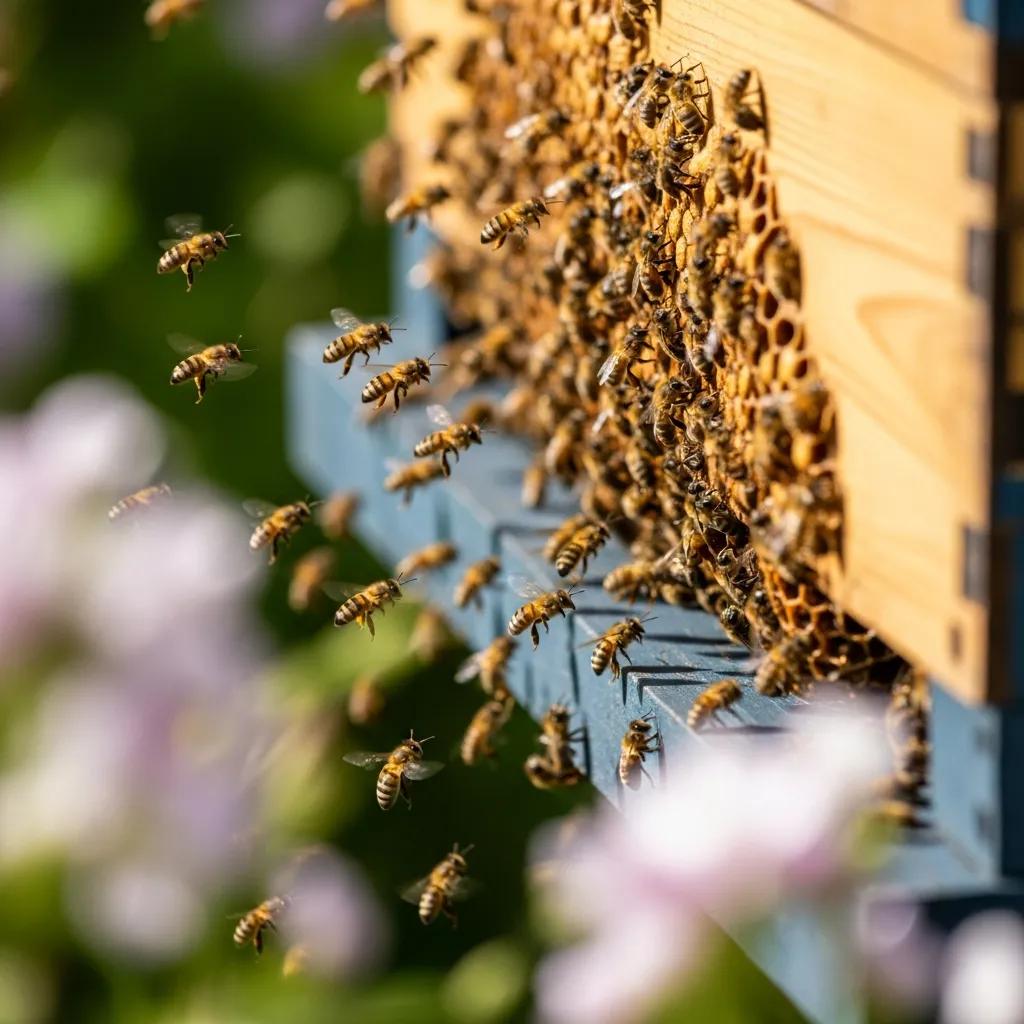
Bees do some surprisingly sophisticated things — especially when it comes to growing their numbers and ensuring the survival of their species. Swarming is the natural, vital process by which a single honey bee colony reproduces, effectively becoming two (or more) distinct colonies. This allows bees to spread their genetic material, colonize new territories, and maintain healthy gene diversity across populations. Below we explain the intricate mechanisms of colony splitting, what to watch for if a new hive appears on your property, and the humane, eco-conscious ways to move colonies when necessary. If you’d rather leave it to seasoned professionals, Eli the Bee Guy offers safe, environmentally minded relocation services that prioritize both your property and the well-being of these essential pollinators.
Understanding Colony Splitting: How Bees Form New Hives
Colony splitting, universally known as swarming, is the primary method of reproduction for honey bee populations at the colony level. This remarkable biological event is triggered when an existing hive reaches a critical mass, becoming crowded with bees, honey, and brood. In response, the colony initiates the rearing of new queens within specialized, larger queen cells. Once these virgin queens are nearing emergence, the original, older queen typically departs with a significant portion of the worker bees, forming a primary swarm to establish a new nest. The remaining bees stay behind in the original hive, and one of the newly emerged queens takes over, ensuring the continuity of the parent colony. This natural process is fundamental to keeping bee populations robust and genetically diverse across landscapes.
The precise coordination and decision-making involved in swarming highlight the complex social intelligence of honey bees. Research continues to unravel the sophisticated ways colonies manage the emergence of multiple queens during these fission events, ensuring the survival of both the parent and daughter colonies.
How colonies remove extra queens during swarming
Honey bee colonies produce multiple unmated queens during fission, but only one typically remains in the parental nest. Extra queens are eliminated by three main routes: direct queen‑queen fights, preventing some queens from emerging, or those queens leaving with a secondary swarm.
Three mechanisms of queen elimination in swarming honey bee colonies, DC Gilley, 2005
What Prompts a Colony to Expand Naturally Through Swarming?
Several interconnected factors can trigger the swarming impulse within a honey bee colony. Overcrowding is the most common and direct catalyst—bees require adequate space for honey storage, pollen reserves, and the expansion of their brood nest. Abundant food resources, such as plentiful nectar and pollen flows, coupled with favorable weather conditions, particularly during the spring and early summer, significantly encourage colonies to reproduce. When these environmental conditions align, bees instinctively capitalize on the opportunity to split and colonize new sites, maximizing their reproductive success.
Beyond external factors, intricate internal colony dynamics play a crucial role in orchestrating a swarm. As a hive becomes densely populated, the queen’s pheromone—a chemical signal that indicates her presence and suppresses the rearing of new queens—becomes diluted throughout the colony. This dilution acts as a vital signal to worker bees, prompting them to begin constructing queen cells and raising new queens. Concurrently, the old queen reduces her egg-laying rate and slims down her abdomen, physically preparing herself for the arduous flight associated with leading the swarm. This complex interplay of chemical communication, environmental cues, and behavioral changes precisely orchestrates the timing and execution of the swarming event.
How Do Scout Bees Find New Hive Sites?
Scout bees are the colony’s dedicated surveyors and real estate agents. Small groups of these experienced foragers embark on extensive searches across the landscape, seeking out suitable cavities or sheltered locations that offer optimal access to food resources, protection from the elements, and defensibility. Upon discovering a potential site, scouts meticulously assess its characteristics and then return to the temporary swarm cluster to perform the renowned waggle dance. Through repeated dances, each conveying the direction and distance to a specific site, and a process of collective comparison and debate, the colony ultimately reaches a democratic consensus on the best possible location for their new home. This remarkable collective decision-making process ensures the selection of a high-quality site critical for the new colony’s survival.
Key characteristics scout bees prioritize when selecting a new home include:
- Cavity Volume: Scouts exhibit a strong preference for cavities of a specific size, typically around 40 liters (approximately 1.4 cubic feet), which provides ample space for comb building, honey storage, and future colony growth without being excessively large or small.
- Entrance Size and Orientation: An ideal site features a small, easily defensible entrance, often facing south or southeast. This orientation maximizes exposure to morning sun, aiding in thermoregulation and providing warmth, while a small entrance helps deter predators and makes defense easier.
- Protection from Elements: The chosen site must offer robust shelter from adverse weather conditions, including strong winds, heavy rain, and direct, scorching sunlight, ensuring a stable internal environment for the colony.
- Proximity to Resources: While not always the sole deciding factor, being situated near abundant floral resources (nectar and pollen) and a reliable water source is a significant advantage, reducing foraging effort for the new colony.
- Absence of Pests and Pathogens: Scouts rigorously avoid locations showing any signs of existing pests such as ants, rodents, or other potential threats, as well as evidence of disease, to ensure a healthy start for the new colony.
The Journey of a Swarm: From Departure to New Home
The swarming process is a truly remarkable and perilous journey for honey bees. It commences when the old queen, accompanied by approximately half of the worker bees, vacates the original hive. This initial cluster, often comprising thousands of bees, typically settles temporarily on a nearby tree branch, fence post, or building overhang, forming a dense, often beard-like mass. This temporary resting spot is not the new home but a crucial staging area where scout bees, who have already been actively searching for suitable locations, intensify their efforts to find a permanent dwelling. This phase is critical for the swarm’s survival, as they are vulnerable to predators and the elements.
During this temporary clustering period, which can last from a few hours to several days, the swarm is generally docile. This is because they have no comb, honey stores, or brood to defend, and their primary focus is on finding a new home. Once the scout bees reach a definitive consensus on the best new location through their sophisticated ‘waggle dance democracy,’ the entire swarm takes flight again, moving en masse with incredible precision to their chosen cavity. Upon arrival, they immediately begin the arduous task of building new comb, the queen promptly starts laying eggs, and the colony rapidly establishes itself, transforming from a transient cluster into a thriving, self-sustaining new home. This swift establishment is vital for their long-term survival.
Collective Intelligence in Swarm Migration
Honey bee swarms exhibit a sophisticated form of collective intelligence during migration, where thousands of individuals coordinate to make a single, optimal decision about a new nest site. This process involves scout bees identifying potential sites, communicating their findings through waggle dances, and engaging in a democratic decision-making process that ensures the selection of the best available option for the colony’s future.
Honeybee Democracy, Thomas D. Seeley, 2010
What Are the Signs a New Hive Is Forming on Your Property?
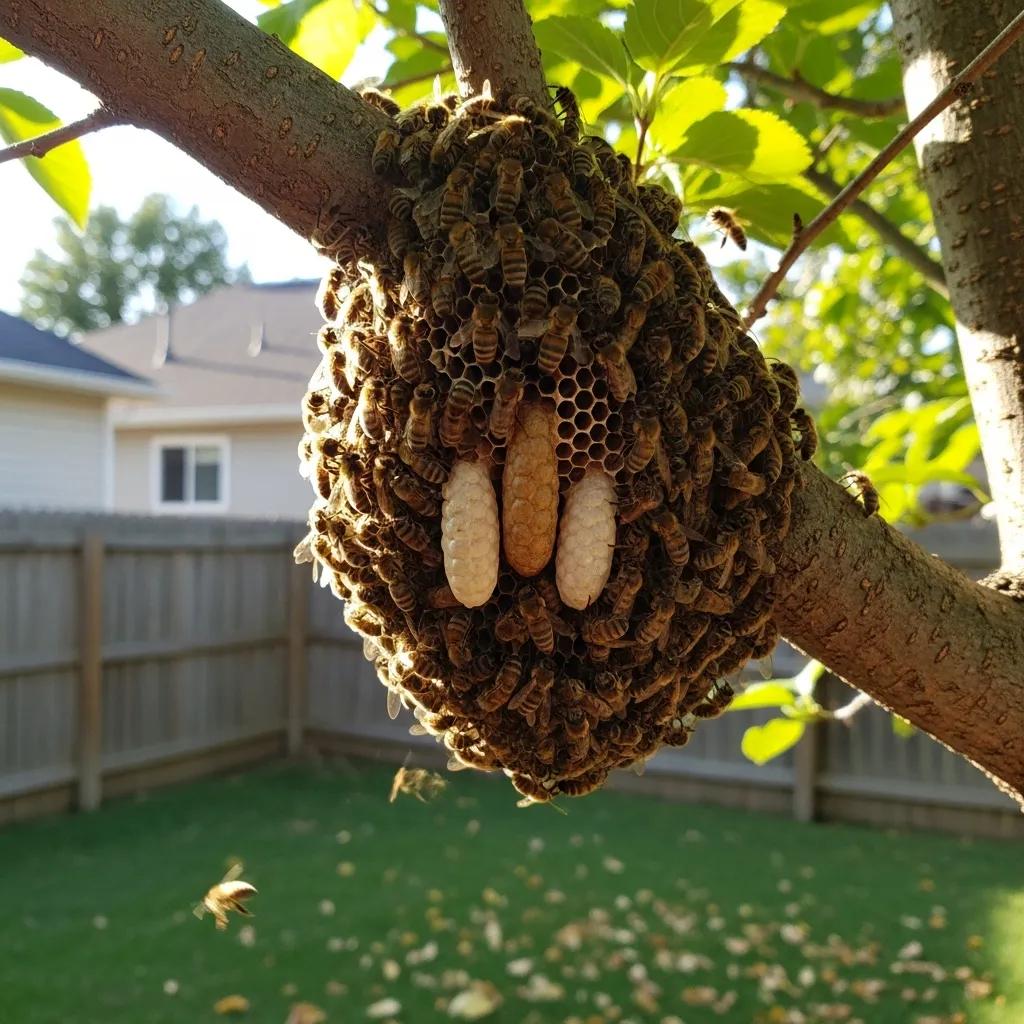
Spotting a new hive or a swarm early on your property makes management significantly easier and safer. Vigilance for increased bee traffic, the presence of visible queen cells inside an open hive (if you have one), or tight clusters of bees on trees, fences, or building eaves are key indicators. While not every temporary cluster will evolve into a permanent hive, these signs usually mean a colony is actively preparing to move or has recently arrived and is scouting for a permanent residence.
How to Spot Early Indicators of Swarms and New Colonies
Property owners should keep a keen eye out for these common signals, especially during peak swarming season (typically spring and early summer):
- Increased Bee Activity: A noticeable and sustained rise in the number of bees flying around a specific structure, tree, or area in your yard often means there’s a hive or swarm nearby. This can manifest as a higher volume of bees entering and exiting a particular opening, such as a crack in a wall, a vent, or a hole in a tree.
- Queen Cells: For those with existing hives or who can safely observe, the presence of larger, distinctively peanut-shaped cells (often found along the bottom edges of the comb) indicates the colony is actively raising new queens and is likely preparing to swarm.
- Clustering Behavior: Bees that gather in a dense, beard-like mass on trees, fence posts, utility poles, or building overhangs are typically a swarm that has just left its original hive. They are either temporarily resting or waiting for scout bees to finalize a new permanent site. These clusters can vary significantly in size, from that of a softball to a basketball or larger.
Beyond visual cues, advanced technologies like acoustic monitoring are being developed to detect queen presence and predict swarming events with greater reliability and precision, offering a non-invasive approach to colony management.
Using sound and vibration to detect swarming
Researchers are exploring acoustic and vibration recordings to identify queen presence and other swarming indicators. Those methods could improve precision beekeeping by offering earlier, noninvasive warnings of impending swarms.
Acoustic and vibration monitoring of honeybee colonies for beekeeping‑relevant aspects of presence of queen bee and swarming, C Uthoff, 2023
What Risks Do Multiple Colonies Pose for Homeowners and Businesses?
The presence of multiple bee colonies on a property, particularly when nesting within structures, can lead to significant problems and potential hazards. For homeowners, bees nesting in walls, attics, chimneys, or even under floorboards can cause substantial structural damage. Over time, the weight of honey-filled combs can become immense, leading to collapse, which can then cause honey to leak through ceilings and walls, resulting in unsightly stains, attracting other pests (like ants, rodents, and cockroaches), and potentially damaging drywall, insulation, and electrical wiring. The continuous activity of a large, active colony can also compromise the integrity of wooden structures and create persistent buzzing noises. If you suspect an established hive, consider professional bee hive removal immediately.
For businesses, hives on-site may disrupt operations, create negative perceptions, and pose significant liability concerns for customers and staff. Businesses face unique challenges, including potential health code violations if bees are near food service areas, disruption to customer traffic, and the heightened risk of stings to employees or clients, which can lead to serious allergic reactions and legal liability issues. Prompt and professional removal is crucial to mitigate these risks, maintain a safe environment, and protect your business’s reputation. When colonies appear on commercial buildings, it’s always best to call professionals who handle removals safely, legally, and with minimal disruption—for example, our commercial bee removal team.
There’s also a significant economic side to consider: timely detection and capture of swarms can profoundly affect costs and benefits for beekeepers and property owners alike, influencing decisions about intervention and resource allocation.
Why detecting swarms matters economically
Studies model the economic tradeoffs of catching swarms versus letting them go. Early detection can change the costs and benefits for both beekeepers and landowners, influencing decisions about intervention.
When It Pays to Catch a Swarm—Evaluation of the Economic Importance of Remote Honey Bee (Apis mellifera)
Colony Swarming Detection, A Zacepins, 2021
Preventative Measures: Making Your Property Less Attractive to Swarms
While swarming is an entirely natural and essential biological process for honey bees, property owners can take proactive and effective steps to significantly reduce the likelihood of bees choosing their home or business as a new nesting site. Implementing preventative measures can save you considerable time, money, and the eventual need for professional removal services.
- Seal Entry Points: Conduct a thorough inspection of your property for any cracks, crevices, gaps, or unsealed openings in walls, eaves, attics, foundations, and around utility penetrations. Seal any openings larger than 1/8 inch (the approximate width of a pencil), as bees can enter surprisingly small spaces. Use caulk, expanding foam, or fine mesh screens.
- Repair Structural Damage: Promptly fix any damaged siding, loose fascia boards, broken vents, or deteriorated soffits that could provide easy access to sheltered voids within your building’s structure. Ensure all screens on windows and vents are intact.
- Remove Old Hives/Nests: If you’ve had a bee or wasp nest removed previously, it is crucial to ensure all comb, honey residue, and pheromone traces are thoroughly cleaned and removed. Residual scents can act as powerful attractants for new swarms seeking a proven nesting location.
- Trim Vegetation: Keep trees, shrubs, and dense vegetation trimmed well away from your building, especially near potential entry points like roofs, windows, and eaves. This reduces easy access for scout bees and makes your property less appealing as a temporary resting spot for swarms.
- Consider Bee-Friendly Landscaping (Away from Structures): While encouraging pollinators is beneficial, if you are concerned about bees nesting in your home, avoid planting highly attractive flowering plants directly adjacent to your home’s walls or entryways. Instead, create pollinator gardens further away from your main structures.
How Does Humane Swarm Relocation Work?
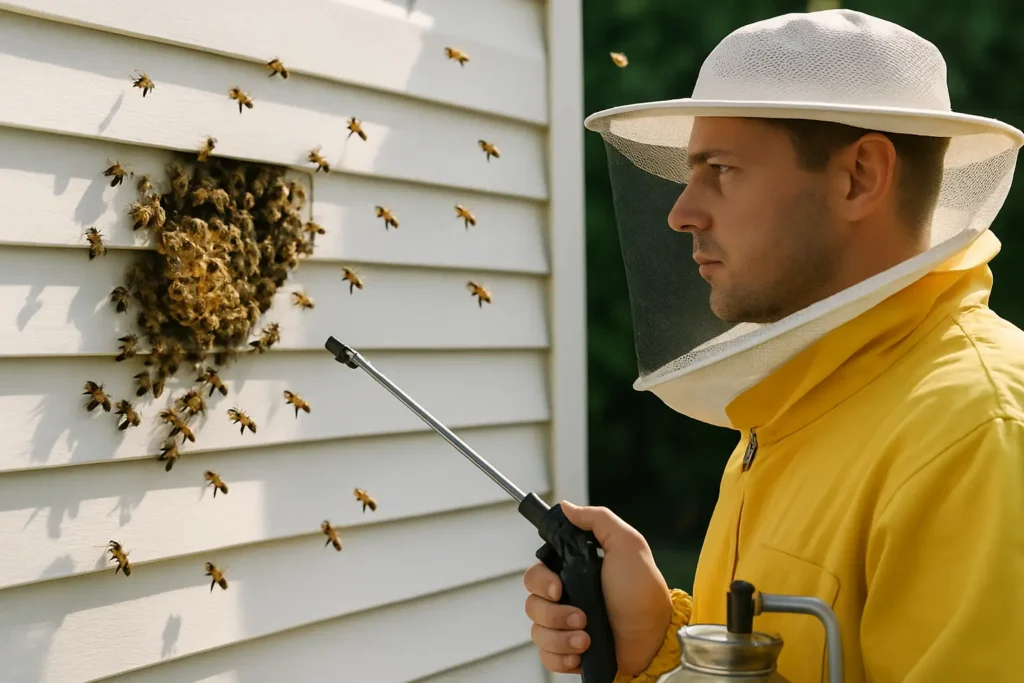
Humane relocation is a specialized process designed to move bees without causing them harm, ensuring the colony remains intact and can thrive in a new, appropriate environment. Trained specialists employ gentle, non-lethal techniques to carefully collect the bees and rehome them, minimizing stress to the colony. This responsible approach not only protects people and property but also plays a vital role in conserving local pollinator populations, which are essential for our ecosystems and food supply.
What Are the Steps for Safe, Eco-Friendly Bee Removal?
The typical humane relocation process, as practiced by experts like Eli the Bee Guy, follows a structured and careful approach: safe methods for honey bee removal in your backyard
- Thorough Assessment of the Hive: Our team first evaluates the colony’s size, its precise location, and any access issues that might complicate removal. This critical initial step includes identifying the queen’s location if possible and understanding the colony’s temperament to choose the safest and most effective removal plan.
- Gentle Extraction Techniques: Utilizing specialized bee boxes, soft brushes, or low‑pressure bee vacuums specifically designed for live bee removal, we carefully transfer the entire colony without injury whenever possible. The primary goal during extraction is to safely capture the queen, as the vast majority of the swarm will instinctively follow her into the new enclosure.
- Post‑Relocation Care and Prevention: After successfully moving the bees to a new, suitable apiary or location, we monitor the new site to ensure the colony is establishing itself well. Crucially, we also inspect and seal the original location to discourage re‑nesting by future swarms and protect the surrounding ecosystem from potential future infestations. This often involves cleaning residual pheromones and sealing entry points.
Why Hire Professionals Instead of Attempting DIY Removal?
There are clear and compelling benefits to entrusting bee removal to an experienced, professional team rather than attempting a potentially dangerous DIY approach:
- Enhanced Safety: Professionals are equipped with extensive knowledge of bee behavior, proper protective gear, and specialized tools, significantly reducing the risk of stings and avoiding dangerous situations, including severe allergic reactions.
- Proven Effectiveness: Trained beekeepers utilize methods that are not only humane but also highly effective in preserving the entire colony and preventing repeat infestations. They understand the intricate dynamics of bee behavior, ensuring a successful and lasting relocation.
- Significant Conservation Impact: Opting for humane, professional removal directly contributes to keeping local pollinator populations healthy and thriving. This is immensely beneficial for gardens, farms, and the broader ecosystem over the long term, supporting biodiversity and food security. Professionals prioritize the bees’ well-being and their ecological role.
Comparison of Bee Removal Approaches
| Method | Description | Key Benefits & Risks |
|---|---|---|
| DIY Removal | Attempting to remove bees or a hive without professional training, equipment, or expertise. | Benefits: May save money short‑term. Risks: High risk of stings, incomplete removal leading to re-infestation, potential harm to bees, structural damage, and legal liabilities. |
| Professional Removal | Hiring experienced, licensed beekeepers or pest control specialists for safe and effective relocation. | Benefits: Safer for people and bees, more reliable outcomes, prevents structural damage, often includes guarantees. Risks: Higher upfront cost than DIY. |
| Eco‑Friendly Practices | Techniques specifically focused on preserving bee populations through live capture and relocation. | Benefits: Supports vital conservation efforts, maintains local pollination services, aligns with environmental values. Risks: Requires specialized knowledge and equipment. |
Need Professional Bee Relocation?
Don’t risk DIY removal or harmful extermination methods. Our expert team provides safe, humane, and eco-friendly bee relocation services for both homes and businesses. Protect your property and our precious pollinators by choosing the responsible solution.
Choosing humane, professional removal protects both your property from potential damage and the invaluable bees that support our food systems and natural environment. If you discover a swarm or suspect a hive on your property, reach out to experts who can assess the situation accurately and relocate the colony responsibly, ensuring a positive outcome for all involved.