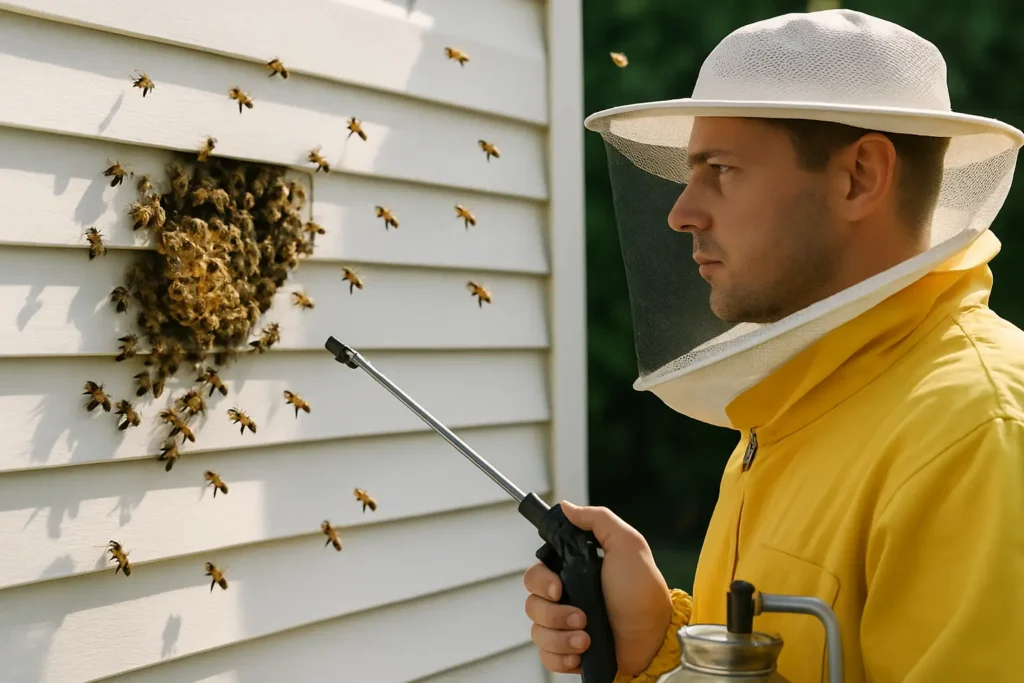
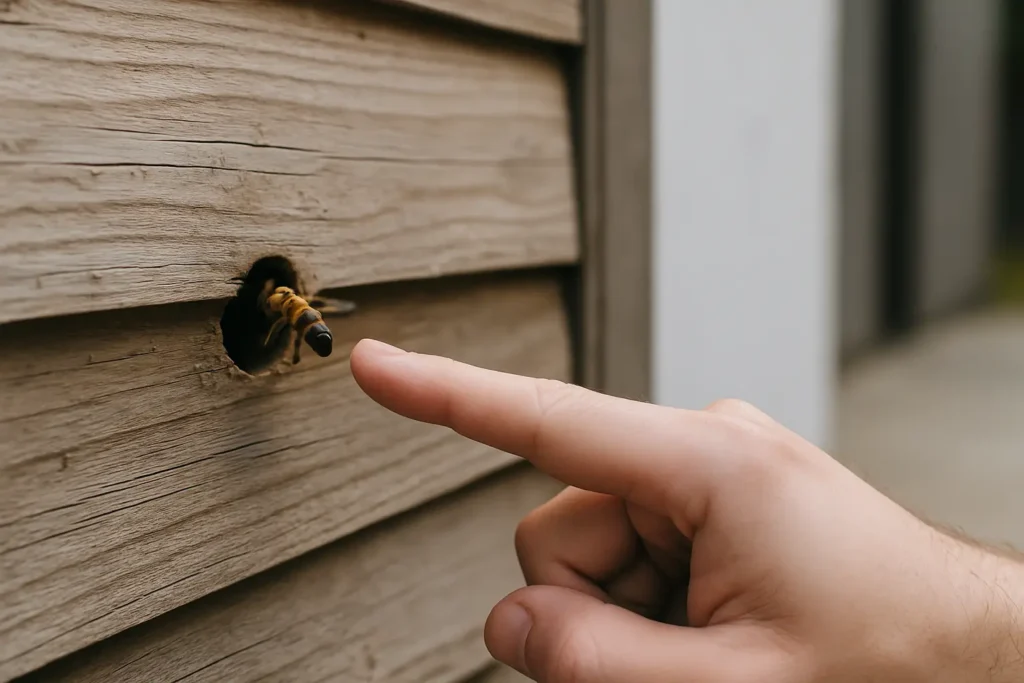
A buzzing cloud forms near your front door, and within minutes it feels like your home has new occupants. Maybe it is a swarm settling on a tree branch. Maybe it is a hidden colony that has finally made itself known through a steady stream of bees at the eaves. Either way, when people and bees end up in the same tight space, decisions made in the next hour matter – for safety, for your property, and for the bees.
When it is actually an emergency
Not every bee sighting is a crisis. In Southern California, you can see bees on flowering plants every day without any real risk. The situations that call for a bee emergency response service in California are the ones where exposure is high, access is unavoidable, or the colony is established in a structure.
If bees are inside living spaces, moving through wall voids, or collecting near entrances, that crosses from “nuisance” into “urgent.” The same is true when the bees are near high-traffic areas like school drop-offs, loading docks, pool decks, or apartment breezeways where people cannot easily keep their distance.
The biggest “it depends” factor is allergy risk. If anyone on the property has a history of severe reactions to stings, the threshold for calling quickly is much lower. Even a normally calm colony can become dangerous when frightened, and an allergic emergency can escalate fast.
Swarm vs. hive: why the difference changes the response
A swarm is usually a temporary stop. Thousands of bees may cluster on a fence, shrub, or tree limb while scout bees look for a new home. Swarms often look dramatic, but they can be less defensive than an established hive because they are in transit and do not yet have brood or honey to protect.
A hive (or colony) in a structure is different. Once bees move into a wall, attic, soffit, chimney, or crawl space, they begin building comb and storing honey. Over time, that can lead to staining, odors, and secondary pests if the comb is left behind. If the colony is disturbed, defensive behavior is more likely because they have something to protect.
This distinction is why quick DIY action can backfire. Spraying a swarm may scatter bees across the yard and push them toward openings. Sealing an entry point on an established colony can trap bees inside walls, driving them into living spaces and creating a much harder problem.
What to do in the first 15 minutes
Your goal is simple: reduce contact while you line up the right help. Start by bringing kids and pets indoors and keeping doors closed. If the cluster is near a doorway, use another exit and avoid walking through the flight path.
If bees are inside, close the room, turn off lights in that space, and keep people out. Do not swing at bees, vacuum them, or use aerosols indoors. Agitation increases stinging risk and can spread bees deeper into the structure.
If you can do it without getting close, take a few photos from a safe distance. A quick photo of the cluster and a photo of where bees are entering the structure can help a professional triage the situation. Then, step away and keep the area clear.
What not to do (even if it seems reasonable)
Most emergency calls turn into bigger repairs because someone tried a “quick fix.” The common ones are worth naming plainly.
Do not use wasp spray, brake cleaner, gasoline, or other chemicals. Aside from being inhumane and often illegal in practice, these methods can create a fire hazard and can contaminate surfaces. They also rarely solve the underlying issue if a colony is inside a wall.
Do not seal holes while bees are actively using them. Trapping a colony can push bees into interior spaces or cause them to find a new exit – sometimes into your home.
Do not knock down comb or cut into a wall without a plan for full extraction and cleanup. Partial removal can leave honey and brood behind, which can lead to odors, stains, and insect activity.
Do not assume “nighttime is safest.” Bees are less active after dark, but working at night without proper equipment and a plan can be risky. It is also easier to miss active entry points or leave parts of the colony behind.
What a true emergency response should include
A bee emergency response service in California should do more than “make the bees go away.” A permanent solution typically has three layers: safe removal, responsible relocation when possible, and prevention so you get your peace and home restored – without a repeat visit next month.
Fast risk assessment, not guesswork
The first step is identifying what you are dealing with: honey bees vs. yellowjackets, swarm vs. established colony, exterior cluster vs. structural hive. A professional should also ask about allergies, access points, and whether bees are appearing inside. Those questions are not small talk – they determine the safest approach.
Humane removal and live relocation when possible
When honey bees are involved, ethical providers prioritize live removal and relocation to an apiary where the colony can continue natural behavior. This is especially important in established colonies, where a careful extraction can save the queen and keep the colony intact.
Humane removal takes more time than a spray-and-walk-away approach. It can involve opening a wall or soffit, removing comb, collecting bees, and transporting them for placement. That time investment is the difference between temporary relief and a solution that respects the role bees play in our environment.
Full hive extraction and cleanup
If a colony is in a structure, the job is not finished when the visible bees disappear. Comb and honey left behind can melt in the heat, soak into insulation or drywall, and attract ants or other pests. A thorough extraction includes removing comb and addressing residue so the area does not become an ongoing problem.
Entry-point repairs to prevent re-occupation
Bees are excellent at finding the same gaps again. A sustainable response includes identifying and repairing the entry point and any vulnerable areas nearby. It is common to see recurring colonies where a previous provider removed bees but never closed the access route.
Repairs do not always mean major construction, but they do require attention to detail. The goal is simple: no open invitation for the next swarm.
Timing and trade-offs: when “same day” matters
Some situations truly require rapid response: bees inside living spaces, high foot traffic, or severe allergy risk. Other situations can wait a day if the area can be safely isolated – for example, a swarm high in a tree far from walkways.
There is also a cost trade-off. Emergency scheduling and after-hours calls may be more expensive, but delaying a structural hive can increase damage and complexity. If you suspect bees are in a wall and you hear buzzing, see consistent bee traffic, or notice staining near an entry point, faster action often reduces total repair work.
How to choose the right provider in Southern California
When you call for help, the goal is not just removal. It is a clear plan. Ask how they confirm whether it is honey bees or another stinging insect, whether they perform live removals, and whether they remove comb and address entry points.
Be cautious of anyone who guarantees a one-step “treatment” without seeing the site or asking questions about where bees are entering. Also be cautious of providers who avoid discussing what happens to the bees. If humane relocation matters to you, it should be part of the service, not an afterthought.
For property managers, documentation and predictability matter. Ask what the process looks like for tenant notifications, access to utility rooms or attics, and how repairs are handled. The best outcomes come when everyone knows what will happen before any cutting or sealing begins.
If you are looking for a humane, safety-first option across Los Angeles, Orange, Riverside, San Bernardino, Ventura and nearby counties, you can contact Eli the Bee Guy for live removals, full extractions, relocations, and entry-point repairs designed to keep bees rescued and properties secure.
Special situations that change the approach
Schools, multi-family housing, and busy commercial sites
Crowd control is part of the job. A responsible response may include temporarily blocking access to an area, working during off-hours, and coordinating with staff. The best plan reduces panic and prevents people from trying to “help” in ways that raise risk.
Pools, irrigation, and water sources
Bees need water, and they will return to reliable sources. If bees are collecting at pool edges or sprinklers, removal alone may not fully solve the issue if there is an established colony nearby. A professional should consider the broader pattern, not only the spot where bees are currently visible.
Repeat infestations
If bees keep coming back to the same corner of a roofline or the same wall, there is usually an access problem or residual scent drawing scouts. That is why repairs and cleanup matter. The long-term fix is not just removal, it is removal plus prevention.
A calm plan beats a rushed reaction
Most bee emergencies escalate because people feel forced to act immediately. The better move is to create distance, keep the area quiet, and bring in someone who can remove bees safely and humanely. Bees are not the enemy – they are just doing what bees do. With the right response, you can protect the people on the property and still give the colony a real chance to live elsewhere, so the space feels like yours again.