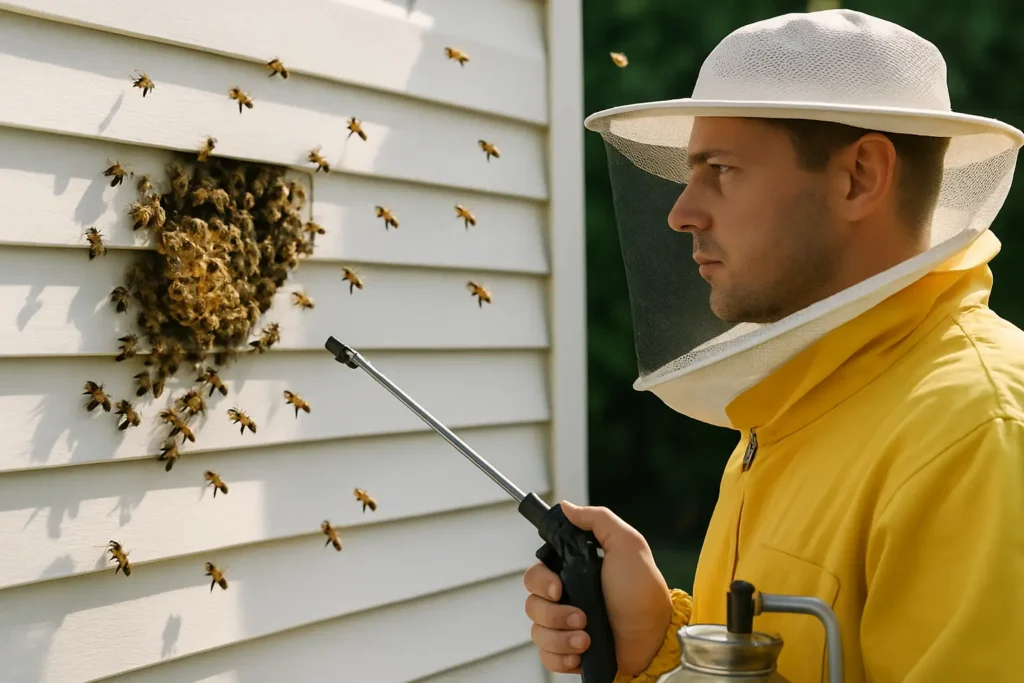
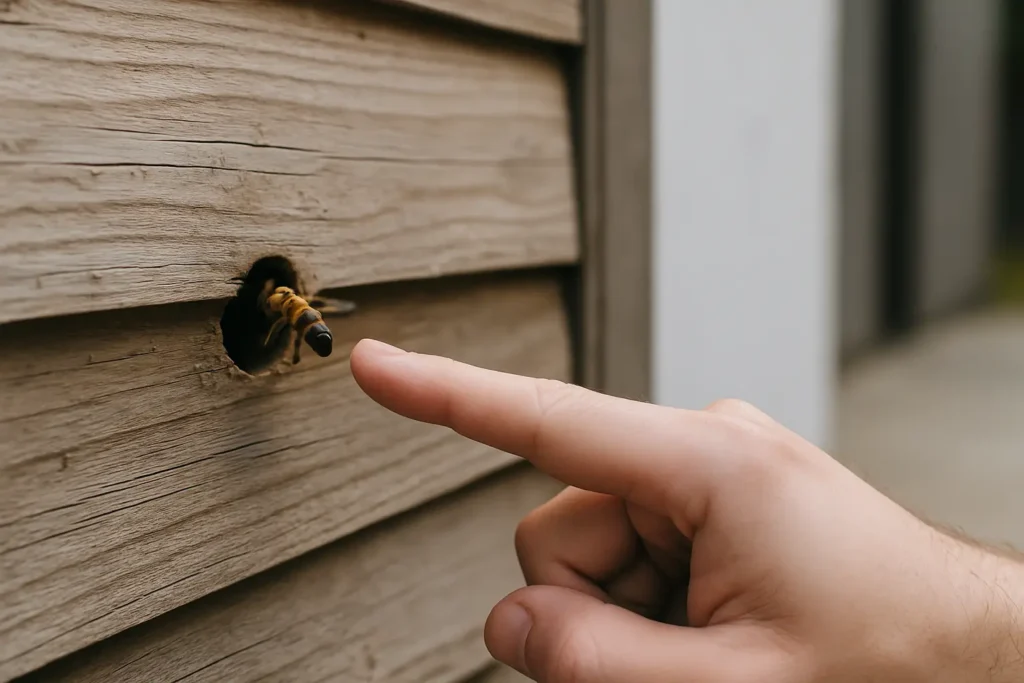
You notice it first as a low, steady hum near a wall. Then the traffic starts: bees arriving and leaving through the same tiny gap under the eave, a crack in stucco, or a seam where a utility line meets the house. If you’re a homeowner or property manager in Southern California, that moment is when the situation shifts from “a few bees” to a likely established colony inside the structure.
At that point, the goal isn’t simply to make the bees disappear for a day. The goal is peace and home restored—safely for people, ethically for the bees, and permanently for the building. That’s exactly what professional hive extraction and repair services are designed to do.
What “hive extraction” actually means (and why it matters)
A swarm is temporary. A hive is a built-out home with comb, brood (developing bees), stored honey, and a queen. Once bees have moved into a wall, attic, roofline, soffit, or other void, they’re not just visiting—they’re established.
Hive extraction means physically removing the colony and the hive structure from the building materials. This is different from “spraying,” “dusting,” or setting out deterrents. Those approaches may reduce activity at the entrance for a short time, but they often leave the comb and honey inside the structure.
Leaving comb behind creates real problems. Honey and wax can melt and seep, stain drywall, attract ants and roaches, and create persistent odors. Even if the bees are gone, the scent of old comb can draw new swarms back to the same cavity year after year. Extraction addresses the source, not just the symptoms.
What repair services add to the removal
Extraction is only half the job. Bees got in because the building gave them an opening and a protected cavity. Repair work closes that invitation.
Repair services typically involve locating the entry point (and any secondary gaps), then restoring the structure so it’s no longer an easy nesting site. Depending on the building, that may include replacing damaged materials, sealing gaps, reinforcing vulnerable seams, and making sure the area is weather-tight.
This is where a “quick removal” can fall short. If the colony is removed but the access point remains, the next swarm that scouts your property may decide it’s a perfect fit. A complete service combines removal, cleanup, and exclusion so you’re not dealing with repeat calls.
Signs you likely need hive extraction and repairs
Some situations are obvious—visible comb in an open structure, or bees pouring in and out of a wall. Others are quieter but just as urgent.
If you’re seeing steady bee traffic to one spot for more than a couple days, hearing buzzing in a wall (especially in the afternoon warmth), noticing a faint honey smell indoors, or finding small brownish stains forming on ceilings or drywall, those are common indicators of an established hive inside.
For commercial properties, loading docks, soffits over walkways, and utility chases are frequent trouble areas. For homes, eaves, roof returns, stucco cracks, and gaps around vents are common. In Southern California’s mild climate, bees can remain active for long stretches, so colonies can grow quickly.
Why humane relocation is the better long-term choice
Many people call because they’re worried about stings—especially if someone in the home has a serious allergy. That’s a valid concern. Professional service prioritizes safety first.
But there’s also the question of what happens to the bees. Ethical, live removal and relocation aims to rescue the colony so it can continue its natural role as a pollinator. When bees are moved to a vetted apiary and managed properly, they can rebuild, forage, and thrive rather than being destroyed.
There’s a practical advantage, too: humane extraction usually goes hand-in-hand with thorough removal of comb and a careful approach to the structure. Quick chemical kills can leave the mess behind, which is where many of the lingering building problems come from.
What the process usually looks like on-site
Every building is different, but most responsible hive extraction and repair services follow a similar flow.
First comes a careful assessment: where bees are entering, how long they’ve likely been established, and what access is needed to reach the colony. A professional should be honest about trade-offs—sometimes the cleanest extraction requires opening a section of soffit or wall to fully remove comb and brood. It can feel invasive in the moment, but it’s often the difference between a lasting fix and an ongoing issue.
Next is controlled removal. In a humane approach, the aim is to remove adult bees and the queen intact, then collect and remove comb. Good handling matters here—not only for bee survival, but for safety around people and pets.
Then comes cleanup. Removing wax, honey residue, and debris reduces the scent trail that attracts future swarms and helps prevent secondary pests. Finally, repairs and exclusion work close up the entry point and restore the area.
If you’re working with a provider who offers both extraction and repairs, you’re not juggling multiple contractors or leaving the home partially exposed while you try to coordinate the next step.
“Can’t we just seal the hole?” (Why that backfires)
Sealing the entrance while bees are still inside is one of the most common DIY mistakes. It can trap thousands of bees in the structure, forcing them to search for new exits—sometimes into living spaces. It also leaves comb and honey behind, which can create odor, staining, and pest issues.
Even sealing after the bees seem “gone” can be risky if the hive structure remains. The smell of old comb is a beacon for future colonies. The better approach is removal first, then repair and exclusion.
How professionals decide between a cut-out and other methods
People often hear terms like “cut-out,” “trap-out,” or “removal,” and it can get confusing.
A cut-out (extraction) is typically preferred when bees are inside a cavity and the structure can be opened and repaired. It’s direct, thorough, and allows comb to be removed.
A trap-out is sometimes used when a cut-out would be excessively destructive or isn’t feasible due to access limitations. The trade-off is time: trap-outs can take longer and may not remove comb, which can mean you still need cleanup and repairs afterward.
A trustworthy provider will explain which option fits your situation, what it means for your building, and what results you can realistically expect.
Why repairs are especially important in Southern California buildings
Our building styles and climate create repeat opportunities for bees: warm walls, plenty of sun exposure, and lots of architectural seams—stucco transitions, fascia boards, roof vents, and decorative beams.
Small gaps expand over time with heat cycles. Caulking fails. Wood weathers. A tiny opening can become a reliable entry point season after season.
That’s why repairs aren’t a “nice extra.” They’re what turns an emergency call into a permanent solution. The goal is to remove what’s there and also make the spot unattractive to the next swarm scouting for a home.
Questions to ask before you hire hive extraction and repair services
The quickest way to avoid repeat problems is to choose a provider who treats the job as removal plus prevention.
Ask whether they physically remove comb and honey residue, not just the bees. Ask what repair work is included and whether they close up all known entry points in the affected area. It’s also fair to ask what happens to the bees—humane relocation should be more than a marketing phrase.
If anyone suggests chemicals as the primary approach for honey bees inside a structure, ask what their plan is for the comb left behind. If the answer is vague, that’s a sign you may be paying twice: once now, and again when stains, odors, or new swarms show up.
Safety and timing: when to call right away
If bees are inside a wall near a bedroom, a childcare area, or a high-traffic entrance, it’s worth acting quickly. The longer a colony is established, the larger it can grow and the more comb is built. Larger colonies generally mean more time on-site and more extensive cleanup.
If someone on the property has a history of severe allergic reactions, don’t wait for the situation to escalate. Keep distance, keep pets away from the flight path, and avoid vibrating tools near the area (mowers and leaf blowers can agitate defensive behavior). A professional can assess the risk and handle the removal with the right protective equipment.
A humane, complete approach—what “done” should feel like
When hive extraction and repairs are handled correctly, the results are straightforward: the bee traffic stops, the cavity is cleared, the entry points are closed, and you’re not left worrying about honey stains showing up weeks later.
For property managers, that means fewer tenant complaints and a safer walkway or entry. For homeowners, it means the quiet return of normal life—doors used freely, yards enjoyed again, and no constant scanning of the eaves.
If you’re looking for ethical, full-scope help in Southern California, Eli the Bee Guy focuses on live bee removals, thorough hive extractions, and the repair work that keeps bees from re-occupying the same space.
The best moment to deal with a hive is before it becomes part of the building. If you’re hearing that hum in the wall or seeing steady flight lines to a single gap, trust what you’re observing—and choose a solution that protects both your property and the bees that found their way there.