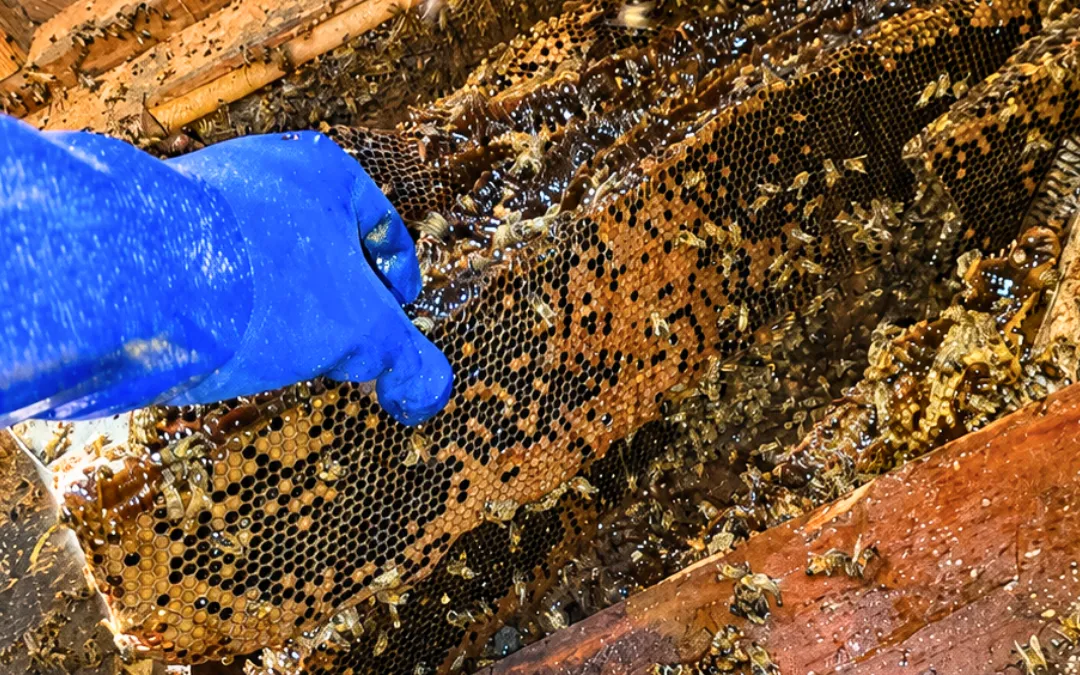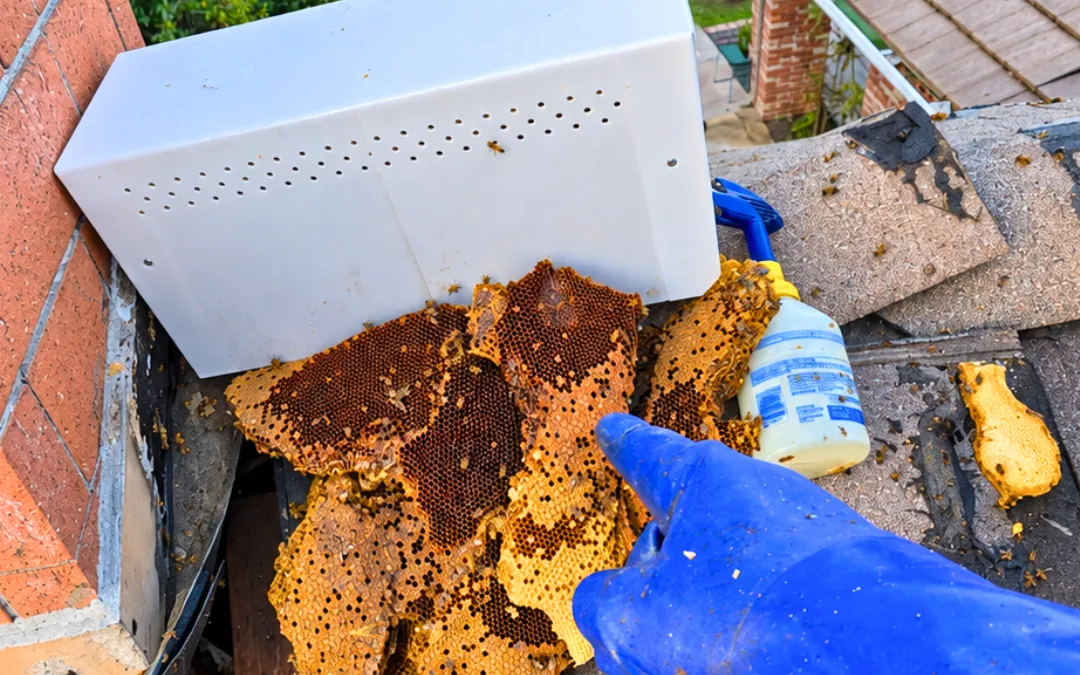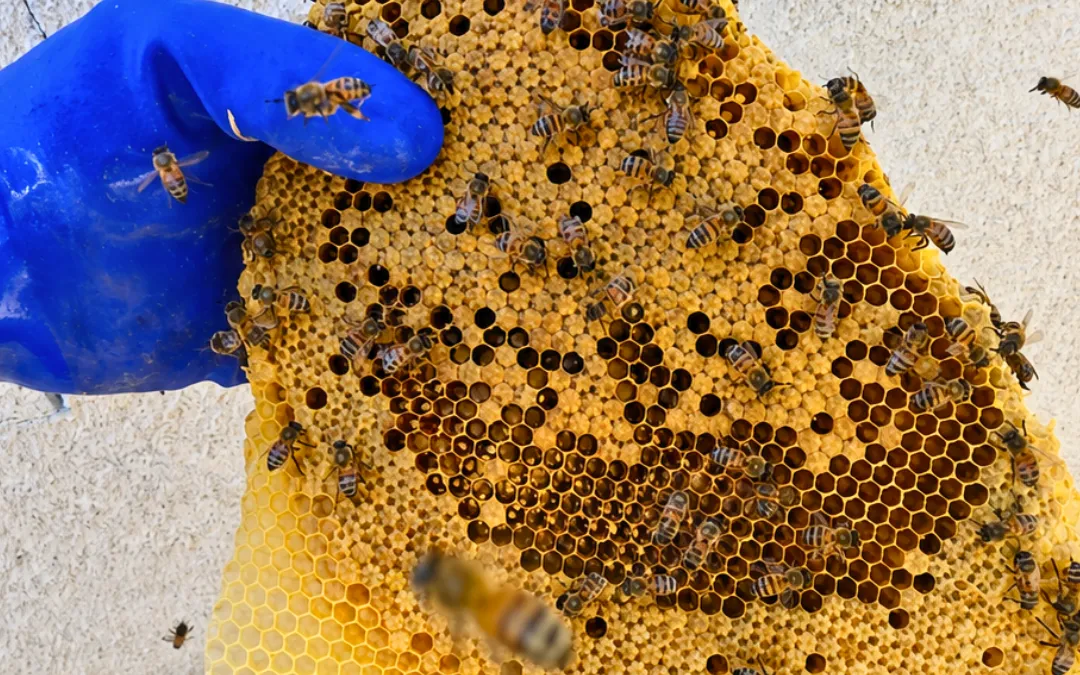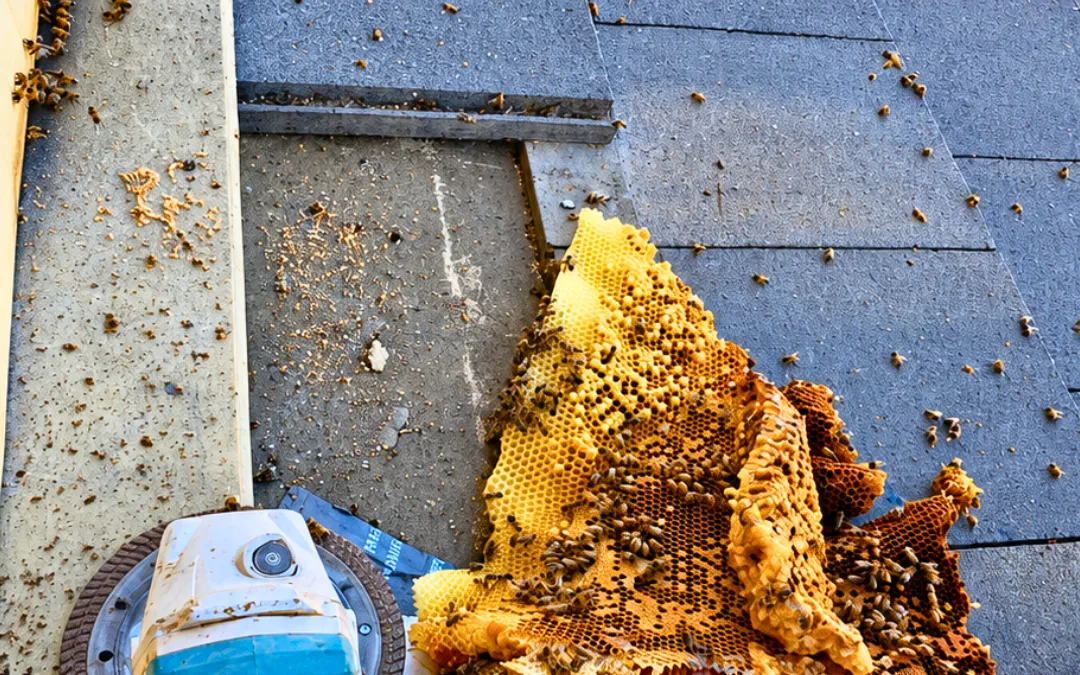
Usually it starts as a low, steady hum near a wall. Then the traffic starts: bees coming and going through the same little gap under the eave, a crack in the stucco, or a seam where a utility line meets the house. If you own a home or manage property in Southern California, that’s when “a few bees” turns into a colony that has most likely moved into the structure.
From there, making the bees disappear for a day doesn’t help much. You want them out safely for the people, alive for the bees’ sake, and in a way that keeps them from coming back. That’s what professional hive extraction and repair services are for.
What “hive extraction” actually means (and why it matters)
A swarm is passing through. A hive is a built-out home with comb, brood (developing bees), stored honey and a queen. Once bees have moved into a wall, attic, roofline, soffit or other void, they’re settled in for good.
Hive extraction means physically taking the colony and the hive structure out of the building. Spraying, dusting and setting out deterrents are something else. Those can cut down activity at the entrance for a little while, but they usually leave the comb and honey inside.
Comb left behind causes real problems. Honey and wax can melt and seep, stain drywall, draw ants and roaches, and leave a smell that won’t go away. Even after the bees are gone, the scent of old comb can pull new swarms to the same cavity year after year. Extraction goes after the source of the problem.
What repair services add to the removal
Getting the hive out is half the job. The bees got in because the building gave them an opening and a protected cavity, and the patch work closes that opening.
That usually means finding the entry point (and any other gaps), then sealing and patching it so the spot isn’t an easy place to nest anymore. Depending on the building, that can mean patching the opening I cut, sealing gaps and closing up weak seams. I’m not a licensed contractor, so these are patches, not rebuilds. They run under $250, depend on the condition of the structure, and don’t come with a structural warranty.
This is where a “quick removal” falls short. If the colony comes out but the way in stays open, the next swarm that scouts your property may decide it’s perfect. A complete job covers the removal, the cleanup and closing the bees out, so you aren’t calling again next season.
Signs you likely need hive extraction and repairs
Some cases are obvious, like comb you can see in an open structure or bees pouring in and out of a wall. Others are quieter, and just as urgent.
Steady bee traffic to one spot for more than a couple of days, buzzing in a wall (especially when it warms up in the afternoon), a faint honey smell indoors, or small brownish stains showing up on the ceiling or drywall are all common indicators that a hive is established inside.
On commercial properties, loading docks, soffits over walkways and utility chases are frequent trouble spots. On houses it’s usually eaves, roof returns, stucco cracks and gaps around vents. Southern California’s mild climate keeps bees active for long stretches, so colonies can grow fast.
Why humane relocation is the better long-term choice
A lot of people call because they’re worried about stings, especially when someone in the house has a serious allergy. That’s a fair worry, and safety comes first on every job.
Then there’s the question of what happens to the bees. With live removal and relocation, the colony gets rescued so it can keep pollinating. When the bees go to a vetted apiary and get looked after, they can rebuild, forage and do well instead of being killed.
It’s practical too. A humane extraction usually goes along with taking out all of the comb and being careful with the structure. A quick chemical kill can leave the mess behind, and that mess is where a lot of the lasting building problems come from.
What the process usually looks like on-site
Every building is different, but most people doing hive extraction and repair services the right way follow about the same steps.
It starts with a careful look: where the bees are getting in, about how long they’ve been there, and what access it’ll take to reach the colony. Whoever you hire should be straight with you about the trade-offs. Sometimes the cleanest extraction means opening a section of soffit or wall to get all of the comb and brood out. It feels like a lot when it’s happening, but it’s often what separates a fix that lasts from a problem that keeps coming back.
Next is the removal itself. Done humanely, the adult bees and the queen come out alive, and then the comb gets collected and taken out. Careful handling matters here, for the bees’ survival and for the safety of people and pets nearby.
Then the cleanup. Getting the wax, honey residue and debris out cuts down the scent trail that pulls in future swarms and helps keep other pests away. Last, the entry point gets sealed and the opening gets patched.
When the same person does the extraction and the patch, you don’t have the house sitting open while you line up somebody else for the next step. If the damage needs more than a patch, you’ll want a licensed contractor for that part.
“Can’t we just seal the hole?” (Why that backfires)
Sealing the entrance while bees are still inside is one of the most common DIY mistakes. It can trap thousands of bees in the structure, and they’ll hunt for another way out, sometimes into the living space. It also leaves the comb and honey behind, which means smells, stains and pests.
Even sealing after the bees seem “gone” can backfire if the hive is still in there. Old comb smells like home to the next colony. Take the hive out first, then seal it up.
How professionals decide between a cut-out and other methods
People hear “cut-out,” “trap-out” and “removal” thrown around, and it gets confusing.
A cut-out (extraction) is usually the way to go when the bees are inside a cavity that can be opened up and patched afterward. It’s direct and thorough, and the comb comes out with the bees.
A trap-out is sometimes used when a cut-out would tear up too much or the access just isn’t there. It takes longer, and it may not get the comb out, so you might still need cleanup and patching afterward.
Anyone worth hiring will tell you which option fits your situation, what it means for your building, and what results you can realistically expect.
Why repairs are especially important in Southern California buildings
The way houses are built here, plus the climate, keeps giving bees chances: warm walls, lots of sun, and plenty of seams where stucco meets trim, fascia boards, roof vents and decorative beams.
Small gaps open up over time with the heat. Caulk fails. Wood weathers. A tiny opening can turn into a dependable way in, season after season.
That’s why sealing and patching the entry is part of the job and not an add-on. It’s what turns an emergency call into a fix that holds. You want what’s there taken out, and you want the spot to look unappealing to the next swarm out scouting for a home.
Questions to ask before you hire hive extraction and repair services
The easiest way to avoid repeat problems is to hire someone who treats the job as removal plus prevention.
Ask whether they physically remove the comb and the honey residue along with the bees. Ask what patch work is included, what it costs, and whether they close up all the entry points they know about in that area. It’s fair to ask what happens to the bees too. If they say “humane relocation,” they should be able to tell you where the bees go.
If anyone suggests chemicals as the main plan for honey bees inside a structure, ask what they’ll do about the comb left behind. If the answer is vague, you may end up paying twice: once now, and again when the stains, smells or new swarms show up.
Safety and timing: when to call right away
If bees are in a wall near a bedroom, a childcare area or a busy entrance, it’s worth moving quickly. The longer a colony has been there, the bigger it gets and the more comb it builds. A bigger colony generally means more time on-site and more cleanup.
If someone on the property has a history of severe allergic reactions, don’t wait for it to get worse. Keep your distance, keep pets out of the flight path, and don’t run vibrating tools near the spot (mowers and leaf blowers can set off defensive behavior). A professional can size up the risk and do the removal in the right protective gear.
A humane, complete approach: what “done” should feel like
When hive extraction and repairs are done right, you can see it: the bee traffic stops, the cavity is cleaned out, the entry points are closed, and you’re not waiting for honey stains to show up a few weeks later.
For property managers, that means fewer tenant complaints and a safe walkway or entry. For homeowners it means things go back to normal. You use the doors, you use the yard, and you quit checking the eaves every time you walk outside.
If you want this kind of help in Southern California, that’s my work at Eli the Bee Guy: live bee removals, thorough hive extractions, and sealing and patching the entry so bees don’t move back into the same space.
The best time to deal with a hive is before it’s built into the building. If you hear that hum in the wall or see a steady line of bees heading for one gap, believe what you’re seeing, and pick a fix that takes care of your property and the bees that found their way in.
Like these guides? Add Eli the Bee Guy as a preferred source on Google to see more of them in your search results.